


8 channel LCD Teperature meter ( RS232 - AT90S2313 )
#temperature meter
#DS1820
#AT90S2313
#microcontroller
#1-wire bus
#RS232
#LCD
#sensor interface
#digital sensors
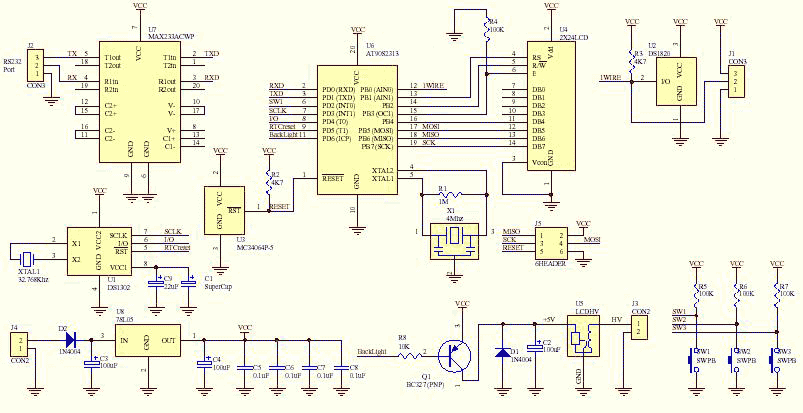
Description: This is the fully featured, jammed packed temperature readout unit. I can measure temperature from up at 8 DS1820 digital temperature sensors all on the same 1-wire bus. That's right only 3 wires are needed to go to all the temperature sensors, GND, VCC and 1-wire data. All sensors will connect to the same cable! Anyone who has used the DS1820's will know that each DS1820 sensor will have a 48bit serial number that is used to address the sensors. With this unit the microcontroller will search the bus automatically for all present DS1820's and record their serial numbers in memory. You just connect the sensors and go. You don't have to program in serial numbers of each device. More: And to add to the all the features, this unit can display two temperatures on the screen and display 8 temperatures on its RS232 serial port. There are a few catches. 1 - You can't yet pick the two sensors you wish to display on the screen. I only use the unit to display inside and outside temperature so there is no incentive for me to this as an option. The first two serial numbers found on the bus are displayed on the unit. The second catch, you need a PC or terminal monitoring the serial port to display greater than 2 temperatures. No time nor date is displayed on the serial port. This can be very easily added if required. A standard terminal program can be used for logging the temperature from the Readout Unit. The comm settings are 9600bps, 8 data bits, No parity with no handshaking. The RS232 frame shows the serial numbers of all devices connected to the display unit. More than eight DS1820's can be connected, however only the first 8 devices found are shown. After the serial numbers are dumped, the temperature of these devices are then dumped to the terminal in real values. This way no conversion is required on the PC side making life easy! Below is a screen dump of 7 frames from my Readout Unit. Specifications High 0.02deg C Resolution Readouts Up to 8 sensors can be connected on the one bus with automatic search of ROM codes Displays up to 2 temperatures on the LCD panel Backlit LCD with on/off control RS232 Port for logging all 8 sensors on a PC DS1302 Real time Clock with over 3 months backup Supports Wayne's NTP format for updating the clock to a Time server Uses the very cheap Atmel AT90S2313.
The temperature readout unit is designed to interface with up to eight DS1820 digital temperature sensors, utilizing a single 1-wire bus architecture that simplifies wiring by requiring only three connections: ground (GND), power (VCC), and data. Each DS1820 sensor is uniquely identified by a 48-bit serial number, allowing the microcontroller within the unit to automatically scan the bus for all connected sensors upon initialization. This feature eliminates the need for manual configuration of sensor addresses, streamlining the setup process.
The unit is equipped with an LCD display capable of showing two temperature readings simultaneously. The selection of which two sensors to display is currently fixed; the first two sensors detected during the bus scan are shown on the LCD. For more extensive monitoring, the unit features an RS232 serial port that can transmit temperature data from all eight connected sensors to a PC or terminal. The communication settings for the RS232 interface are standardized at 9600 baud rate, 8 data bits, no parity, and no handshaking, facilitating easy integration with terminal software for data logging.
In terms of functionality, the device provides high-resolution temperature readouts with an accuracy of 0.02 degrees Celsius. The LCD is backlit, with the option to control the backlight, enhancing visibility in low-light environments. Additionally, the unit incorporates a DS1302 real-time clock that offers over three months of backup power, ensuring accurate timekeeping even during power outages. It also supports Wayne's NTP format for synchronizing the clock with a time server, further enhancing its utility in time-sensitive applications.
The microcontroller used in this design is the Atmel AT90S2313, a cost-effective solution that provides sufficient processing power for managing the sensor array, handling the LCD interface, and managing the RS232 communication. Overall, this temperature readout unit is a versatile and efficient solution for monitoring multiple temperature points in various applications, from environmental monitoring to industrial systems.This is the fully featured, jammed packed temperature readout unit. I can measure temperature from up at 8 DS1820 digital temperature sensors all on the same 1-wire bus. That's right only 3 wires are needed to go to all the temperature sensors, GND, VCC and 1-wire data. All sensors will connect to the same cable! Anyone who has used the DS1820's will know that each DS1820 sensor will have a 48bit serial number that is used to address the sensors.
With this unit the microcontroller will search the bus automatically for all present DS1820's and record thier serial numbers in memory. You just connect the sensors and go. You dont have to program in serial numbers of each device. And to add to the all the features, this unit can display two temperatures on the screen and display 8 temperatures on it's RS232 serial port. There are a few catches. 1 - You can't yet pick the two sensors you wish to display on the screen. I only use the unit to display inside and outside temperature so there is no insentive for me to this as an option.
The first two serial numbers found on the bus are displayed on the unit. The second catch, you need a PC or terminal monitoring the serial port to display greater that 2 temperatures. No time nor date is displayed on the serial port. This can be very easily added if required. A standard terminal program can be used for logging the temperature from the Readout Unit. The comm settings are 9600bps, 8 data bits, No parity with no handshaking. The RS232 frame shows the serial numbers of all devices connected to the display unit. More than eight DS1820's can be connected, however only the first 8 devices found are shown. After the serial numbers are dump, the temperature of these devices are then dumped to the terminal in real values.
This way no conversion is required on the PC side making life easy! Below is a screen dump of 7 frames from my Readout Unit. Specifications High 0.02deg C Resolution Readouts Up to 8 sensors can be connected on the one bus with automatic search of ROM codes Displays up to 2 temperatures on the LCD panel Backlit LCD with on/off control RS232 Port for logging all 8 sensors on a PC DS1302 Real time Clock with over 3 months backup Supports Wayne's NTP format for updating the clock to a Time server Uses the very cheap Atmel AT90S2313
The temperature readout unit is designed to interface with up to eight DS1820 digital temperature sensors, utilizing a single 1-wire bus architecture that simplifies wiring by requiring only three connections: ground (GND), power (VCC), and data. Each DS1820 sensor is uniquely identified by a 48-bit serial number, allowing the microcontroller within the unit to automatically scan the bus for all connected sensors upon initialization. This feature eliminates the need for manual configuration of sensor addresses, streamlining the setup process.
The unit is equipped with an LCD display capable of showing two temperature readings simultaneously. The selection of which two sensors to display is currently fixed; the first two sensors detected during the bus scan are shown on the LCD. For more extensive monitoring, the unit features an RS232 serial port that can transmit temperature data from all eight connected sensors to a PC or terminal. The communication settings for the RS232 interface are standardized at 9600 baud rate, 8 data bits, no parity, and no handshaking, facilitating easy integration with terminal software for data logging.
In terms of functionality, the device provides high-resolution temperature readouts with an accuracy of 0.02 degrees Celsius. The LCD is backlit, with the option to control the backlight, enhancing visibility in low-light environments. Additionally, the unit incorporates a DS1302 real-time clock that offers over three months of backup power, ensuring accurate timekeeping even during power outages. It also supports Wayne's NTP format for synchronizing the clock with a time server, further enhancing its utility in time-sensitive applications.
The microcontroller used in this design is the Atmel AT90S2313, a cost-effective solution that provides sufficient processing power for managing the sensor array, handling the LCD interface, and managing the RS232 communication. Overall, this temperature readout unit is a versatile and efficient solution for monitoring multiple temperature points in various applications, from environmental monitoring to industrial systems.This is the fully featured, jammed packed temperature readout unit. I can measure temperature from up at 8 DS1820 digital temperature sensors all on the same 1-wire bus. That's right only 3 wires are needed to go to all the temperature sensors, GND, VCC and 1-wire data. All sensors will connect to the same cable! Anyone who has used the DS1820's will know that each DS1820 sensor will have a 48bit serial number that is used to address the sensors.
With this unit the microcontroller will search the bus automatically for all present DS1820's and record thier serial numbers in memory. You just connect the sensors and go. You dont have to program in serial numbers of each device. And to add to the all the features, this unit can display two temperatures on the screen and display 8 temperatures on it's RS232 serial port. There are a few catches. 1 - You can't yet pick the two sensors you wish to display on the screen. I only use the unit to display inside and outside temperature so there is no insentive for me to this as an option.
The first two serial numbers found on the bus are displayed on the unit. The second catch, you need a PC or terminal monitoring the serial port to display greater that 2 temperatures. No time nor date is displayed on the serial port. This can be very easily added if required. A standard terminal program can be used for logging the temperature from the Readout Unit. The comm settings are 9600bps, 8 data bits, No parity with no handshaking. The RS232 frame shows the serial numbers of all devices connected to the display unit. More than eight DS1820's can be connected, however only the first 8 devices found are shown. After the serial numbers are dump, the temperature of these devices are then dumped to the terminal in real values.
This way no conversion is required on the PC side making life easy! Below is a screen dump of 7 frames from my Readout Unit. Specifications High 0.02deg C Resolution Readouts Up to 8 sensors can be connected on the one bus with automatic search of ROM codes Displays up to 2 temperatures on the LCD panel Backlit LCD with on/off control RS232 Port for logging all 8 sensors on a PC DS1302 Real time Clock with over 3 months backup Supports Wayne's NTP format for updating the clock to a Time server Uses the very cheap Atmel AT90S2313
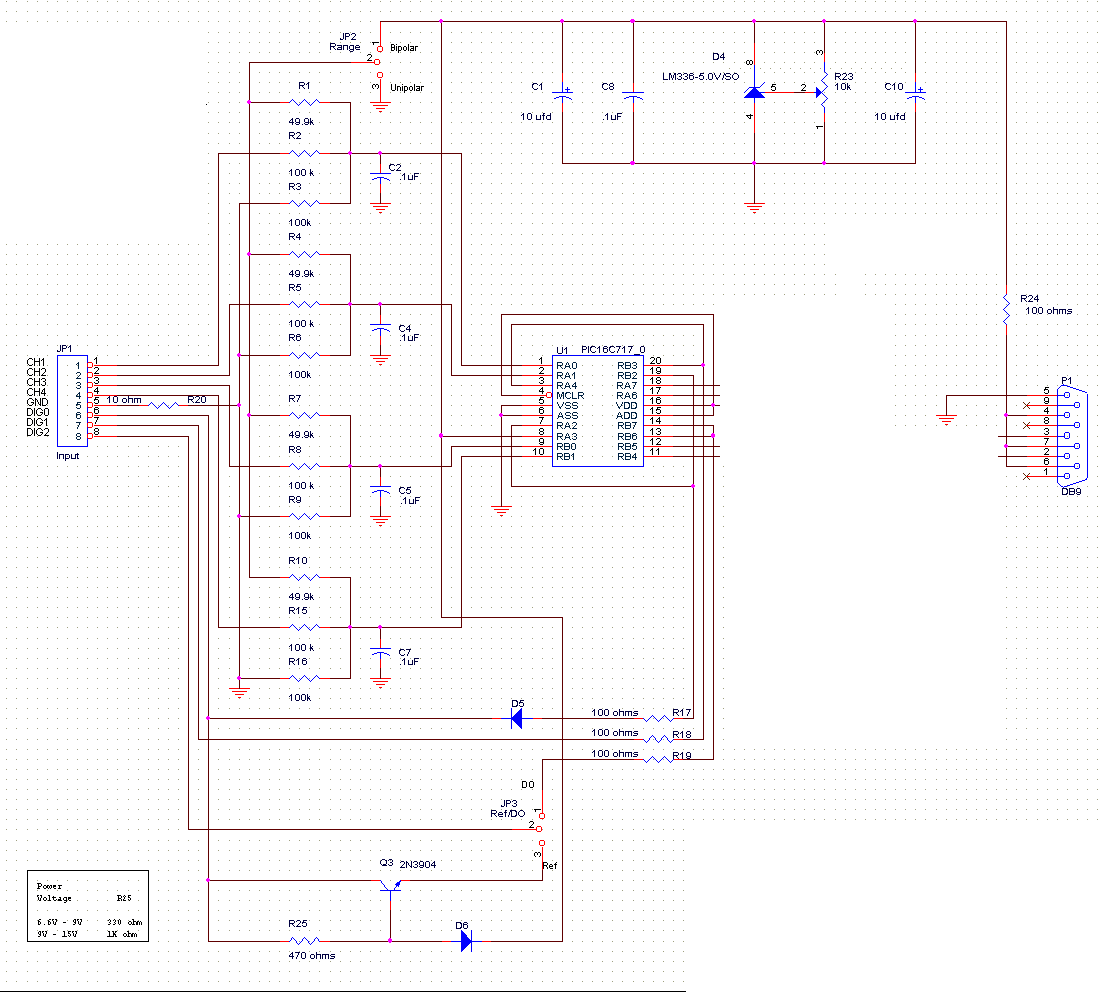
powering circuit using serial port
Power an RS232-TTL converter circuit using the serial port to eliminate the need for an external power supply. It has been noted that the DTR, RTS, and TD pins can facilitate this. Since the TD pin is already utilized for...
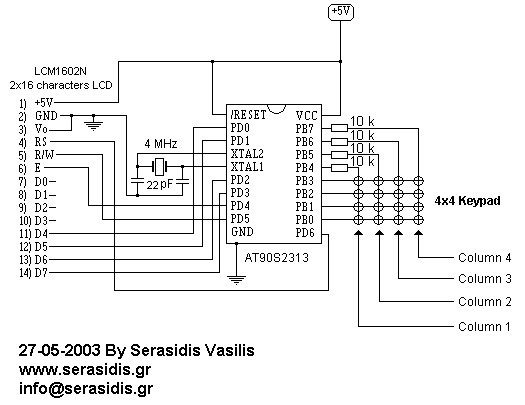
2x16 LCD and 4x4 keypad example
This circuit is designed for experiments using the AT90S2313 microcontroller, a 2x16 LCD display, and a 4x4 keypad. It operates with a clock based on a 4 MHz crystal, although any crystal between 1-4 MHz can be utilized. The keys...
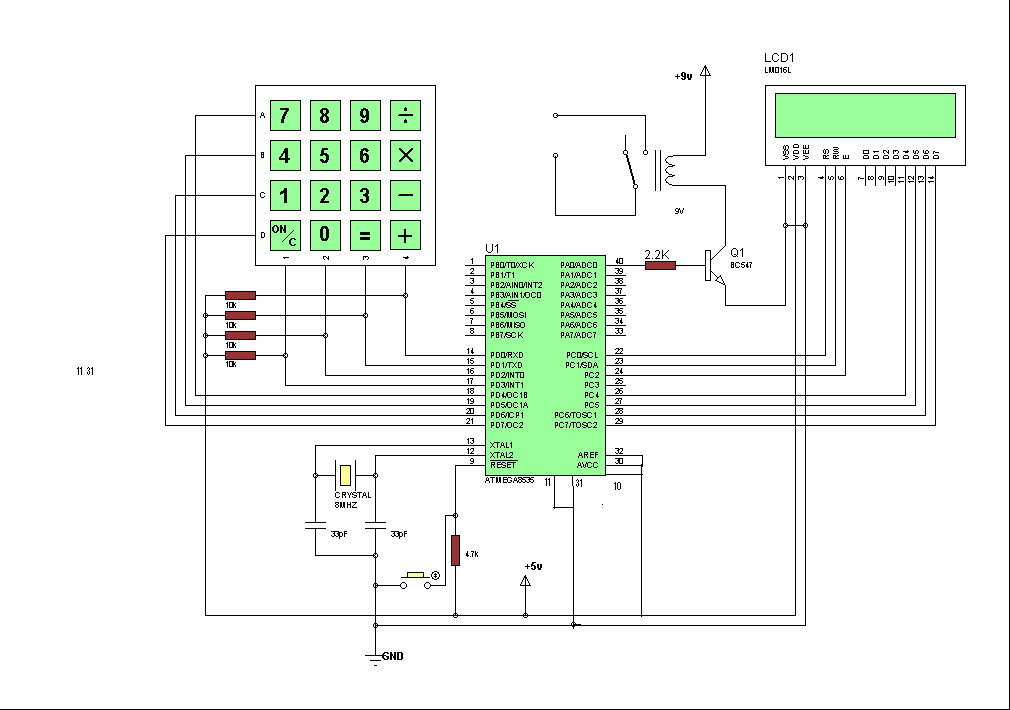
Secured room access system
Security is a primary concern in daily life, and an access control system is a crucial component of a security framework. The microcontroller-based digital lock described here is an access control system that permits only authorized individuals to enter a...
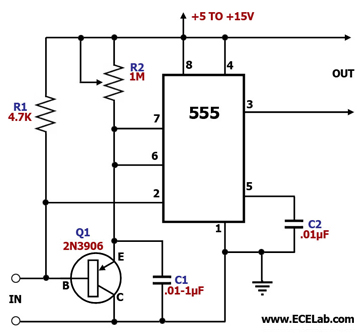
L7136 LCD Thermometer For Vehicle Engine
Function: Used to measure the voltage change minute by management before the temperature diodes. Component: IC, Diode, Resistor, 3-1/2 digit LCD (SP521PR).
The circuit described functions as a voltage measurement system designed to monitor minute voltage changes, particularly in relation to...
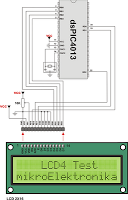
interface and program lcd to
The 2x16 Parallel LCD is an 8-bit or 4-bit parallel interfaced LCD. This unit allows the user to display text, numerical data, and custom-created characters. The LCD utilizes the HD44780 series LCD driver from Hitachi or an equivalent controller. It...
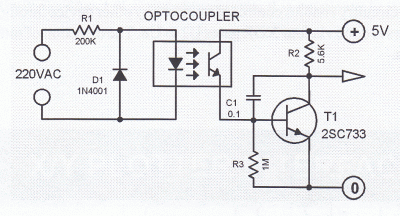
Microcontroller Relay Driver and Interface
Many microcontroller designs typically integrate various interfacing methods. A microcontroller (µC) system can be viewed as a system that reads from inputs.
Microcontroller systems are versatile platforms that facilitate the integration of multiple interfacing methods to interact with various peripherals and...
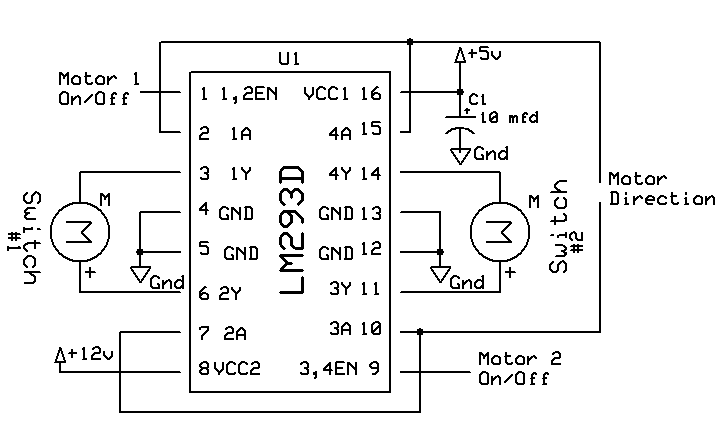
Automatic Switch Project
Model railroad turnouts, often referred to as switches, can be controlled in various ways. The simplest method is manual control, operated by hand. Remote activation is typically achieved through pneumatic (air) or electrical means. The project discussed in these articles...
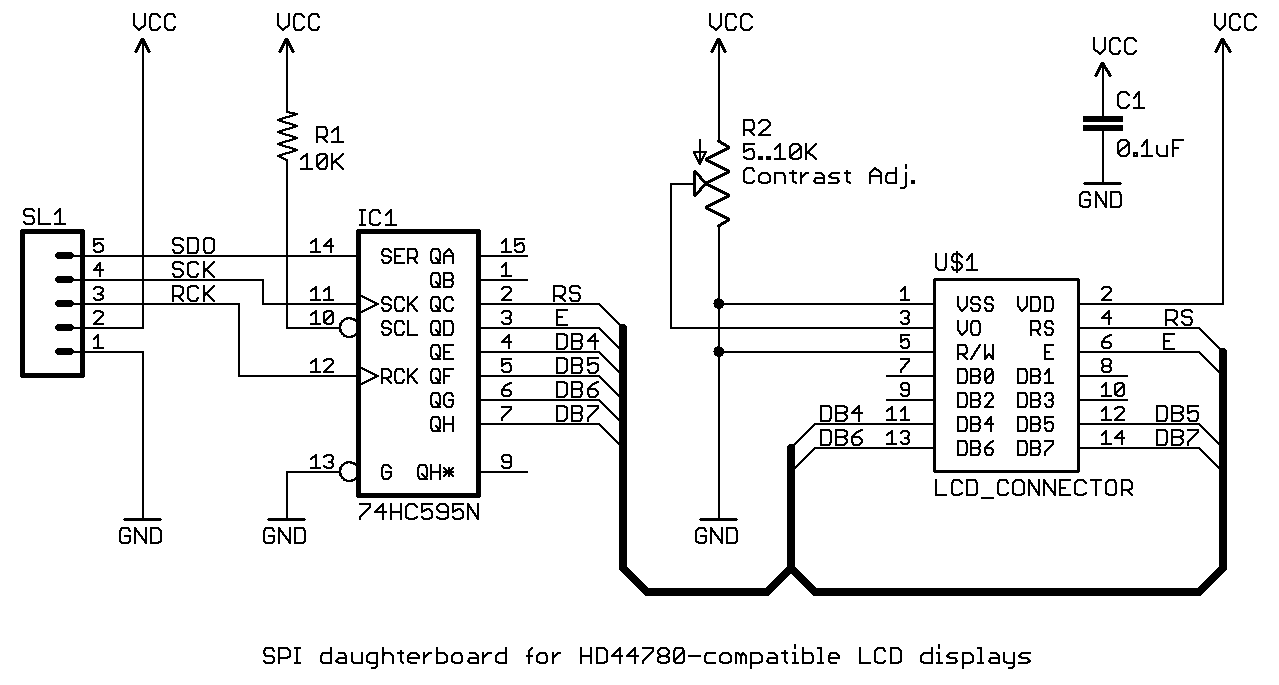
Interfacing LCD via SPI
Over time, microcontrollers have become increasingly powerful, cost-effective, and compact. A typical microcontroller from the past may have had 40 pins and lacked internal memory, whereas modern J-series PICs feature 96K of program memory and only 28 pins. This allows...
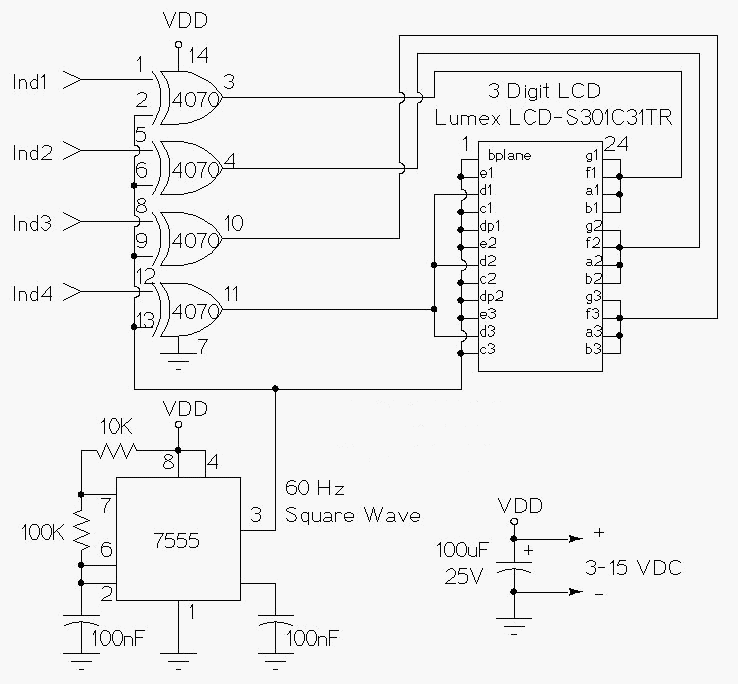
Ultra Low Power LCD
This circuit functions as an ultra-low power alternative to multiple LED on-off indicators. It is designed to be easily readable in full daylight conditions.
The described circuit employs a low-power microcontroller or a dedicated LED driver IC that manages the operation...