


Accurate-voltage-to-frequency-converter
#voltage-to-frequency
#converter
#linearity
#measurement
#signal processing
#analog circuit
#precision
#sensor interface
#calibration
#test equipment
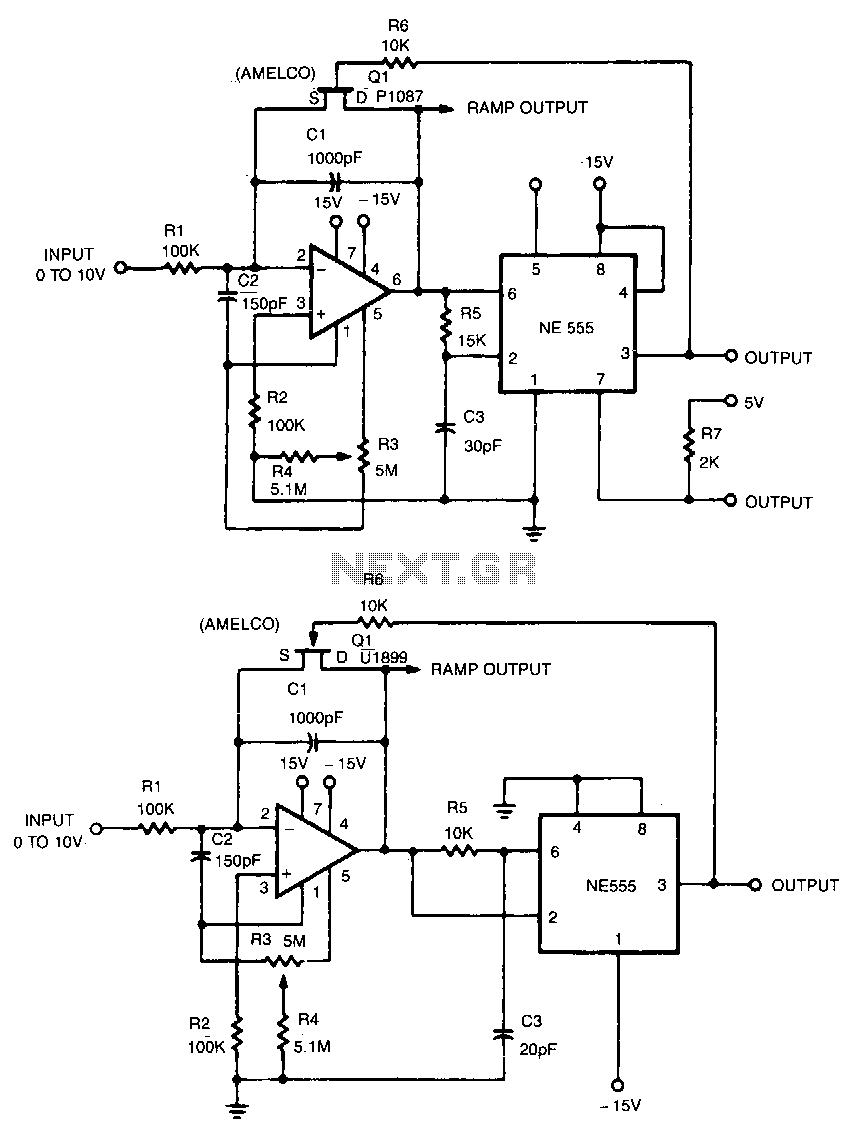
Description: This linear voltage-to-frequency converter achieves good linearity over the range of 0 to -10 V. Its mirror image provides the same linearity over the range of 0 to +10 V; however, it is not compatible with DTL or TTL.
The linear voltage-to-frequency converter is a crucial component in various electronic applications where voltage needs to be converted into a corresponding frequency signal. This specific converter operates effectively within the voltage range of 0 to -10 V, ensuring that the output frequency is linearly proportional to the input voltage. This characteristic is essential for applications requiring precise frequency modulation based on varying voltage levels.
The mirror image of this converter extends its functionality to a positive voltage range of 0 to +10 V. While it maintains similar linearity characteristics, it is important to note that this version does not support DTL (Diode-Transistor Logic) or TTL (Transistor-Transistor Logic) compatibility. This limitation may restrict its use in certain digital circuits that rely on these specific logic levels for proper operation.
In designing circuits that incorporate this voltage-to-frequency converter, careful consideration should be given to the input voltage range and the required output frequency specifications. The linearity of the converter ensures minimal distortion in the frequency output, which is critical for accurate signal processing in applications such as data acquisition systems, frequency modulation transmitters, and other analog-to-digital conversion scenarios.
Overall, this linear voltage-to-frequency converter and its mirror image variant provide essential functionality in electronic designs, enabling seamless integration of voltage signals into frequency-based systems while maintaining high linearity across their respective operating ranges.This linear voltage-to-frequency converter, a, achieves good linearity over 0 to -10 V. Its mirror image, b, provides the same linearity over 0 to + 10 V, but it is not DTL!TTL compatible.
The linear voltage-to-frequency converter is a crucial component in various electronic applications where voltage needs to be converted into a corresponding frequency signal. This specific converter operates effectively within the voltage range of 0 to -10 V, ensuring that the output frequency is linearly proportional to the input voltage. This characteristic is essential for applications requiring precise frequency modulation based on varying voltage levels.
The mirror image of this converter extends its functionality to a positive voltage range of 0 to +10 V. While it maintains similar linearity characteristics, it is important to note that this version does not support DTL (Diode-Transistor Logic) or TTL (Transistor-Transistor Logic) compatibility. This limitation may restrict its use in certain digital circuits that rely on these specific logic levels for proper operation.
In designing circuits that incorporate this voltage-to-frequency converter, careful consideration should be given to the input voltage range and the required output frequency specifications. The linearity of the converter ensures minimal distortion in the frequency output, which is critical for accurate signal processing in applications such as data acquisition systems, frequency modulation transmitters, and other analog-to-digital conversion scenarios.
Overall, this linear voltage-to-frequency converter and its mirror image variant provide essential functionality in electronic designs, enabling seamless integration of voltage signals into frequency-based systems while maintaining high linearity across their respective operating ranges.This linear voltage-to-frequency converter, a, achieves good linearity over 0 to -10 V. Its mirror image, b, provides the same linearity over 0 to + 10 V, but it is not DTL!TTL compatible.
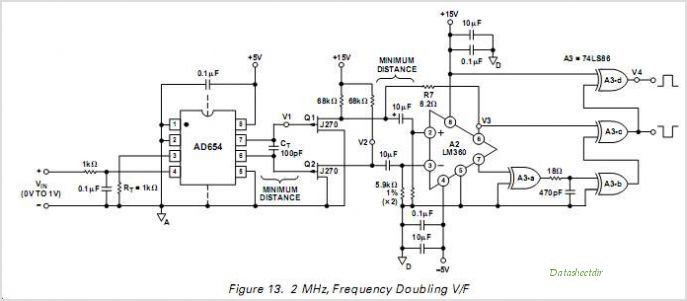
Low Cost Monolithic Voltage-to-Frequency Converter
The AD7740 is the smallest and most affordable 12-bit Voltage-to-Frequency Converter (VFC) available. As a synchronous converter, its output frequency is tied to a fixed master clock frequency, which enhances temperature stability compared to asynchronous VFCs. With a 1 MHz...
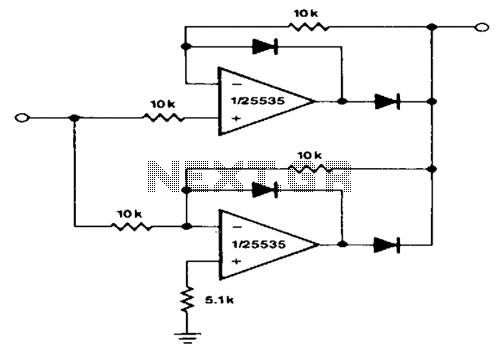
Precision-full-wave-rectifier
This circuit provides accurate full-wave rectification. The output impedance is low for both input polarities, and the errors are small at all signal levels. It is important to note that the output will not sink heavy currents, except for a...
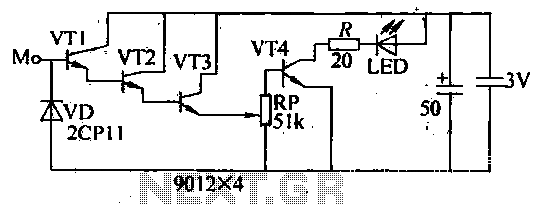
Blanket internal measurement circuit disconnection
The internal disconnection circuit for a blanket operates on the principle of induction. It includes a wire approximately 2 cm in length that senses the proximity of a charged mains power source. When the sensing wire is close to the...
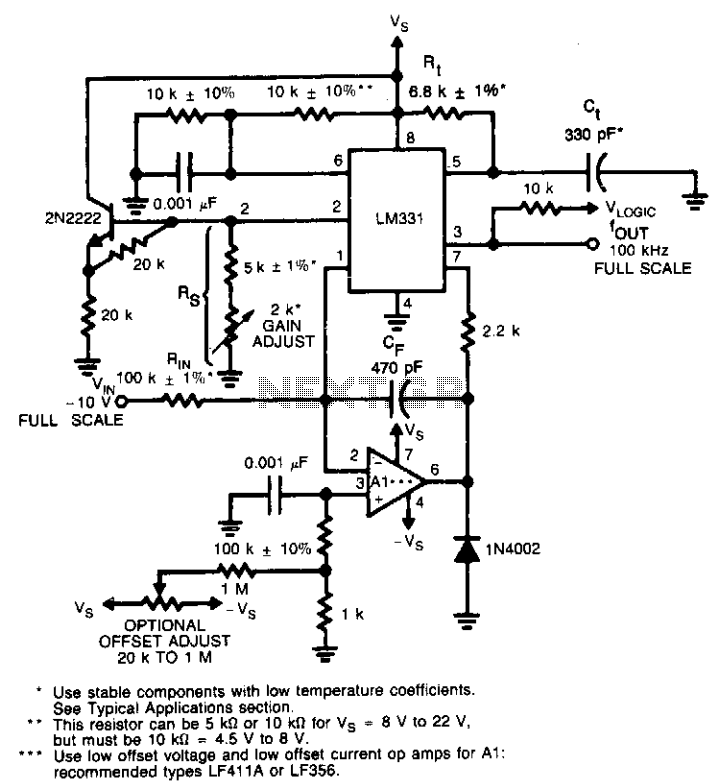
Precision voltage-to-frequency converter
This circuit utilizes a conventional operational amplifier in conjunction with a feedback capacitor (CF) to perform integration. When the output of the integrator exceeds the nominal threshold level at pin 6 of the LM131, it triggers the timing cycle. The...
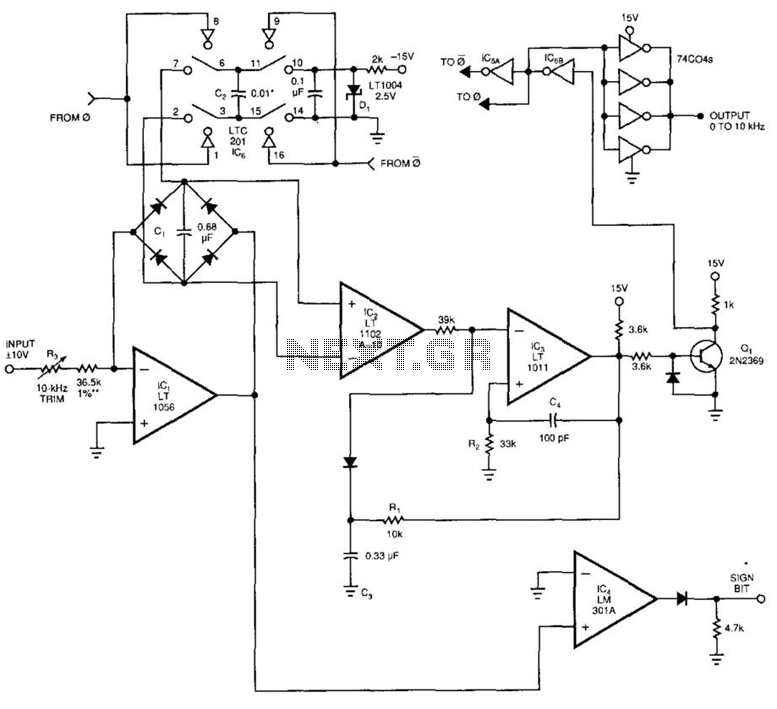
Voltage-To-Frequency Converter Ii
This voltage-to-frequency converter (VFC) accepts bipolar AC inputs. For -10 to +10 V inputs, the converter produces a proportional 0 to 10 kHz output. Linearity is 0.04%, and the temperature coefficient (TC) is approximately 50 ppm/°C. To understand the circuit,...
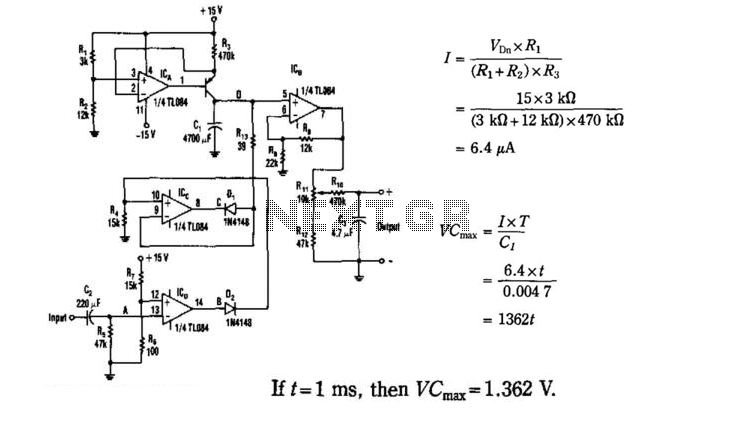
Period-To-Voltage Converter
The input signal drives the ICD. Because the positive input (V+) of the ICD is slightly offset to +0.1 V, its steady-state output will be around +13 V. This voltage is sent to the ICC through D2, which sets the...
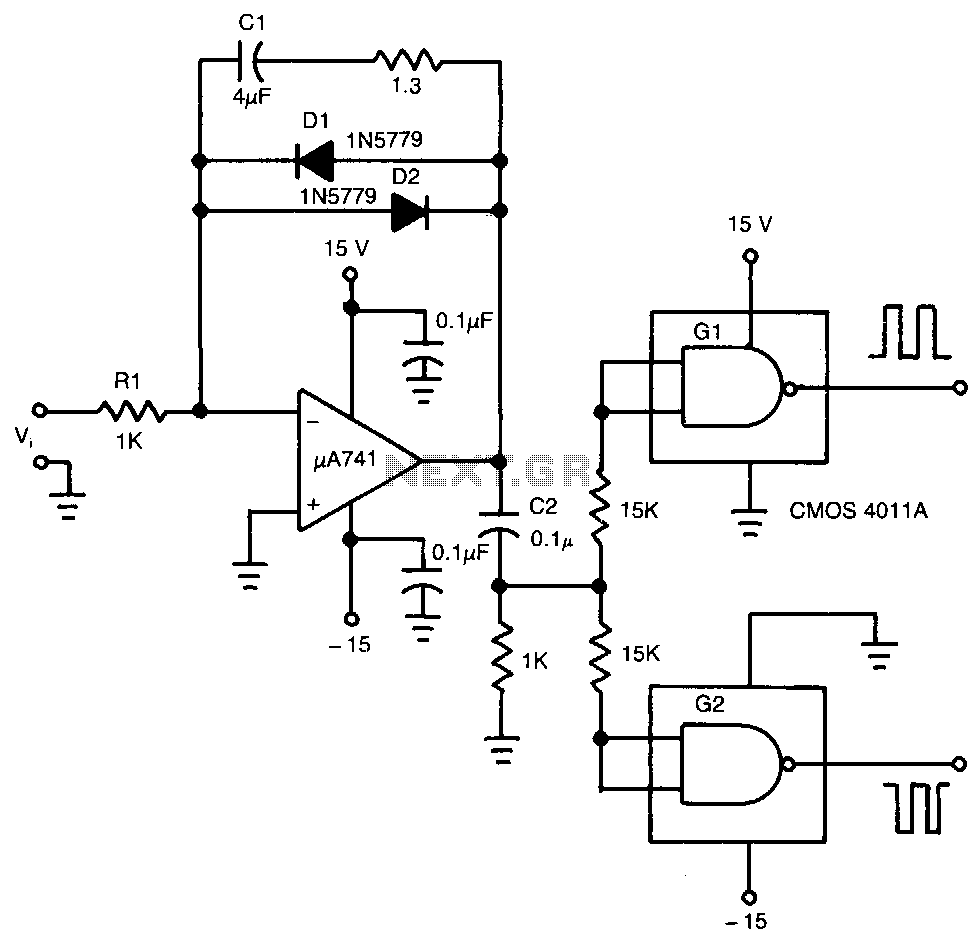
Voltage-to-frequency-converter
The input voltage, V1, causes capacitor C1 to charge, producing a ramp voltage at the output of the 741 operational amplifier. Diodes D1 and D2 are four-layer devices. When the voltage across C1 reaches the breakover voltage of either diode,...
RealView 2.0
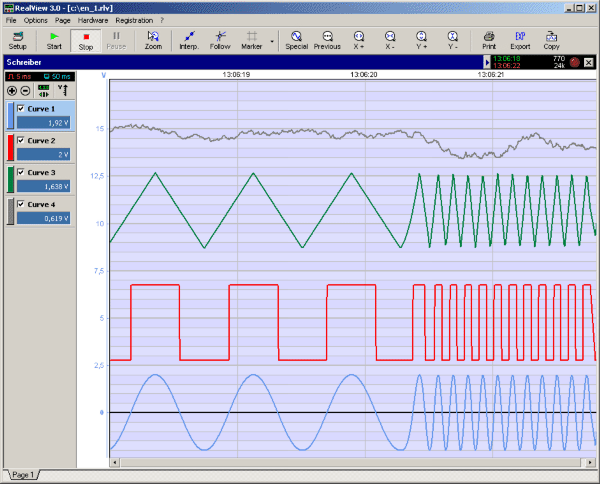
RealView is a measurement application, which records and plots measured values from analogue hardware devices in real-time. Several curves can be plotted into a single diagram. Several diagrams can be arranged on one or more pages if necessary. Plot options...
1Mhz-voltage-to-frequency-converter
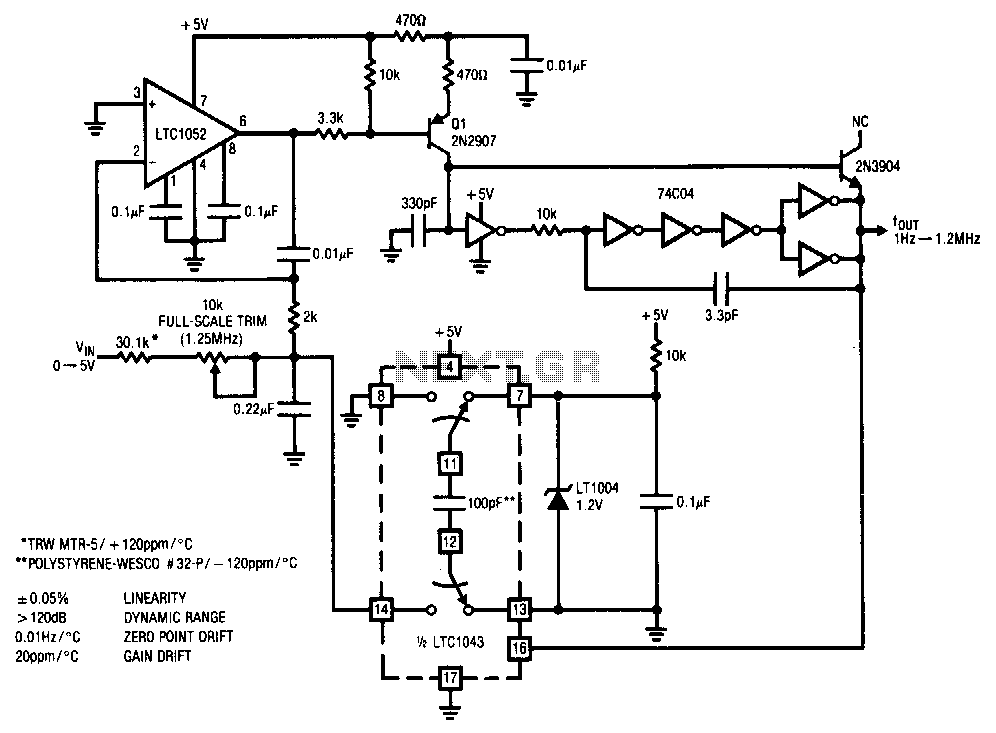
This stabilized voltage-to-frequency converter operates within a range of 1 Hz to 1.25 MHz, featuring a linearity of 0.05% and a typical temperature coefficient of 20 ppm/°C. The circuit is powered by a single 5-V supply. It employs a charge...