


Digital Thermometer using ATmegsa8 and LM335
#ATmega8
#LM335
#temperature sensor
#digital display
#microcontroller
#embedded systems
#sensor interface
#analog to digital conversion
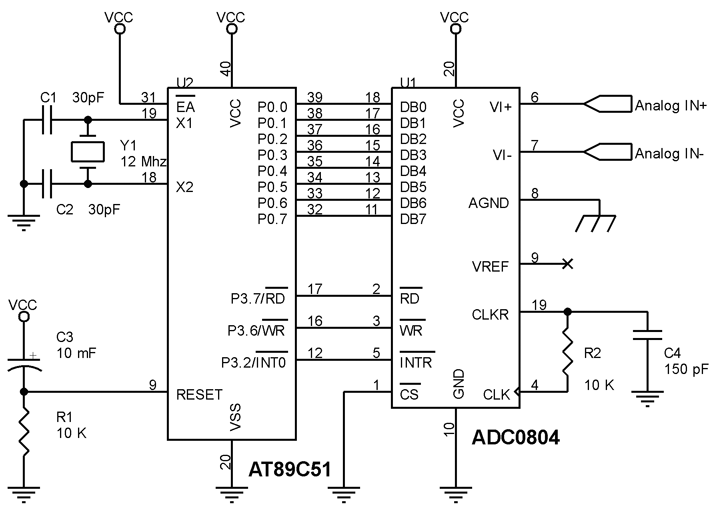
Description: A digital thermometer is being planned for construction using an ATmega8 microcontroller and an LM335 temperature sensor. Guidance is sought on how to proceed with the project, particularly concerning the display components.
The digital thermometer circuit utilizes the ATmega8 microcontroller, which serves as the central processing unit, and the LM335 temperature sensor, which provides an analog voltage output proportional to the temperature. The LM335 operates within a range of -40°C to +100°C, outputting 10 mV per degree Celsius.
To design the circuit, the following components are required:
1. **ATmega8 Microcontroller**: This 8-bit microcontroller features multiple analog-to-digital converters (ADCs) that can convert the analog voltage from the LM335 into a digital value. The microcontroller should be programmed to read the ADC values and convert them into temperature readings.
2. **LM335 Temperature Sensor**: This device will be connected to the microcontroller's ADC input. It is essential to ensure proper power supply and grounding to minimize noise in the readings.
3. **Display Module**: A suitable display, such as a 16x2 LCD or a seven-segment display, should be chosen to show the temperature readings. The microcontroller will control this display to present the processed temperature data.
4. **Resistors and Capacitors**: Additional passive components may be needed to filter the output from the LM335 and stabilize the power supply to the microcontroller.
5. **Power Supply**: A stable power source, typically 5V, is required to power the microcontroller and the sensor.
The circuit design should include connections from the LM335 to the ADC input of the ATmega8, a power supply circuit, and the interfacing of the display module. The microcontroller will need to be programmed in C or Assembly language to read the ADC values, convert them to temperature, and update the display accordingly.
In summary, the design of the digital thermometer involves selecting appropriate components, establishing connections, and programming the microcontroller to interpret temperature data and control the display output effectively.hello , I am planningto build Digital Thermometer using ATmegsa8 and LM335. Can Somebody tell me how should i go about ?? I want to display it on..
The digital thermometer circuit utilizes the ATmega8 microcontroller, which serves as the central processing unit, and the LM335 temperature sensor, which provides an analog voltage output proportional to the temperature. The LM335 operates within a range of -40°C to +100°C, outputting 10 mV per degree Celsius.
To design the circuit, the following components are required:
1. **ATmega8 Microcontroller**: This 8-bit microcontroller features multiple analog-to-digital converters (ADCs) that can convert the analog voltage from the LM335 into a digital value. The microcontroller should be programmed to read the ADC values and convert them into temperature readings.
2. **LM335 Temperature Sensor**: This device will be connected to the microcontroller's ADC input. It is essential to ensure proper power supply and grounding to minimize noise in the readings.
3. **Display Module**: A suitable display, such as a 16x2 LCD or a seven-segment display, should be chosen to show the temperature readings. The microcontroller will control this display to present the processed temperature data.
4. **Resistors and Capacitors**: Additional passive components may be needed to filter the output from the LM335 and stabilize the power supply to the microcontroller.
5. **Power Supply**: A stable power source, typically 5V, is required to power the microcontroller and the sensor.
The circuit design should include connections from the LM335 to the ADC input of the ATmega8, a power supply circuit, and the interfacing of the display module. The microcontroller will need to be programmed in C or Assembly language to read the ADC values, convert them to temperature, and update the display accordingly.
In summary, the design of the digital thermometer involves selecting appropriate components, establishing connections, and programming the microcontroller to interpret temperature data and control the display output effectively.hello , I am planningto build Digital Thermometer using ATmegsa8 and LM335. Can Somebody tell me how should i go about ?? I want to display it on..
R/C-Plane altitude recorder
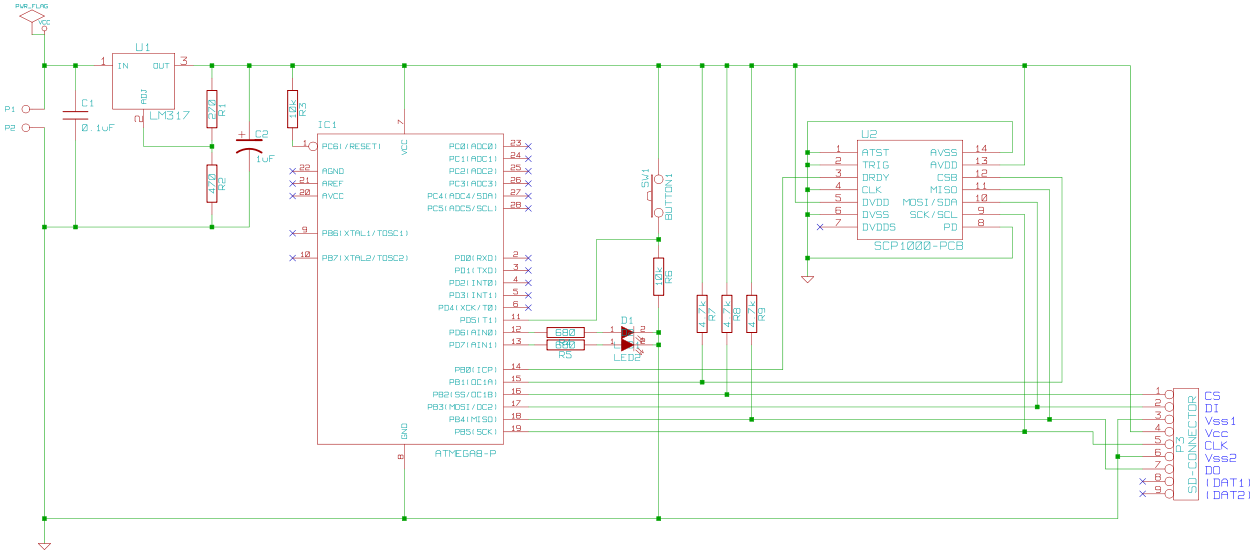
This circuit is designed to record the altitude of a remote-controlled (R/C) plane. The recorded data is stored on an SD card. It utilizes an ATmega8 microcontroller and a SCP1000 chip to measure temperature and, more importantly, atmospheric pressure. Users...
Automatic Switch Project
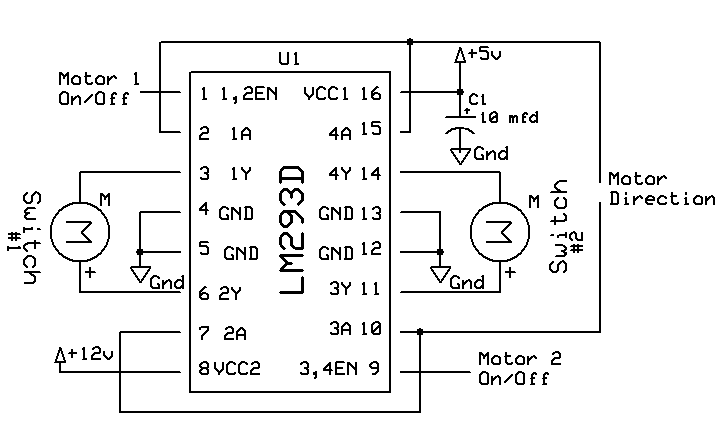
Model railroad turnouts, often referred to as switches, can be controlled in various ways. The simplest method is manual control, operated by hand. Remote activation is typically achieved through pneumatic (air) or electrical means. The project discussed in these articles...
doorbel
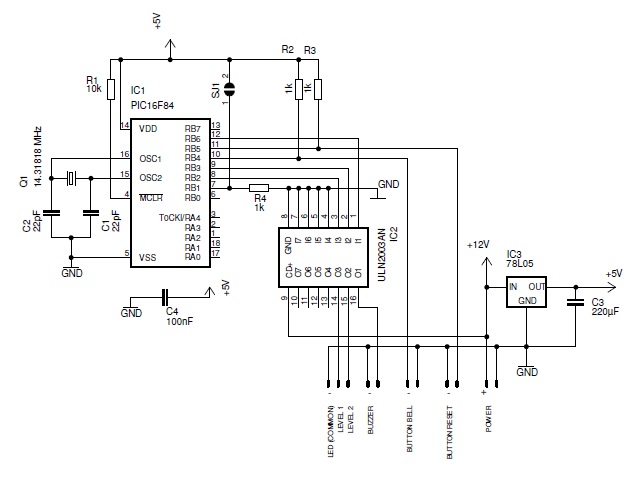
This smart doorbell system is designed for use in industrial environments. It is microcontroller-based and controls a horn and a flashlight.
The smart doorbell system utilizes a microcontroller to manage its operations, making it suitable for industrial applications where reliability and...
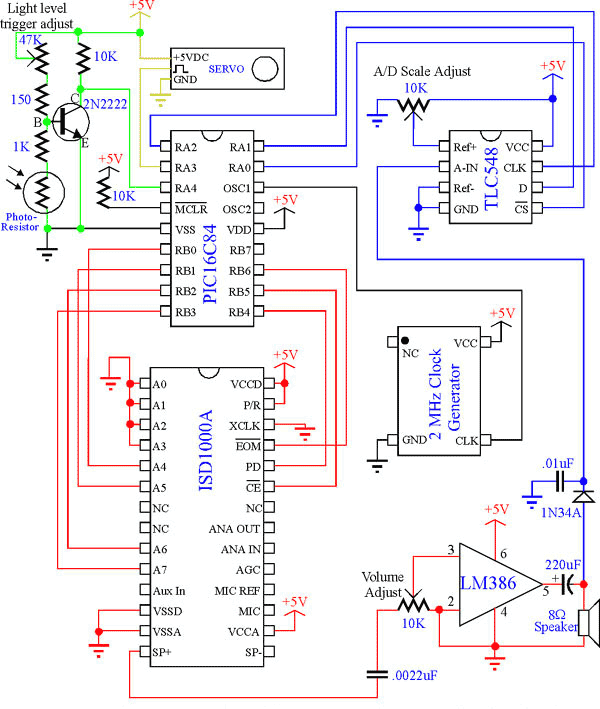
Talking Yoda head
The talking Yoda head consists of a Yoda mask and a microcontroller system to achieve the desired operation/effect. The basic operation of the project was specified as follows: The head was to be placed inside a closed box. Upon opening...
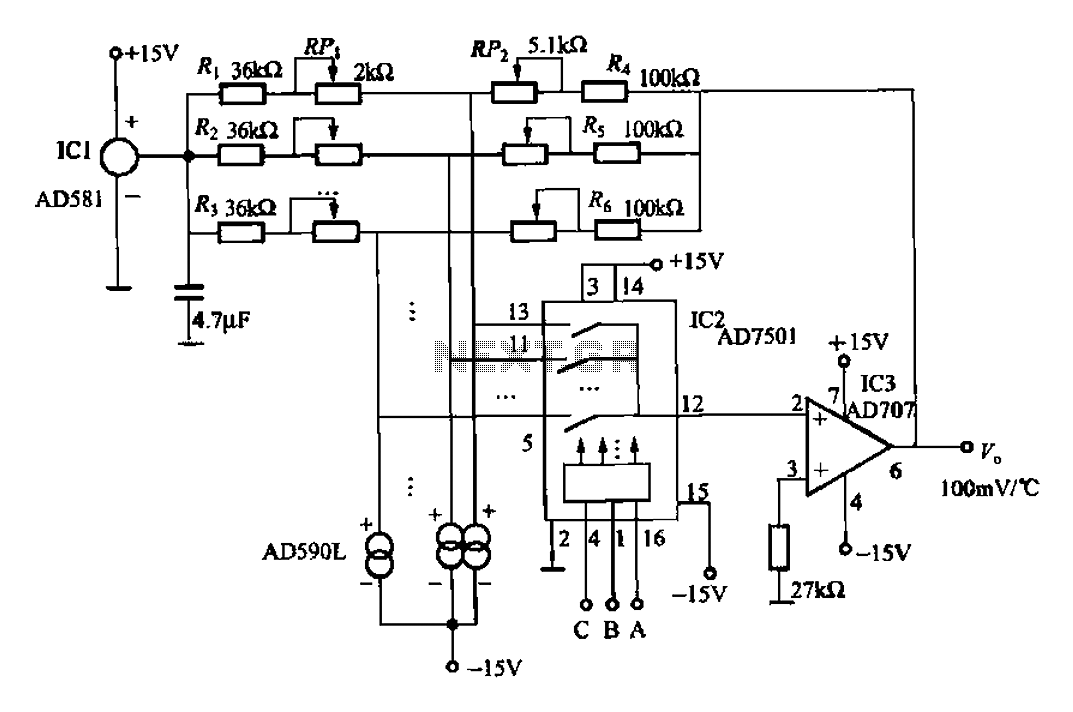
8-channel temperature detection circuit
An 8-channel temperature detection circuit capable of monitoring eight different temperature sensors. The D581 serves as a 10.00V precision reference voltage source, providing a stable reference level for the detection circuit. Resistors RPi, RP2, and R4, along with the AD590L...
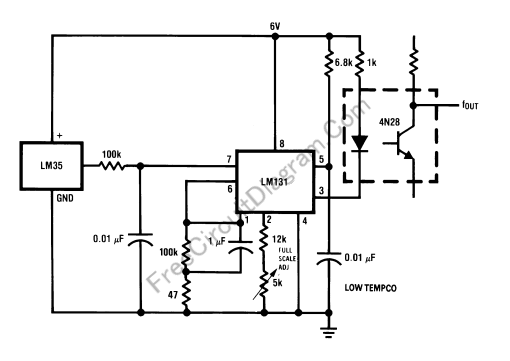
Temperature-to-Frequency Converter: Enabling Simple Telemetry
When a DC voltage signal is transmitted over long distances, it experiences attenuation with unpredictable characteristics introduced by the transmission medium, such as cable resistance that varies with temperature changes. In contrast, carrying information using frequency rather than a DC...
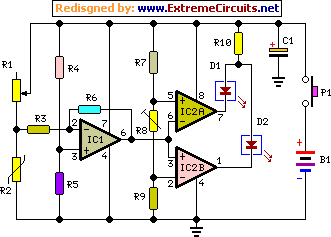
Energy Leak Detector
This sensitive circuit functions primarily as a comparator, capable of detecting minimal temperature changes relative to ambient temperature. It was originally designed to identify drafts around doors and windows that lead to energy loss, but it can be utilized in...
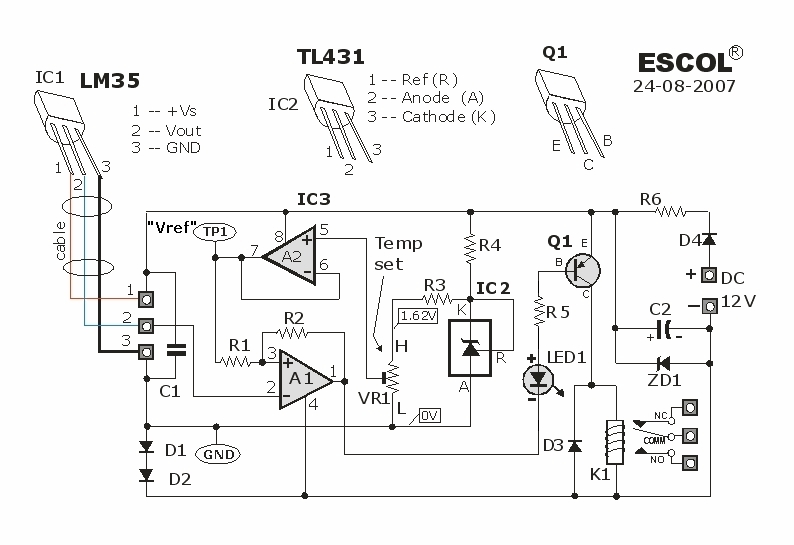
Temperature Controlled Relay Circuit
This temperature-controlled relay circuit is a simple yet highly accurate thermal control circuit that can be used in applications where automatic temperature regulation is required.
The temperature-controlled relay circuit operates by monitoring the ambient temperature using a temperature sensor, such as...
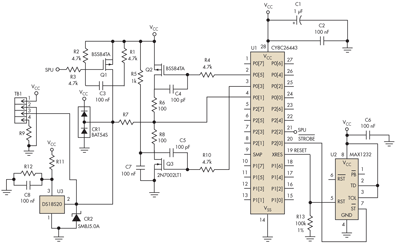
Simple Circuit Interfaces 1-Wire Temperature Sensor To A Microcontroller
Temperature indicators and temperature-based products have garnered significant interest due to their numerous applications and various possible solutions, each presenting unique advantages and disadvantages. This concept focuses on a sensor interface that delivers high accuracy while minimizing board space. The...