


Model Railroad OdometerCar
#odometer
#LCD display
#distance measurement
#model railroad
#counter
#sensor
#precision
#freight car wheel
#revolution counter
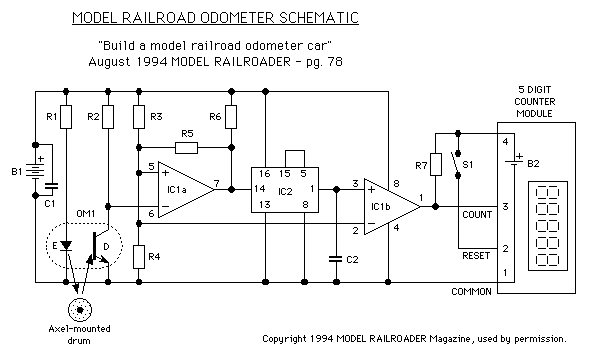
Description: The Car shows the distance a train travels on a 5 digit LCD display. The distance is indicated down to 1/100th of a mile (about the length of a 50 foot car) with an accuracy of approximately plus 2 percent using a standard 33 inch freight car wheel. Simply stated, the Odometer Car counts the number of revolutions of one of the axles, divides it by six and displays the result on the counter module. More: The magazine article lists the TIL 139 as the part number for the emitter detector module but the ECG 3104 would be a better choice as it is much smaller and would be easier to mount using a small section of printed circuit board. The ECG 3104 will be eas
The described system utilizes a five-digit LCD display to provide real-time distance measurements for a train, specifically calibrated to show distances down to 1/100th of a mile. This precision is particularly useful for applications requiring accurate tracking of distances, such as in railway operations where even minor discrepancies can lead to significant operational inefficiencies.
The fundamental operating principle of the Odometer Car involves counting the revolutions of one of the train's axles. This is achieved through a sensor module that detects the rotation of the axle. The system divides the total number of revolutions by six, which correlates to the train's wheel diameter and gear ratio, thereby converting the mechanical motion into a distance measurement. The calculated distance is then displayed on the LCD, allowing for easy reading and monitoring by the operator.
For the emitter-detector module, two components are mentioned: the TIL 139 and the ECG 3104. The TIL 139 is a standard choice, but the ECG 3104 is recommended due to its smaller size, which facilitates easier integration onto a printed circuit board (PCB). The reduced footprint of the ECG 3104 not only simplifies the mounting process but also enhances the overall design by minimizing space requirements and potentially reducing the weight of the assembly.
In terms of circuit design, the system would typically include a microcontroller that interfaces with the sensor module to process the input from the axle rotation. The microcontroller would execute the necessary calculations to convert revolutions into distance and manage the output to the LCD display. Additional components might include resistors, capacitors, and possibly operational amplifiers to ensure signal integrity and stability.
Power supply considerations must also be accounted for, ensuring that the system operates efficiently within the voltage and current ratings of the components used. This could involve the use of voltage regulators or battery management systems if a portable power source is employed.
Overall, the combination of a precise distance measurement system, an efficient processing unit, and a user-friendly display creates a comprehensive solution for monitoring train travel distances accurately.The Car shows the distance a train travels on a 5 digit LCD display. The distance is indicated down to 1/100th of a mile (about the length of a 50 foot car) with an accuracy of approximately plus 2 percent using a standard 33 inch freight car wheel. Simply stated, the Odometer Car counts the number of revolutions of one of the axles, divides it by six and displays the result on the counter module.
The magazine article lists the TIL 139 as the part number for the emitter detector module but the ECG 3104 would be a better choice as it is much smaller and would be easier to mount using a small section of printed circuit board. The ECG 3104 will be eas
The described system utilizes a five-digit LCD display to provide real-time distance measurements for a train, specifically calibrated to show distances down to 1/100th of a mile. This precision is particularly useful for applications requiring accurate tracking of distances, such as in railway operations where even minor discrepancies can lead to significant operational inefficiencies.
The fundamental operating principle of the Odometer Car involves counting the revolutions of one of the train's axles. This is achieved through a sensor module that detects the rotation of the axle. The system divides the total number of revolutions by six, which correlates to the train's wheel diameter and gear ratio, thereby converting the mechanical motion into a distance measurement. The calculated distance is then displayed on the LCD, allowing for easy reading and monitoring by the operator.
For the emitter-detector module, two components are mentioned: the TIL 139 and the ECG 3104. The TIL 139 is a standard choice, but the ECG 3104 is recommended due to its smaller size, which facilitates easier integration onto a printed circuit board (PCB). The reduced footprint of the ECG 3104 not only simplifies the mounting process but also enhances the overall design by minimizing space requirements and potentially reducing the weight of the assembly.
In terms of circuit design, the system would typically include a microcontroller that interfaces with the sensor module to process the input from the axle rotation. The microcontroller would execute the necessary calculations to convert revolutions into distance and manage the output to the LCD display. Additional components might include resistors, capacitors, and possibly operational amplifiers to ensure signal integrity and stability.
Power supply considerations must also be accounted for, ensuring that the system operates efficiently within the voltage and current ratings of the components used. This could involve the use of voltage regulators or battery management systems if a portable power source is employed.
Overall, the combination of a precise distance measurement system, an efficient processing unit, and a user-friendly display creates a comprehensive solution for monitoring train travel distances accurately.The Car shows the distance a train travels on a 5 digit LCD display. The distance is indicated down to 1/100th of a mile (about the length of a 50 foot car) with an accuracy of approximately plus 2 percent using a standard 33 inch freight car wheel. Simply stated, the Odometer Car counts the number of revolutions of one of the axles, divides it by six and displays the result on the counter module.
The magazine article lists the TIL 139 as the part number for the emitter detector module but the ECG 3104 would be a better choice as it is much smaller and would be easier to mount using a small section of printed circuit board. The ECG 3104 will be eas
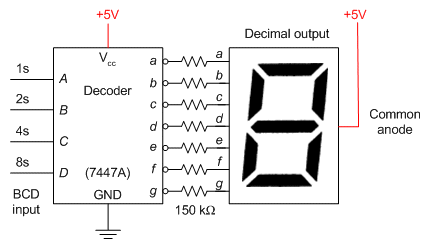
Debounced Counter Made From Off-The-Shelf Chips
The true utility of the SR latch is evident during transitions of the input switch. Assume that the input switch is of the break-before-make type and starts in the up position. When the switch is up, the input values are...
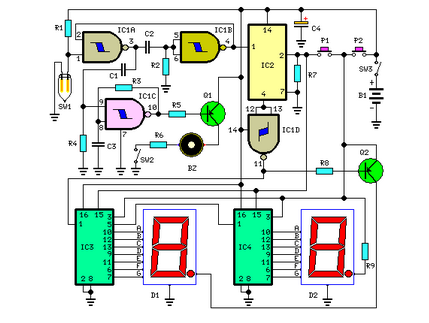
Digital Step-Km Counter Circuit Schematic
This circuit measures the distance covered during a walk. The hardware is housed in a small box that can be placed in a pocket, and the display is designed as follows: the leftmost display D2 (the most significant digit) indicates...
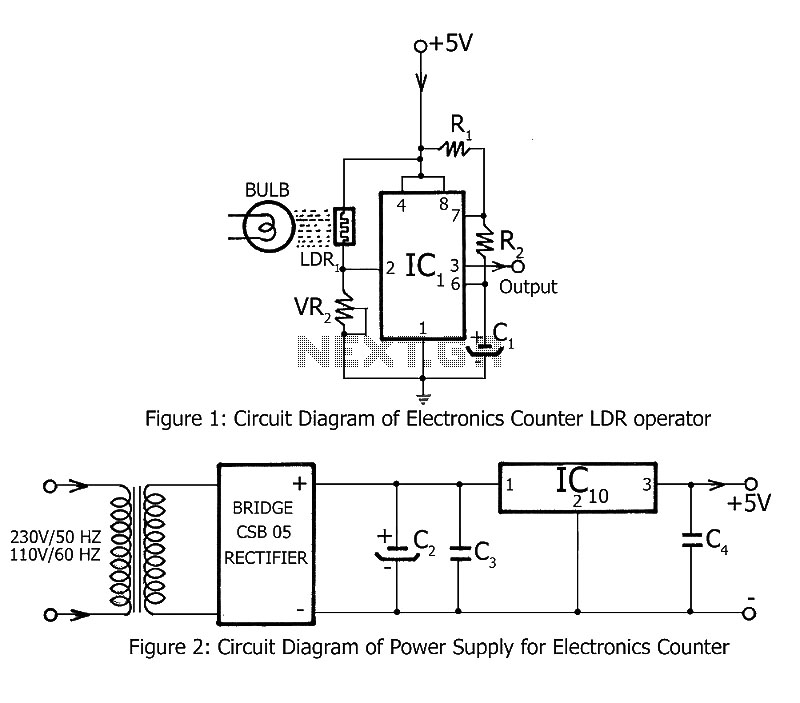
Electronic counter
Simple counting can be performed by anyone, but counting over large intervals can be tedious and prone to errors. A previously published project, the Digital Counter, serves as a foundation for this electronics counter, which is the second project in...
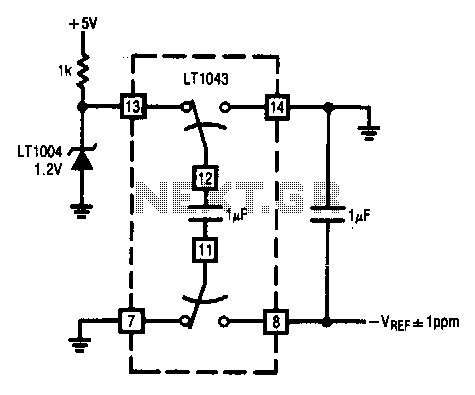
Precision-voltage-inverter
This circuit enables the inversion of a reference signal with an accuracy of 1 ppm. It features high input impedance and does not require any trimming.
The described circuit is designed to invert a reference voltage signal while maintaining a high...
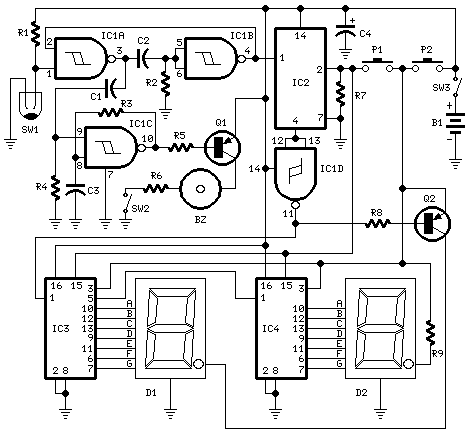
Digital Step-Km Counter
This circuit measures the distance covered during a walk. Hardware is located in a small box slipped in pants pocket and the display is conceived in the following manner: the leftmost display D2 (the most significant digit) shows 0 to...
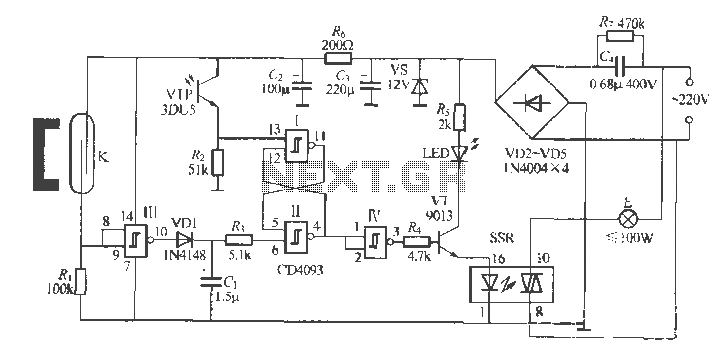
Gate automatic lamp circuit
The circuit utilizes multiple integrated circuits to form an automatic lighting device that is activated by door and window sensors. It includes CD4093 digital integrated circuits, a relay, and a power supply circuit. The system typically remains closed when a...
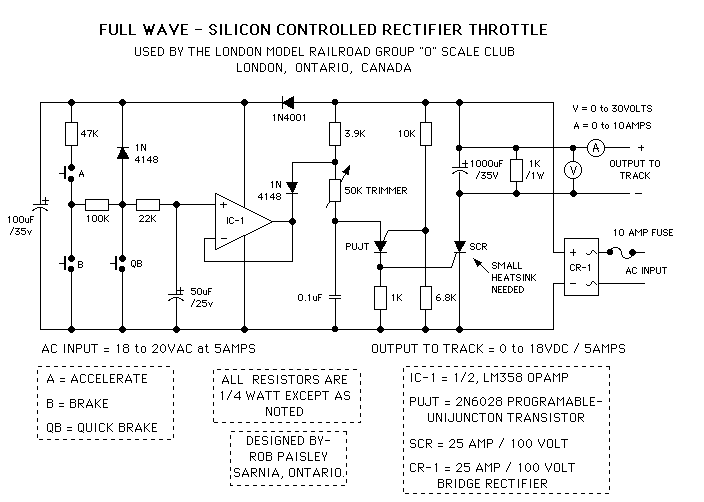
Model Railroad Group SCR Throttle
It was designed for use on a The London Model Railroad Group's large O scale layout located at London, Ontario, Canada. The prime requirements for the club throttles were that they be rugged, reliable and produce as little heat as...
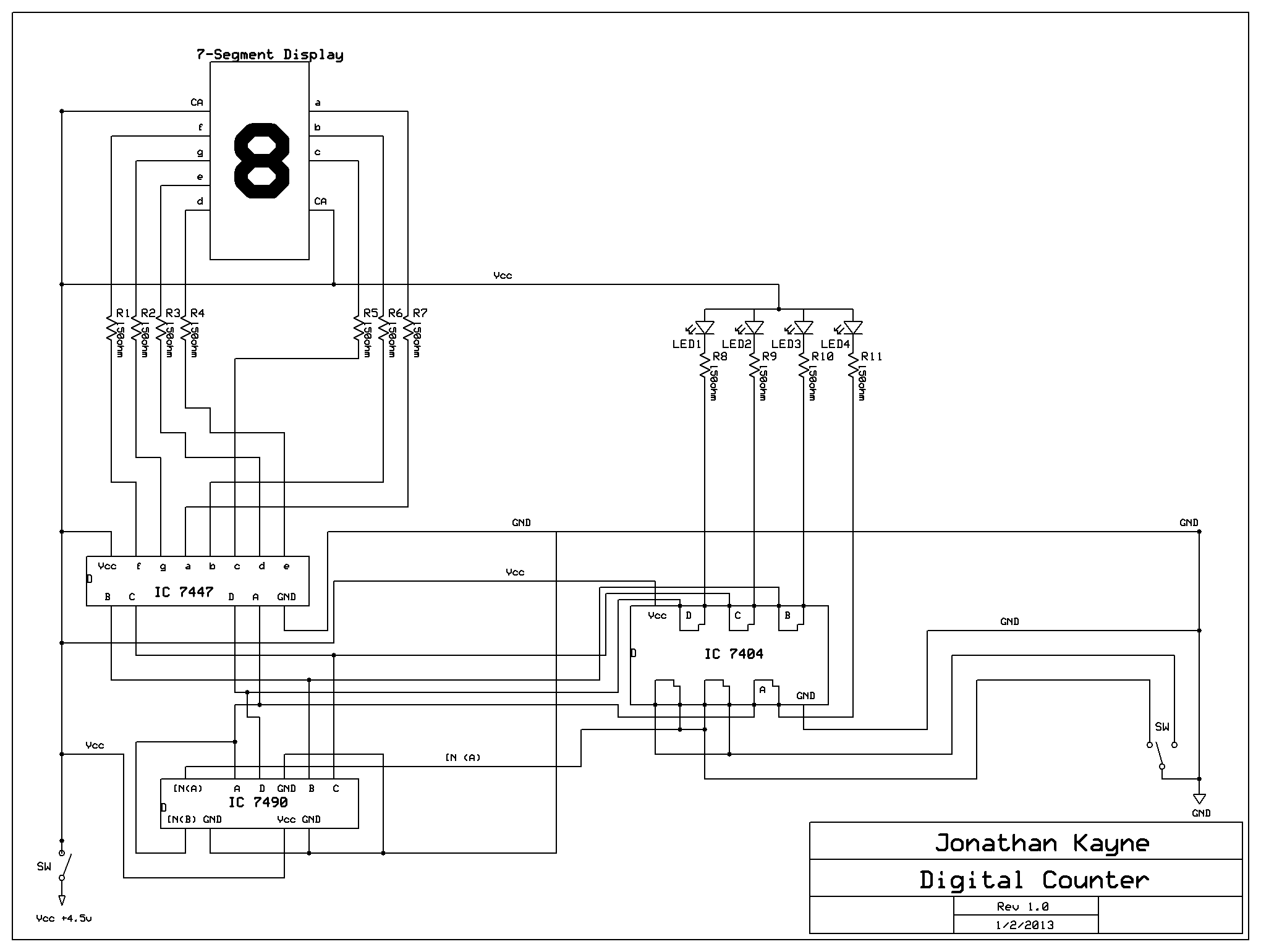
digital counter circuit
The Digital Counter Circuit is an electronic project that converts digital numbers (0-9) to binary (0-1). For those interested in understanding binary code, a PowerPoint presentation on the topic is available. Below are the parts list, schematic, and additional information...
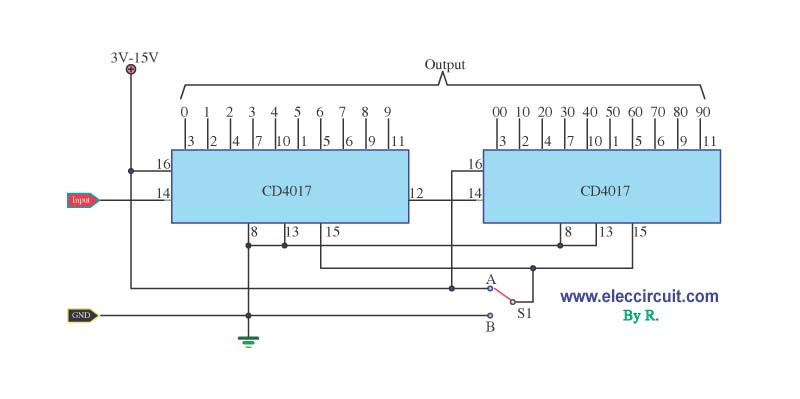
0-99 counter by IC 4017G—2
When designing a counter circuit that counts from 0 to 99, an effective approach is to utilize the IC LM4017, which is a decade counter.
The LM4017 is a CMOS decade counter capable of counting from 0 to 9, and it...