


LM1812 uses ultrasonic anti-collision circuit design
#ultrasonic
#anti-collision
#LM1812
#sensor
#distance measurement
#transmitter
#receiver
#circuit design
#automotive
#robotics
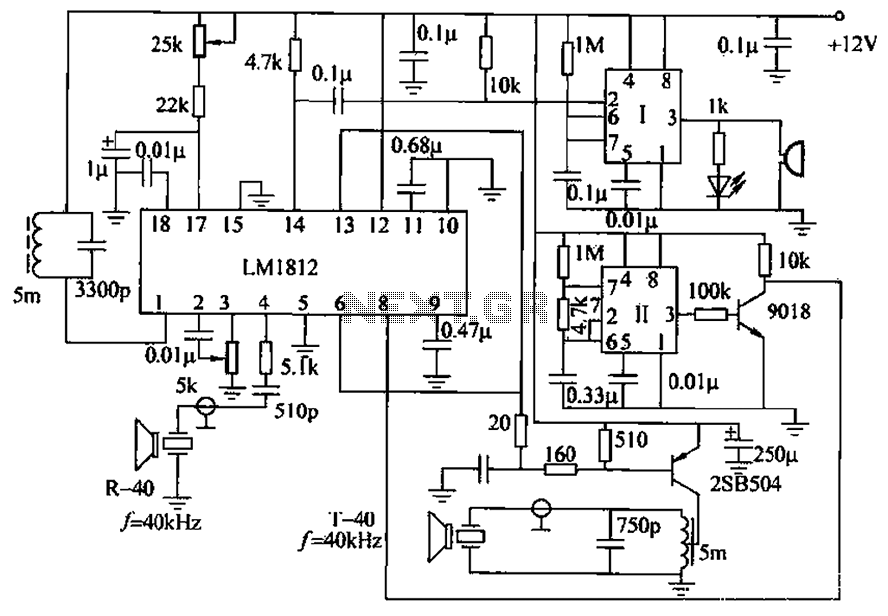
Description: The ultrasonic anti-collision circuit is designed using the LM1812 integrated circuit, which controls both the transmission and reception functions. A distance control potentiometer allows for adjustments within a range of 2 to 3 meters. The timebase circuit is constructed with a one-shot circuit that triggers an alarm when the measured distance falls below a specified threshold. When the alarm distance is reached, the input pin of the timebase circuit goes low (approximately 1/3 of Vcc), which activates the one-shot circuit and results in a high output. This output drives an LED and an electronic buzzer to signal an alert. The ultrasonic sensor used in this circuit is from the T/R-40 series, making it suitable for applications such as reverse collision prevention in vehicles when mounted at the rear. Additionally, it can serve as an anti-theft alarm system, triggering when an intruder enters the detection range of 2 to 3 meters, making it applicable for use in homes, warehouses, and financial institutions.
The ultrasonic anti-collision circuit operates on the principle of emitting ultrasonic waves and measuring the time taken for the echoes to return after bouncing off an object. The LM1812 circuit serves as the heart of this system, facilitating both the transmission of ultrasonic signals and the reception of their reflections. The circuit includes a potentiometer that allows users to set the desired detection range, typically between 2 to 3 meters, to suit specific applications.
The timebase circuit, which includes a one-shot timer, plays a crucial role in determining when to trigger the alarm. When the distance measurement indicates that an object has entered the preset alarm zone, the input pin of the timebase circuit receives a low signal, which corresponds to about 1/3 of the supply voltage (Vcc). This low signal activates the one-shot timer, causing its output pin to go high. The high output signal is then utilized to illuminate an LED and activate an electronic buzzer, providing both visual and audible alerts.
The T/R-40 series ultrasonic sensor is specifically designed for this type of application, offering reliable performance in detecting objects within the specified range. The circuit can be effectively mounted at the rear of a vehicle to prevent collisions while reversing, ensuring that the driver is alerted to any obstacles in the path. Furthermore, this circuit can be adapted for anti-theft purposes, where it can monitor entry points to a property. If an intruder approaches within the defined range, the system will trigger the alarm, enhancing security for residential, commercial, and financial environments. This versatility makes the ultrasonic anti-collision circuit a valuable tool in various safety and security applications. Circuit principle : ultrasonic anti-collision circuit is shown, when the LM1812 circuit by circuit group to control the transmission and reception of LM1812 (LM1812, ie send an d receive). Available Skfl distance control potentiometer to adjust, and can be controlled 2-3m. Timebase circuit consisting of one-shot circuit, when reaching the alarm distance, time-based circuit pin input low (equivalent to 1/3Vcc) 1, the one-shot circuit is triggered, pin output high. LED lights while electronic buzzer alarm. This circuit ultrasonic transmitting/receiving sensor is T/R-40 series, the circuit can be used for anti-collision car when reversing alarm, installed in the rear of the car can be.
Can also be used for anti-theft alarm, the thief entered the range of 2 ~ 3m, began to alarm for home, warehouse, finance and other departments.
The ultrasonic anti-collision circuit operates on the principle of emitting ultrasonic waves and measuring the time taken for the echoes to return after bouncing off an object. The LM1812 circuit serves as the heart of this system, facilitating both the transmission of ultrasonic signals and the reception of their reflections. The circuit includes a potentiometer that allows users to set the desired detection range, typically between 2 to 3 meters, to suit specific applications.
The timebase circuit, which includes a one-shot timer, plays a crucial role in determining when to trigger the alarm. When the distance measurement indicates that an object has entered the preset alarm zone, the input pin of the timebase circuit receives a low signal, which corresponds to about 1/3 of the supply voltage (Vcc). This low signal activates the one-shot timer, causing its output pin to go high. The high output signal is then utilized to illuminate an LED and activate an electronic buzzer, providing both visual and audible alerts.
The T/R-40 series ultrasonic sensor is specifically designed for this type of application, offering reliable performance in detecting objects within the specified range. The circuit can be effectively mounted at the rear of a vehicle to prevent collisions while reversing, ensuring that the driver is alerted to any obstacles in the path. Furthermore, this circuit can be adapted for anti-theft purposes, where it can monitor entry points to a property. If an intruder approaches within the defined range, the system will trigger the alarm, enhancing security for residential, commercial, and financial environments. This versatility makes the ultrasonic anti-collision circuit a valuable tool in various safety and security applications. Circuit principle : ultrasonic anti-collision circuit is shown, when the LM1812 circuit by circuit group to control the transmission and reception of LM1812 (LM1812, ie send an d receive). Available Skfl distance control potentiometer to adjust, and can be controlled 2-3m. Timebase circuit consisting of one-shot circuit, when reaching the alarm distance, time-based circuit pin input low (equivalent to 1/3Vcc) 1, the one-shot circuit is triggered, pin output high. LED lights while electronic buzzer alarm. This circuit ultrasonic transmitting/receiving sensor is T/R-40 series, the circuit can be used for anti-collision car when reversing alarm, installed in the rear of the car can be.
Can also be used for anti-theft alarm, the thief entered the range of 2 ~ 3m, began to alarm for home, warehouse, finance and other departments.
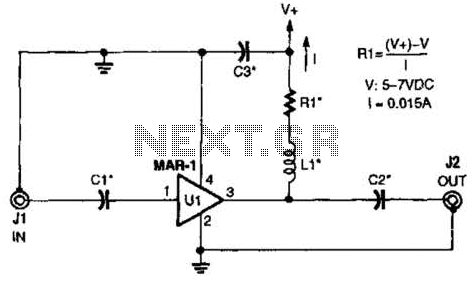
Receiver/Scanner Preamp Circuit
The low-cost Mini-Circuits MAR-X series of chips provides a significant advantage for RF builders, featuring inherent 50-ohm input and output impedances essential for RF systems. An MAR-1-based receiver/scanner preamplifier is illustrated. Capacitors Ci and C2 are chip capacitors, with values...
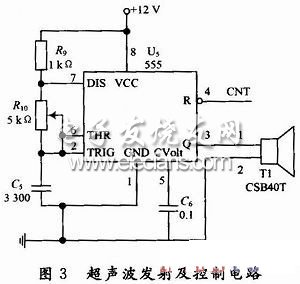
Contactless air range finding method on the basis of P89LPC932
The defect that cannot be overcome exists in certain circumstances with traditional distance measuring methods. For instance, the measurement of liquid levels is a type of range measurement where traditional electrode methods involve the placement of electrodes to measure liquid...
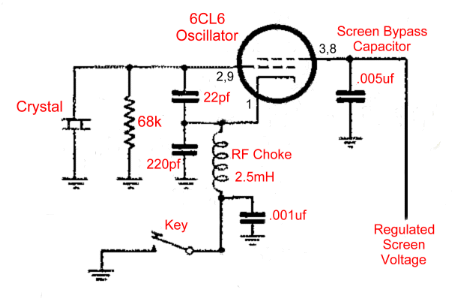
The AA8V/W8EXI 6CL6 One-Tube Transmitter
The operation of the 6CL6 transmitter is quite sophisticated despite the simple appearance of the circuit. The core of the circuit is the electron-coupled crystal oscillator. This circuit integrates the functions of an oscillator and amplifier into a single tube,...
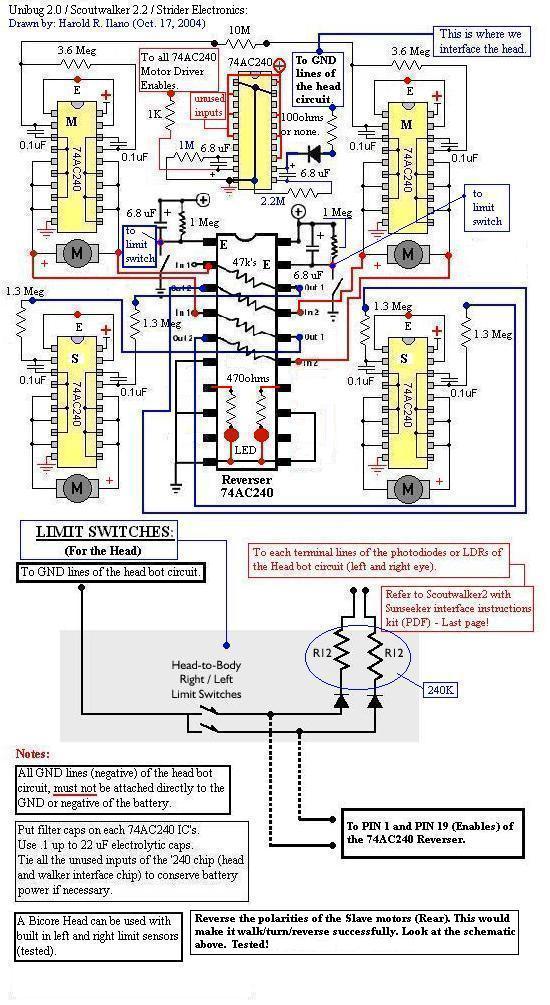
Robotics Page
This is an attempt to create a simple and compact photovore. Although it may not be visually appealing, it serves as a good starting point for beginners. It is a personal version of the Dozer photovore. The latest robot built...
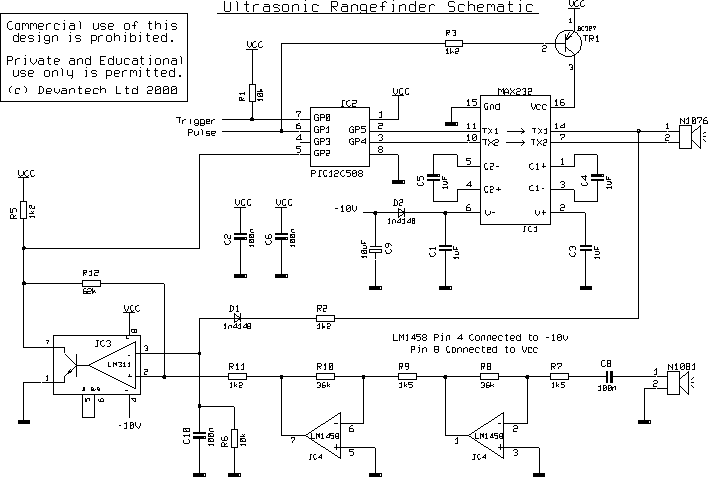
Ultrasonic SensorCircuit Based On The MAX232 IC
The following circuit illustrates an Ultrasonic Sensor Circuit Diagram. This circuit is based on the MAX232 IC. Features include a quiescent current of 150mA.
The Ultrasonic Sensor Circuit utilizes the MAX232 integrated circuit, which is primarily designed for converting signals from...
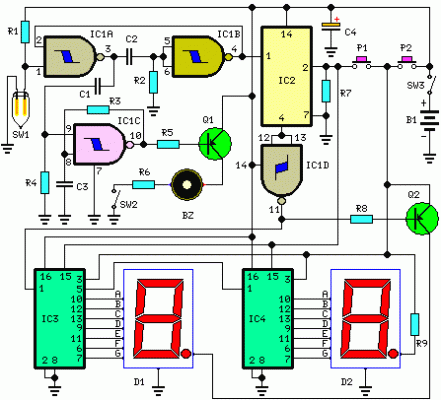
how to build digital step km counter
This circuit measures the distance covered during a walk. The hardware is housed in a small box that fits into a pocket, and the display operates as follows: the leftmost display, D2 (the most significant digit), shows distances from 0...
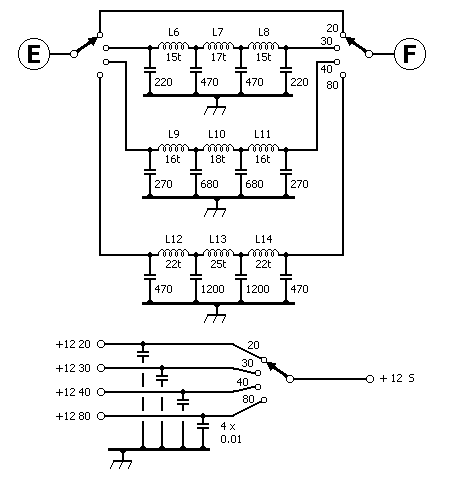
radio mf tx
There has been a longstanding interest in constructing a simple VXO transmitter, though concerns regarding the limited tuning range typically associated with VXOs on busy HF bands have been present. The capability to switch between multiple crystals and cover various...
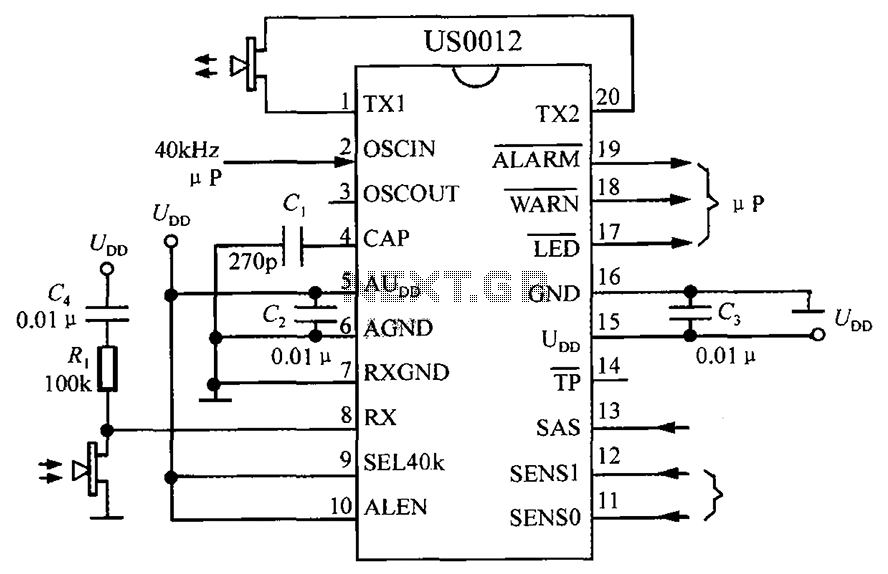
Hotel ultrasonic interference detection system based on ultrasonic probe DSP interference US0012
The circuit consists of the US0012 ultrasonic interference detection system, as illustrated in the accompanying figure. When the SEL40k termination is set to high, it selects a clock frequency of 40kHz. The US0012 module can perform several tasks: it provides...
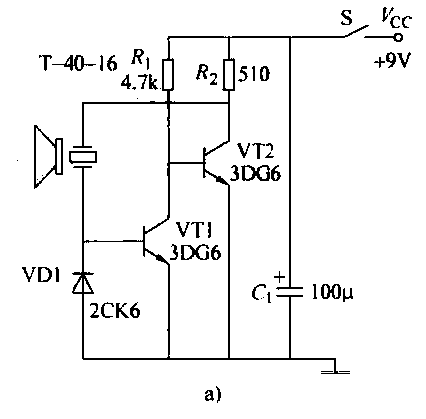
Ultrasonic transmitter circuit
The ultrasonic transmitter circuit T-40-16, along with various discrete components, functions as a feedback sensor. The transistors VT1 and VT2 create a robust positive feedback oscillator that converts an electric signal into an ultrasonic oscillation signal, with the oscillation frequency...