


Metal Detector
#metal detector
#NE602
#heterodyne detector
#sense oscillator
#inductor
#frequency change
#electronics
#detection

Description: An NE602 functions as a heterodyne detector, while Q1 serves as a sense oscillator. When L1 is brought near metal, it induces a change in inductance, resulting in a shift in the resonant frequency of L1 and C6/C7. L1 consists of 5 turns of #20 wire wound on a 9-inch diameter wood or plastic form.
The NE602 integrated circuit is designed for use in radio frequency applications, specifically as a mixer and detector. In this configuration, it operates as a heterodyne detector, which is crucial for demodulating signals in various communication systems. The heterodyne process involves mixing the incoming radio frequency signal with a local oscillator signal generated by Q1, allowing for the extraction of the desired information from the modulated carrier wave.
The inductor L1, constructed with 5 turns of #20 gauge wire on a 9-inch diameter form, plays a pivotal role in determining the resonant frequency of the circuit. The inductance of L1 can be altered when it is brought into proximity with metallic objects, which affects the overall inductive properties of the coil. This change in inductance shifts the resonant frequency of the LC circuit formed by L1 and the capacitors C6 and C7. The resonant frequency is crucial as it defines the operational bandwidth of the detector and the sensitivity to incoming signals.
Capacitors C6 and C7 are typically chosen to complement the inductance of L1, forming a tank circuit that resonates at the desired frequency. The values of these capacitors need to be selected based on the target frequency of operation, ensuring that the circuit remains responsive to the signals of interest while minimizing noise and interference.
In summary, this circuit configuration utilizing the NE602 as a heterodyne detector, along with Q1 as a sense oscillator and the adjustable inductor L1, provides a versatile platform for signal detection and processing in RF applications. The design allows for the dynamic adjustment of the resonant frequency, enhancing the circuit's adaptability to varying signal conditions. An NE602 acts as a heterodyne detector and Ql as a sense oscillator. When Ll is brought near metal, it causes a charge in lo op inductance, shifting the resonant frequency of Ll C6/C7. Ll is 5 turns #20 wire on a 9" diameter wood or plastic form.
The NE602 integrated circuit is designed for use in radio frequency applications, specifically as a mixer and detector. In this configuration, it operates as a heterodyne detector, which is crucial for demodulating signals in various communication systems. The heterodyne process involves mixing the incoming radio frequency signal with a local oscillator signal generated by Q1, allowing for the extraction of the desired information from the modulated carrier wave.
The inductor L1, constructed with 5 turns of #20 gauge wire on a 9-inch diameter form, plays a pivotal role in determining the resonant frequency of the circuit. The inductance of L1 can be altered when it is brought into proximity with metallic objects, which affects the overall inductive properties of the coil. This change in inductance shifts the resonant frequency of the LC circuit formed by L1 and the capacitors C6 and C7. The resonant frequency is crucial as it defines the operational bandwidth of the detector and the sensitivity to incoming signals.
Capacitors C6 and C7 are typically chosen to complement the inductance of L1, forming a tank circuit that resonates at the desired frequency. The values of these capacitors need to be selected based on the target frequency of operation, ensuring that the circuit remains responsive to the signals of interest while minimizing noise and interference.
In summary, this circuit configuration utilizing the NE602 as a heterodyne detector, along with Q1 as a sense oscillator and the adjustable inductor L1, provides a versatile platform for signal detection and processing in RF applications. The design allows for the dynamic adjustment of the resonant frequency, enhancing the circuit's adaptability to varying signal conditions. An NE602 acts as a heterodyne detector and Ql as a sense oscillator. When Ll is brought near metal, it causes a charge in lo op inductance, shifting the resonant frequency of Ll C6/C7. Ll is 5 turns #20 wire on a 9" diameter wood or plastic form.
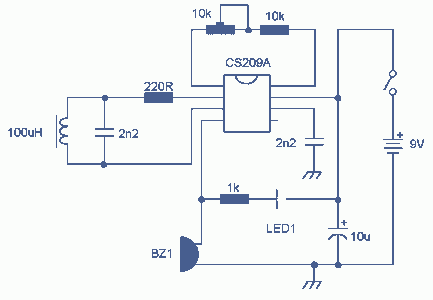
Metal detector with CS209A
A single chip metal detector with a range of a few inches. This is useful for detecting nails or screws in walls and floors, or for locating buried mains cable. The heart of the circuit is a single IC, the...
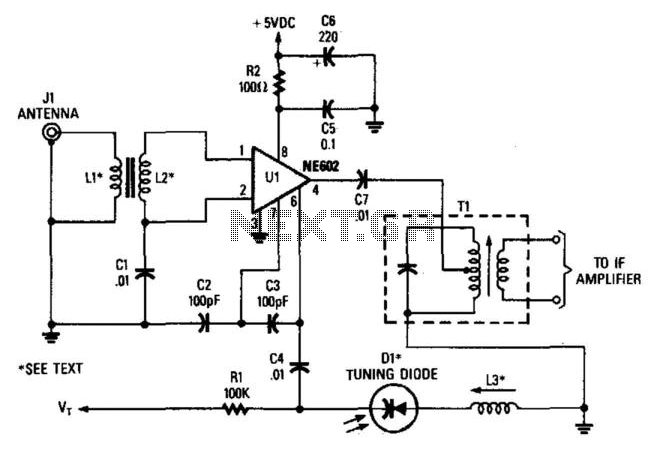
Receiver Frequency-Converter Stage
In this configuration, the NE602 serves as a frequency converter in a superheterodyne front-end setup. L1 and L2 form a broadband toroidal transformer, although a tuned transformer may also be utilized. The supply voltage ranges from +5 to +9 VDC....
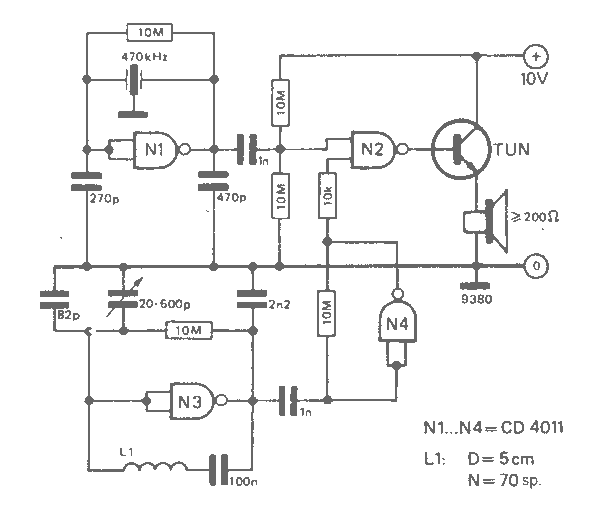
Metal detector with CD4011
The working principle of this cheap and easy to build metal detector circuit consists in mixing two equal frequencies which causes a low-frequency interference. When one of the oscillators become unstable then the frequency of the interference will be modified....
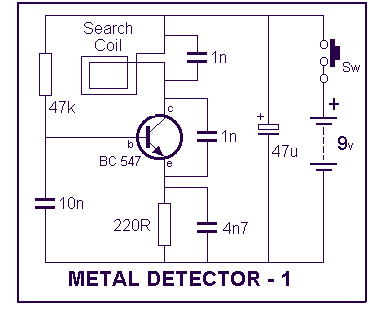
Metal detector 1
This project has not been called a GOLD detector as this name has been left for the more complex detectors that actually discriminate between gold and other metals. There is an enormous difference between detecting gold and ordinary metals (called...
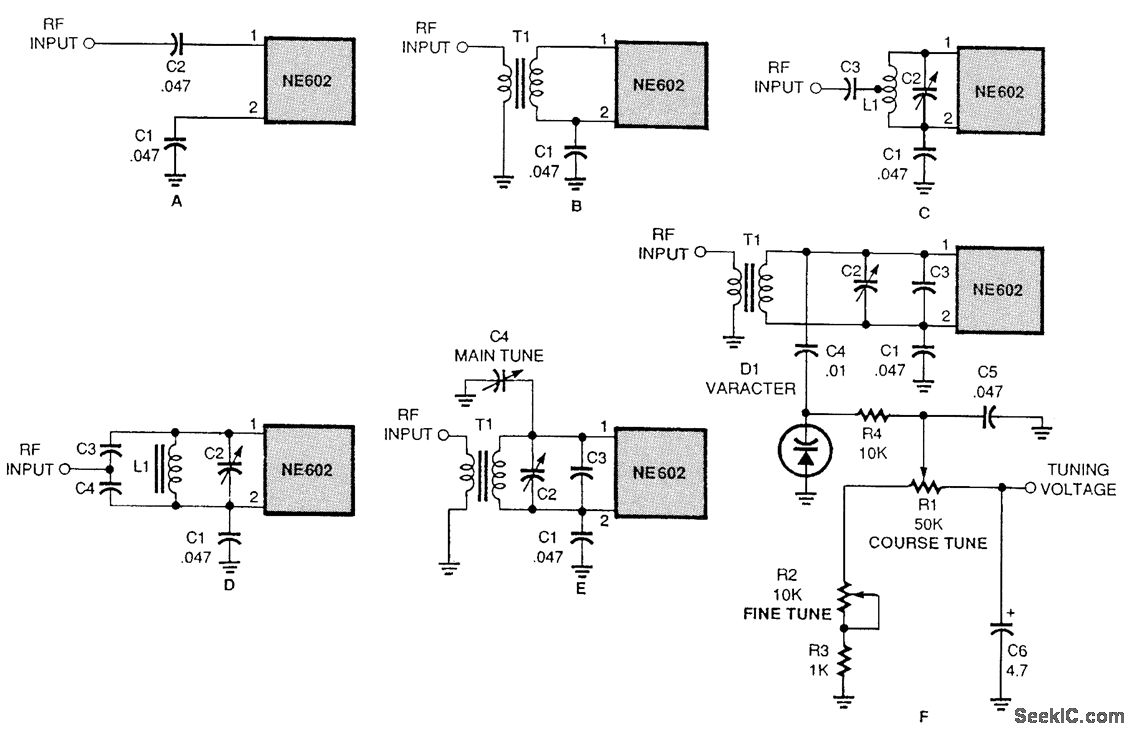
NE602 INPUT CIRCUITS
There are several methods to input a signal into the NE602. Simple untuned approaches (a and b) are viable. For tuning to a specific frequency, an LC resonant circuit with ungrounded trimmer capacitors (c and d) or grounded variable capacitors...
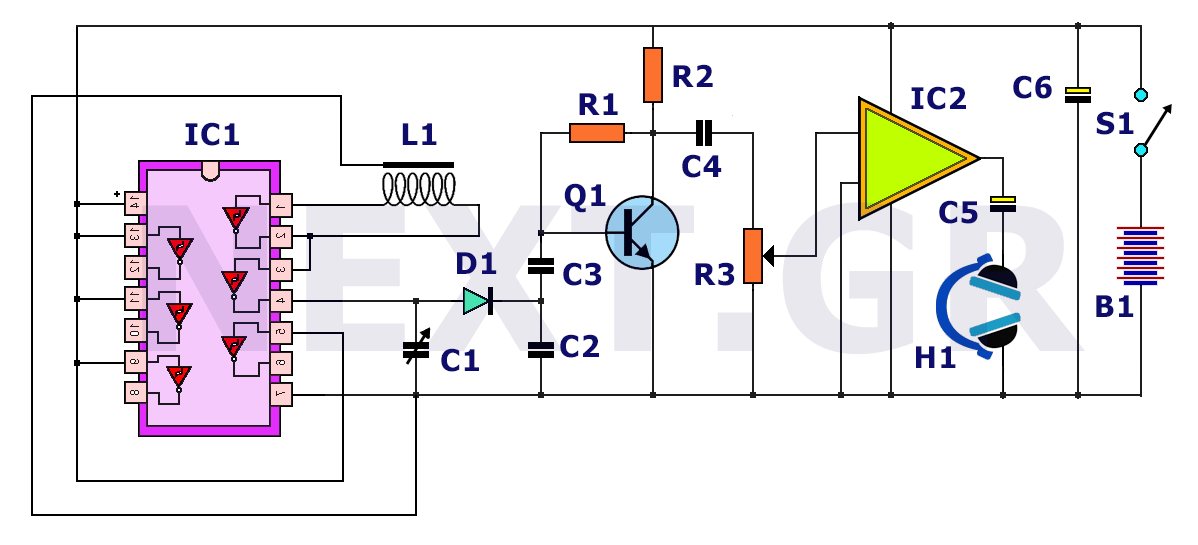
Simple deep searching metal detector circuit
The principle behind a metal detector is quite simple. This is demonstrated by the following circuit, which shows that a metal detector can be constructed quickly with a few readily available components. This metal detector circuit can detect a metal...
super simple shortwave receiver circuit
The integrated circuit Ul (an NE602 double-balanced mixer) serves as both an oscillator and a frequency mixer. Signals from the antenna input (at Jl) pass through the DC-blocking capacitor C1 to the RF-gain control resistor Rl and are then directed...
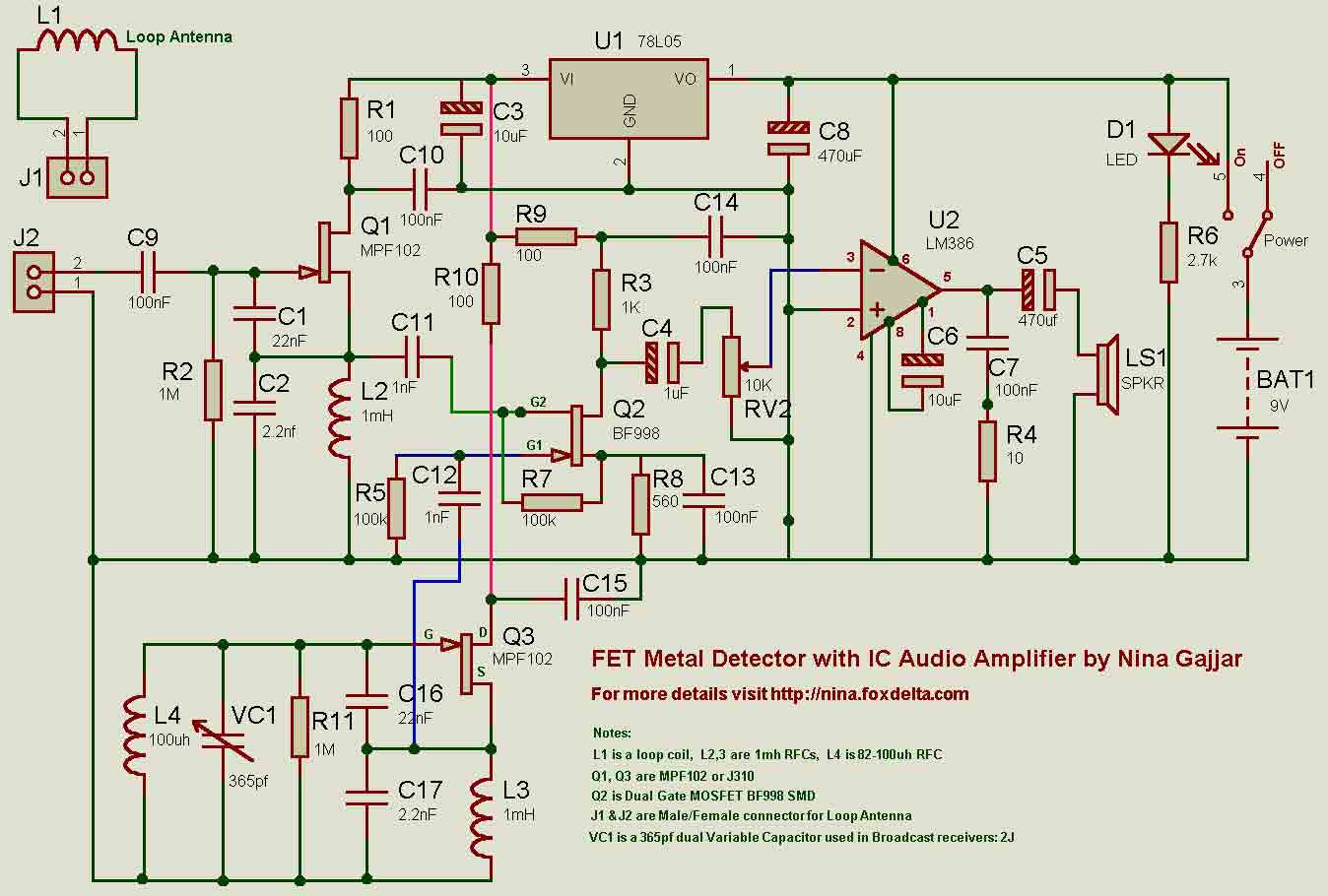
Zero beating Metal Detector
Both oscillators are built using MPF102 or J310 FETs. The Mixer is BF998 dual gate MOSFET. Audio IC amplifier is LM386 which drives a speaker. I have used a stabilized supply for two oscillators and mixer. U1, a 78L05 is...
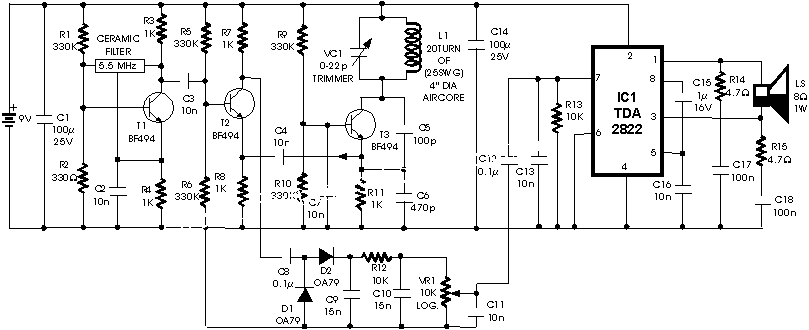
Metal Detector TDA 2822
The circuit described here is that of a metal detector. The operation of the circuit is based on superheterodyning principle which is commonly used in superhet receivers. The circuit utilises two RF oscillators. The frequencies of both oscillators are fixed...