


Whites Classic I metal detector schematic diagram
#metal detector
#hobbyist
#simple circuit
#discriminator
#coins
#jewelry
#relics
#entry-level
#on/off switch
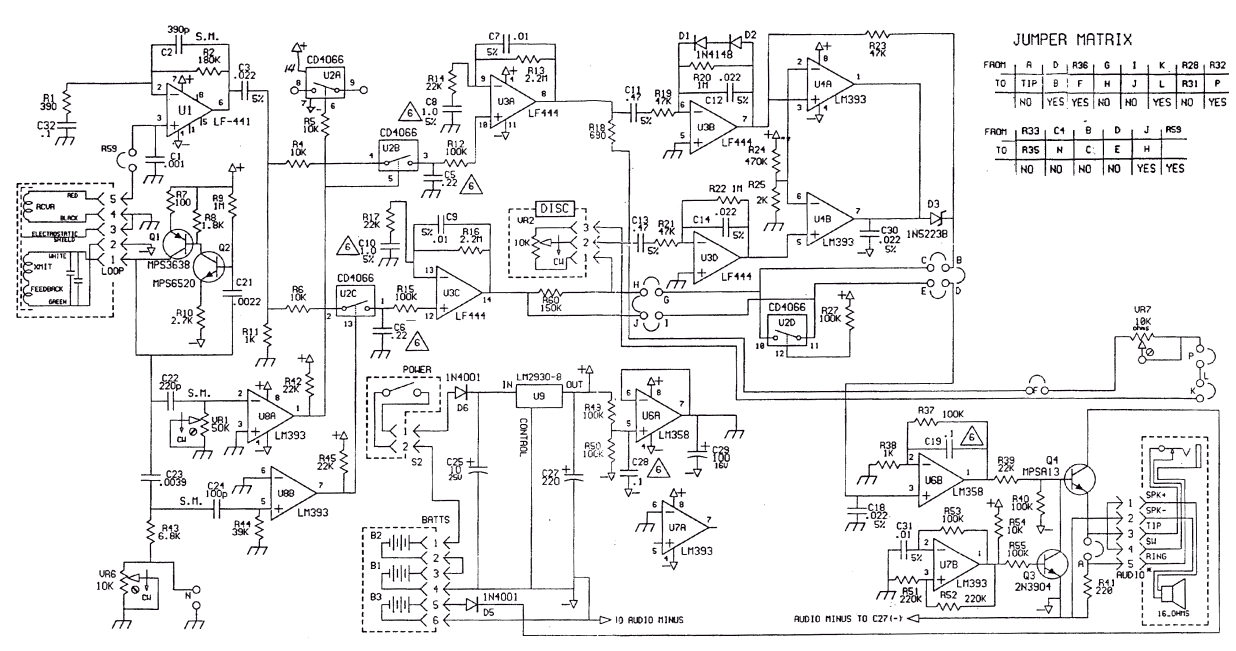
Description: The White's Classic I was a straightforward and user-friendly metal detector, making it suitable for entry-level enthusiasts. It featured a simple design with only an on/off switch and a discriminator adjustment knob. Although it lacked depth, it was capable of detecting coins, jewelry, and relics when operated by a skilled user. Despite its effectiveness in its time, newer and more advanced beginner metal detectors are now available. The detector utilized four transistors (MPS3638, MPS6520, MPSA13, and 2N3904) along with several integrated circuits: a CD4066 digital switch, three LM393 dual comparators, LF444, LF441, LM358 operational amplifiers, and an LM2930-8 3-terminal positive voltage regulator. All resistors in the circuit were rated at 1/4 watt with a tolerance of +/- 5%, and all capacitors were specified in microfarads unless otherwise noted. Capacitors greater than 1 µF were aluminum electrolytic types, while those less than 1 µF were polyester film types. Capacitors marked with a triangle were of the stacked polyester variety. Areas enclosed by dashed lines were not part of the main printed circuit board (PCB).
The White's Classic I metal detector is designed as a basic yet effective tool for novice metal detecting enthusiasts. Its simplicity is a key feature, allowing users to quickly learn the fundamentals of metal detection without the complexities found in more advanced models. The operational framework is built around a minimalistic interface, which includes an on/off switch and a discriminator knob that enables users to filter out unwanted signals, thereby enhancing the detection of valuable items.
The circuit design incorporates four transistors, which are essential for signal amplification and processing. The MPS3638 and MPS6520 transistors function primarily in the signal path, while the MPSA13 and 2N3904 transistors may be utilized for switching and additional amplification tasks. The use of a CD4066 digital switch allows for effective control of signal routing within the detector, contributing to its overall functionality.
The three LM393 dual comparators serve as critical components for comparing input signals, facilitating effective discrimination between different types of metals based on their conductivity. This capability is crucial for users who wish to avoid false signals from unwanted metal objects. The operational amplifiers (LF444, LF441, and LM358) are employed for signal conditioning, ensuring that the signals processed by the detector are clean and accurately represent the detected objects.
Power regulation is managed by the LM2930-8, which provides a stable voltage supply necessary for the reliable operation of the detector's circuitry. The choice of 1/4 watt resistors with a +/- 5% tolerance ensures that the circuit operates within acceptable limits, while the specified capacitors are selected based on their capacitance values to optimize performance. The distinction between aluminum electrolytic and polyester film capacitors is significant, as it affects the frequency response and stability of the circuit.
In summary, the White's Classic I metal detector, while basic in its design, incorporates a thoughtful arrangement of components that allows it to perform effectively for entry-level users. Its straightforward operation, combined with reliable circuitry, makes it a valuable tool for those beginning their journey in metal detecting.The White`s Classic I was a very simple, easy to use machine, ideal for the entry-level detectorist to pick-up-and-go. It was a simple detector with no bells or whistles, only an on/off switch and a turn knob for a discriminator.
It did not have much depth but it did find coins, jewelry and relics in the hand of a skilled hobbyist. While the Class ic I was good for its day, there are now better beginner metal detectors on the market. The detector used 4 transistors (MPS3638, MPS6520, MPSA13 and 2N3904) and only a few ICs: a CD4066 digital switch, three LM393 dual comparators, LF444, LF441, LM358 op-amp ICs and an LM2930-8 3-terminal positive regulator. All resistors in the schematic are 1/4 watt, +/- 5% tolerance and all capacitors are in microfarads unless marked otherwise.
Capacitors greater then 1 uF are aluminum electrolytics. Capacitors less than 1uF are polyester film type. Capacitors marked with a triangle are stacked polyester type. Areas inside dashed lines are not located on the main PCB.
The White's Classic I metal detector is designed as a basic yet effective tool for novice metal detecting enthusiasts. Its simplicity is a key feature, allowing users to quickly learn the fundamentals of metal detection without the complexities found in more advanced models. The operational framework is built around a minimalistic interface, which includes an on/off switch and a discriminator knob that enables users to filter out unwanted signals, thereby enhancing the detection of valuable items.
The circuit design incorporates four transistors, which are essential for signal amplification and processing. The MPS3638 and MPS6520 transistors function primarily in the signal path, while the MPSA13 and 2N3904 transistors may be utilized for switching and additional amplification tasks. The use of a CD4066 digital switch allows for effective control of signal routing within the detector, contributing to its overall functionality.
The three LM393 dual comparators serve as critical components for comparing input signals, facilitating effective discrimination between different types of metals based on their conductivity. This capability is crucial for users who wish to avoid false signals from unwanted metal objects. The operational amplifiers (LF444, LF441, and LM358) are employed for signal conditioning, ensuring that the signals processed by the detector are clean and accurately represent the detected objects.
Power regulation is managed by the LM2930-8, which provides a stable voltage supply necessary for the reliable operation of the detector's circuitry. The choice of 1/4 watt resistors with a +/- 5% tolerance ensures that the circuit operates within acceptable limits, while the specified capacitors are selected based on their capacitance values to optimize performance. The distinction between aluminum electrolytic and polyester film capacitors is significant, as it affects the frequency response and stability of the circuit.
In summary, the White's Classic I metal detector, while basic in its design, incorporates a thoughtful arrangement of components that allows it to perform effectively for entry-level users. Its straightforward operation, combined with reliable circuitry, makes it a valuable tool for those beginning their journey in metal detecting.The White`s Classic I was a very simple, easy to use machine, ideal for the entry-level detectorist to pick-up-and-go. It was a simple detector with no bells or whistles, only an on/off switch and a turn knob for a discriminator.
It did not have much depth but it did find coins, jewelry and relics in the hand of a skilled hobbyist. While the Class ic I was good for its day, there are now better beginner metal detectors on the market. The detector used 4 transistors (MPS3638, MPS6520, MPSA13 and 2N3904) and only a few ICs: a CD4066 digital switch, three LM393 dual comparators, LF444, LF441, LM358 op-amp ICs and an LM2930-8 3-terminal positive regulator. All resistors in the schematic are 1/4 watt, +/- 5% tolerance and all capacitors are in microfarads unless marked otherwise.
Capacitors greater then 1 uF are aluminum electrolytics. Capacitors less than 1uF are polyester film type. Capacitors marked with a triangle are stacked polyester type. Areas inside dashed lines are not located on the main PCB.
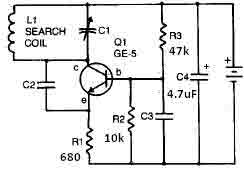
Small Metal detector schematic circuit
This metal detector circuit requires a power supply of 9 volts (DC) or a 9-volt battery. The circuit includes a variable capacitor C1 valued at 365 pF, a 100 pF silver mica capacitor C2, a 0.05 µF disc capacitor C3,...
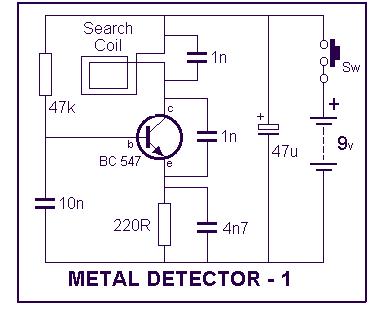
Metal detector 1
This project has not been called a GOLD detector as this name has been left for the more complex detectors that actually discriminate between gold and other metals. There is an enormous difference between detecting gold and ordinary metals (called...
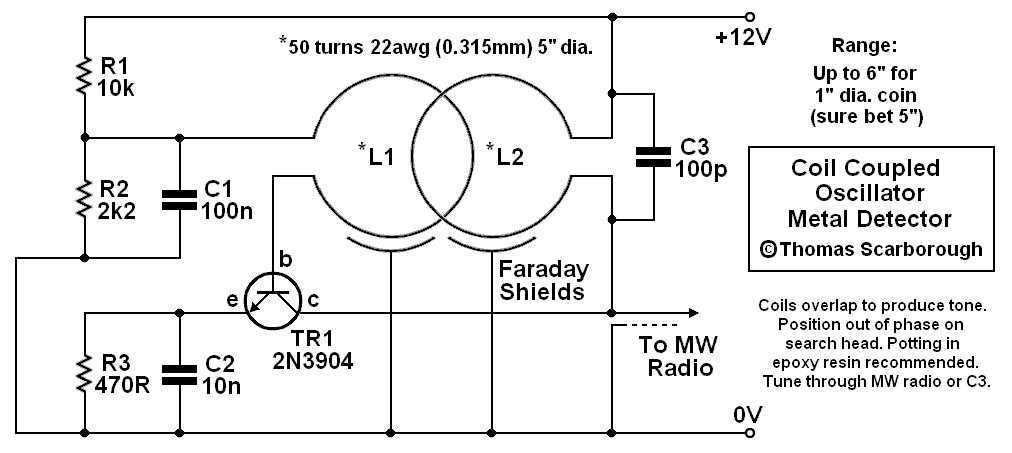
Coupled Coil Metal Detector
A Coil Coupled Operation Metal Detector made from readily obtainable components and using an ordinary medium receiver as a detector. The metal detector shown here may well represent a new genre. At any rate, after some exposure, it is regarded...
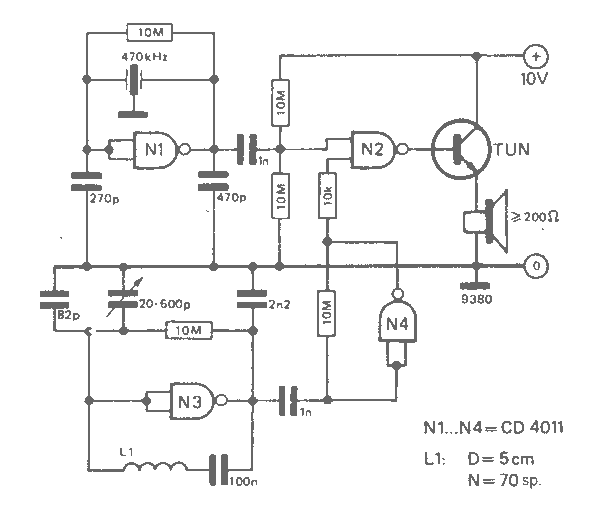
Metal detector with CD4011
The working principle of this cheap and easy to build metal detector circuit consists in mixing two equal frequencies which causes a low-frequency interference. When one of the oscillators become unstable then the frequency of the interference will be modified....
Metal detector 1
This project has not been called a GOLD detector as this name has been left for the more complex detectors that actually discriminate between gold and other metals. There is an enormous difference between detecting gold and ordinary metals (called...
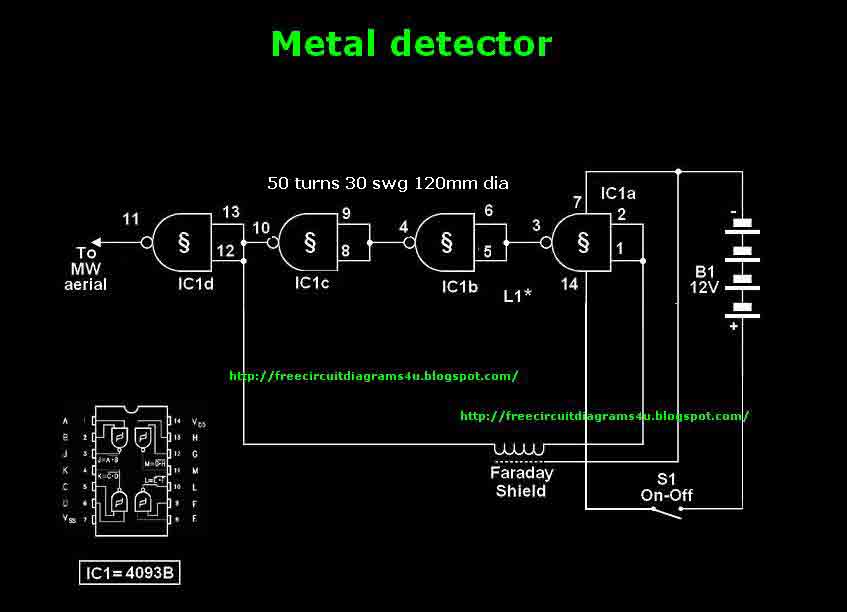
Mettle Detector circuit with Ic4093
This circuit needs a Faraday shield, which is connected to 0V. To make this one wrap a tin foil around the coil and connect to 0V. Then you can use this circuit to find metal. Tune your mw radio until...
Small Metal detector schematic circuit
This metal detector circuit requires a power supply of 9 volts (DC) or a 9-volt battery. The circuit includes a variable capacitor C1 valued at 365 pF, a 100 pF silver mica capacitor C2, a 0.05 µF disc capacitor C3,...
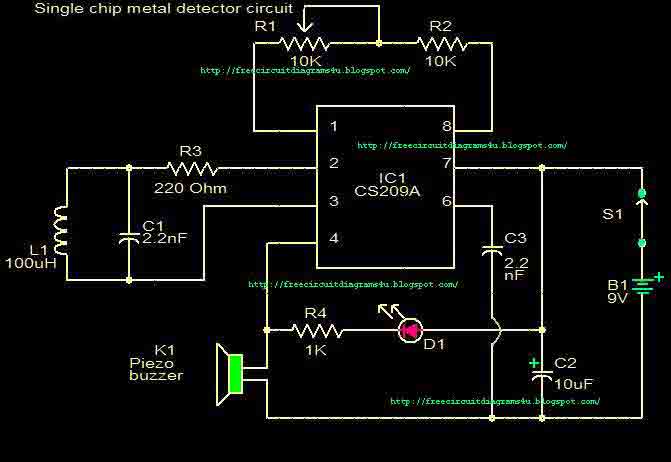
Metal detector circuit with CS209A
This circuit is a single chip metal detector. Actually, we can use this one to detect metals. Especially, you have seen some army soldiers keep something to detect metals. That equipment has been made through this circuit. So you also...
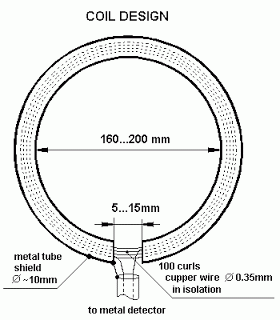
simple metal detector
This design features a simple metal detector with commendable characteristics. Its operational principle differs from traditional schemes such as BFO (Beat Frequency Oscillator) and the two-box transmit-receive metal detectors. The dynamic mode is employed to locate targets in environments with...