


28 pin pic development board with usb
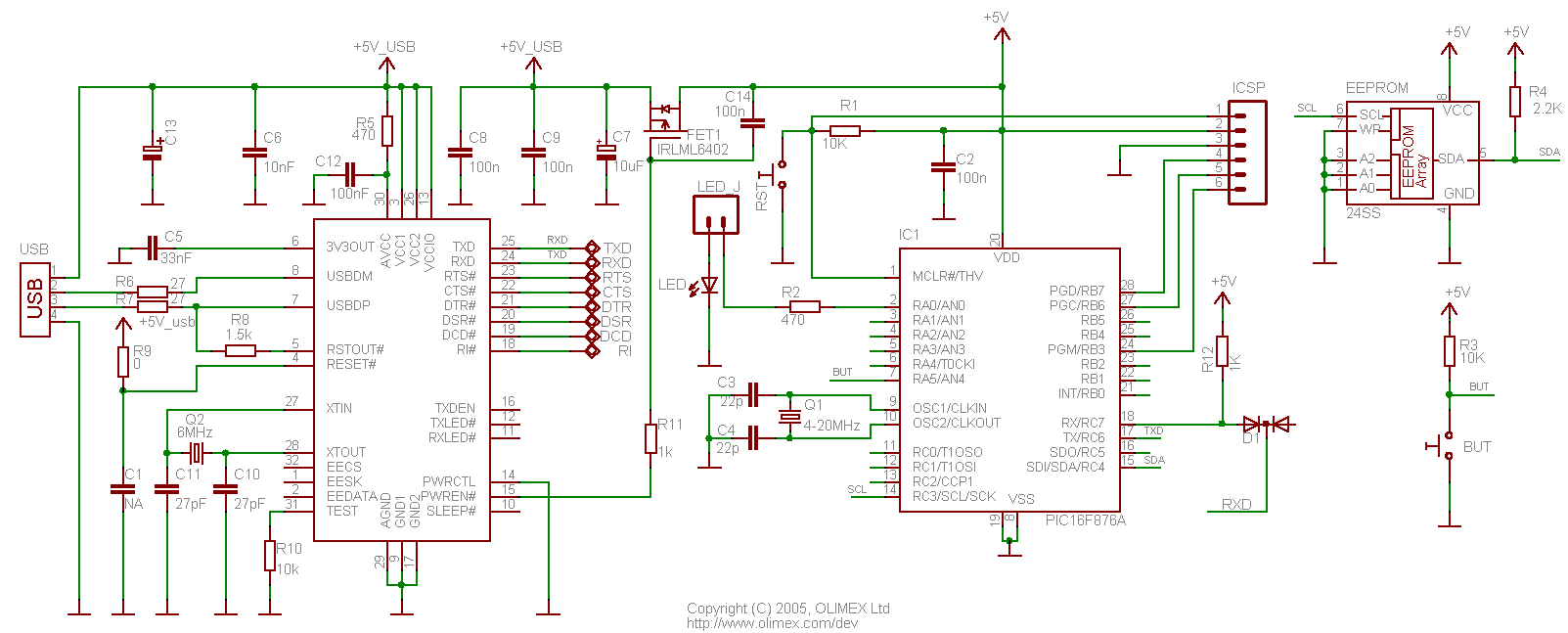
Description: 28-pin development board featuring an integrated USB connection. Power and serial communication are facilitated by the FTDI USB to RS232 converter chip. No additional setup is required; simply connect the USB.
This 28-pin development board is designed for ease of use and rapid prototyping. The integrated FTDI USB to RS232 converter chip allows for seamless communication between the board and a host computer, enabling the transfer of data and commands without the need for additional circuitry or configuration. The board is powered directly through the USB connection, simplifying the setup process and eliminating the need for an external power supply.
The layout of the board includes 28 pins that can be utilized for various input and output functions, making it versatile for different applications. Each pin can be programmed to serve specific roles, such as digital input or output, analog input, or communication protocols, depending on the requirements of the project. The FTDI chip not only handles power supply but also manages serial communication, ensuring that data is transmitted reliably and efficiently.
In addition to the standard USB connection, the board may include features such as indicator LEDs for power status and data transmission, as well as a reset button to facilitate easy debugging during development. The compact design of the board makes it suitable for integration into larger projects or for standalone use in applications ranging from educational purposes to professional development environments.
Overall, this development board represents a practical solution for engineers and hobbyists looking to prototype and test their designs quickly and effectively, with minimal setup required.28 Pin Development board with built-in USB connection. Power and serial communications are provided by the FTDI USB<->RS232 converter chip. You don`t have to do anything! Connect the USB ..
This 28-pin development board is designed for ease of use and rapid prototyping. The integrated FTDI USB to RS232 converter chip allows for seamless communication between the board and a host computer, enabling the transfer of data and commands without the need for additional circuitry or configuration. The board is powered directly through the USB connection, simplifying the setup process and eliminating the need for an external power supply.
The layout of the board includes 28 pins that can be utilized for various input and output functions, making it versatile for different applications. Each pin can be programmed to serve specific roles, such as digital input or output, analog input, or communication protocols, depending on the requirements of the project. The FTDI chip not only handles power supply but also manages serial communication, ensuring that data is transmitted reliably and efficiently.
In addition to the standard USB connection, the board may include features such as indicator LEDs for power status and data transmission, as well as a reset button to facilitate easy debugging during development. The compact design of the board makes it suitable for integration into larger projects or for standalone use in applications ranging from educational purposes to professional development environments.
Overall, this development board represents a practical solution for engineers and hobbyists looking to prototype and test their designs quickly and effectively, with minimal setup required.28 Pin Development board with built-in USB connection. Power and serial communications are provided by the FTDI USB<->RS232 converter chip. You don`t have to do anything! Connect the USB ..
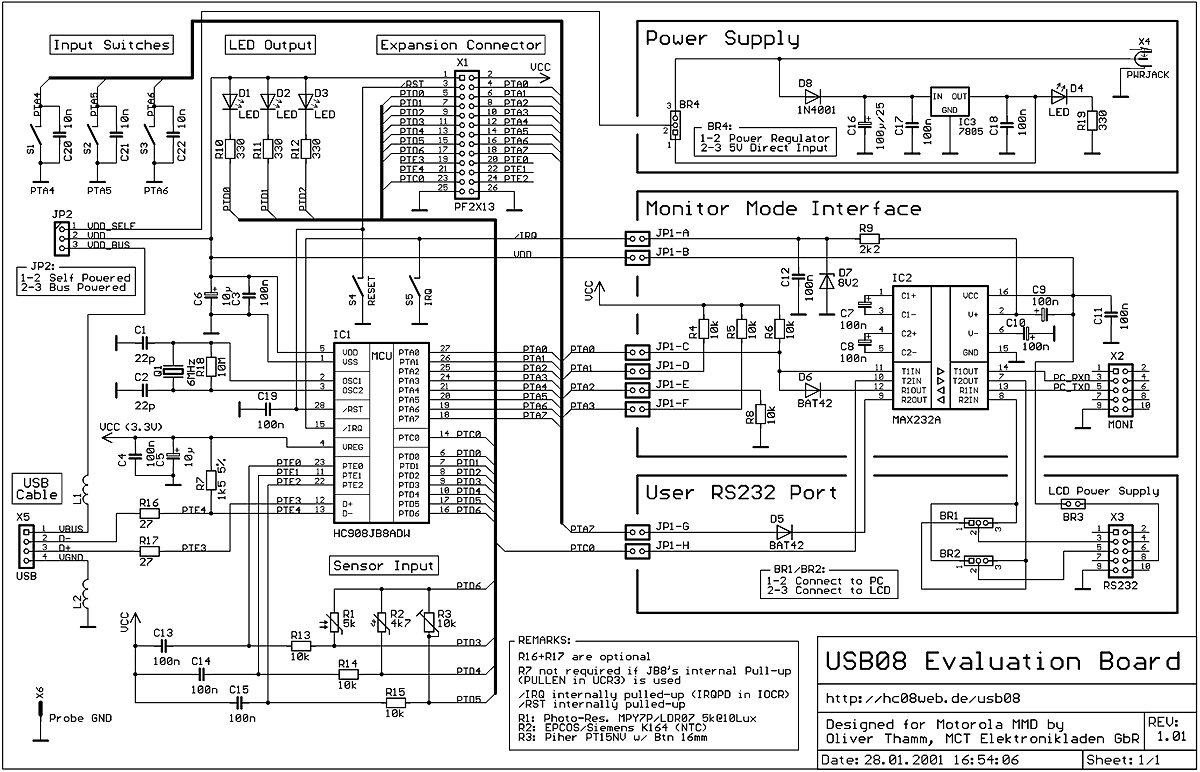
USB08 HC908JB8 USB Reference Design
The primary target audience of the USB08 Reference Design consists of developers focused on microcontroller firmware and hardware, as well as those dealing with Windows driver and application software issues. USB (Universal Serial Bus) serves as a standardized bus interface...

Miniature Real-time Controller
This is my long history the device that controls my home's night light, air-conditioner, etc. The device is a Miniature Real-time Controller. The circuit uses only three chips, a 89C2051, DS275 (or MAX232), and 74LS07 open collector driver. The scheduler...
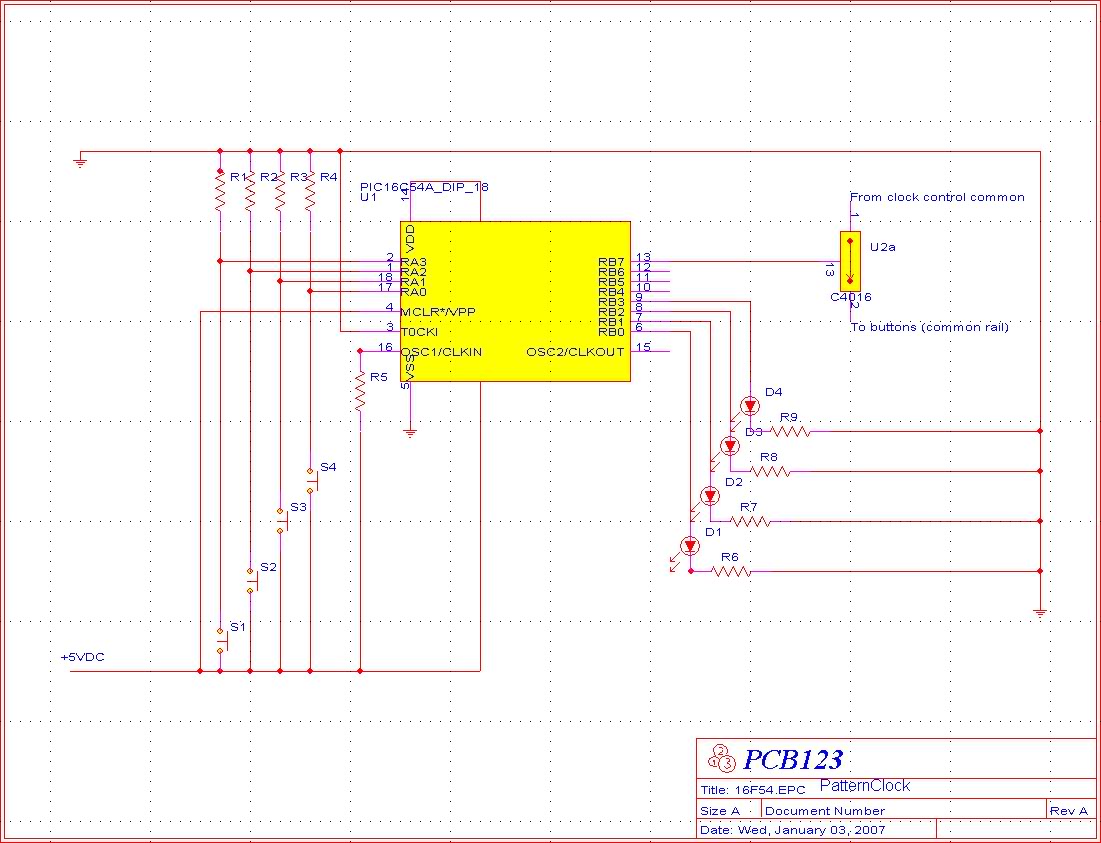
16F54 fickle!
The primary issue observed is that the circuit runs code, but several input/output (I/O) components are non-functional. For instance, only half of the LEDs driven by the circuit operate, and this appears to be random. Attempts to implement the slow...
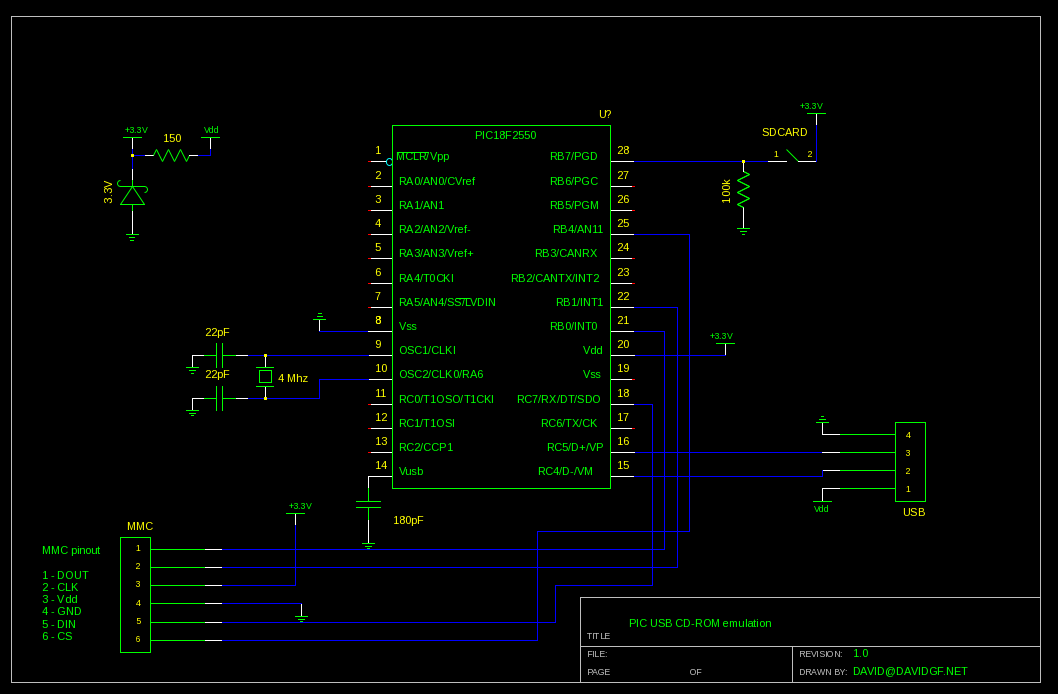
usb cd rom emulation
This project aims to create a USB CD-ROM device. Unlike typical devices that imitate a CD-ROM drive, this project emulates one. The concept allows users to store an ISO image or other types of CD-ROM images on an SD card,...
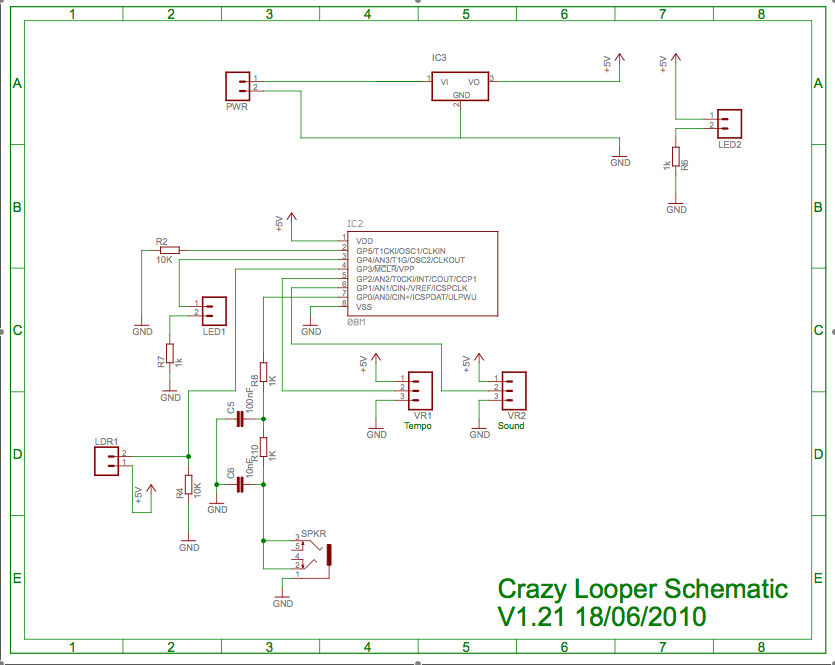
Crazy Looper Schematic
Two schematics are provided, one depicting the circuit without a programming port and the other including a programming port.
The first schematic represents a basic electronic circuit configuration that operates independently of a programming interface. This design may be suitable for...
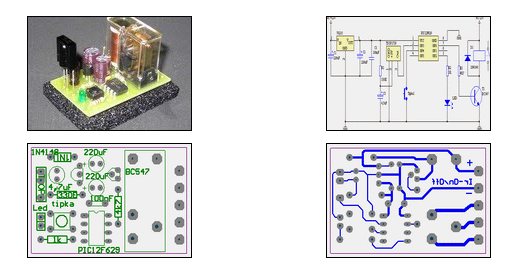
IR On/Off Switch Using Microcontroller
The ability to turn electrical devices ON or OFF using a remote control is a well-established concept, with numerous devices effectively performing this function.
To implement a remote control system for switching electrical devices, a typical schematic would include several key...

Perfect Pitch Circuit
Perfect Pitch, which is based on the 8751 microprocessor, is an affordable and straightforward instrument tuner and frequency counter that features a built-in headphone amplifier and a visual metronome. Perfect Pitch converts the audio signal from an instrument into a...
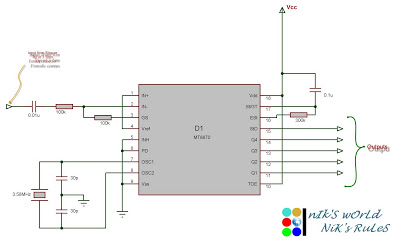
Microcontroller circuits
Connect the serial cable to the serial port. If using a USB to TTL, RS232, or serial converter, plug it into the USB port. Next, short the Tx pin to the Rx pin or the TxD pin to the RxD...
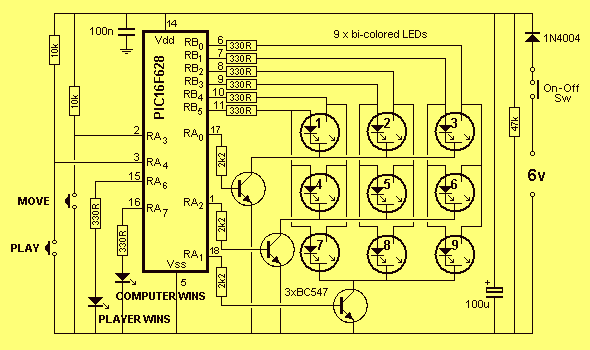
Electronic TIC TAC TOE
This project is not to introduce Tic Tac Toe. Everyone knows this game. It is to introduce two features: bi-coloured LEDs, microcontrollers, and the skill of writing an ALGORITHM. You can use the project to learn the skills of creating...