


A Simple Programmer for PIC18F14K50 Microcontroller
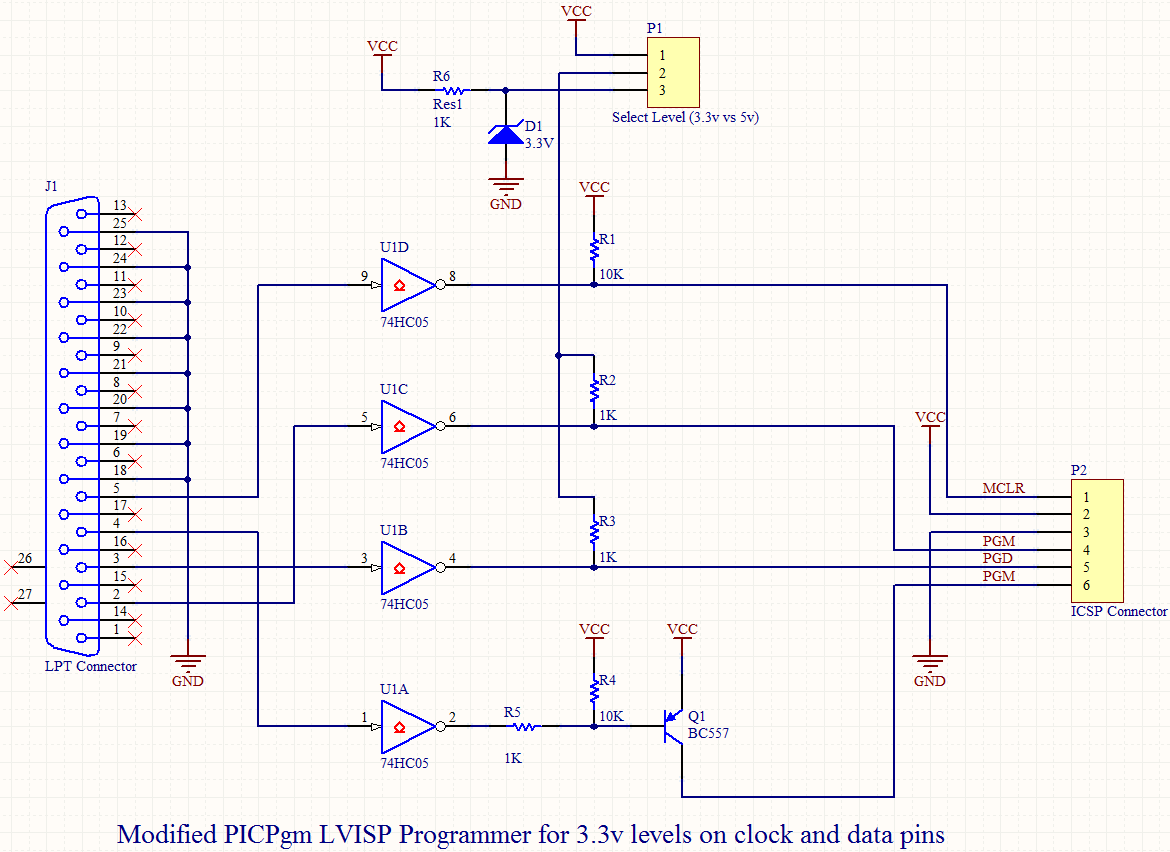
Description: Microchip's PIC18F14K50 is an excellent choice, offering a wide range of features in a compact package at an affordable price. While focusing on the chip's numerous capabilities, a specific requirement for its flash programming was overlooked during the design of a small USB board. Unlike many other PIC microcontrollers, this particular model requires the activation of two programming pins for proper functionality.
The Microchip PIC18F14K50 microcontroller is a member of the PIC18 family, known for its high performance and versatility. It features a 28-pin package, making it suitable for space-constrained applications. The device operates at a maximum clock speed of 48 MHz and is equipped with 32 KB of flash memory, 2 KB of RAM, and 256 bytes of EEPROM, providing ample resources for a variety of embedded applications.
One of the key aspects of the PIC18F14K50 is its USB interface, which supports full-speed USB 2.0 connectivity. This feature is particularly beneficial for applications requiring direct communication with host devices such as computers or USB hubs. The microcontroller also includes multiple I/O ports, allowing for the connection of various peripherals, sensors, and actuators, enhancing its functionality in different projects.
It is crucial to note that the flash programming of the PIC18F14K50 requires the manipulation of two specific pins, typically referred to as MCLR (Master Clear) and PGD/PGC (Programming Data/Clock). These pins must be correctly driven during the programming process to ensure successful flash memory updates. Failure to adhere to this requirement can result in programming errors or device malfunctions.
Designers utilizing the PIC18F14K50 should incorporate these considerations into their schematics to facilitate proper programming and functionality. The integration of decoupling capacitors near the power supply pins is recommended to enhance stability and reduce noise. Additionally, pull-up resistors may be necessary on the MCLR pin to ensure reliable operation during reset conditions.
In conclusion, the PIC18F14K50 microcontroller is a powerful and cost-effective solution for a wide range of applications, particularly those requiring USB connectivity. Attention to its unique programming requirements and careful schematic design will ensure optimal performance and reliability in the final product.Microchip`s PIC18F14K50 is fantastic: almost anything you need in a small footprint for a low price! Absorbed in many good features of this chip, I neglected a special requirement for its flash programming when I was designing a small USB board. Unlike many other PICs, you have to drive two programming pins of this micro..
The Microchip PIC18F14K50 microcontroller is a member of the PIC18 family, known for its high performance and versatility. It features a 28-pin package, making it suitable for space-constrained applications. The device operates at a maximum clock speed of 48 MHz and is equipped with 32 KB of flash memory, 2 KB of RAM, and 256 bytes of EEPROM, providing ample resources for a variety of embedded applications.
One of the key aspects of the PIC18F14K50 is its USB interface, which supports full-speed USB 2.0 connectivity. This feature is particularly beneficial for applications requiring direct communication with host devices such as computers or USB hubs. The microcontroller also includes multiple I/O ports, allowing for the connection of various peripherals, sensors, and actuators, enhancing its functionality in different projects.
It is crucial to note that the flash programming of the PIC18F14K50 requires the manipulation of two specific pins, typically referred to as MCLR (Master Clear) and PGD/PGC (Programming Data/Clock). These pins must be correctly driven during the programming process to ensure successful flash memory updates. Failure to adhere to this requirement can result in programming errors or device malfunctions.
Designers utilizing the PIC18F14K50 should incorporate these considerations into their schematics to facilitate proper programming and functionality. The integration of decoupling capacitors near the power supply pins is recommended to enhance stability and reduce noise. Additionally, pull-up resistors may be necessary on the MCLR pin to ensure reliable operation during reset conditions.
In conclusion, the PIC18F14K50 microcontroller is a powerful and cost-effective solution for a wide range of applications, particularly those requiring USB connectivity. Attention to its unique programming requirements and careful schematic design will ensure optimal performance and reliability in the final product.Microchip`s PIC18F14K50 is fantastic: almost anything you need in a small footprint for a low price! Absorbed in many good features of this chip, I neglected a special requirement for its flash programming when I was designing a small USB board. Unlike many other PICs, you have to drive two programming pins of this micro..
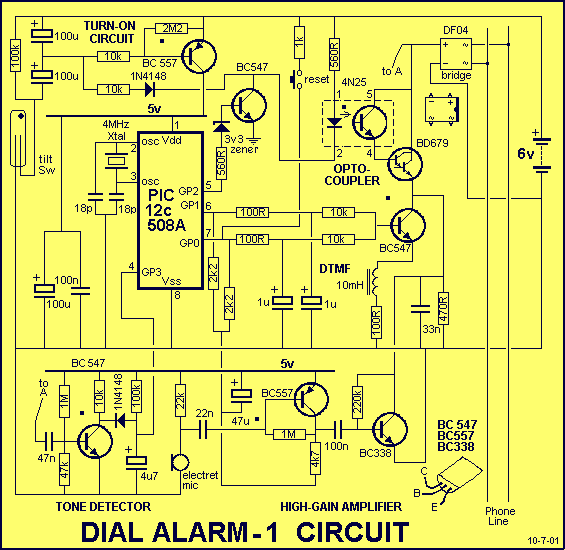
DIAL ALARM-1
This is the lowest cost dialing alarm on the market and shows what can be done with an 8-pin microcontroller. The complete circuit is shown below. You cannot see all the features of this project by looking at the circuit...
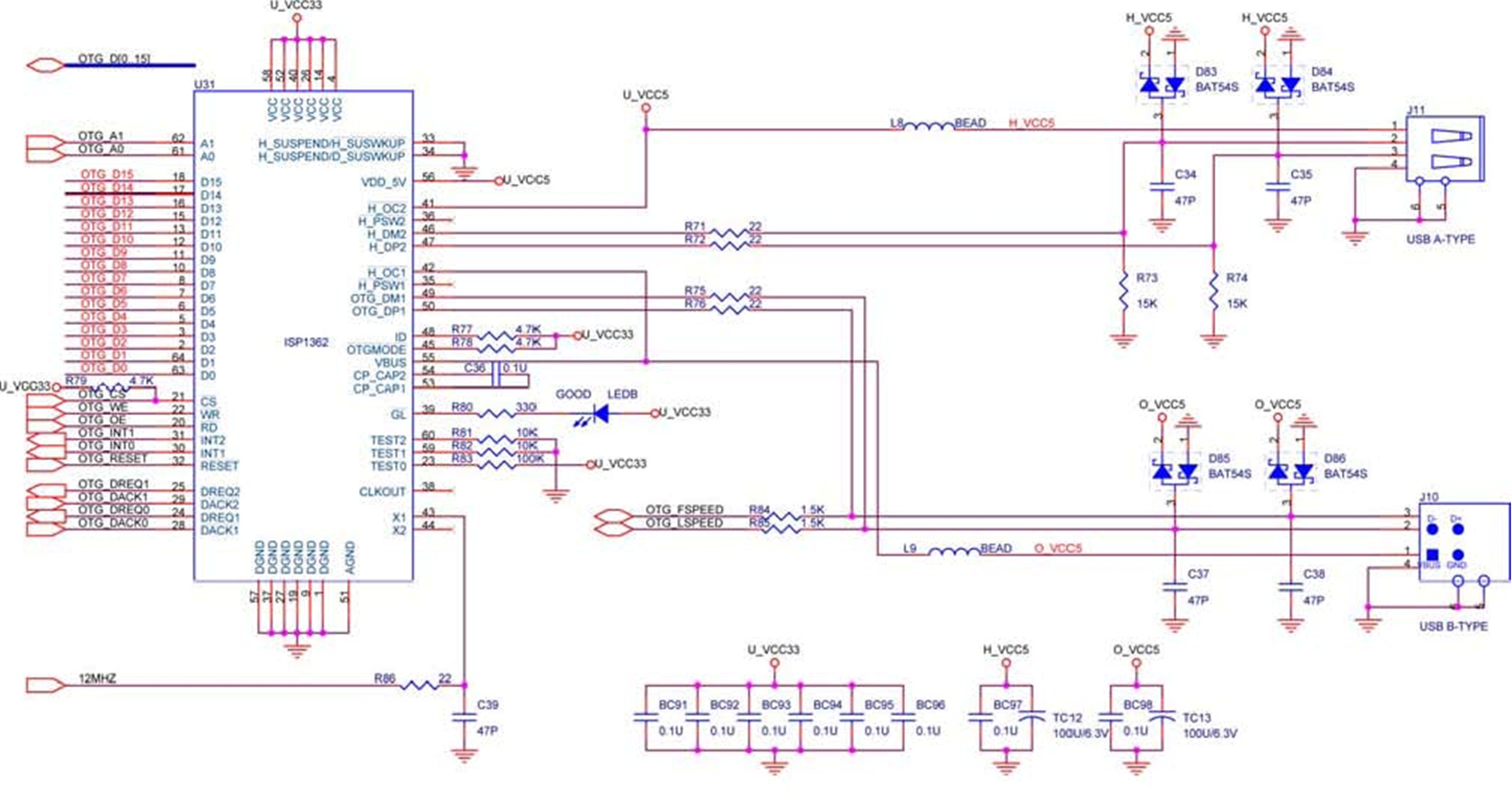
USB Host and Device
The DE2 board features both USB host and device interfaces utilizing the Philips ISP1362 single-chip USB controller. The host and device controllers adhere to the Universal Serial Bus Specification Revision 2.0, enabling data transfer at full-speed (12 Mbit/s) and low-speed...
lf286 Linux USB LCD display with watchdog and buttons
This article is the result of positive feedback on previous hardware articles. Readers of LinuxFocus expressed interest in interfacing with the USB bus. This solution utilizes the LCD display from a May 2002 article and connects it to the USB...
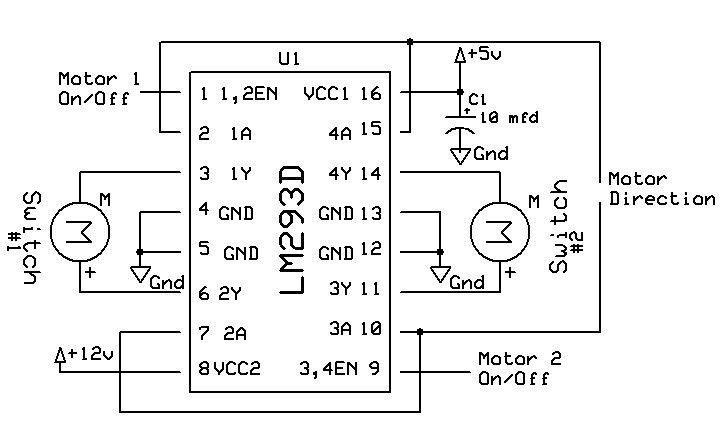
Automatic Switch Project
Model railroad turnouts, often referred to as switches, can be controlled in various ways. The simplest method is manual control, operated by hand. Remote activation is typically achieved through pneumatic (air) or electrical means. The project discussed in these articles...
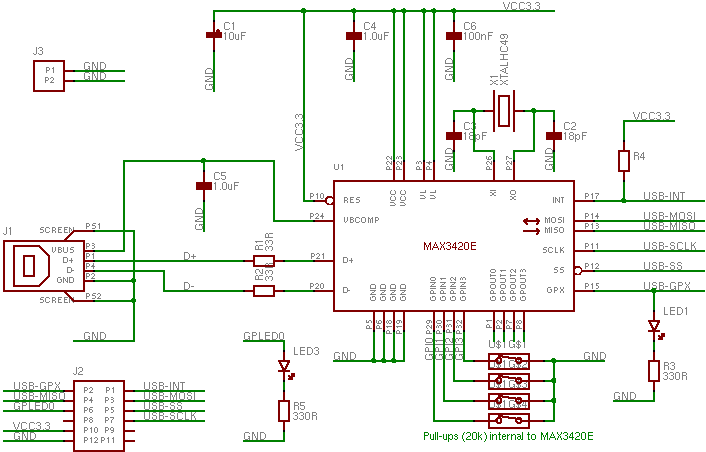
MAX3420 Maxim USB Peripheral Controller
The MAX3420 is a USB peripheral controller chip featuring an SPI bus. This document aims to provide sufficient information for effective utilization of the device in various projects. The MAX3420 simplifies the integration of a USB interface into a circuit...
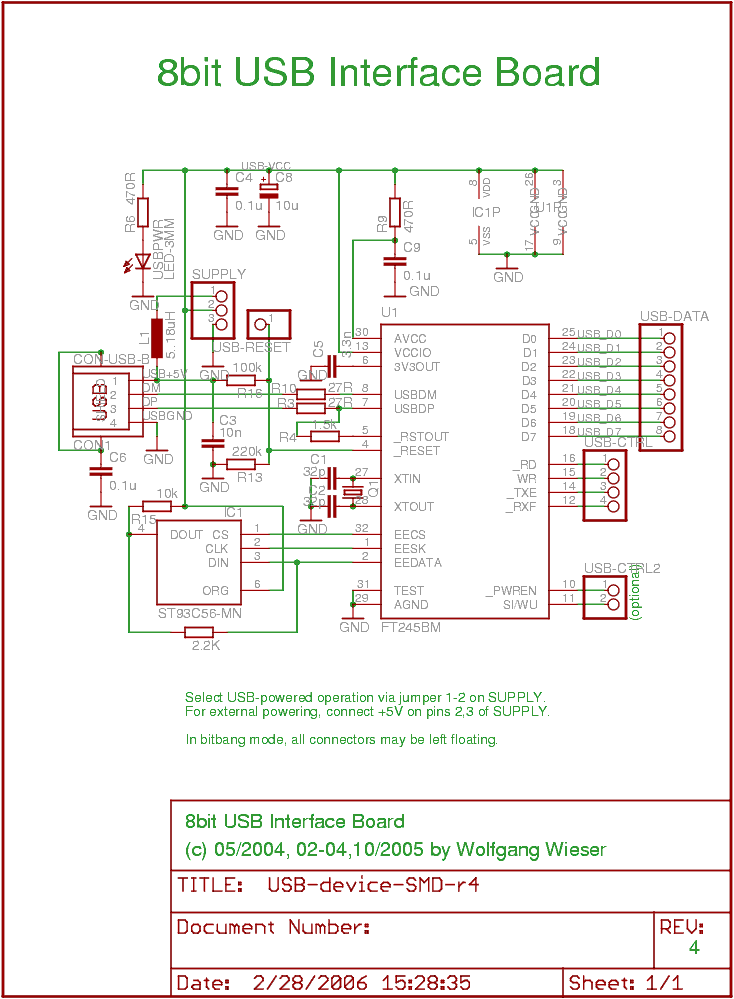
USB 8bit Interface Board
The objective was to create a compact USB interface board that can be easily connected to microcontroller boards. It is designed to support both USB-powered and externally-powered operation. The number of external components has been minimized, although there are still...

Password Based Door Locking
Security is a prime concern in our day-to-day life. Everyone wants to be as much secure as possible. An access control for doors forms a vital link in a security chain. The microcontroller based Door locker is an access control...

Password(code) Based Digital Locking System Using Microcontroller 89C52/89S52
Upon entering the password, the application, in this case "LED," will illuminate. In this digital locking system project, the interfacing of a keypad and a 16x2 LCD with a microcontroller will be explored, along with the accompanying code. This project...
DC motor driver for DCMP(AVR-008)
A microcontroller is used to control various types of DC motors, including permanent magnet DC motors, DC servo motors, and stepper motors. This project utilizes the AVR-008 microcontroller from Circuits-Home, which is frequently referred to as the 3-in-1 driver motor...