


AT91SAM7S circuit minimum components
#AT91SAM7S
#ARM7
#microcontroller
#minimum components
#embedded systems
#circuit design
#supporting components
#hardware setup
#ARM microcontroller
#electronics
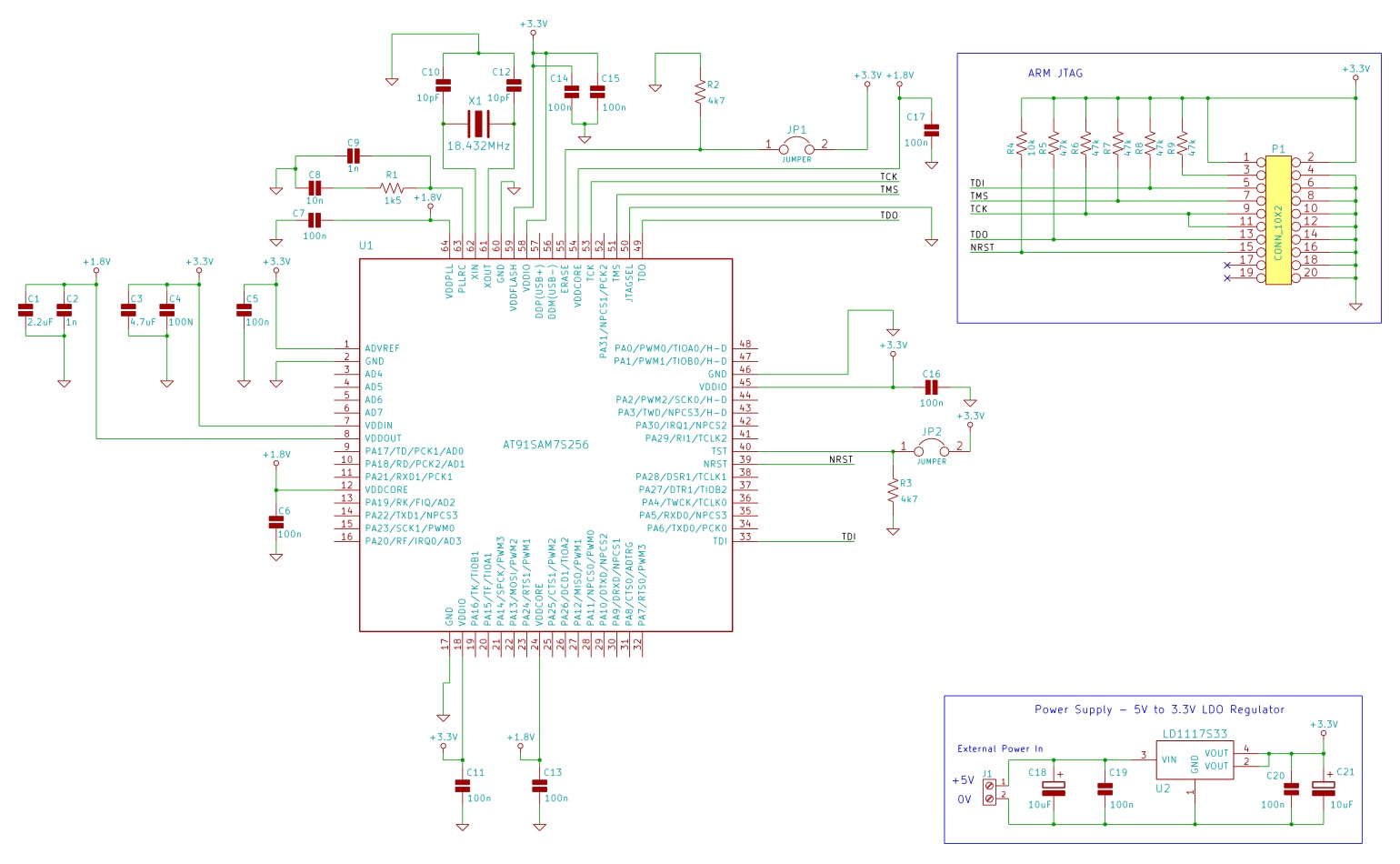
Description: The minimum number of supporting components required to build a circuit using AT91SAM7S microcontrollers. This example uses the AT91SAM7S256 ARM7 microcontroller.
To construct a circuit utilizing the AT91SAM7S256 ARM7 microcontroller, a minimal set of supporting components is essential to ensure proper functionality and performance. The core of the circuit is the AT91SAM7S256, which is a 32-bit microcontroller based on the ARM7 architecture.
The basic components required for the circuit include:
1. **Power Supply**: A stable power supply is critical. The microcontroller operates typically at 3.3V, requiring appropriate voltage regulation to ensure reliable operation.
2. **Decoupling Capacitors**: These capacitors are placed close to the power pins of the microcontroller to filter out noise and stabilize the power supply. A common practice is to use a combination of a 100nF ceramic capacitor and a larger electrolytic capacitor (e.g., 10µF) in parallel.
3. **Crystal Oscillator**: To provide the clock signal for the microcontroller, a crystal oscillator (typically 12MHz or 16MHz) is necessary. This oscillator must be accompanied by two load capacitors connected to ground, as specified in the crystal's datasheet.
4. **Reset Circuit**: A reset circuit is crucial for initializing the microcontroller. This can be achieved using a simple resistor-capacitor (RC) network connected to the reset pin, ensuring the microcontroller starts in a known state upon power-up.
5. **Programming Interface**: For development and debugging purposes, a programming interface such as JTAG or SWD (Serial Wire Debug) is often included. This requires specific pins on the microcontroller to be connected to a suitable programmer.
6. **I/O Connections**: The microcontroller has multiple GPIO (General Purpose Input/Output) pins that may require pull-up or pull-down resistors depending on the application. These resistors help define the default state of the pins when not actively driven.
7. **Optional Components**: Depending on the application, additional components such as LEDs for status indication, sensors, or communication interfaces (like UART, SPI, or I2C) may be incorporated into the circuit design.
By ensuring these components are correctly integrated into the circuit, optimal performance and functionality of the AT91SAM7S256 microcontroller can be achieved, facilitating the development of various applications ranging from simple control systems to more complex embedded solutions.The minimum number of supporting components required to build a circuit using AT91SAM7S microcontrollers. This example uses the AT91SAM7S256 ARM7 microcontroller..
To construct a circuit utilizing the AT91SAM7S256 ARM7 microcontroller, a minimal set of supporting components is essential to ensure proper functionality and performance. The core of the circuit is the AT91SAM7S256, which is a 32-bit microcontroller based on the ARM7 architecture.
The basic components required for the circuit include:
1. **Power Supply**: A stable power supply is critical. The microcontroller operates typically at 3.3V, requiring appropriate voltage regulation to ensure reliable operation.
2. **Decoupling Capacitors**: These capacitors are placed close to the power pins of the microcontroller to filter out noise and stabilize the power supply. A common practice is to use a combination of a 100nF ceramic capacitor and a larger electrolytic capacitor (e.g., 10µF) in parallel.
3. **Crystal Oscillator**: To provide the clock signal for the microcontroller, a crystal oscillator (typically 12MHz or 16MHz) is necessary. This oscillator must be accompanied by two load capacitors connected to ground, as specified in the crystal's datasheet.
4. **Reset Circuit**: A reset circuit is crucial for initializing the microcontroller. This can be achieved using a simple resistor-capacitor (RC) network connected to the reset pin, ensuring the microcontroller starts in a known state upon power-up.
5. **Programming Interface**: For development and debugging purposes, a programming interface such as JTAG or SWD (Serial Wire Debug) is often included. This requires specific pins on the microcontroller to be connected to a suitable programmer.
6. **I/O Connections**: The microcontroller has multiple GPIO (General Purpose Input/Output) pins that may require pull-up or pull-down resistors depending on the application. These resistors help define the default state of the pins when not actively driven.
7. **Optional Components**: Depending on the application, additional components such as LEDs for status indication, sensors, or communication interfaces (like UART, SPI, or I2C) may be incorporated into the circuit design.
By ensuring these components are correctly integrated into the circuit, optimal performance and functionality of the AT91SAM7S256 microcontroller can be achieved, facilitating the development of various applications ranging from simple control systems to more complex embedded solutions.The minimum number of supporting components required to build a circuit using AT91SAM7S microcontrollers. This example uses the AT91SAM7S256 ARM7 microcontroller..
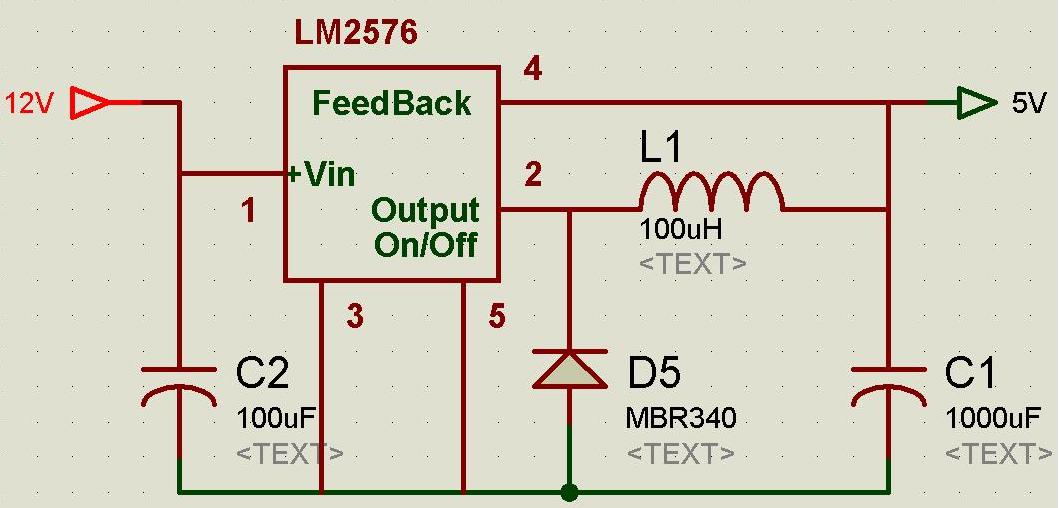
Some Voltage Regulator Ciruits for Microcontroller based Projects
A regulated and noise-free power supply voltage is essential for microcontrollers and other components such as amplifiers, filters, and GPS devices. Voltage surges in the supply voltage can permanently damage embedded systems. A voltage regulator must maintain the output voltage...
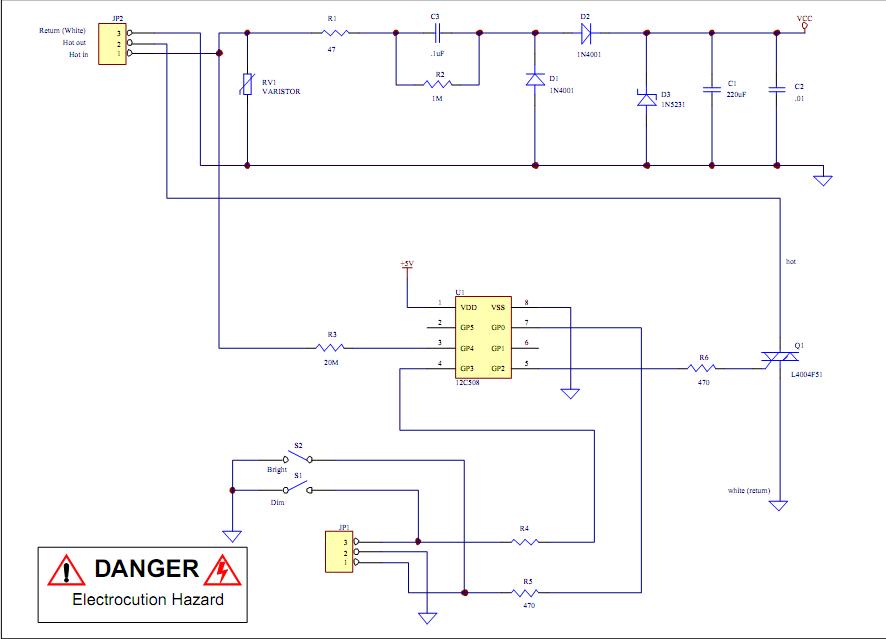
analog light dimmer circuit connected to microcontroller
Assistance is required to modify a light dimmer circuit connected to a PIC12C508 microcontroller. This circuit is designed for the...
The light dimmer circuit utilizing the PIC12C508 microcontroller serves to control the brightness of a light source through pulse width modulation...
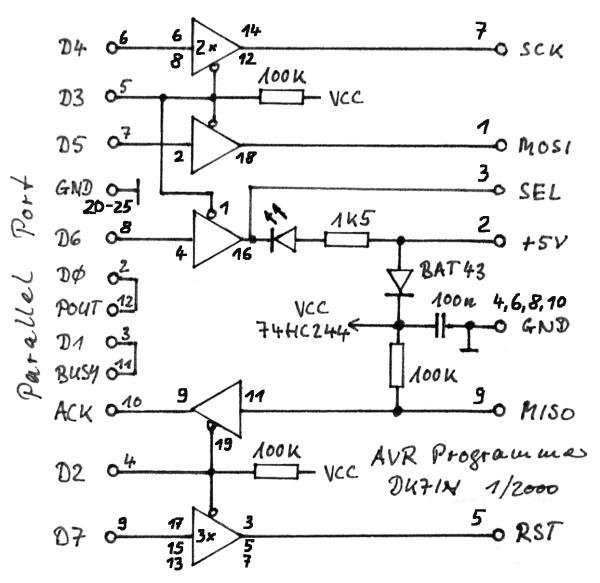
Microcontroller
The gap between TTL (Transistor-Transistor Logic) devices and personal computers can be effectively bridged with modern microcontrollers. These microcontrollers not only incorporate a central processing unit (CPU) but also include program and data memory, EEPROM, input/output (I/O) ports, timers, and...
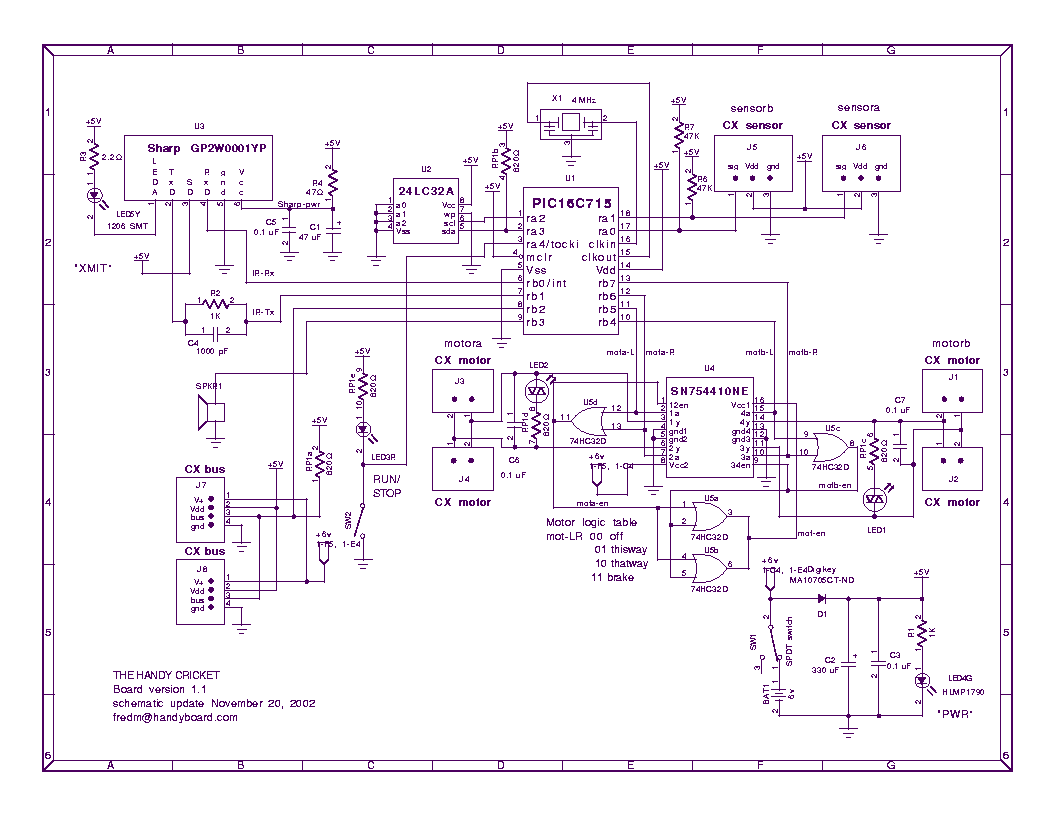
Handy Cricket Hardware Description
This document presents an overview of the hardware design of the Handy Cricket.
The Handy Cricket is a compact electronic device designed for educational and recreational purposes, primarily aimed at children. The hardware design incorporates various components that work together to...
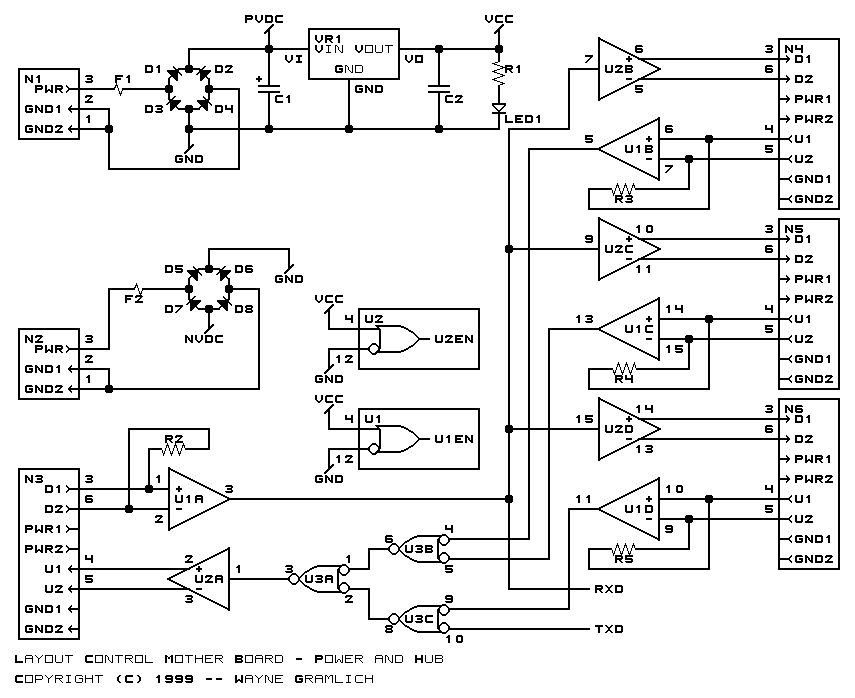
Layout Control Mother Board
The layout control motherboard is designed to facilitate the management of various sections of a layout. It features a microcontroller that connects to the MRNet bus and multiple slots for inexpensive control and sensor boards. All control and sensor boards...
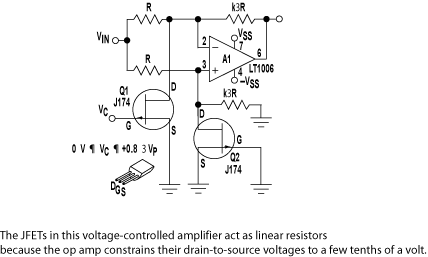
µP-Controlled Oscillator Delivers Rock-Bottom Distortion
Function generators are essential in the design, testing, and operation of encoders, modulators, demodulators, and measurement instruments. This document presents an economical method to construct a bus-controlled sinewave oscillator that exhibits exceptionally low distortion. The circuit produces a sinusoidal output...
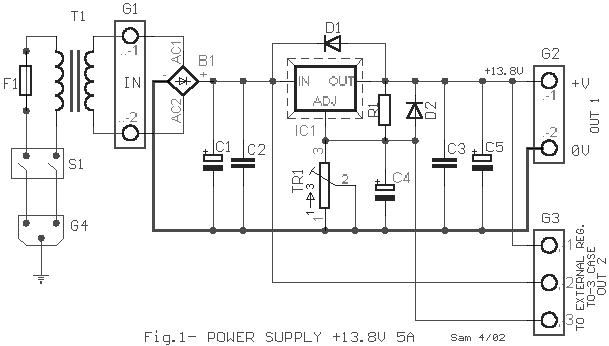
Electronics Projects Circuits
Over 1400 top electronics projects and electronic circuits with photos, datasheets, and easy-to-read schematics, along with explanations of how they work and how to build them.
The collection comprises a vast array of electronics projects suitable for enthusiasts and professionals alike....
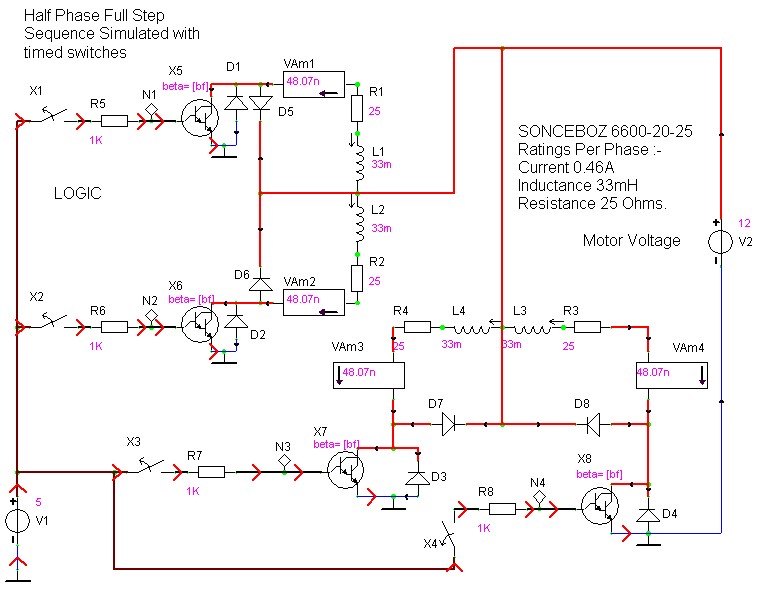
case stepper
Beige Bag Software has been offering affordable and innovative circuit design tools since 1990. B2 Spice provides schematics as well as analog, digital, and mixed-mode electronic circuit simulation. It integrates with EAGLE and CADSTAR PCB software.
B2 Spice is a powerful...
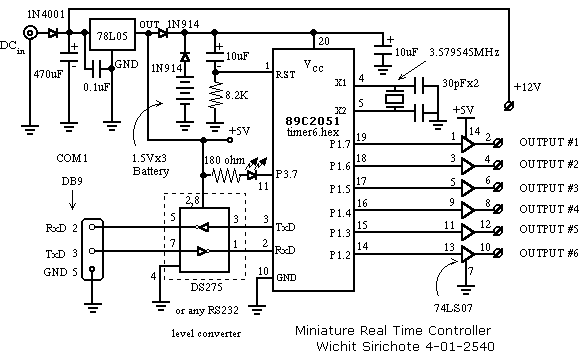
Miniature Real-time Controller
This is my long history the device that controls my home's night light, air-conditioner, etc. The device is a Miniature Real-time Controller. The circuit uses only three chips, a 89C2051, DS275 (or MAX232), and 74LS07 open collector driver. The scheduler...