


atmega 32a programming
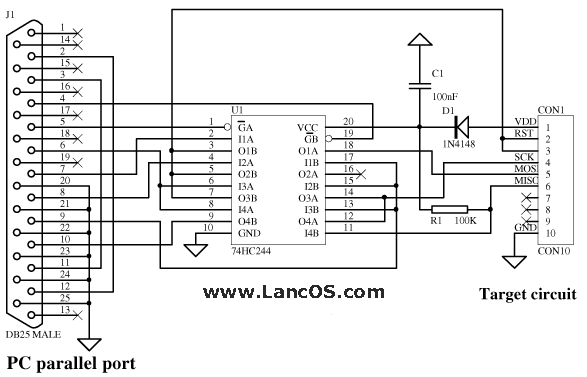
Description: A cellphone-operated robot is being developed, and there are challenges with programming the Atmega32A microcontroller. The recommended software for this task is AVR Studio 4. Within the Tools menu, the option "Program the AVR" can be selected, allowing the user to choose the appropriate programmer and set up the microcontroller for programming. The firmware loading process is free. The ATMEGA8L chip is available for under Rs100, and the required components, including a USB socket, PCB, and crystal, should not exceed a total cost of approximately Rs100. A PCB is necessary for the project, with an estimated landing cost of around 25 Euros, which translates to about Rs1750 based on the current exchange rate (Rs25 * 70). If a budget of Rs250 is available, a decent USB-based programmer can be assembled at home. This task is viewed as a one-time effort, and utilizing resources at a college or university for programming is recommended as a practical solution.
A cellphone-operated robot utilizing the Atmega32A microcontroller represents an innovative project that combines mobile technology with robotics. The Atmega32A, a versatile 8-bit microcontroller from the Atmel AVR family, is suitable for various applications due to its rich set of features, including a 32KB flash memory, 2KB SRAM, and multiple I/O ports. Programming this microcontroller can be efficiently accomplished using AVR Studio 4, a development environment that supports C and assembly language programming.
To initiate programming, users should navigate to the Tools menu within AVR Studio 4 and select "Program the AVR." This feature allows users to configure their specific programmer, which is essential for loading the firmware onto the microcontroller. The firmware itself can be obtained free of charge, simplifying the development process.
The ATMEGA8L chip serves as a viable alternative, offering similar functionalities at a lower cost. The estimated expenses for the project include the ATMEGA8L chip, which is priced below Rs100, along with additional components such as a USB socket, a printed circuit board (PCB), and a crystal oscillator. While the total cost of these components may not exceed Rs100, the PCB is a critical component that requires fabrication. The projected landing cost for the PCB is approximately 25 Euros, equating to around Rs1750, based on current currency exchange rates.
For those on a tighter budget, constructing a USB-based programmer at home is a feasible option, with an estimated cost of Rs250. This programmer will facilitate the one-time firmware loading process, after which the user may not require it again. Therefore, utilizing the programming facilities available at educational institutions may be the most efficient approach, allowing users to complete the programming task without incurring additional costs. This project exemplifies the integration of low-cost components and educational resources to achieve innovative technological solutions.A cellphone operated robot and i`m stuck with Atmega32A microcontroller programming. As software you can use then AVR STUDIO 4. Unter the Tools you can find the Menu "Programm theAVR" Chose there your used Programmer and you can setup and Programm your controller. the loading firmware is free. the chip ATMEGA8L is sold below 100/- usb socket and pcb and few components including crystal should not
cost you more than say Rs100. Yes, you have to make a PCB of course. Its landing cost works to around 25 Euros and as per our currency it should amount IN Rs25*70=Rs1750/- but if he can spend Rs250, he can make a decent USB based Programmer sitting at home. the whole issue, as I understand, it is of one time job for him to lad after which he might never need it.
Perhaps the best for him is too use a facility at his college or University. get it done and forget.
A cellphone-operated robot utilizing the Atmega32A microcontroller represents an innovative project that combines mobile technology with robotics. The Atmega32A, a versatile 8-bit microcontroller from the Atmel AVR family, is suitable for various applications due to its rich set of features, including a 32KB flash memory, 2KB SRAM, and multiple I/O ports. Programming this microcontroller can be efficiently accomplished using AVR Studio 4, a development environment that supports C and assembly language programming.
To initiate programming, users should navigate to the Tools menu within AVR Studio 4 and select "Program the AVR." This feature allows users to configure their specific programmer, which is essential for loading the firmware onto the microcontroller. The firmware itself can be obtained free of charge, simplifying the development process.
The ATMEGA8L chip serves as a viable alternative, offering similar functionalities at a lower cost. The estimated expenses for the project include the ATMEGA8L chip, which is priced below Rs100, along with additional components such as a USB socket, a printed circuit board (PCB), and a crystal oscillator. While the total cost of these components may not exceed Rs100, the PCB is a critical component that requires fabrication. The projected landing cost for the PCB is approximately 25 Euros, equating to around Rs1750, based on current currency exchange rates.
For those on a tighter budget, constructing a USB-based programmer at home is a feasible option, with an estimated cost of Rs250. This programmer will facilitate the one-time firmware loading process, after which the user may not require it again. Therefore, utilizing the programming facilities available at educational institutions may be the most efficient approach, allowing users to complete the programming task without incurring additional costs. This project exemplifies the integration of low-cost components and educational resources to achieve innovative technological solutions.A cellphone operated robot and i`m stuck with Atmega32A microcontroller programming. As software you can use then AVR STUDIO 4. Unter the Tools you can find the Menu "Programm theAVR" Chose there your used Programmer and you can setup and Programm your controller. the loading firmware is free. the chip ATMEGA8L is sold below 100/- usb socket and pcb and few components including crystal should not
cost you more than say Rs100. Yes, you have to make a PCB of course. Its landing cost works to around 25 Euros and as per our currency it should amount IN Rs25*70=Rs1750/- but if he can spend Rs250, he can make a decent USB based Programmer sitting at home. the whole issue, as I understand, it is of one time job for him to lad after which he might never need it.
Perhaps the best for him is too use a facility at his college or University. get it done and forget.
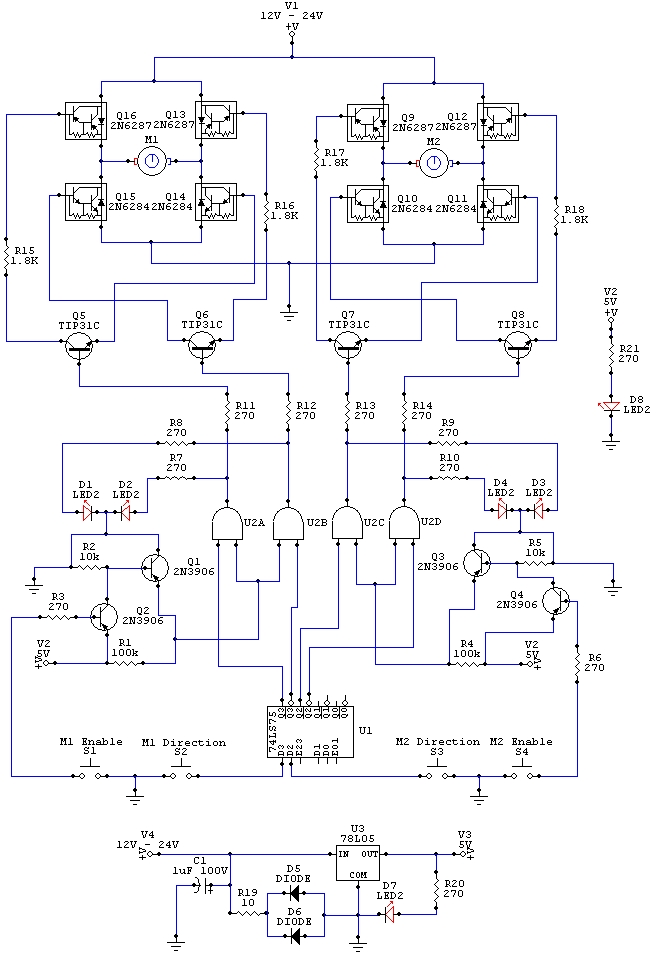
Electronic robot wiring schematic
The wiring schematic played a significant role in the robot. This diagram is used to graphically display all the wiring of the motor-controlling micro-components that enabled the robot to physically move forward, backward, left, right, and stop. This diagram was...
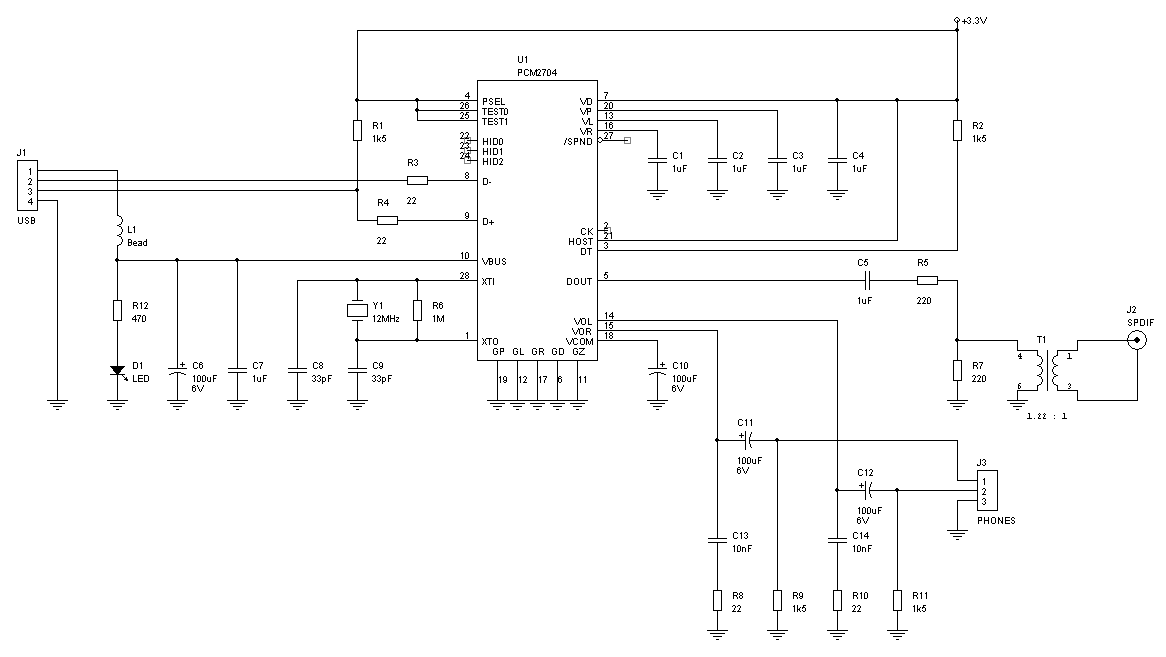
USB to SPDIF Converter
Is there a source for a schematic for a USB to SPDIF converter, similar to those offered by Empirical Audio? The concept is appealing, but the price of $500 is quite high.
A USB to SPDIF converter is a device that...
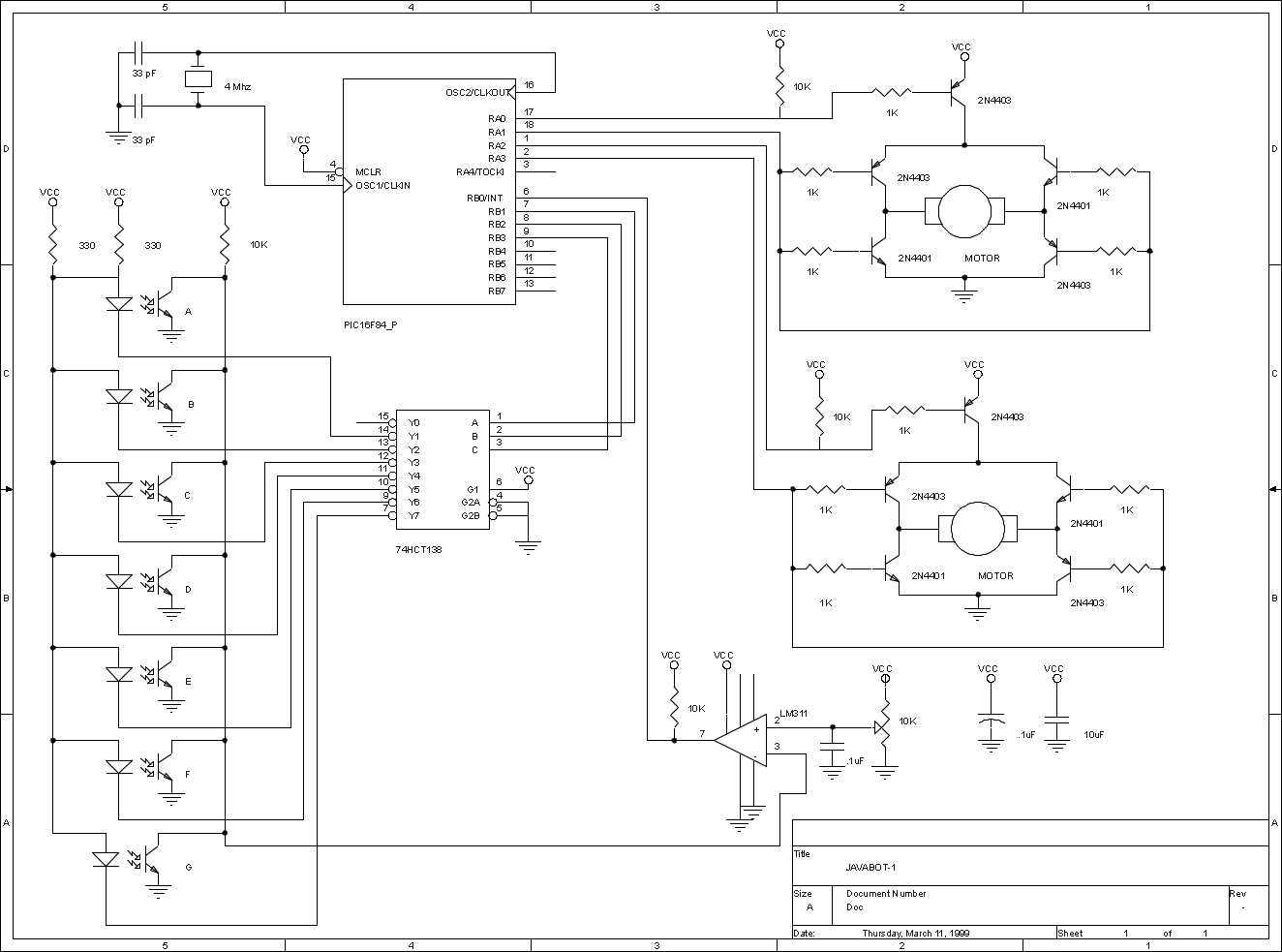
JavaBot1
The JavaBot1 is a small line following robot designed to follow a black line drawn on a dry erase board. It is designed to follow very tight curves. The software still has lots of room for improvement but works well...
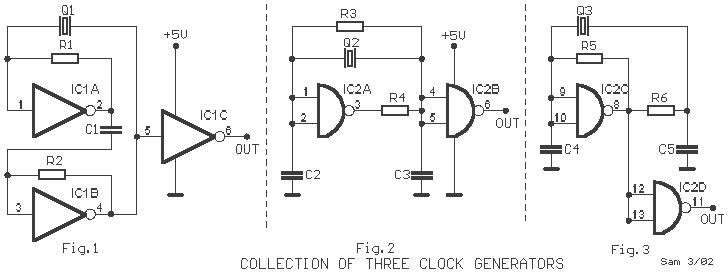
Crystal Clock Generators
Here exists a small collection from three generators, which use crystals for the basic production of oscillations. Each generator uses a different topology of circuit for the production of oscillations.
The described circuit features three distinct oscillators, each utilizing a crystal...

100Khz Crystal Calibrator
Using a 12-V supply, this crystal calibrator should prove to be a useful accessory for a shortwave (SW) receiver. Q1 and Q2 form a oscillator, and Q3 is a buffer amplifier.
The described crystal calibrator operates on a 12-V power supply...
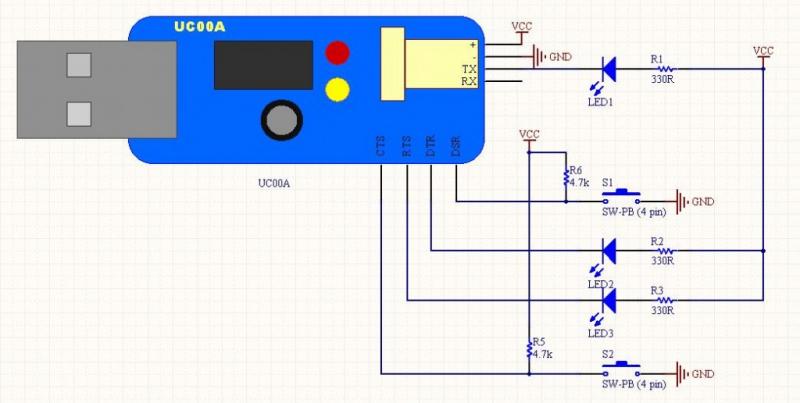
USB to serial converter circuit
The LEDs operate in an active-low configuration (0), while the initial state of the switches is high (1). In other words, the PC software must send a low signal (0) to activate the LEDs, and if a low signal (0)...
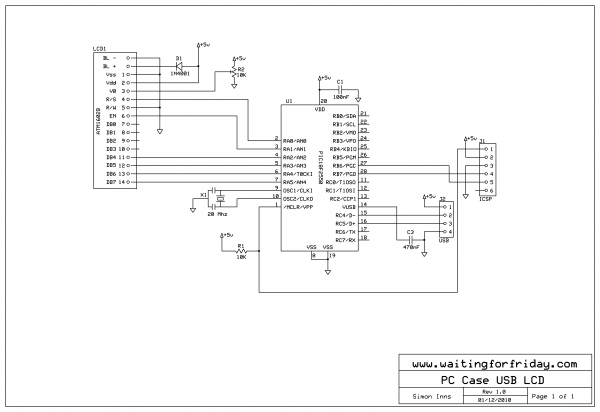
PC Case USB LCD
The first version of an Open Source Framework for USB Generic HID devices based on the PIC18F and Windows includes an example of how to utilize the library with a USB interface for an LCD. With the completion of the...
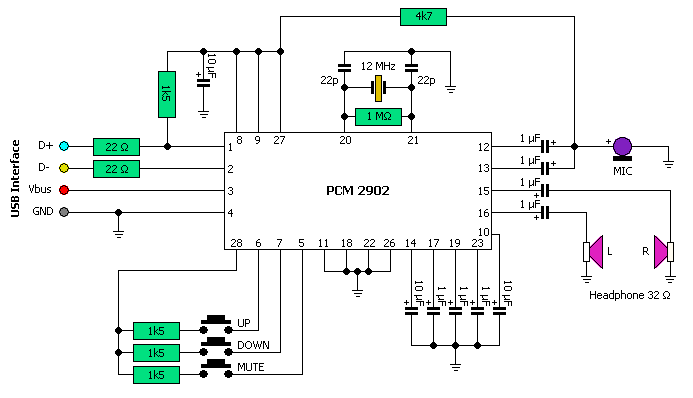
Schematic diagram of a USB player Schematic Diagram
This USB circuit utilizes an integrated circuit (IC) to convert digital voice data into an analog format, making it suitable for headphone use. Additionally, the output can be amplified through a power amplifier, allowing the sound to be played through...
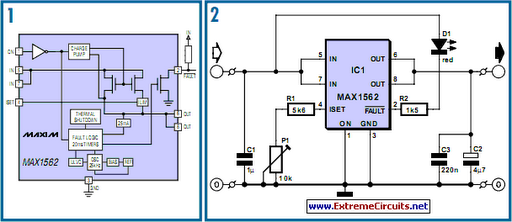
USB Fuse
Life in the 21st century would be nearly unbearable without some of the computer peripherals that PC users now consider essential. For instance, the USB-powered teacup warmer is an invaluable productivity tool for all users; however, it may draw enough...