


Ponyprog Circuit for ATMEL AVR
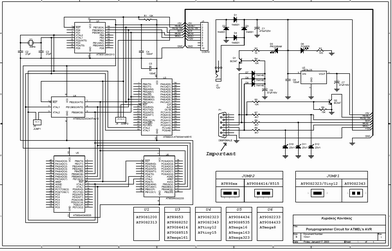
Description: The ATMEL AVR programmer operates with the Windows program "Ponyprog," which is compatible with Windows 95, 98, and XP.
The ATMEL AVR programmer is a device designed for programming AVR microcontrollers. It interfaces with the microcontroller through the ISP (In-System Programming) method, allowing users to upload firmware directly onto the chip without the need for an external programmer. This feature is particularly useful for development and debugging purposes.
Ponyprog is a widely used software tool that facilitates the programming process. It provides a user-friendly interface for writing and reading data from the microcontroller's memory. The software supports various programming modes and configurations, making it adaptable for different applications. Users can access features such as EEPROM programming, flash memory writing, and fuse bit settings, which are essential for customizing the microcontroller's behavior.
The ATMEL AVR programmer connects to a computer via a standard interface, typically USB or serial port, depending on the specific model. The programmer is powered through the connection to the computer, eliminating the need for an external power supply.
For successful operation, it is essential to ensure that the correct drivers are installed on the Windows operating system. Compatibility with older Windows versions, such as 95, 98, and XP, allows a broader range of users to utilize the programming tool, although it may limit the use of modern features and updates available in newer operating systems.
In summary, the ATMEL AVR programmer in conjunction with the Ponyprog software provides a robust solution for programming AVR microcontrollers, enabling efficient development and testing of embedded systems.The ATMEL AVR programmer works with the Windows program ""Ponyprog"" which works under 95, 98, XP.
The ATMEL AVR programmer is a device designed for programming AVR microcontrollers. It interfaces with the microcontroller through the ISP (In-System Programming) method, allowing users to upload firmware directly onto the chip without the need for an external programmer. This feature is particularly useful for development and debugging purposes.
Ponyprog is a widely used software tool that facilitates the programming process. It provides a user-friendly interface for writing and reading data from the microcontroller's memory. The software supports various programming modes and configurations, making it adaptable for different applications. Users can access features such as EEPROM programming, flash memory writing, and fuse bit settings, which are essential for customizing the microcontroller's behavior.
The ATMEL AVR programmer connects to a computer via a standard interface, typically USB or serial port, depending on the specific model. The programmer is powered through the connection to the computer, eliminating the need for an external power supply.
For successful operation, it is essential to ensure that the correct drivers are installed on the Windows operating system. Compatibility with older Windows versions, such as 95, 98, and XP, allows a broader range of users to utilize the programming tool, although it may limit the use of modern features and updates available in newer operating systems.
In summary, the ATMEL AVR programmer in conjunction with the Ponyprog software provides a robust solution for programming AVR microcontrollers, enabling efficient development and testing of embedded systems.The ATMEL AVR programmer works with the Windows program ""Ponyprog"" which works under 95, 98, XP.
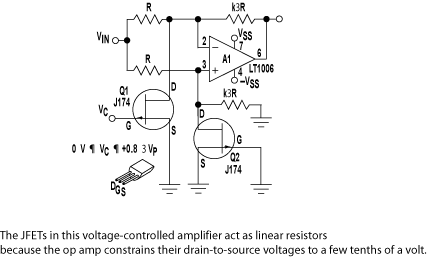
µP-Controlled Oscillator Delivers Rock-Bottom Distortion
Function generators are essential in the design, testing, and operation of encoders, modulators, demodulators, and measurement instruments. This document presents an economical method to construct a bus-controlled sinewave oscillator that exhibits exceptionally low distortion. The circuit produces a sinusoidal output...

AVR Dongle
This circuit is designed to program AVR controllers such as the AT90S1200 using a parallel port. The circuit is straightforward, with IC1 serving as a buffer for the signals transmitted between the parallel port and the microcontroller. This encompasses the...
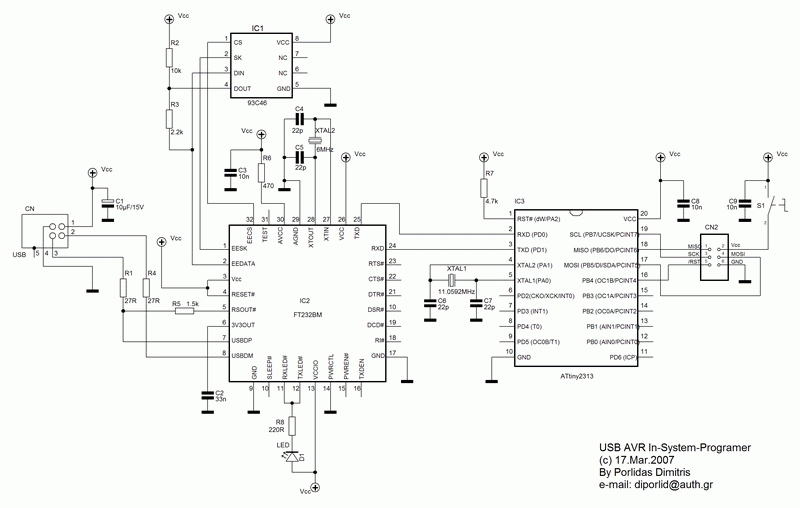
USB AVR In-System-Programmer (ISP)
Nowadays, USB is the most popular connection between PCs and peripherals such as AVR programmers, printers, scanners, etc. For that reason, it was necessary to modify an old serial AVR In-System-Programmer (ISP) to work with a USB connection. One solution...
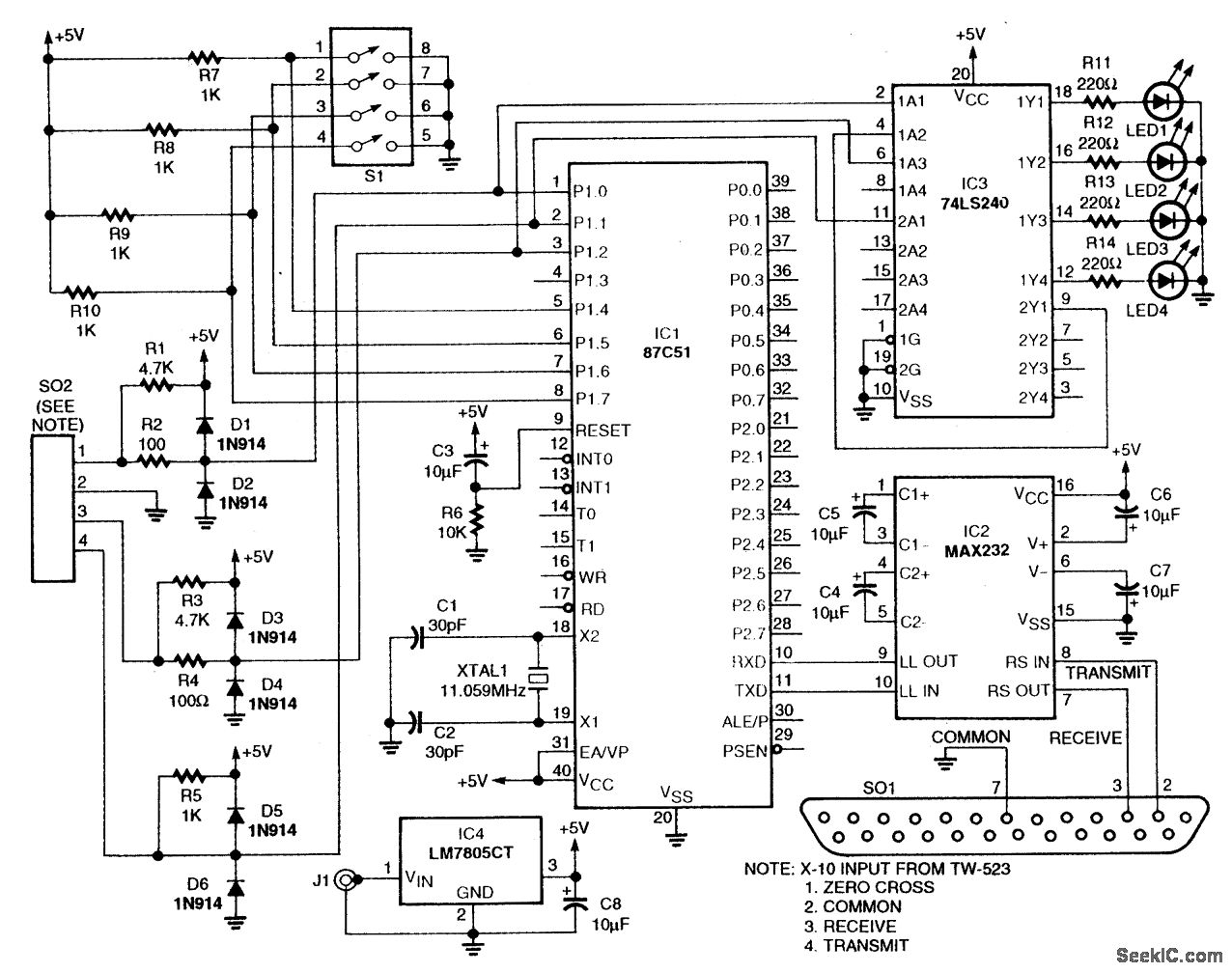
87C51 Selling Leads
This circuit utilizes an 87C57 microcontroller along with several peripherals to convert X-10 power-line carrier-code formats from a personal computer for use with an X-10 power-line interface in a home control system. Software details can be found in the reference....
Hum Circuit
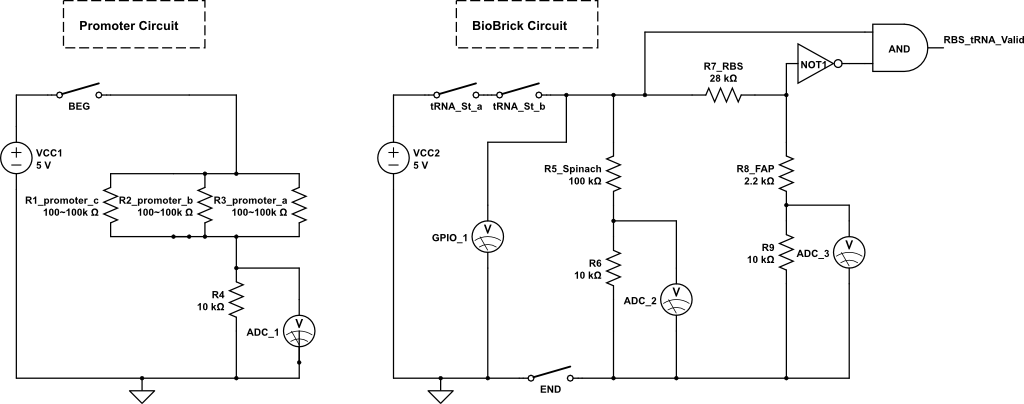
The kit employs an off-the-shelf microcontroller based on the AtMega328P-PU Arduino, along with a simplified version designed for ease of replication and modification by collaborators and students. This initiative aims to enable the fabrication of simplified microcontrollers for DIY synthetic...

measurement conductance cell constant
A small transmitter board interfaces with a microcontroller and conductivity probe to measure liquid conductance and conductivity. Precise equations and measurements are provided for this microcontroller-controlled conductivity meter.
The described circuit consists of a compact transmitter board that serves as an...
AVR microcontroller based PWM fan controllers
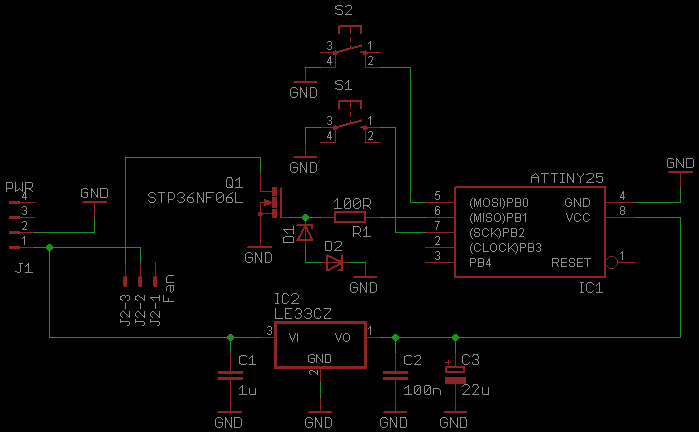
This document serves as a continuation of the previous work on PWM controllers utilizing 555 timers. The new design incorporates microcontrollers and MOSFETs in place of the 555 integrated circuits and transistors. Two versions have been developed: one equipped with...

Perfect Pitch Circuit
Perfect Pitch, which is based on the 8751 microprocessor, is an affordable and straightforward instrument tuner and frequency counter that features a built-in headphone amplifier and a visual metronome. Perfect Pitch converts the audio signal from an instrument into a...
knight Rider
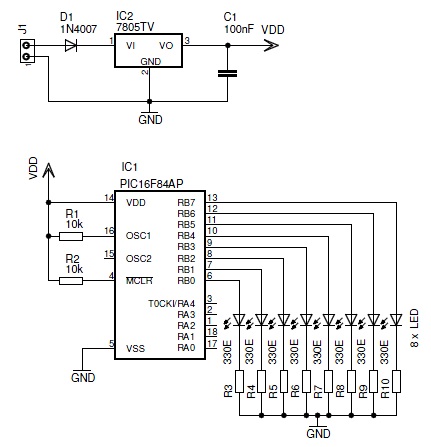
A light computer has been developed that simulates the scanning effect seen in the KITT car from the TV series Knight Rider. The design utilizes a microcontroller, specifically the PIC16F84A, instead of the commonly used CD4017 counter IC. This choice...