


footstepper
#locomotion interface
#exercise machine
#walk-through
#VE
#effort-based
#inexpensive
#readily-available
#interface
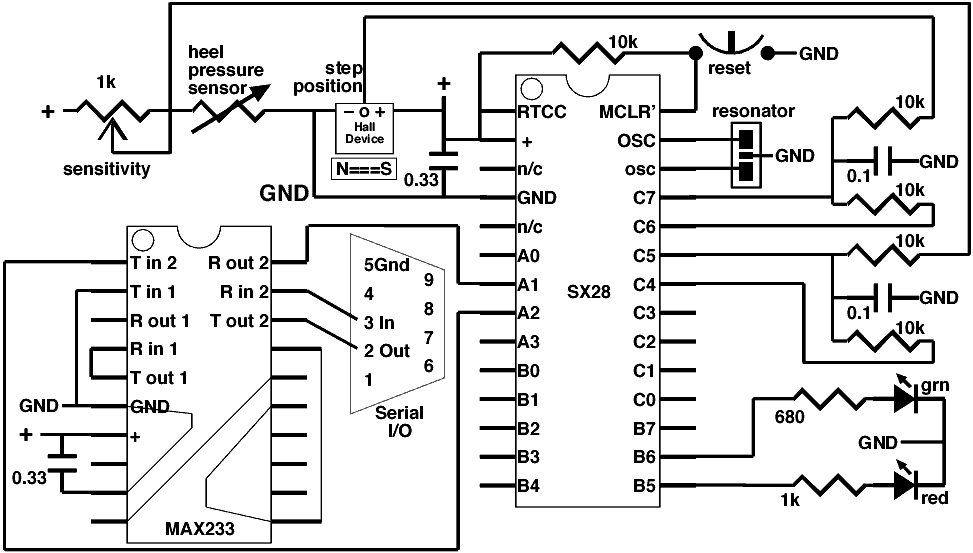
A footstepping effort-based locomotion interface is described. Built around an inexpensive and readily available exercise machine, it provides an effective interface for walking through virtual environments.
The footstepping effort-based locomotion interface utilizes a low-cost exercise machine, such as a treadmill or a stationary bike, to create an immersive experience in virtual environments (VEs). The primary objective of this interface is to translate the physical effort exerted by the user into corresponding movements within the virtual space, allowing for a more natural and intuitive interaction.
The core components of the system include the exercise machine, sensors to detect user movement, and a software interface that processes the input data. Sensors, such as accelerometers or pressure sensors, are strategically placed to monitor the user's foot movements. These sensors capture the user's stepping patterns and translate them into digital signals.
The software component is responsible for interpreting the sensor data and mapping it to the virtual environment. This involves algorithms that convert the physical stepping effort into virtual locomotion, ensuring that the user's movements are accurately reflected within the VEs. Additionally, feedback mechanisms, such as visual or auditory cues, can enhance the user's experience by providing real-time information about their movements and interactions within the virtual space.
Overall, this footstepping effort-based locomotion interface represents a cost-effective solution for enabling immersive experiences in virtual environments, leveraging existing exercise equipment to facilitate user engagement and interaction.A footstepping effort-based locomotion interface is described. Built around an inexpensive and readily-available exercise machine, it provides an effective interface to walk-through VEs..
The footstepping effort-based locomotion interface utilizes a low-cost exercise machine, such as a treadmill or a stationary bike, to create an immersive experience in virtual environments (VEs). The primary objective of this interface is to translate the physical effort exerted by the user into corresponding movements within the virtual space, allowing for a more natural and intuitive interaction.
The core components of the system include the exercise machine, sensors to detect user movement, and a software interface that processes the input data. Sensors, such as accelerometers or pressure sensors, are strategically placed to monitor the user's foot movements. These sensors capture the user's stepping patterns and translate them into digital signals.
The software component is responsible for interpreting the sensor data and mapping it to the virtual environment. This involves algorithms that convert the physical stepping effort into virtual locomotion, ensuring that the user's movements are accurately reflected within the VEs. Additionally, feedback mechanisms, such as visual or auditory cues, can enhance the user's experience by providing real-time information about their movements and interactions within the virtual space.
Overall, this footstepping effort-based locomotion interface represents a cost-effective solution for enabling immersive experiences in virtual environments, leveraging existing exercise equipment to facilitate user engagement and interaction.A footstepping effort-based locomotion interface is described. Built around an inexpensive and readily-available exercise machine, it provides an effective interface to walk-through VEs..
Aladin
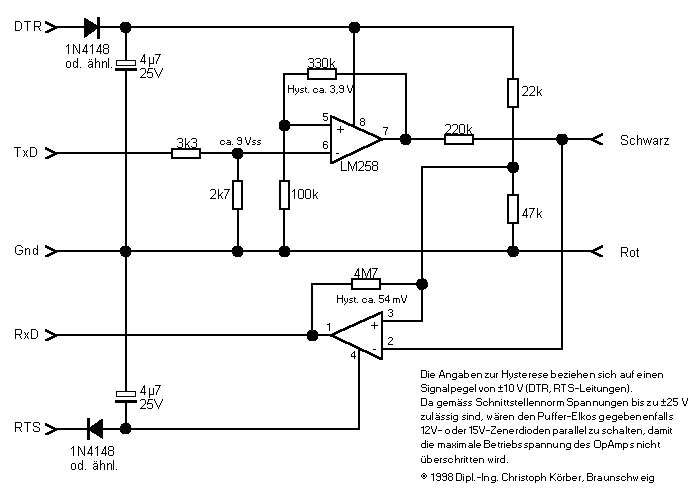
Whoever thinks about reproducing an interface for the Aladin should first of all be aware of the fact that there are two different versions of the interface. The first version, easier to assemble, enables the user to transfer dive data...
Suunto PC Interface
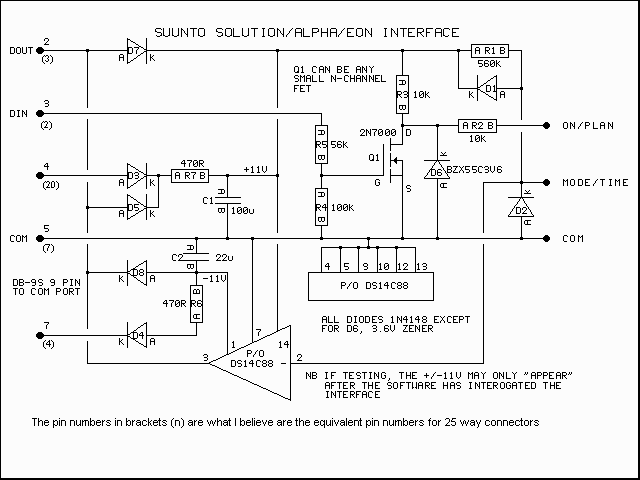
This page contains GIF images of the circuit diagram for the Solution interface, the PCB artwork, the board layout, a typical side elevation of the assembly, a parts list, some hints, and a brief overview of troubleshooting. This is a...