


Home-Built Copper Chloride (CuCl) and Copper Bromide (CuBr) Laser
#laser
#copper chloride
#copper bromide
#high voltage
#pulse
#green wavelength
#yellow wavelength
#repetition rate
#CuCl
#CuBr
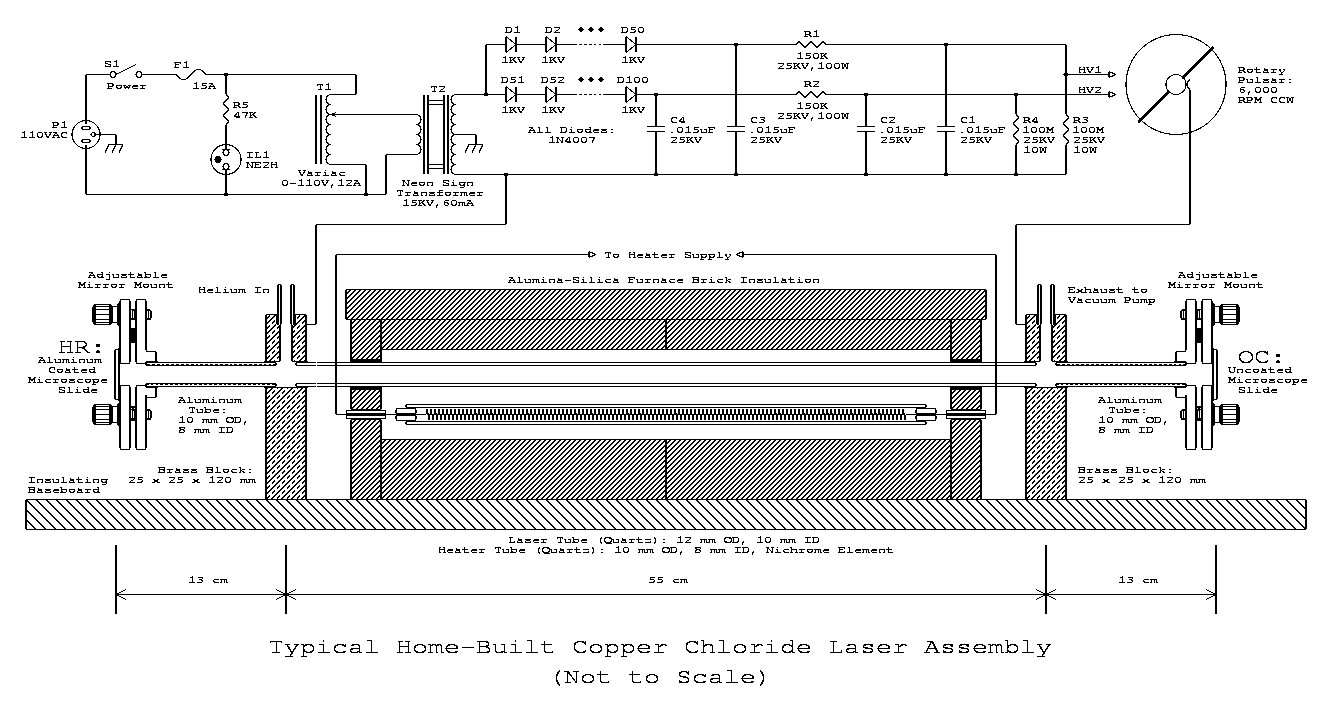
Description: The copper chloride (CuCl) and copper bromide (CuBr) lasers are variations of the copper vapor laser. The copper vapor laser operates at a high temperature of approximately 1,100 °C and is driven by a high voltage pulse, typically at a repetition rate of 8 to 10 kHz. Its output is approximately evenly divided between the green (510 nm) and yellow (578 nm) wavelengths. By utilizing a halide of copper instead of pure metal, the CuCl and CuBr lasers can function at lower temperatures than those required to produce copper in vapor form. However, the copper must be dissociated from its halogen atoms to achieve lasing. Consequently, the power requirements are somewhat atypical, necessitating a pair of high voltage pulses in rapid succession to operate the laser: the first pulse separates the Cu and Cl or Br atoms, while the second pulse excites the Cu atoms to the necessary upper energy state for lasing. Given the brief lifetime of the dissociated atoms, this process must be repeated for each laser activation. This requirement complicates the power supply design compared to conventional neon sign transformers. Although these lasers are pulsed, the high repetition rate creates the appearance of a continuous output. This can be achieved using a basic motor-driven distributor, similar to those found in automotive ignitions, or a more advanced solid-state power supply. The former may resemble something from a science fiction film but is effective. A quasi-continuous wave (CW) CuCl/CuBr laser may also be constructed, potentially for commercial use. At several kHz, sufficient copper ions exist in a dissociated state to ensure lasing occurs with each pulse, effectively allowing each pulse to serve dual purposes. The construction of an appropriate pulsar is a more advanced topic. Similar to the N2 laser, CuCl and CuBr lasers do not require a resonator for operation. The design detailed in "Light and its Uses" incorporates a mirror at one end and an unsilvered piece of glass at the other output end. Plain glass acts as a partial reflector, reflecting about 4% of light at normal incidence. Mirrors can be positioned internally or externally, with the Scientific American design opting for internal mirrors. When external mirrors are used, optical windows at a slight angle seal the ends of the tube, with the angle intended to minimize reflections that might affect the mode pattern. Most lasers require resonance to amplify emission; however, copper vapor lasers risk damage if allowed to resonate due to excessive photonic emission. Thus, only one mirror, the back mirror in the cavity of a Cu laser, is necessary. A single pass through the cavity suffices, as Cu lasers can generate hundreds of watts per pulse. The home-built HeHg laser may produce a beam with an average power of several tens of mW across multiple wavelengths. Due to the lack of specific information regarding the actual power obtainable from this or similar home-built laser designs, it is crucial to exercise caution and assume a higher power output until verified otherwise.
Electrical safety is paramount, as the power supplies can be lethal. Neon sign transformer-based power supplies deliver sufficient voltage and current to potentially stop a heart. Even if survival is possible, the shock may induce a reflexive action that could lead to injury. Adherence to Safety Guidelines for High Voltage and/or Line Powered Equipment is essential. All connections must be insulated, and barriers should be installed to prevent accidental contact with high voltage. Additionally, caution is necessary around the heater terminals. The laser tube operates at several hundred degrees Celsius, presenting burn hazards for sections of the tube that extend beyond the fire brick enclosure, as well as for the bricks themselves. If a rotary pulsar is employed, it introduces additional electrical hazards and the risk of entanglement with moving machinery.The copper chloride (CuCl) and copper bromide (CuBr) lasers are variations of the copper vapor laser. The Cu vapor laser runs at a high temperature of around 1, 100 °C and is driven with a high voltage pulse, usually at a repetition rate of 8 to 10 kHz.
Its output is roughly split 50:50 between the green (510 nm) and yellow (578 nm) wavelengths. B y starting with a halide of copper rather than pure metal, the CuCl and CuBr lasers can operate at lower temperatures than required to produce copper in vapor form. However, the copper must be dissociated from its halogen atoms to lase. For this reason, power requirements are somewhat unusual in that a pair of high voltage pulses in rapid succession is needed to operate the laser: The first separates the Cu and Cl or Br atoms and the second pumps the Cu atoms to the required upper energy state for lasing to take place.
Since, the lifetime of the separate atoms is short, this must be repeated for each activation of the laser. This makes the power supply design a bit more interesting than the run-of-the-mill neon sign transformer!
Also they are pulsed lasers but at a high enough repetition rate, the output will appear continuous. This can be accomplished by a simple but brute-force motor driven distributor somewhat like that used in an automotive ignition or by a fancy sophisticated solid state power supply. The former looks and sounds like something out of a bad Sci-Fi movie (or nightmare, take your pick) but works!
A quasi-CW CuCl/CuBr laser can also be built (and this approach may be used commercially). At a repetition rate of several kHz, enough copper ions exist in the dissociated state so that lasing occurs on every pulse. In other words, each pulse does double duty. Building a suitable pulsar is, however, left for the advanced course. :) Like the N2 laser, CuCl and CuBr lasers do not need a resonator to operate. The design in "Light and its Uses" uses a mirror at one end and an *unsilvered* piece of glass at the other (output) end.
(Of course, plain glass will act as a partial reflector - reflecting about 4% at zero-degree incidence). Mirrors can be internal or external (the Sci-Am design used internal mirrors). Where they are external, optical windows at a slight angle seal the ends of the tube. The angle is just to minimize reflections that could affect the resultant mode pattern - it doesn`t need to be (and probably shouldn`t be) at the Brewster angle.
Most lasers need to resonate to build up emission. However, copper vapor lasers would damage themselves if they were allowed to resonate. There is so much photonic emission you only need one mirror, the back mirror in the cavity of a Cu laser. One pass through the cavity is enough, Cu lasers produce hundreds of watts per pulse! Laser output: The home-built HeHg laser may be capable of producing a beam with an average power of several 10s of mW at multiple wavelengths.
Since there doesn`t seem to be any hard information on the actual power obtainable with this or similar home-built laser designs, it is important to take precautions assuming a higher power until determined otherwise. Electrical: The power supplies can be lethal. Neon sign transformer based power supplies have enough voltage and current to stop a heart, Even if you aren`t killed, the shock may startle you into doing something you might regret.
Make sure you read and follow the Safety Guidelines for High Voltage and/or Line Powered Equipment. Insulate all connections and install barriers to prevent contact with the high voltage. And, don`t forget about the terminals of the heater! High temperatures: The laser tube operates at several hundred °C. Burn hazards may be present for portions of the tube that extend beyond the fire brick enclosure as well as parts of the bricks themselves. Rotating machinary If you use the rotary pulsar, in addition to its electrical dangers is the risk of getting caught on ro
Electrical safety is paramount, as the power supplies can be lethal. Neon sign transformer-based power supplies deliver sufficient voltage and current to potentially stop a heart. Even if survival is possible, the shock may induce a reflexive action that could lead to injury. Adherence to Safety Guidelines for High Voltage and/or Line Powered Equipment is essential. All connections must be insulated, and barriers should be installed to prevent accidental contact with high voltage. Additionally, caution is necessary around the heater terminals. The laser tube operates at several hundred degrees Celsius, presenting burn hazards for sections of the tube that extend beyond the fire brick enclosure, as well as for the bricks themselves. If a rotary pulsar is employed, it introduces additional electrical hazards and the risk of entanglement with moving machinery.The copper chloride (CuCl) and copper bromide (CuBr) lasers are variations of the copper vapor laser. The Cu vapor laser runs at a high temperature of around 1, 100 °C and is driven with a high voltage pulse, usually at a repetition rate of 8 to 10 kHz.
Its output is roughly split 50:50 between the green (510 nm) and yellow (578 nm) wavelengths. B y starting with a halide of copper rather than pure metal, the CuCl and CuBr lasers can operate at lower temperatures than required to produce copper in vapor form. However, the copper must be dissociated from its halogen atoms to lase. For this reason, power requirements are somewhat unusual in that a pair of high voltage pulses in rapid succession is needed to operate the laser: The first separates the Cu and Cl or Br atoms and the second pumps the Cu atoms to the required upper energy state for lasing to take place.
Since, the lifetime of the separate atoms is short, this must be repeated for each activation of the laser. This makes the power supply design a bit more interesting than the run-of-the-mill neon sign transformer!
Also they are pulsed lasers but at a high enough repetition rate, the output will appear continuous. This can be accomplished by a simple but brute-force motor driven distributor somewhat like that used in an automotive ignition or by a fancy sophisticated solid state power supply. The former looks and sounds like something out of a bad Sci-Fi movie (or nightmare, take your pick) but works!
A quasi-CW CuCl/CuBr laser can also be built (and this approach may be used commercially). At a repetition rate of several kHz, enough copper ions exist in the dissociated state so that lasing occurs on every pulse. In other words, each pulse does double duty. Building a suitable pulsar is, however, left for the advanced course. :) Like the N2 laser, CuCl and CuBr lasers do not need a resonator to operate. The design in "Light and its Uses" uses a mirror at one end and an *unsilvered* piece of glass at the other (output) end.
(Of course, plain glass will act as a partial reflector - reflecting about 4% at zero-degree incidence). Mirrors can be internal or external (the Sci-Am design used internal mirrors). Where they are external, optical windows at a slight angle seal the ends of the tube. The angle is just to minimize reflections that could affect the resultant mode pattern - it doesn`t need to be (and probably shouldn`t be) at the Brewster angle.
Most lasers need to resonate to build up emission. However, copper vapor lasers would damage themselves if they were allowed to resonate. There is so much photonic emission you only need one mirror, the back mirror in the cavity of a Cu laser. One pass through the cavity is enough, Cu lasers produce hundreds of watts per pulse! Laser output: The home-built HeHg laser may be capable of producing a beam with an average power of several 10s of mW at multiple wavelengths.
Since there doesn`t seem to be any hard information on the actual power obtainable with this or similar home-built laser designs, it is important to take precautions assuming a higher power until determined otherwise. Electrical: The power supplies can be lethal. Neon sign transformer based power supplies have enough voltage and current to stop a heart, Even if you aren`t killed, the shock may startle you into doing something you might regret.
Make sure you read and follow the Safety Guidelines for High Voltage and/or Line Powered Equipment. Insulate all connections and install barriers to prevent contact with the high voltage. And, don`t forget about the terminals of the heater! High temperatures: The laser tube operates at several hundred °C. Burn hazards may be present for portions of the tube that extend beyond the fire brick enclosure as well as parts of the bricks themselves. Rotating machinary If you use the rotary pulsar, in addition to its electrical dangers is the risk of getting caught on ro
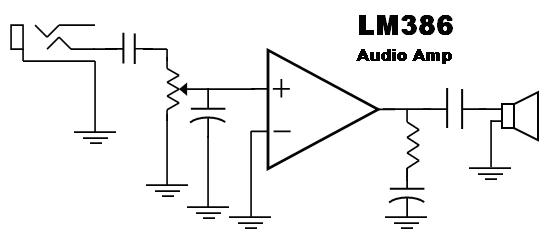
Laser Microphone
This project was a final assignment for an optics class (EE 134) at Stanford University. It was an open-ended task aimed at creating a fully functioning laser microphone. The class focused on demonstrating optics and photonics in the laboratory rather...
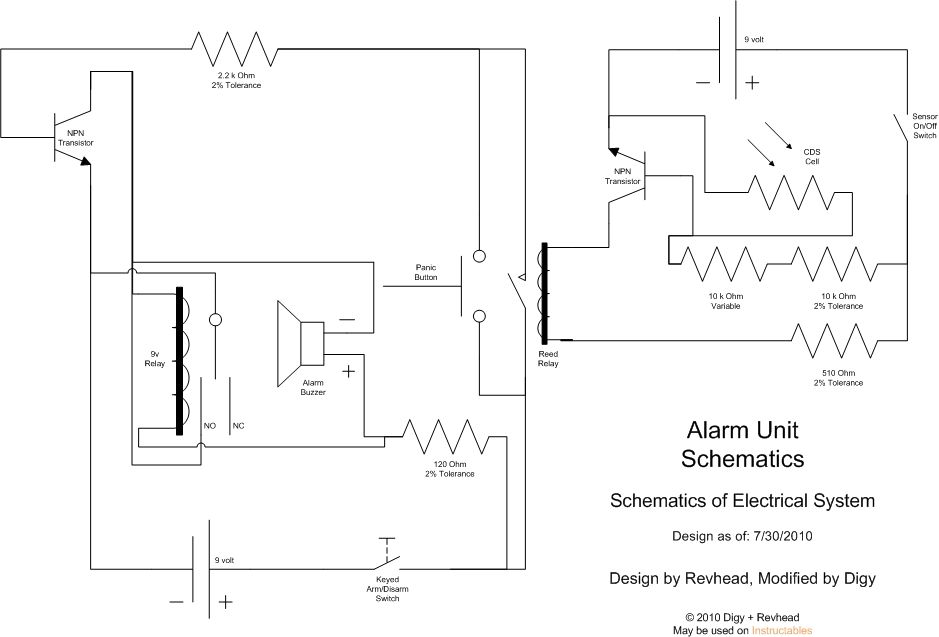
Laser Perimeter Alarm
Learn how to strengthen your security system, regardless of its size, with this innovative and customizable laser grid. Once an individual crosses the threshold, the system activates...
The concept of a customizable laser grid for security applications involves the deployment of...
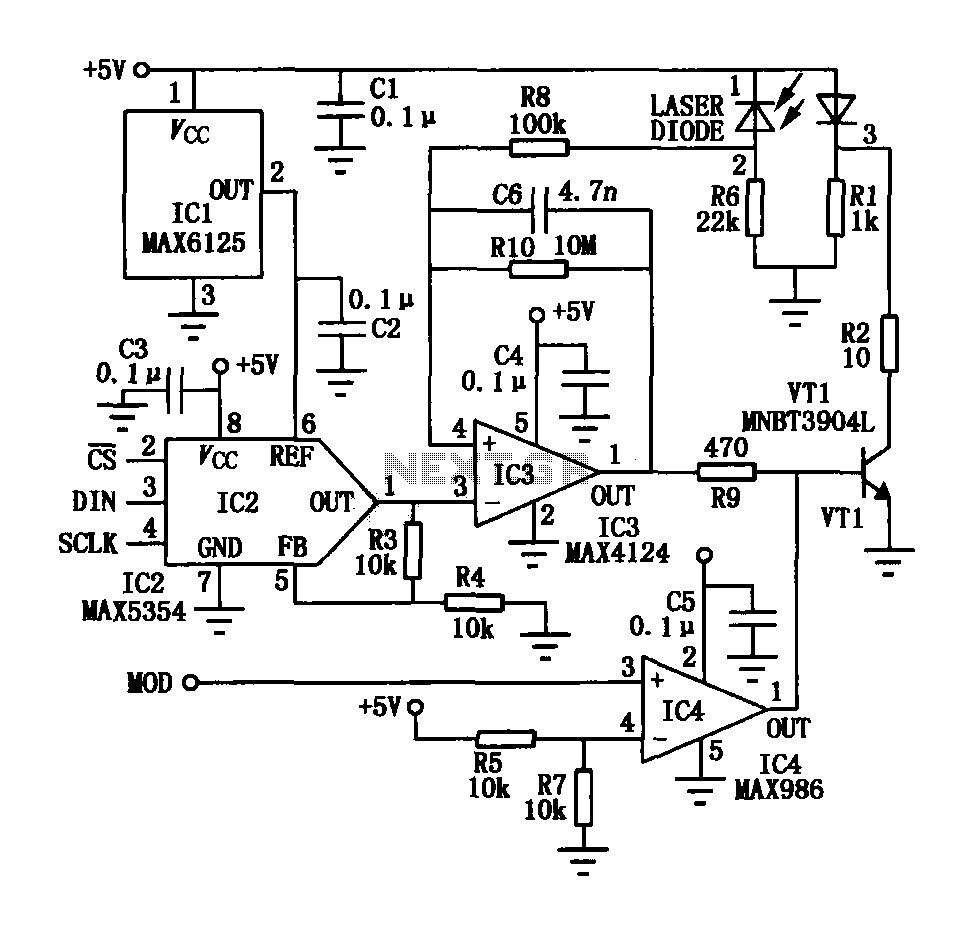
NC visible laser modulation driver circuit
The laser tube drive circuit typically incorporates a photodiode that generates a laser beam proportional to the intensity (optical power) of the current. However, this type of photocell is generally slow and unable to track modulation effectively, particularly for peak...
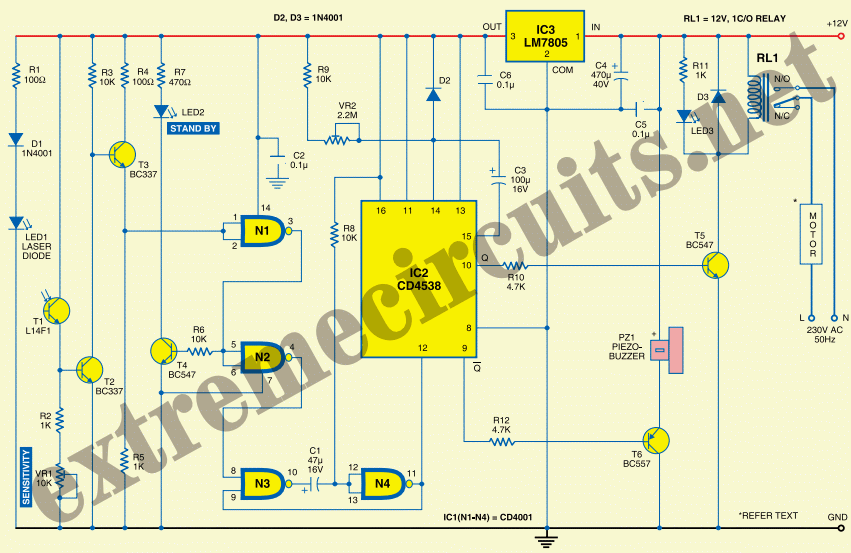
Laser-Guided Door Opener
This automatic door opener can be constructed using readily available components. The electromagnetic relay at the output of this device can be utilized to control the door mechanism.
The automatic door opener circuit is designed to facilitate the opening of a...
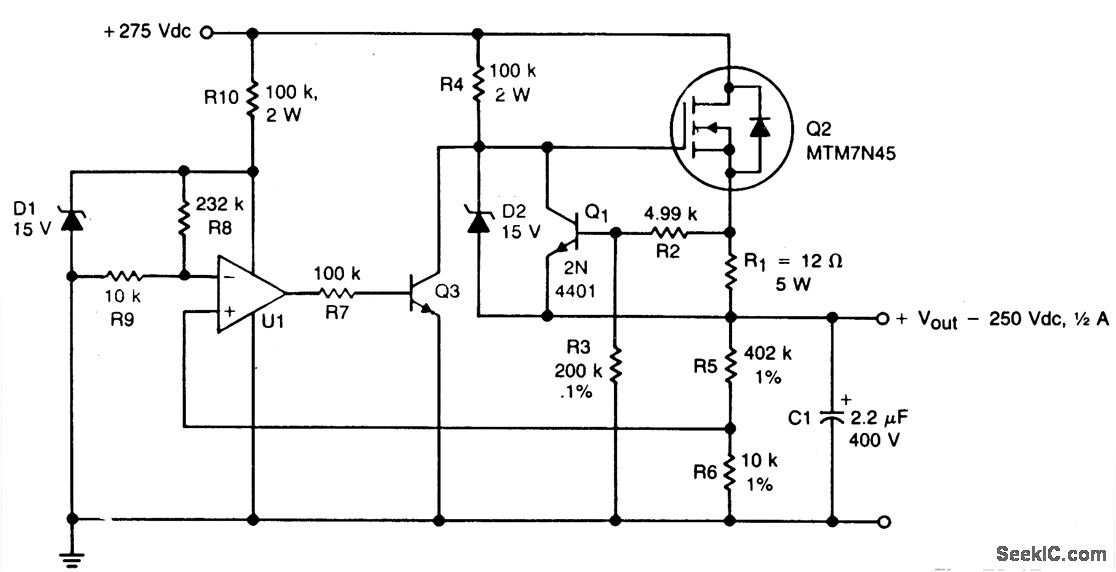
HV REGULATOR WITH FOLDBACK CURRENT LIMITING
A TMOS MTM7N45 (Q2) functions as a series pass element in a linear high voltage supply that accepts +275 V unregulated input and produces a regulated output of 250 V, incorporating foldback current limiting. A 15 V zener diode, D1,...
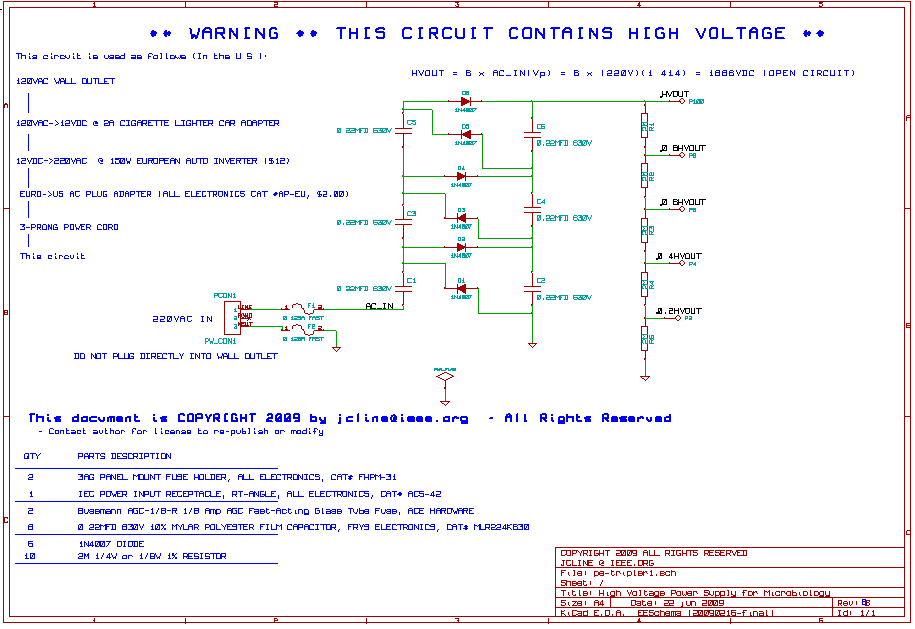
Low Cost High Voltage Power Supply
This high voltage, low current power supply has been designed for various experiments in systems and synthetic biology. The schematic and board layout are provided below. The circuit can output up to +1,866 VDC at under 1 mA and can...
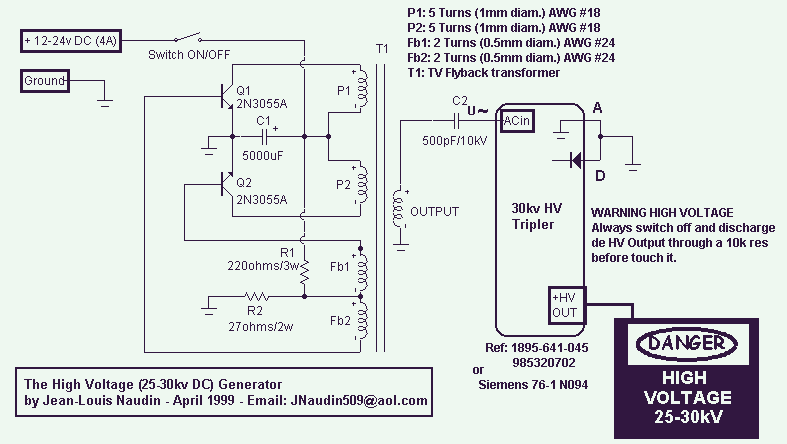
The 25-30kV DC Generator
This High Voltage power supply is able to generate up to 25-30kV DC Output from a 12-24v DC input. With a fully adjustable DC input power supply (0-24V/4A), it is possible to adjust the HV output between 5 to 30kV....
measurement Measuring large differential voltage
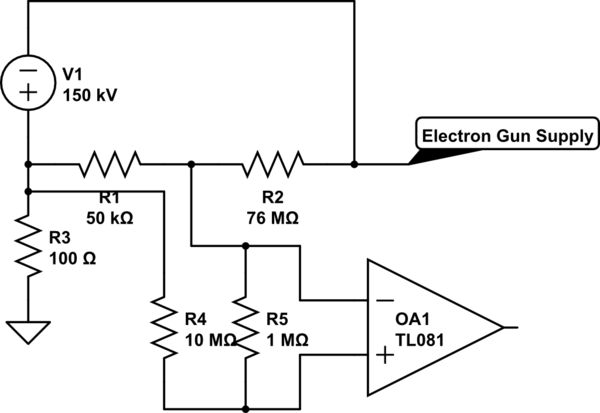
A high voltage power supply is designed for an electron beam system. The voltage regulator utilizes an outdated analog system that operates through a comparator and a reference signal from a potentiometer (POT). The challenge involves the feedback voltage from...
Laser Track Detection
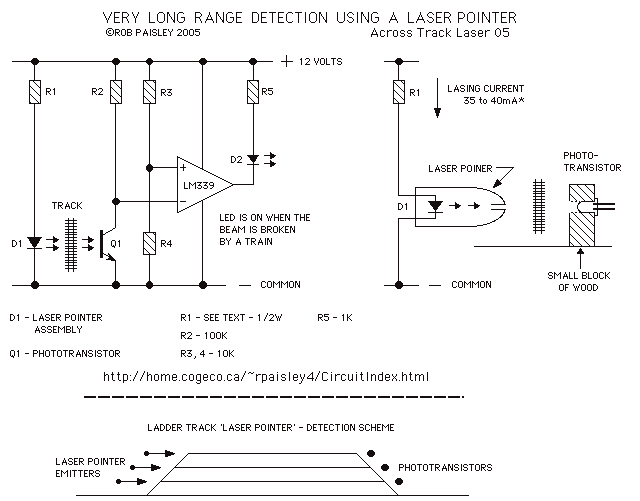
The following diagram shows the basic laser pointer circuit. It is identical to the infrared circuit except that the infrared LEDs have been replaced by the laser pointer unit. Due to the long range of these devices, this detector method...