


line follower
#autonomous robot
#line following
#IR sensor
#motor control
#Arduino
#PID control
#photodiode array
#tracking
#robotics
Description: A line follower is an autonomous robot designed to track and follow a specific colored line, such as white on a black surface, taking advantage of the contrast between the colors.
A line follower robot typically employs a combination of sensors, microcontrollers, and motor drivers to achieve its functionality. The most common sensors used in these robots are infrared (IR) sensors or color sensors. These sensors detect the difference in reflectance between the line and the surrounding surface. When the robot is placed on a track, the sensors continuously monitor the surface beneath it.
The basic operation of a line follower involves the following steps:
1. **Sensor Detection**: The sensors are positioned at the front of the robot, facing downward. When the sensors detect the line, they send signals to the microcontroller indicating whether the line is being followed or if the robot has veered off course.
2. **Microcontroller Processing**: The microcontroller processes the signals received from the sensors. Based on the input, it determines the necessary adjustments to keep the robot centered on the line. For example, if the left sensor detects the line while the right sensor does not, the microcontroller will instruct the motors to steer slightly to the left.
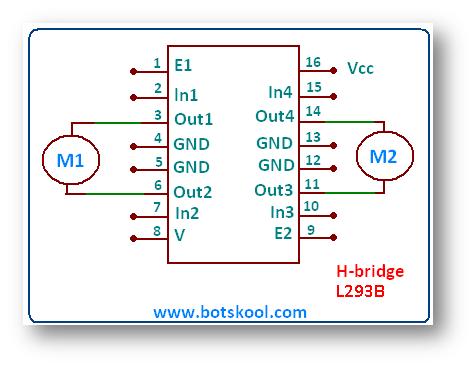
3. **Motor Control**: The robot's movement is controlled by motor drivers that receive commands from the microcontroller. The motors are typically DC motors or stepper motors, which allow for precise control over speed and direction. Adjustments in motor speed and direction are made in real-time, enabling the robot to navigate curves and corners effectively.
4. **Power Supply**: The line follower robot is powered by a battery or a power source that provides the necessary voltage and current to the microcontroller, sensors, and motors. The choice of power supply is crucial for ensuring the robot operates efficiently over extended periods.
5. **Chassis Design**: The physical design of the robot, or chassis, plays a significant role in its performance. A lightweight and compact design helps in maintaining agility and speed, while a stable base ensures that the sensors remain properly aligned with the track.
In summary, a line follower robot is a practical application of autonomous technology, utilizing sensors, microcontrollers, and motor control systems to navigate a predefined path based on color contrast. This technology is widely used in educational robotics and can be further enhanced with additional features such as obstacle detection, speed control, and communication capabilities.A line follower is an autonomous bot that can follow a specific colored line painted on a surface of different contrast, such as white on black..
A line follower robot typically employs a combination of sensors, microcontrollers, and motor drivers to achieve its functionality. The most common sensors used in these robots are infrared (IR) sensors or color sensors. These sensors detect the difference in reflectance between the line and the surrounding surface. When the robot is placed on a track, the sensors continuously monitor the surface beneath it.
The basic operation of a line follower involves the following steps:
1. **Sensor Detection**: The sensors are positioned at the front of the robot, facing downward. When the sensors detect the line, they send signals to the microcontroller indicating whether the line is being followed or if the robot has veered off course.
2. **Microcontroller Processing**: The microcontroller processes the signals received from the sensors. Based on the input, it determines the necessary adjustments to keep the robot centered on the line. For example, if the left sensor detects the line while the right sensor does not, the microcontroller will instruct the motors to steer slightly to the left.
3. **Motor Control**: The robot's movement is controlled by motor drivers that receive commands from the microcontroller. The motors are typically DC motors or stepper motors, which allow for precise control over speed and direction. Adjustments in motor speed and direction are made in real-time, enabling the robot to navigate curves and corners effectively.
4. **Power Supply**: The line follower robot is powered by a battery or a power source that provides the necessary voltage and current to the microcontroller, sensors, and motors. The choice of power supply is crucial for ensuring the robot operates efficiently over extended periods.
5. **Chassis Design**: The physical design of the robot, or chassis, plays a significant role in its performance. A lightweight and compact design helps in maintaining agility and speed, while a stable base ensures that the sensors remain properly aligned with the track.
In summary, a line follower robot is a practical application of autonomous technology, utilizing sensors, microcontrollers, and motor control systems to navigate a predefined path based on color contrast. This technology is widely used in educational robotics and can be further enhanced with additional features such as obstacle detection, speed control, and communication capabilities.A line follower is an autonomous bot that can follow a specific colored line painted on a surface of different contrast, such as white on black..
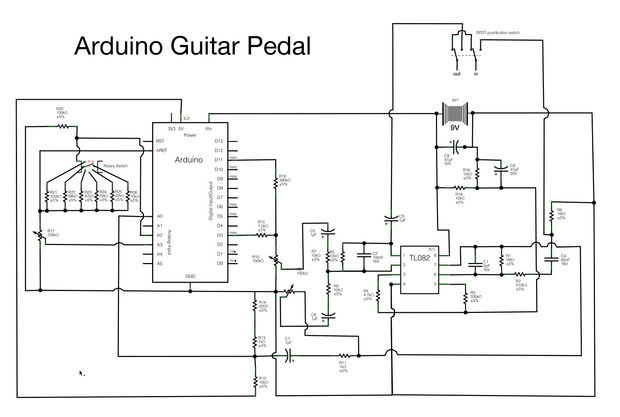
Arduino Guitar Pedal
Begin constructing the circuit as illustrated in the schematic. To view the schematic in a larger format, click the small "i" icon located in the upper right corner of the image.
The schematic serves as a visual representation of the circuit...
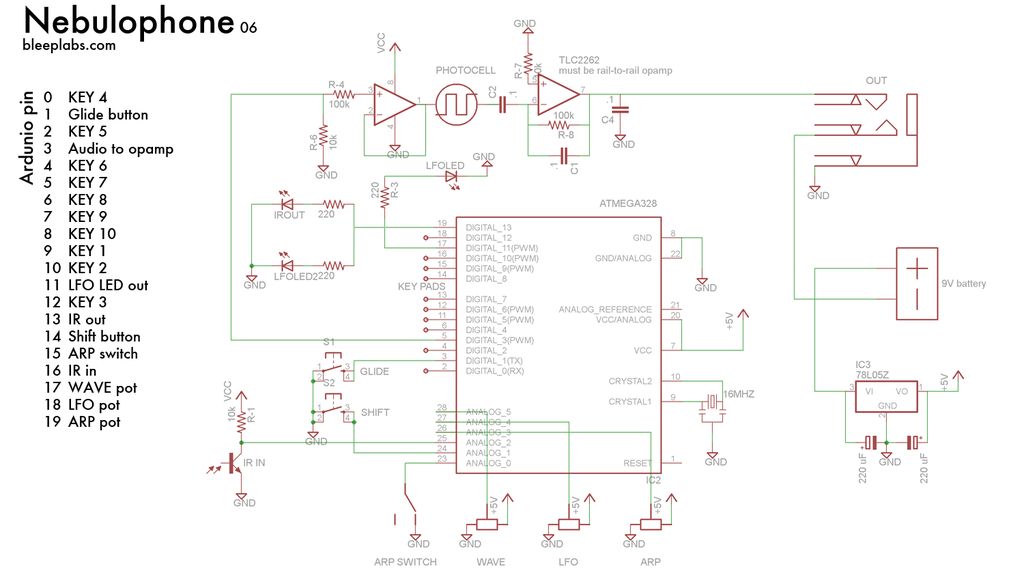
DIY Arduino Nebulophone Synth
The initial intention was to purchase a Nebulophone; however, the price exceeded the budget. It was discovered that programming an AtMega 328 using ArduinoISP was a feasible alternative. If the code was compatible with Arduino, it was logical to utilize...
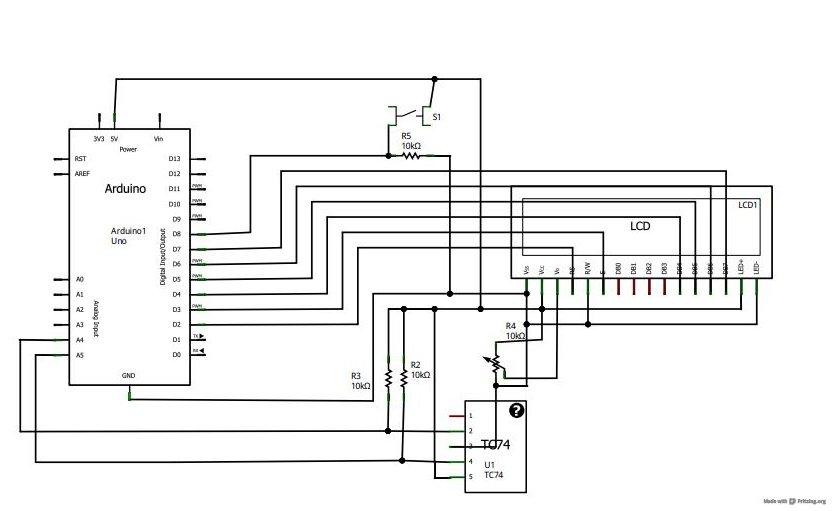
Arduino Liquid Crystal Displays
A tutorial on LCD communication was planned for a later date due to high demand. A circuit was already assembled for testing a new LCD provided by element14. The tutorial explains how communication functions with modern LCD character displays, showcasing...
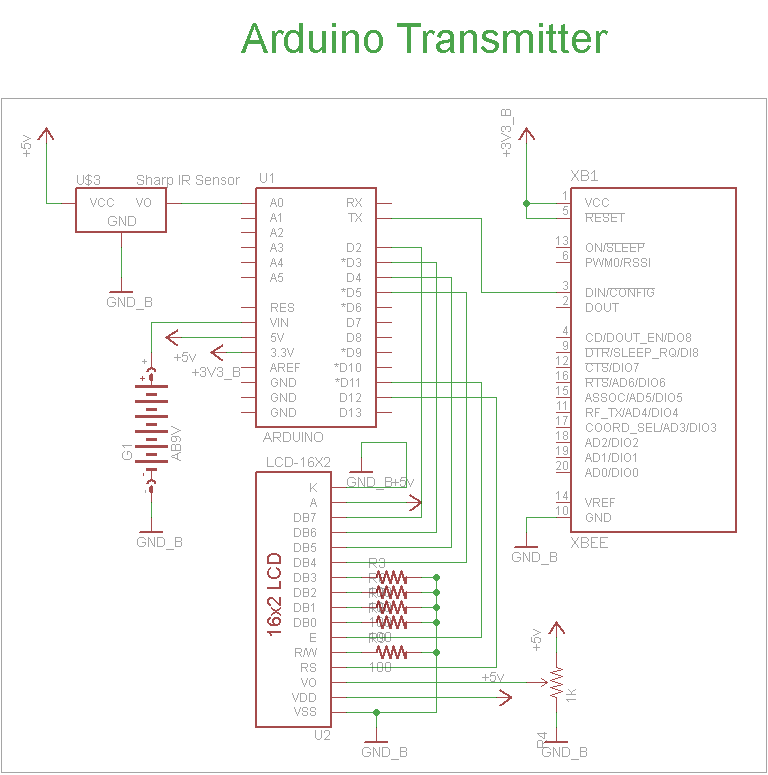
Wireless Sensor Motor Control Circuit
The schematic for the transmitter in this project consists of four main components: the Arduino UNO, the Sharp IR distance sensor, the XBee wireless modules, and a 16x2 LCD. The connections between these components are illustrated in the schematic. The...
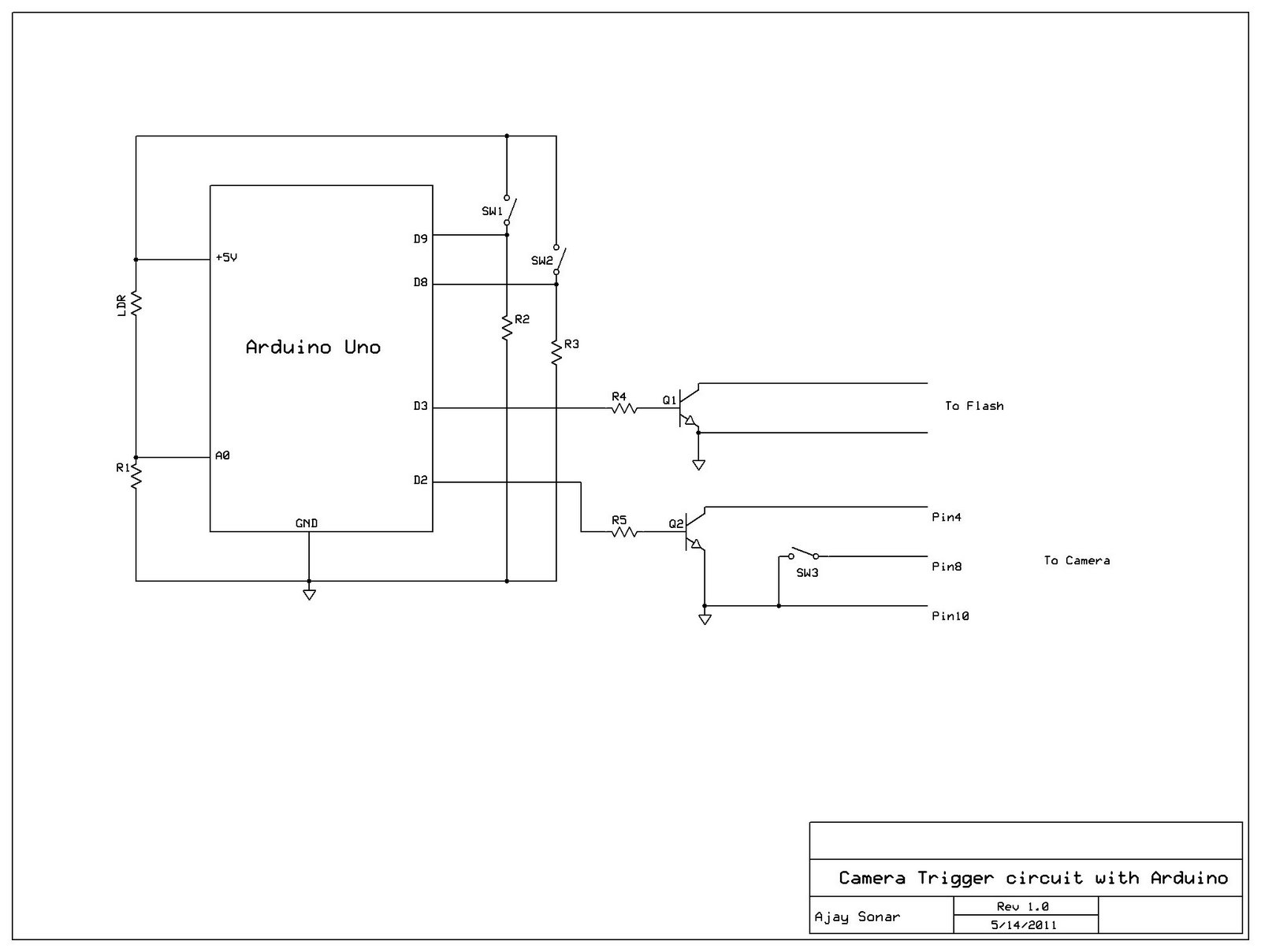
trigger
The objective of this project is to establish a system for capturing images of a falling or moving object at a precise moment using a DSLR camera and an Arduino microcontroller. Various methods can be employed to achieve this, but...
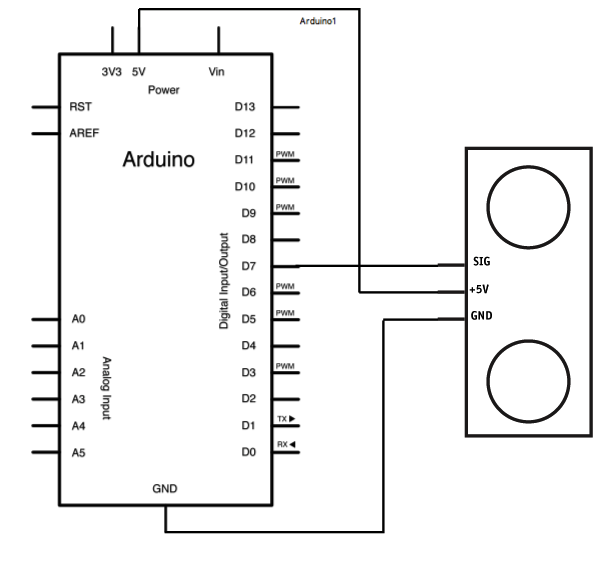
Arduino Ping
The Ping is an ultrasonic range finder from Parallax. It detects the distance of the closest object in front of the sensor (from 2 cm up to 3 meters). It operates by emitting a burst of ultrasound and listening for...
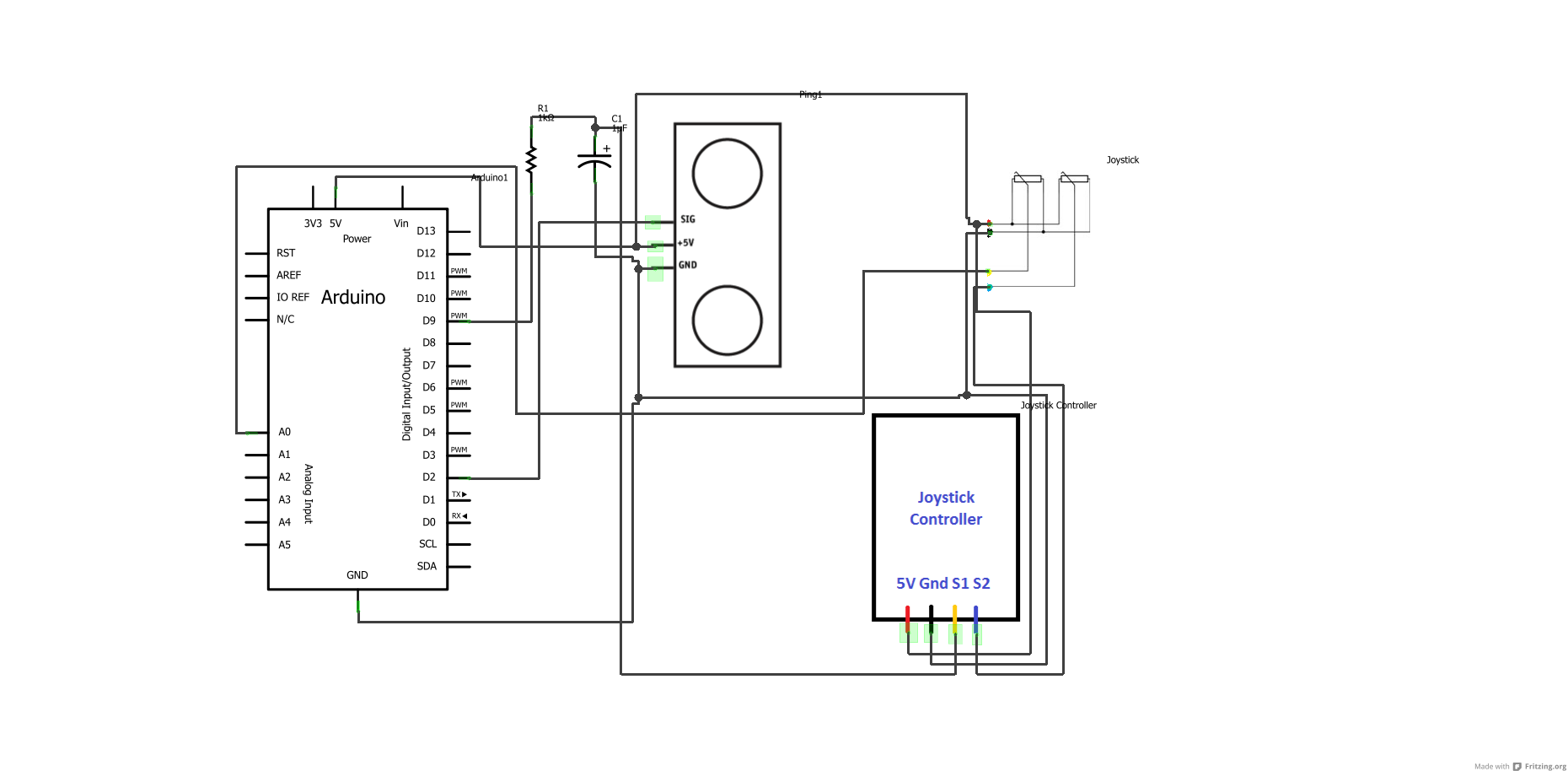
Wheelchair Obstacle Avoidance System
First, download any version of the Arduino software (the latest version is recommended) using the provided link, and then download the specified Arduino sketches. After the download is complete, open the sketches to view the written code. Complete the circuit...
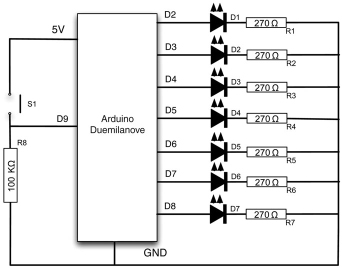
Another Arduino project for newbies
Electronic devices require precision. When a task is performed multiple times, the outcome is consistently the same. However, there are instances where random results are desirable, such as in gaming applications. This project demonstrates how to create a lottery game...
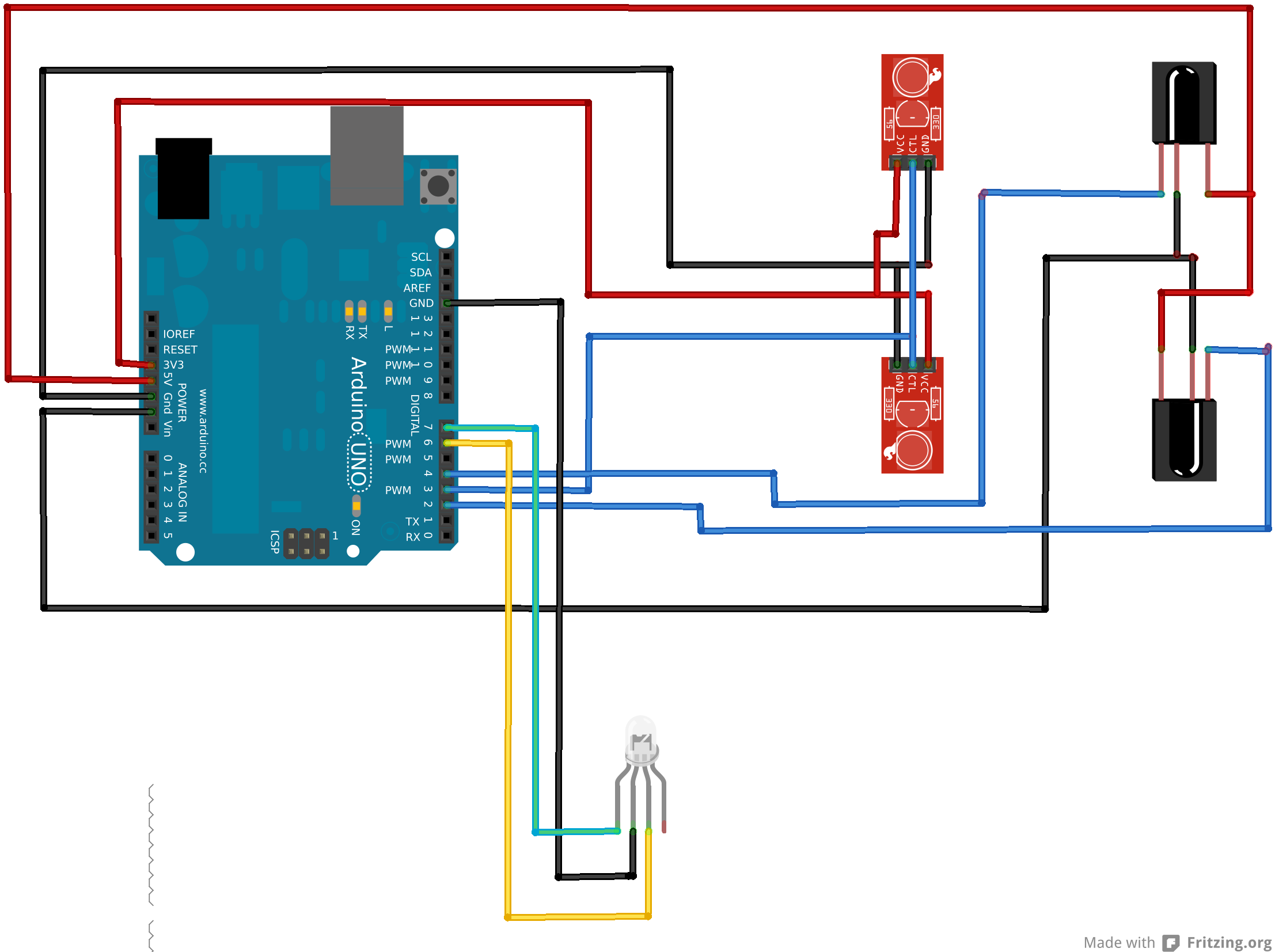
Arduino IR Transmitter & Receiver w/ LEDs Flickering Issue (Whats wrong with this circuit?)
An Arduino Uno is connected to two infrared (IR) transmitters and their respective receivers. When one of the receivers detects a beam break, a strand of LEDs displays a pattern. While this setup functions correctly in principle, an issue arises...