


LINE TRACER ROBOT WITHOUT MICROCONTROLLER
#line tracer
#robot
#breadboard
#PCB
#sensor
#motor control
#DIY
#electronics
#automation
#circuit design
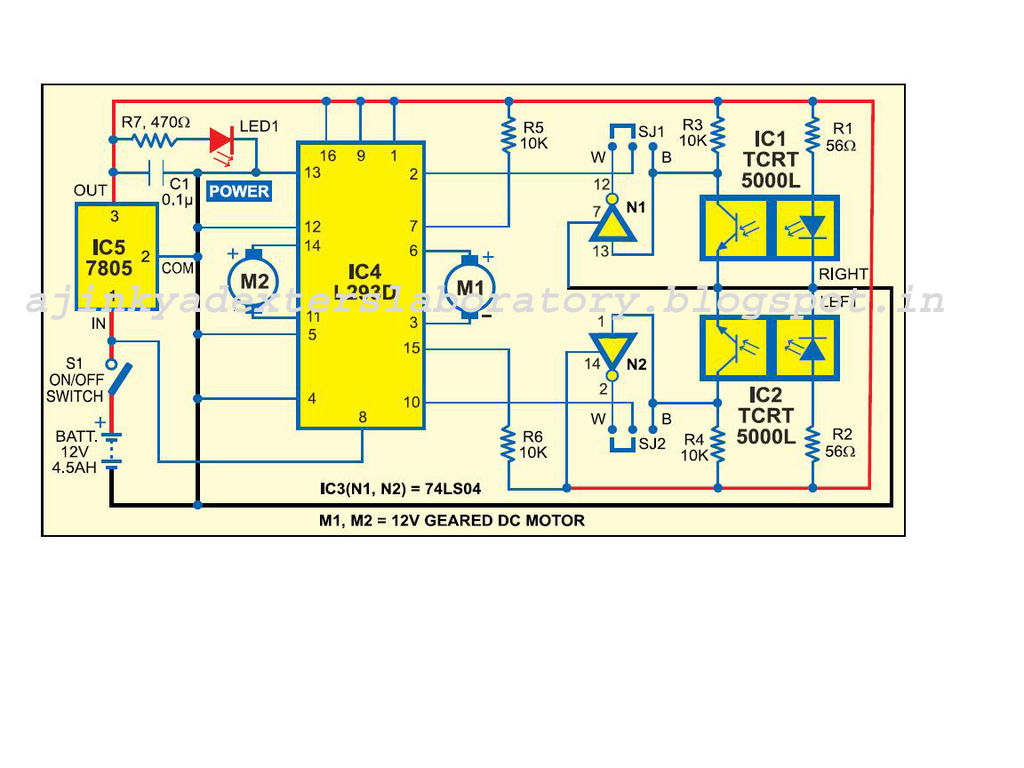
Description: Carefully examine the following circuit diagram and attempt to construct the circuit on a breadboard first. If it functions correctly, proceed to create its PCB version.
The circuit diagram serves as a blueprint for constructing an electronic circuit on a breadboard, which is a temporary platform for prototyping and testing. The initial step involves analyzing the schematic to understand the arrangement of components, their connections, and the overall functionality of the circuit.
Once the circuit is assembled on the breadboard, it is crucial to verify its performance by applying power and testing the output against expected results. This may involve measuring voltages, currents, and signal integrity using appropriate test equipment such as multimeters or oscilloscopes. If the circuit operates as intended, the next phase involves designing a printed circuit board (PCB) layout.
Creating a PCB version requires translating the breadboard layout into a schematic design software, where the circuit connections are optimized for a compact and efficient layout. The PCB design must include considerations for trace widths, component placement, and the routing of power and signal paths to minimize interference and ensure reliability. After finalizing the design, the PCB can be fabricated, allowing for a more permanent and robust implementation of the circuit.
This process emphasizes the importance of thorough testing and verification at each stage to ensure the circuit's functionality and reliability in its intended application.Now Look carefully following circuit Diagram & try out the circuit on bread board first. if it is working properly go to making its PCB version. the P..
The circuit diagram serves as a blueprint for constructing an electronic circuit on a breadboard, which is a temporary platform for prototyping and testing. The initial step involves analyzing the schematic to understand the arrangement of components, their connections, and the overall functionality of the circuit.
Once the circuit is assembled on the breadboard, it is crucial to verify its performance by applying power and testing the output against expected results. This may involve measuring voltages, currents, and signal integrity using appropriate test equipment such as multimeters or oscilloscopes. If the circuit operates as intended, the next phase involves designing a printed circuit board (PCB) layout.
Creating a PCB version requires translating the breadboard layout into a schematic design software, where the circuit connections are optimized for a compact and efficient layout. The PCB design must include considerations for trace widths, component placement, and the routing of power and signal paths to minimize interference and ensure reliability. After finalizing the design, the PCB can be fabricated, allowing for a more permanent and robust implementation of the circuit.
This process emphasizes the importance of thorough testing and verification at each stage to ensure the circuit's functionality and reliability in its intended application.Now Look carefully following circuit Diagram & try out the circuit on bread board first. if it is working properly go to making its PCB version. the P..
The Hoser Paper
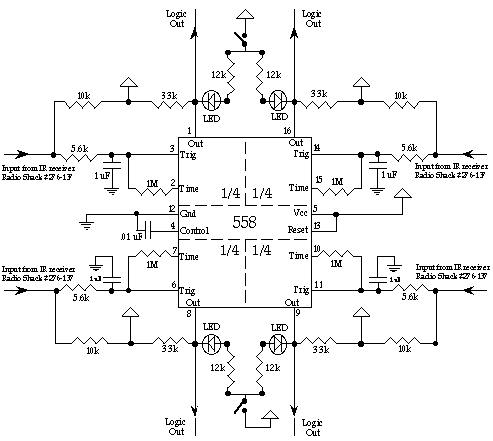
A robot named "Wet Dream" was constructed to roam around, avoid collisions, locate people, and squirt them with an onboard motorized water gun. The robot was designed to maneuver in unstructured environments and react purposefully to various situations. "Wet Dream"...
Dancing Robots
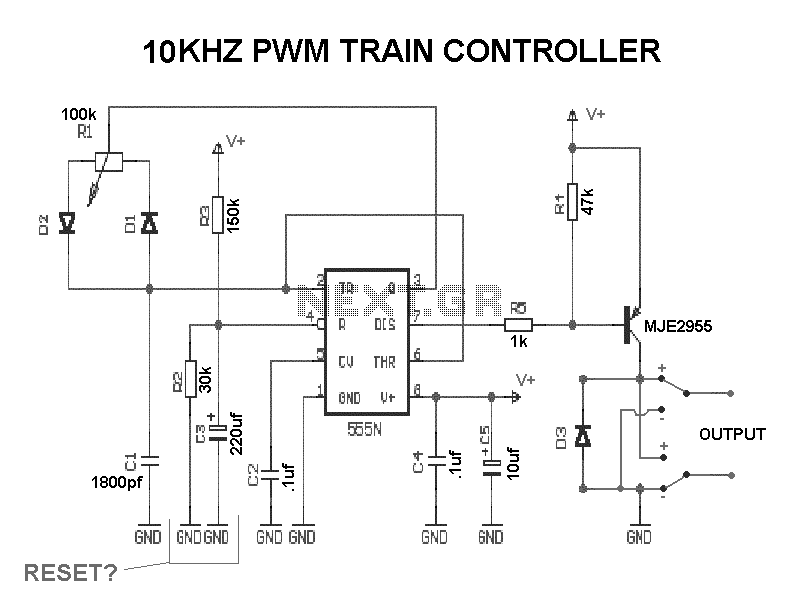
A robot that dances to music. It would be fascinating to have a small robot on your desk dancing to music from Fatboy Slim. Winamp provides an API for writing music visualization plug-ins. A plug-in was developed that sends signals...
Fighting Robot circuit
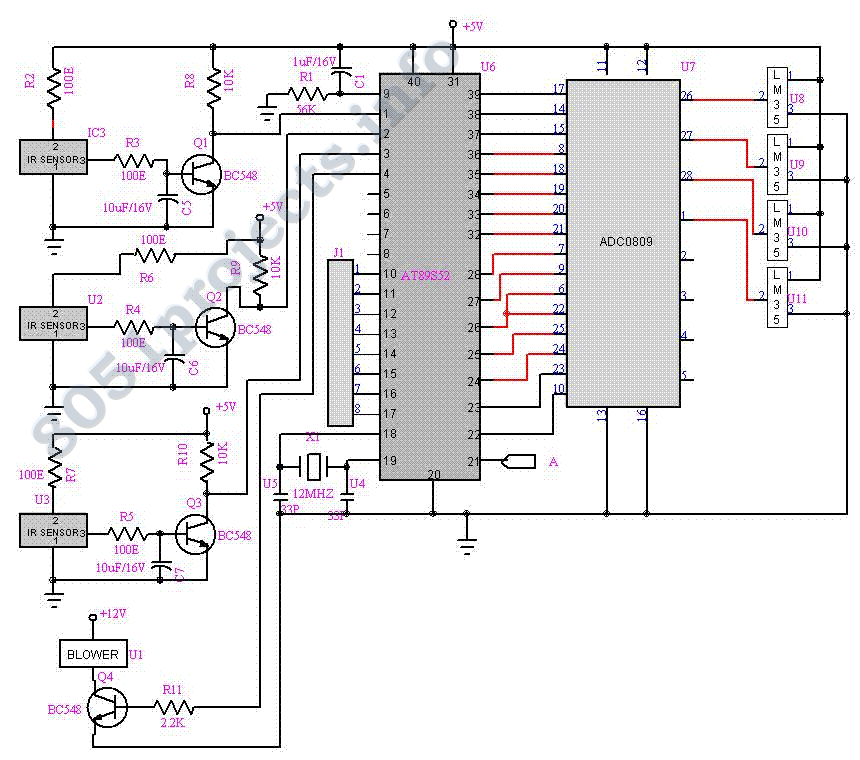
The need for a device that can detect and extinguish a fire on its own is long past due. Many house fires originate when someone is either sleeping or not home. With the invention of such a device, people and...
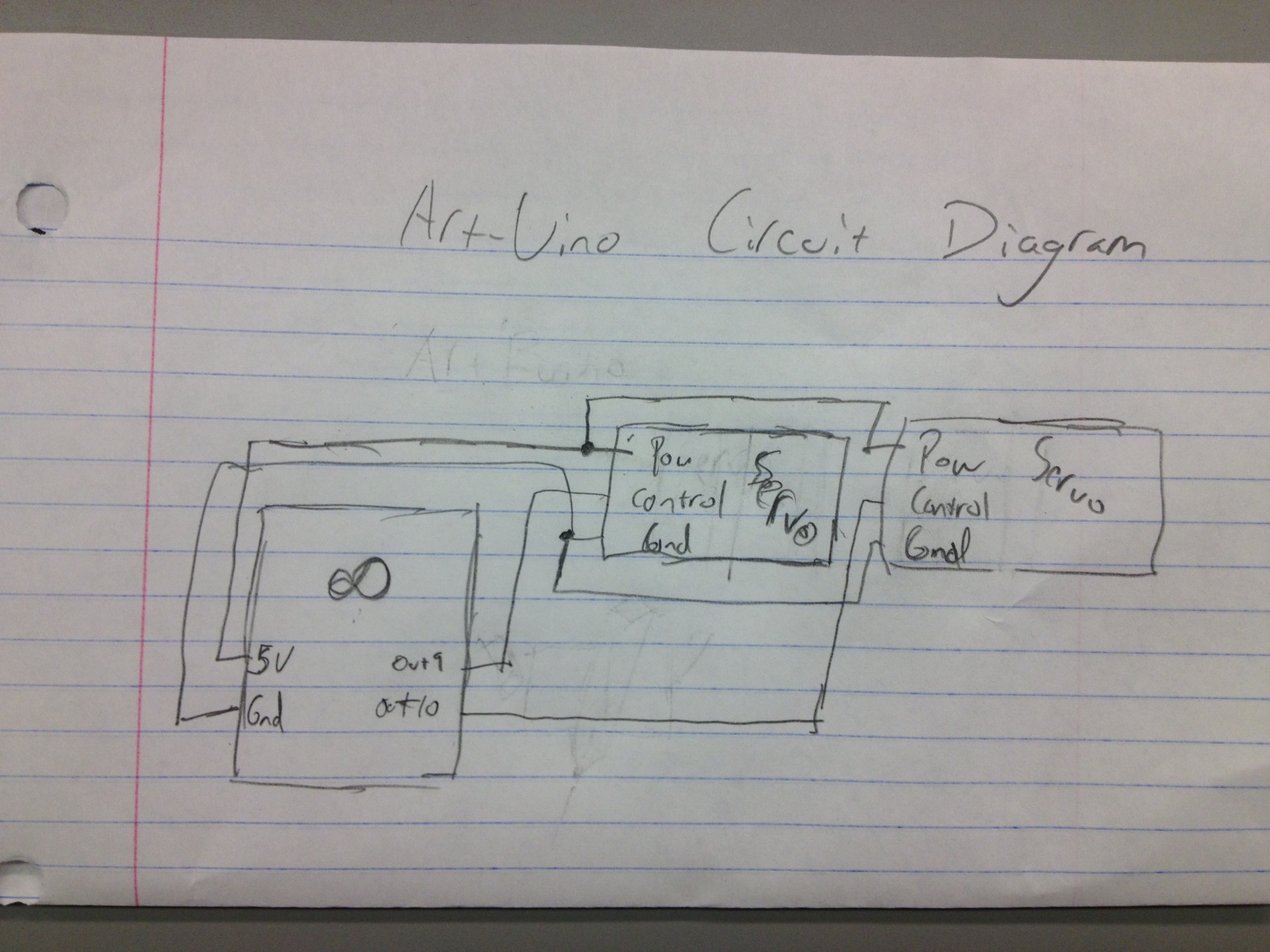
Human-Computer Interface Technology 3
This week, there was a Southern theme in anticipation of Spring Break, leading to the decision to build a LassoBot. This robot throws a lasso in a circular motion until it captures an object in its path. Once an object...
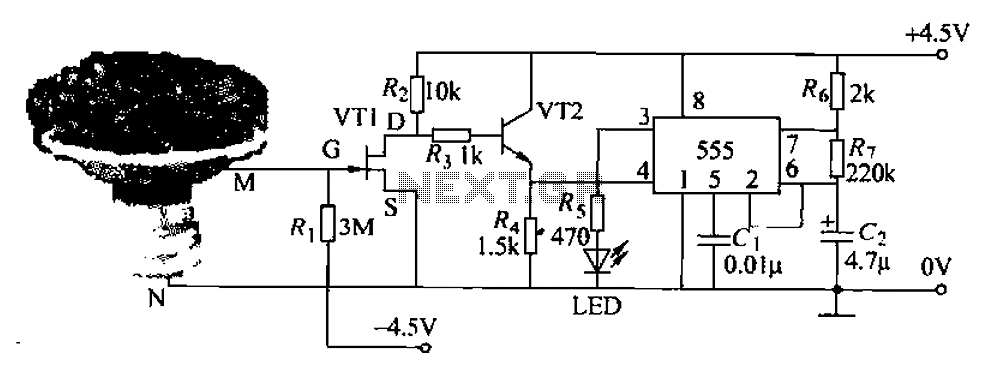
Pots water alarm circuit
The flowers in pots require watering, as relying solely on the observation of moist soil surfaces can be unreliable. To address this issue, a flower watering indicator has been developed. This circuit includes a field effect transistor (VT1), a second...

Discrete Robot
This simple robot responds to light and avoids obstacles without the need for a microcontroller, programmer, or PC. The only specialized component in the circuit is a window discriminator, which functions as a window comparator. Resistors R1 and R2, in...

2 -Y- connection automatic three-speed motor acceleration control circuit
Figure 3-118 illustrates an automatic acceleration control circuit. This circuit employs a male contactor time relay, enabling the motor to start automatically at a low speed before transitioning to high-speed operation.
The automatic acceleration control circuit depicted in Figure 3-118 is...
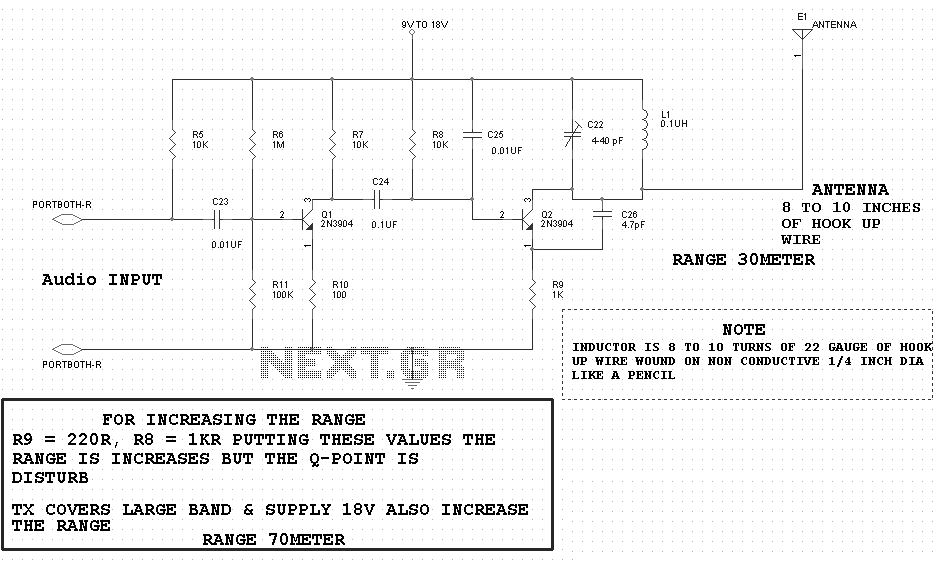
robotic vacuum cleaner
A robot has been designed and built to vacuum the floor of a room or area autonomously, requiring only the initial activation by a user. This project addresses the demand for an affordable and user-friendly product that can independently vacuum...
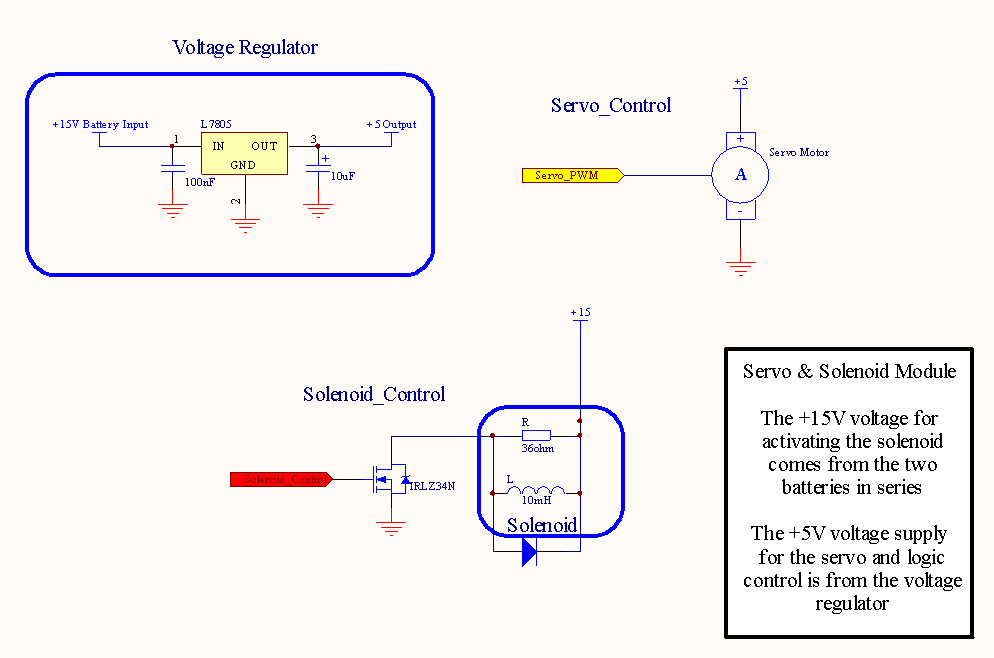
sensors circuits
All electronic circuits were initially built on breadboards. Once the circuits were operational, they were soldered onto perfboards to create a more durable system. A power board was designed to stack two batteries in series, providing access to a 14.4V...