


peltier_mod
#Peltier module
#cooling
#CCD chip
#noise reduction
#camera modification
#thermal management
#electronics cooling
#long exposure
#imaging
#eBay

Description: The long exposure modified TouCam Pro II camera may exhibit unacceptable noise in images for exposures exceeding 30 seconds. To mitigate this issue, the CCD chip can be cooled using a Peltier module. A second-hand module was acquired from eBay for £9.99 plus £1.99 for shipping, a significant saving compared to the new price of over £40. The supplier, Terry Potts, typically maintains a stock of Peltier modules and also provides Silver Compound for thermal surface mating, which was utilized in this project. The CCD chip must be detached from the camera's printed circuit board and mounted on a 'Cold Finger' assembly that is thermally coupled to the Peltier module. Initial tests with the Peltier module against a PC heatsink and fan showed a temperature of +35°C on the hot side and +2°C on the cold side, achieved by simply applying pressure without thermal compound. A 1mm gap is maintained around the perimeter of the Peltier module, and a cut-out of 42mm x 46mm is made in the enclosure to allow for direct seating on the heatsink. The self-tapping screws are insulated from the enclosure using M3 insulators. The internal assembly includes four M3 insulators, with screw fixings and nylon nuts for securing the 'Cold Finger' to the Peltier module. A grommet is used for fan wiring access. The heatsink and fan assembly are secured to the enclosure with self-tapping screws, and the Peltier module is placed on the heatsink with thermal compound. A cut-out for a digital thermometer is also made. The few electronic components required are mounted on a small piece of veroboard attached to the thermometer. The temperature module was purchased from RS Components, part no 337-7864. During initial testing, the Peltier module was clamped to the heatsink with thermal compound, powered by a +12V PC power supply. The fan activated, and the Peltier module began to cool effectively. Ambient temperature was measured at approximately +20°C. A hole for the focuser adapter was created in the enclosure, and the original TouCam Pro II focuser adapter was attached with six self-tapping screws. The Cold Finger was fabricated from a block of aluminum sourced from eBay. The assembly details indicate that the lower part rests on the Peltier module, with the CCD secured by another piece of aluminum, featuring slotted screws for positional adjustment. Although slotted holes in the case were initially planned for further adjustment of the CCD, the alignment was satisfactory, allowing the design to remain unchanged. M4 screws with nylon washers are utilized to secure the Cold Finger, which is tapped for M4 size. The hole in the enclosure is enlarged to accommodate M4 insulators, ensuring complete thermal isolation of the screw fixings from the case.
The described project involves the modification of a TouCam Pro II camera for long exposure astrophotography, addressing noise issues through active cooling. The integration of a Peltier module serves as an effective cooling solution, significantly improving image quality during extended exposure times. The meticulous assembly process ensures proper thermal coupling and isolation, which is critical for maintaining the performance of the CCD sensor. The use of a digital thermometer allows for real-time monitoring of the temperature differential, facilitating optimal operational conditions for the camera. The design considerations, such as the choice of materials and the method of securing components, reflect a comprehensive approach to enhancing the functionality of the camera. The attention to detail in the fabrication of the Cold Finger and the thermal management strategy underscores the importance of precision in electronic modifications aimed at specialized applications like astrophotography.The long exposure modified TouCam Pro II camera may show signs of unacceptable noise in the pictures for exposures of over 30s or so. In order to combat this effect the CCD chip may be cooled. The cooling device I used was a Peltier module. A second hand device was obtained from eBay at a bargain price of £9. 99 + £1. 99 P&P. Since new these can c ost over £40. 00 I was quite pleased. The supplier I used, Terry Potts has told me that he usually has a supply of Peltiers in stock. Terry also supplies Silver Compound for all thermal surface mating which I used in this project. Terry can be contacted by e-mail at: The CCD chip has to be removed from the printed circuit board of the camera, and placed on the `Cold Finger` assembly which is thermally coupled to the Peltier module. Initial testing of just the Peltier module held against a PC heatsink and fan arrangement gave me a reading of +35C on the hot side and +2C on the cold.
Not bad considering I simply used pressure to keep the Peltier against the heatsink and no heatsink compound (it does get better). A gap of 1mm is allowed around the perimeter of the peltier module. The internal cut-out of 42mm x 46mm is also made in the enclosure. This allows the Peltier module to be seated directly onto the heatsink. The self-tap screws are also insulated from the enclosure by M3 insulators. Here is a picture of the inside of the enclosure showing the four M3 insulators. The screw fixings with the nylon nuts are for the `Cold Finger` to Peltier fixing later. The grommet is to allow the fan wiring access to the enclosure. The heatsink and fan assembly were then attached to the enclosure using four self-tap screws. The Peltier module was placed on the heatsink, with some heatsink compound between them, and temporarily held in place using an old PC slot plate from a video card.
I next made a cut-out for the digital thermometer. The few electronic components required for this module were placed on a small piece of veroboard and mounted to the thermometer. The circuit diagram is show below. The picture below shows the veroboard circuit in place on the thermometer. I purchased the module from RS Components, part no 337-7864. Click here for the temperature module data sheet. As mentioned earlier, for the first phase of testing of the module, I clamped the Peltier module to the heatsink, with some heatsink compound, using an old PC slot plate from a video card.
I then connected to the +12V of a PC power pack. With the +12V applied the fan started, (always a good sign), and the Peltier module began to get cold on one side and hot on the other. The thermometer worked correctly and the ambient temperature measurement was around +20C. A hole was made in the mating half of the enclosure for the focuser adapter. The original TouCam Pro II focuser adapter was then attached to this using six self-tap screws. I manufactured the Cold Finger from a piece of block aluminium that I purchased from eBay (seem to be using them a lot lately).
The drawing below details the assembly. The lower part of the assembly is placed on the Peltier module and the CCD is held onto it by a second piece of aluminium. This part has slotted screws to allow the position of the CCD to be adjusted to obtain dead centre of the web-cam adapter.
I was intending to have slotted holes in the case for fixing the `Cold Finger` lower assembly, which would have allowed for adjusting of the CCD in the other direction, but it was so spot on to centre that I decided to just leave to screw holes as they were. (definitely more luck than judgement there). M4 screws were used with a nylon washer to fix the `Cold Finger`, which I had tapped to M4 size. The hole in the box was made larger than the screw to accommodate M4 insulators. This means that the screw fixings are completely thermally isolated from the case. The CCD will be placed on the Cold Finger with the pins protruding down th
The described project involves the modification of a TouCam Pro II camera for long exposure astrophotography, addressing noise issues through active cooling. The integration of a Peltier module serves as an effective cooling solution, significantly improving image quality during extended exposure times. The meticulous assembly process ensures proper thermal coupling and isolation, which is critical for maintaining the performance of the CCD sensor. The use of a digital thermometer allows for real-time monitoring of the temperature differential, facilitating optimal operational conditions for the camera. The design considerations, such as the choice of materials and the method of securing components, reflect a comprehensive approach to enhancing the functionality of the camera. The attention to detail in the fabrication of the Cold Finger and the thermal management strategy underscores the importance of precision in electronic modifications aimed at specialized applications like astrophotography.The long exposure modified TouCam Pro II camera may show signs of unacceptable noise in the pictures for exposures of over 30s or so. In order to combat this effect the CCD chip may be cooled. The cooling device I used was a Peltier module. A second hand device was obtained from eBay at a bargain price of £9. 99 + £1. 99 P&P. Since new these can c ost over £40. 00 I was quite pleased. The supplier I used, Terry Potts has told me that he usually has a supply of Peltiers in stock. Terry also supplies Silver Compound for all thermal surface mating which I used in this project. Terry can be contacted by e-mail at: The CCD chip has to be removed from the printed circuit board of the camera, and placed on the `Cold Finger` assembly which is thermally coupled to the Peltier module. Initial testing of just the Peltier module held against a PC heatsink and fan arrangement gave me a reading of +35C on the hot side and +2C on the cold.
Not bad considering I simply used pressure to keep the Peltier against the heatsink and no heatsink compound (it does get better). A gap of 1mm is allowed around the perimeter of the peltier module. The internal cut-out of 42mm x 46mm is also made in the enclosure. This allows the Peltier module to be seated directly onto the heatsink. The self-tap screws are also insulated from the enclosure by M3 insulators. Here is a picture of the inside of the enclosure showing the four M3 insulators. The screw fixings with the nylon nuts are for the `Cold Finger` to Peltier fixing later. The grommet is to allow the fan wiring access to the enclosure. The heatsink and fan assembly were then attached to the enclosure using four self-tap screws. The Peltier module was placed on the heatsink, with some heatsink compound between them, and temporarily held in place using an old PC slot plate from a video card.
I next made a cut-out for the digital thermometer. The few electronic components required for this module were placed on a small piece of veroboard and mounted to the thermometer. The circuit diagram is show below. The picture below shows the veroboard circuit in place on the thermometer. I purchased the module from RS Components, part no 337-7864. Click here for the temperature module data sheet. As mentioned earlier, for the first phase of testing of the module, I clamped the Peltier module to the heatsink, with some heatsink compound, using an old PC slot plate from a video card.
I then connected to the +12V of a PC power pack. With the +12V applied the fan started, (always a good sign), and the Peltier module began to get cold on one side and hot on the other. The thermometer worked correctly and the ambient temperature measurement was around +20C. A hole was made in the mating half of the enclosure for the focuser adapter. The original TouCam Pro II focuser adapter was then attached to this using six self-tap screws. I manufactured the Cold Finger from a piece of block aluminium that I purchased from eBay (seem to be using them a lot lately).
The drawing below details the assembly. The lower part of the assembly is placed on the Peltier module and the CCD is held onto it by a second piece of aluminium. This part has slotted screws to allow the position of the CCD to be adjusted to obtain dead centre of the web-cam adapter.
I was intending to have slotted holes in the case for fixing the `Cold Finger` lower assembly, which would have allowed for adjusting of the CCD in the other direction, but it was so spot on to centre that I decided to just leave to screw holes as they were. (definitely more luck than judgement there). M4 screws were used with a nylon washer to fix the `Cold Finger`, which I had tapped to M4 size. The hole in the box was made larger than the screw to accommodate M4 insulators. This means that the screw fixings are completely thermally isolated from the case. The CCD will be placed on the Cold Finger with the pins protruding down th
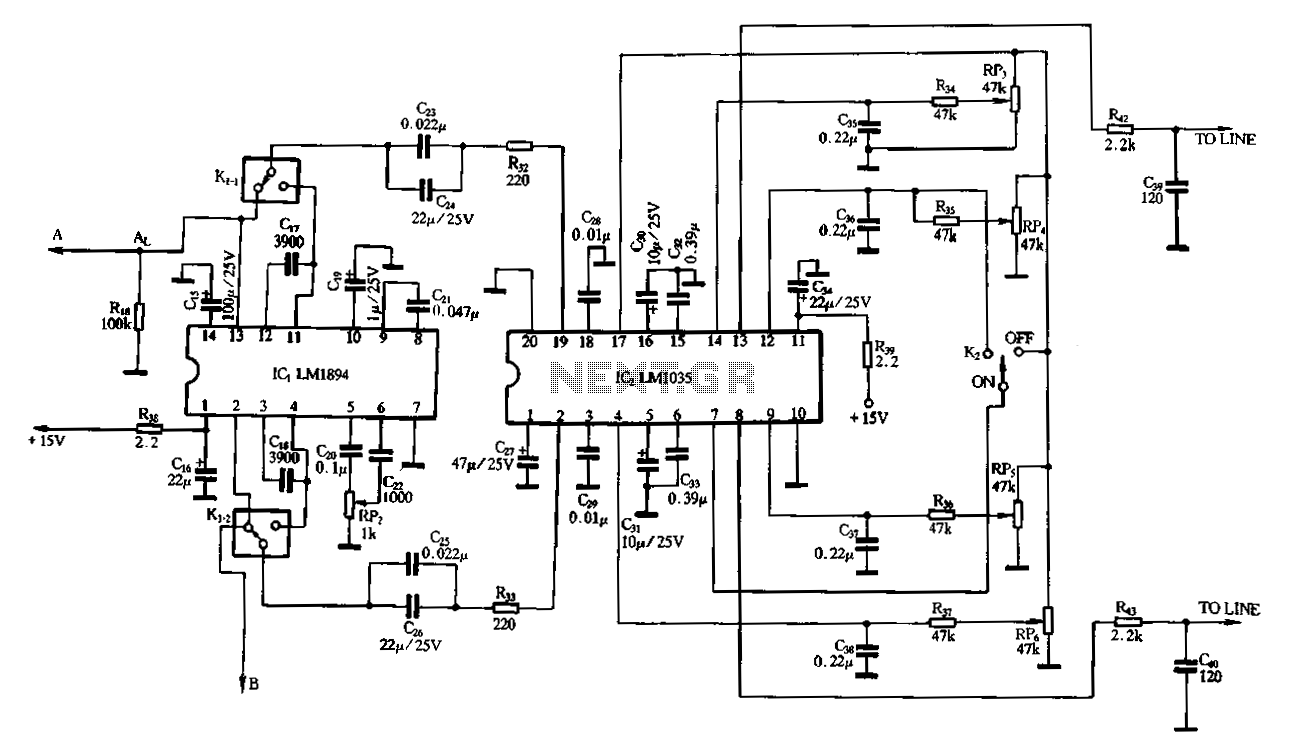
Dynamic noise reduction with DC volume control
A dynamic noise reduction circuit and a DC volume and tone balance control circuit, which are applied to the input stage and the discharge line between the amplifier.
The described circuit configuration incorporates two primary functions: dynamic noise reduction and volume/tone...
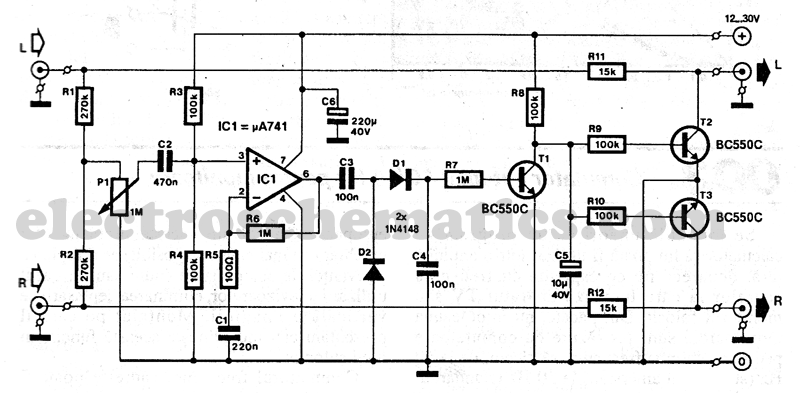
Stereo Noise Reduction Circuit
The noise reduction circuit is designed to minimize disturbances that occur during pauses in music playback. It functions by attenuating the signal output during these intervals.
The noise reduction circuit operates on the principle of detecting silence or low audio signals,...
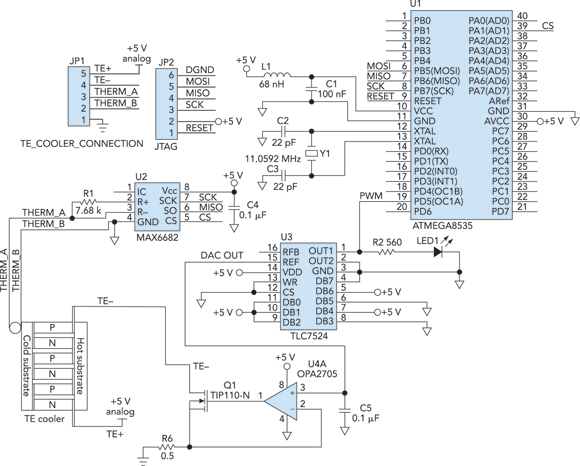
Controller keeps circuits cool
Cooling an instrument or device can enhance the signal-to-noise ratio (SNR) and extend the product's lifespan. For instance, the dark-and-noise signal of an infrared detector's output at room temperature can be significantly reduced when cooled. A custom cooling device was...
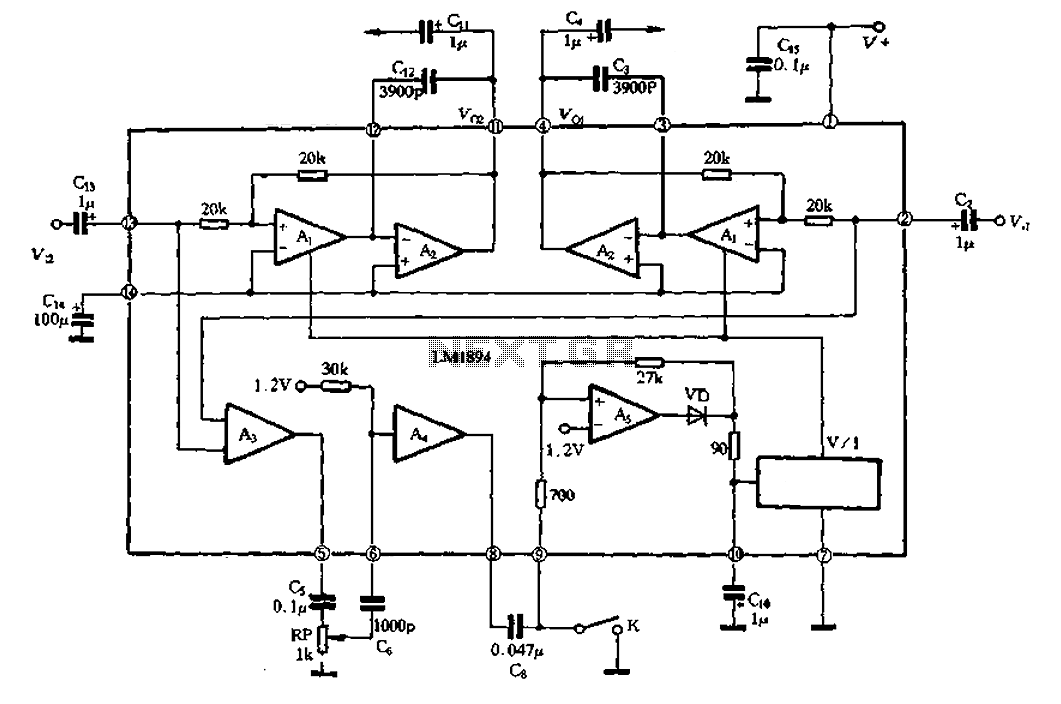
LM1894 Principles and Applications a
A typical representative of dynamic noise reduction developed by the United States National Semiconductor is the LM1894. Its principle is illustrated in Figure 1-1070, where the left and right input signals are processed through a main signal path. The input...