


Rock Paper Scissors Playing Glove
#wearable electronics
#game
#interactive
#machine learning
#sensors
#microcontroller
#human-computer interaction
#fun project
#Arduino
#gesture recognition
Description: This is a glove that plays a competitive game of Rock Paper Scissors against the wearer. It learns the wearer's playing style and exploits their weaknesses. The concept revolves around the idea that technology should interact with users on their own terms, rather than requiring users to adapt to technology. The glove allows users to engage in the game without needing to learn additional skills; they simply wear the glove and play. Initial public interactions with the glove showed positive responses, with users quickly grasping how to play without extensive instructions. However, some individuals approached the game with excessive deliberation instead of a natural playing style. The glove remembers the player's tendencies, such as opening with Rock, and adjusts its responses accordingly, achieving a record of 71 wins and 62 losses in best-of-five matches. Instead of relying on complex vision systems or high-speed cameras, which would be expensive and impractical, the glove focuses on recognizing three specific hand poses: Rock (all fingers bent), Paper (all fingers straight), and Scissors (two fingers bent, two straight). This is accomplished by monitoring the bending of two fingers using flex sensors specifically designed for glove applications, similar to those used in the Nintendo Power Glove. Additionally, hand movement is detected using an accelerometer, which provides accurate readings of acceleration in three directions, offering a reliable solution for detecting shaking motions. The project incorporates a simple yet effective algorithm that enables the glove to adapt its gameplay based on the user's patterns.
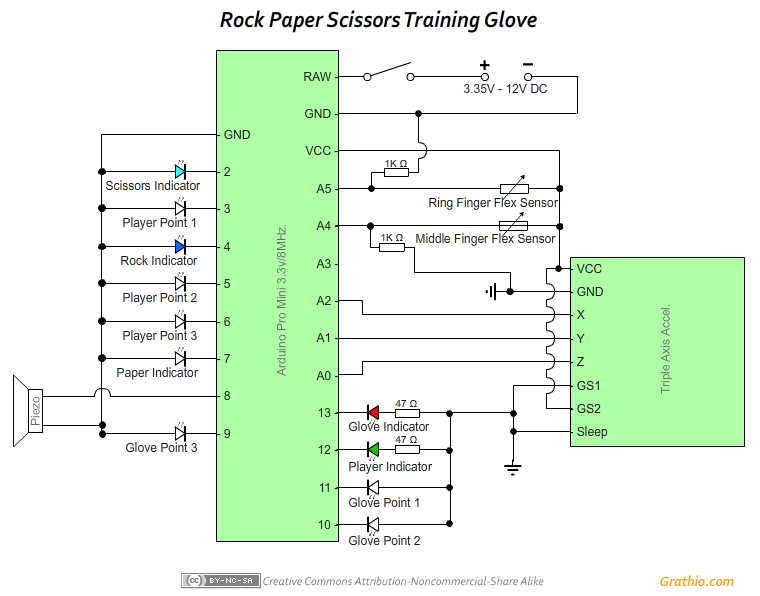
To create a functional electronic schematic for this glove, the design involves several key components. The primary sensors include flex sensors positioned along the middle and ring fingers to detect the required hand gestures for Rock, Paper, and Scissors. These sensors output analog voltage levels corresponding to the degree of bending, which can be processed by a microcontroller. The microcontroller, which serves as the brain of the glove, interprets the sensor data to determine the hand pose and adjusts the glove's responses accordingly.
In addition to the flex sensors, an accelerometer is integrated into the glove to monitor hand movements. This component communicates with the microcontroller via I2C or SPI interface, providing real-time data on the acceleration in three axes. The accelerometer's output enables the glove to distinguish between different shaking motions, enhancing the interactivity of the game.
Power management is also a critical aspect of the design. A compact battery, such as a lithium polymer (LiPo) battery, is used to power the glove's electronics, ensuring a lightweight and portable solution. A power regulation circuit may be included to maintain stable voltage levels for the sensors and microcontroller.
To facilitate user interaction, an LED indicator could be integrated to provide visual feedback during gameplay, signaling the glove's actions or the result of each round. A small, discreet speaker could also be added to announce the results audibly, further enhancing the user experience.
The schematic will include connections for the flex sensors, accelerometer, microcontroller, power supply, LED indicators, and speaker, ensuring a cohesive and functional design. This glove not only serves as an innovative gaming device but also exemplifies the evolution of human-computer interaction, making technology more accessible and engaging.This is a glove that plays a very competitive game of Rock Paper Scissors against the wearer. It learns how they wearer plays and plays to their weaknesses. Why I`m nottotallysure. Chasing down the source of inspiration is often impossible, but sometimes a theme can be teased out. In this case my theme is that I love it when computers can interac t with us on our own terms. Keyboards and mice were made so machines could watch what we do. But we have to learn how to use keyboards and mice (and telephones ) so the machines can understand us. But the mouse was invented almost 50 years ago and the keyboard almost 300 years ago. Technology has advanced a lot in that time, and so should our interfaces. We shouldn`t have to learn how to use technology. So here is a glove that can play Rock Paper Scissors (aka JonKenPon, aka rochambeau ) against a person and the person doesn`t have to learn a thing.
Just put the glove on and play and the glove will play against you. I took it out in public a few times and people responded amazingly well to it, playing it the first time with little or no instruction. The only problem was that a few people didn`t want to treat it naturally and tried to play with more deliberateness than they would if playing against a person.
It remembers how you play so that if you always open with Rock it will tend to open with Paper. And if you tend throw a Paper after a Rock it will counter it with Scissors. The glove`s current record for best-of-five matches against me is 71 wins and 62 losses. All of these things could have been done with a complex vision system, high speed camera or two, and a full computer processing the information in real-time. But that would be less than ideal for what we`re after. It would be expensive and very complex, and still wouldn`t be very reliable. And it wouldn`t fit on your pocket. So lets break it down. We need to read the hand in one of three poses, Rock (all fingers bent) Paper (all fingers straight) and Scissors (two fingers bent, two straight).
Looking at it that way all we need to watch is the bend of two fingers, the middle and ring finger. (The index and /or pinky would work too. ) If they`re both bent, Rock, if they`re both straight Paper, if the top one is bent, Scissors. The most obvious answer on how to measure the bending of something is a flex sensor. It`s a bit overkill since I don`t need to know how much it`s bent just that it is. (Or isn`t. ) But it just so happens that there is a flex sensor the right size and specifications for the finger of a glove. Like it was made for it! In fact it was, these are the same flex sensors that were in the Nintendo Power Glove. Okay, we can sense a pose, but how do we sense the shaking of the hand I tested the idea of a simple jiggle sensor.
It`s basically a little marble in a sealed cup. When it`s at rest in the bottom of the cup electricity can flow, but bump it and the marble rolls around breaking the circuit. Cheap and great for a lot of applications, but playing with a couple I found that it took far too long to settle into the cup and there was no way to set the sensitivity.
Any small hand tremor would set it off and it would take a second or two to re-center. In short it could tell if your hand was moving, but it couldn`t detect individual shakes. The next idea was an accelerometer, similar to what is in an iPhone or a Nintendo Wii controller. It`s a little chip that reads acceleration in three directions. It`s overkill since we really only need to detect shaking in one direction (or so I thought) but it`s highly accurate and has different levels of sensitivity. It`s also simple to use, small, durable, and uses very little power. Hard to go wrong with it. Now lets give the project some brains. It would be simple to make it play randomly, but I wanted it to play better than that. To do that it would need to remember how the wearer played, what patterns they playe
To create a functional electronic schematic for this glove, the design involves several key components. The primary sensors include flex sensors positioned along the middle and ring fingers to detect the required hand gestures for Rock, Paper, and Scissors. These sensors output analog voltage levels corresponding to the degree of bending, which can be processed by a microcontroller. The microcontroller, which serves as the brain of the glove, interprets the sensor data to determine the hand pose and adjusts the glove's responses accordingly.
In addition to the flex sensors, an accelerometer is integrated into the glove to monitor hand movements. This component communicates with the microcontroller via I2C or SPI interface, providing real-time data on the acceleration in three axes. The accelerometer's output enables the glove to distinguish between different shaking motions, enhancing the interactivity of the game.
Power management is also a critical aspect of the design. A compact battery, such as a lithium polymer (LiPo) battery, is used to power the glove's electronics, ensuring a lightweight and portable solution. A power regulation circuit may be included to maintain stable voltage levels for the sensors and microcontroller.
To facilitate user interaction, an LED indicator could be integrated to provide visual feedback during gameplay, signaling the glove's actions or the result of each round. A small, discreet speaker could also be added to announce the results audibly, further enhancing the user experience.
The schematic will include connections for the flex sensors, accelerometer, microcontroller, power supply, LED indicators, and speaker, ensuring a cohesive and functional design. This glove not only serves as an innovative gaming device but also exemplifies the evolution of human-computer interaction, making technology more accessible and engaging.This is a glove that plays a very competitive game of Rock Paper Scissors against the wearer. It learns how they wearer plays and plays to their weaknesses. Why I`m nottotallysure. Chasing down the source of inspiration is often impossible, but sometimes a theme can be teased out. In this case my theme is that I love it when computers can interac t with us on our own terms. Keyboards and mice were made so machines could watch what we do. But we have to learn how to use keyboards and mice (and telephones ) so the machines can understand us. But the mouse was invented almost 50 years ago and the keyboard almost 300 years ago. Technology has advanced a lot in that time, and so should our interfaces. We shouldn`t have to learn how to use technology. So here is a glove that can play Rock Paper Scissors (aka JonKenPon, aka rochambeau ) against a person and the person doesn`t have to learn a thing.
Just put the glove on and play and the glove will play against you. I took it out in public a few times and people responded amazingly well to it, playing it the first time with little or no instruction. The only problem was that a few people didn`t want to treat it naturally and tried to play with more deliberateness than they would if playing against a person.
It remembers how you play so that if you always open with Rock it will tend to open with Paper. And if you tend throw a Paper after a Rock it will counter it with Scissors. The glove`s current record for best-of-five matches against me is 71 wins and 62 losses. All of these things could have been done with a complex vision system, high speed camera or two, and a full computer processing the information in real-time. But that would be less than ideal for what we`re after. It would be expensive and very complex, and still wouldn`t be very reliable. And it wouldn`t fit on your pocket. So lets break it down. We need to read the hand in one of three poses, Rock (all fingers bent) Paper (all fingers straight) and Scissors (two fingers bent, two straight).
Looking at it that way all we need to watch is the bend of two fingers, the middle and ring finger. (The index and /or pinky would work too. ) If they`re both bent, Rock, if they`re both straight Paper, if the top one is bent, Scissors. The most obvious answer on how to measure the bending of something is a flex sensor. It`s a bit overkill since I don`t need to know how much it`s bent just that it is. (Or isn`t. ) But it just so happens that there is a flex sensor the right size and specifications for the finger of a glove. Like it was made for it! In fact it was, these are the same flex sensors that were in the Nintendo Power Glove. Okay, we can sense a pose, but how do we sense the shaking of the hand I tested the idea of a simple jiggle sensor.
It`s basically a little marble in a sealed cup. When it`s at rest in the bottom of the cup electricity can flow, but bump it and the marble rolls around breaking the circuit. Cheap and great for a lot of applications, but playing with a couple I found that it took far too long to settle into the cup and there was no way to set the sensitivity.
Any small hand tremor would set it off and it would take a second or two to re-center. In short it could tell if your hand was moving, but it couldn`t detect individual shakes. The next idea was an accelerometer, similar to what is in an iPhone or a Nintendo Wii controller. It`s a little chip that reads acceleration in three directions. It`s overkill since we really only need to detect shaking in one direction (or so I thought) but it`s highly accurate and has different levels of sensitivity. It`s also simple to use, small, durable, and uses very little power. Hard to go wrong with it. Now lets give the project some brains. It would be simple to make it play randomly, but I wanted it to play better than that. To do that it would need to remember how the wearer played, what patterns they playe
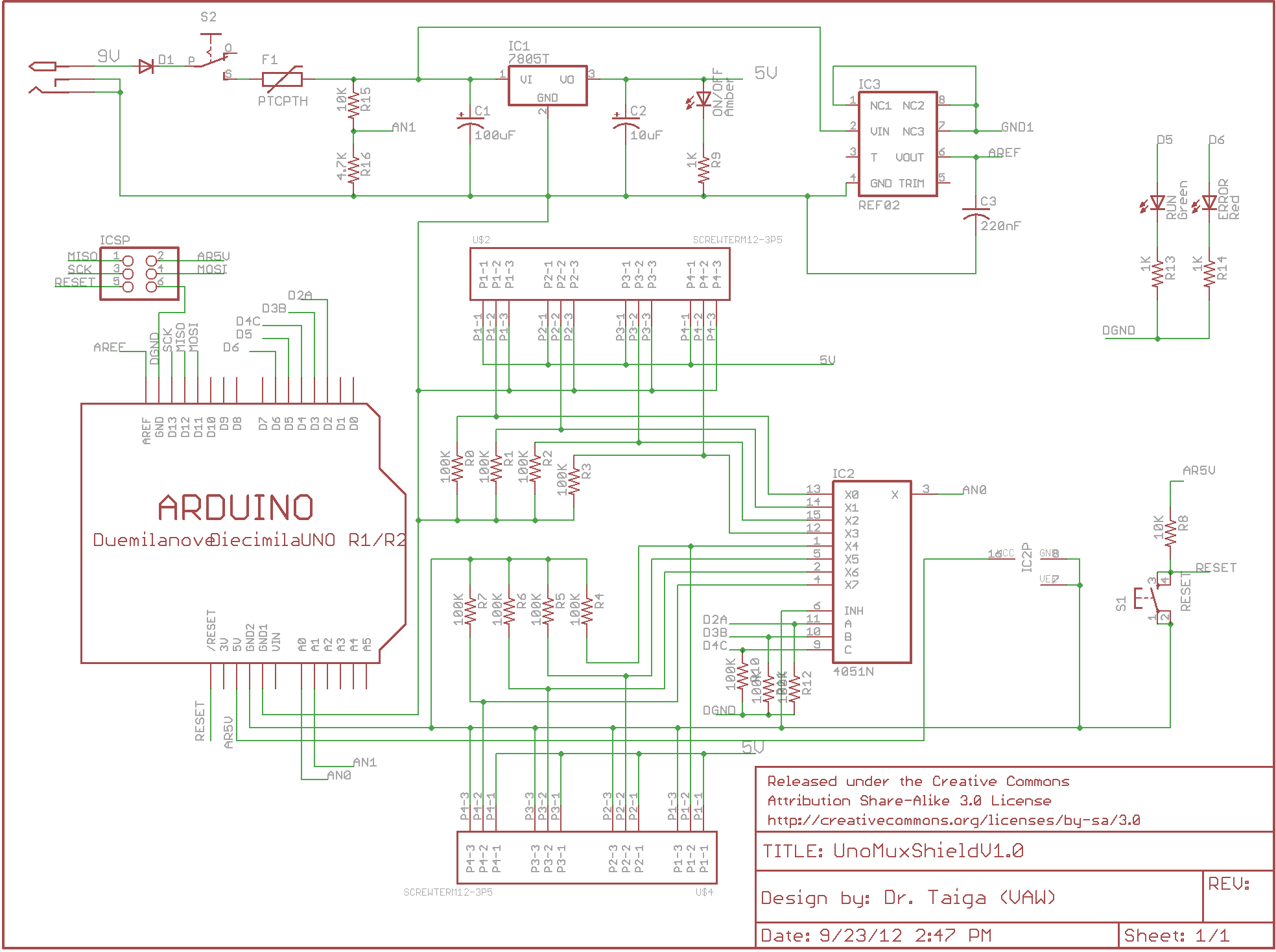
arduino multiplexer shield
There is enthusiasm for using Arduinos in science projects. However, it is important to address several shortcomings of the Arduino before it can be utilized for more serious applications. Specifically, the addition of robust screw terminals is necessary.
The Arduino platform...
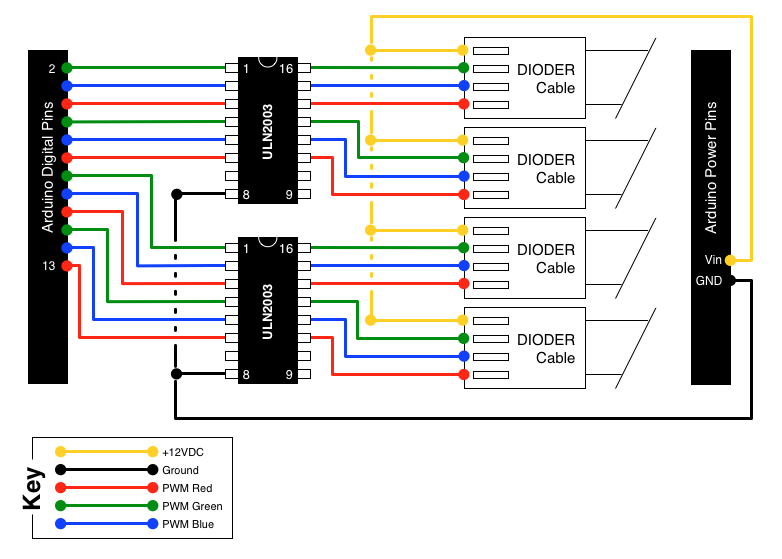
arduino dioder
A few weeks ago, it was noted that IKEA offers a set of color-changeable LED strips. There has been a search for an effective method to provide...
The color-changeable LED strips from IKEA are designed to offer flexibility in lighting options...
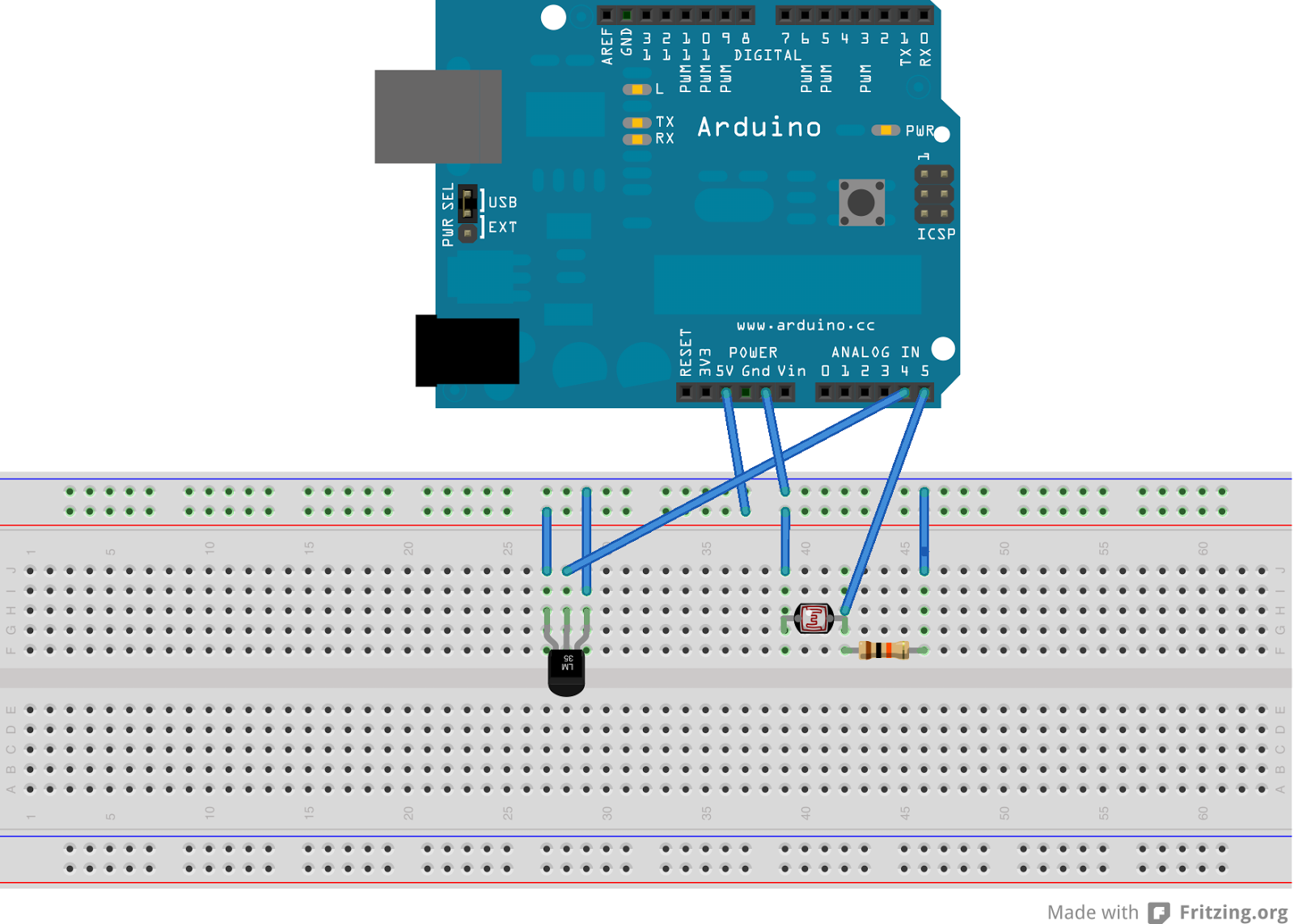
arduino temperature and light sensor
This device transmits data regarding the state of an office to Twitter, as it is deemed slightly more relevant than sharing similar information about a residence. It holds potential significance for biodiversity-related activities, especially when integrated with long-range WiFi technologies....
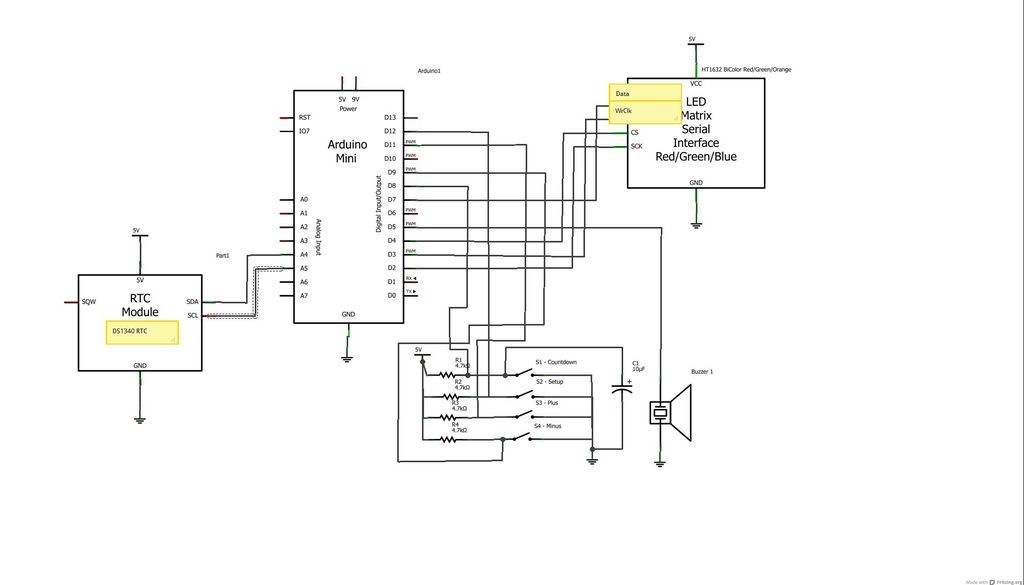
Colorful Countdown Clock for tight timeline management using Arduino
The device is designed to promote respectful time management during meetings, particularly useful in ship-room or SCRUM meetings. The following is a list of components required, including links for purchasing specific parts. It is advisable to check eBay or other...

message in a bottle
Message in a Bottle is an Arduino microcontroller and sensor project that enables an individual to record their voice inside a glass bottle and send it to someone else for playback. By uncorking the bottle and speaking into it, the...
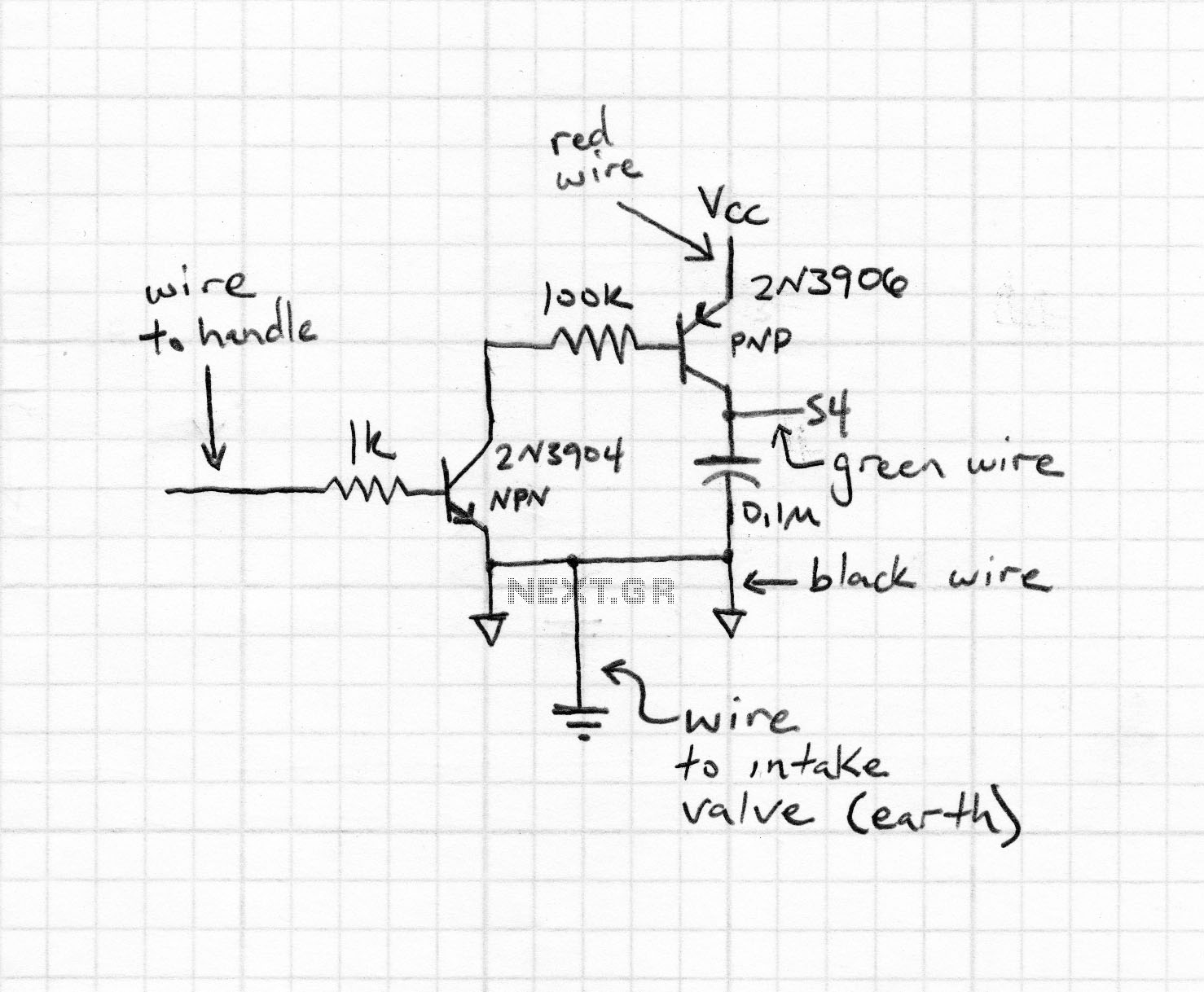
Microcontroller Voltmeter / Ammeter with LCD
The rectifier bridge voltage is determined by the U2 element; refer to its datasheet for the maximum voltage specifications. The minimum voltage at this pin should not fall below approximately 9V, or 6.5V if low-dropout type U2 and U3 voltage...
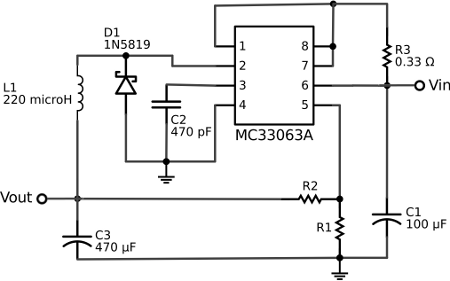
An Efficient Low-Power Arduino Switching Voltage Regulator
The voltage regulator integrated into the Arduino Uno is a linear-type regulator, which exhibits poor efficiency. When operating the ATmega238 at 5V with a 9V battery, nearly half of the battery's energy is wasted as heat by the regulator. This...
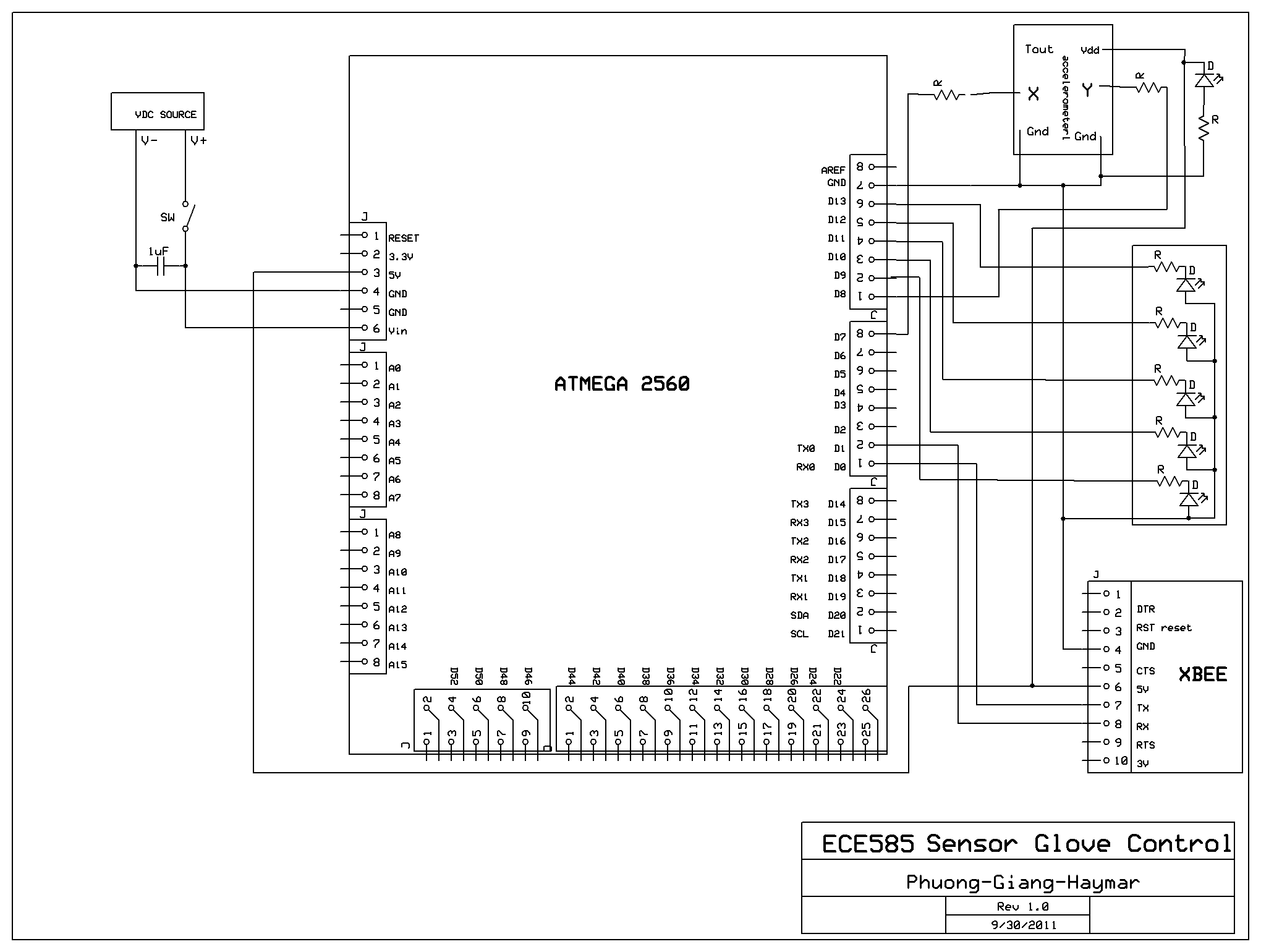
Smart Sensor Glove
To compile this software, simply copy and paste it into any current or newer version of the Arduino software. To compile and check for errors, click the play-like button and wait for the software to process. If any errors are...
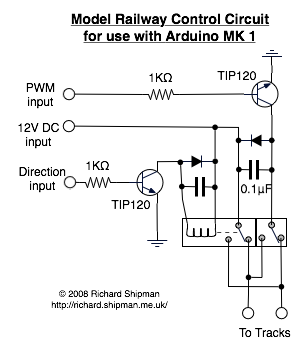
arduino model railway control
A model railway operates under computer control, utilizing a laptop to send commands via the USB port to an Arduino. The Arduino employs PWM (Pulse Width Modulation) to regulate the speed of the train. There were several challenges encountered, particularly...