


A variable speed fan motor thyristor circuit
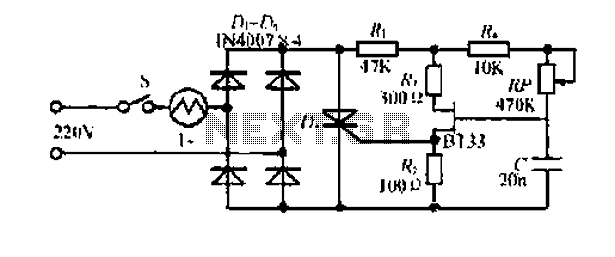
Description: Electrical flow through the saddle j pounds. TV added in a controlled manner Qian Mountain amphipod species lI- ii mi pulsating chord electric. This electric again. The DC Bamboo Division I and the second voltage supply voltage step trigger fat resistance shoulder blade down later. Transistor BT33 dry R4. C Hard potentiometer RP relaxation oscillator type electrical contact plate hoof, Sao RP type of Ilfi, you can couple Chi electric wind speed.
The circuit described involves an electrical flow that is regulated through a series of components. The primary focus is on managing the electrical characteristics of a system that incorporates a DC voltage supply and utilizes a transistor, specifically the BT33 model. This transistor acts as a switch or amplifier within the circuit, controlling the flow of current based on the input signal.
The circuit includes a relaxation oscillator, which is characterized by the use of a potentiometer (RP). This component allows for the adjustment of resistance, thereby influencing the oscillation frequency of the circuit. The relaxation oscillator generates a pulsing output, which can be utilized for various applications, including modulation of electric signals or control of other devices.
The mention of a "controlled manner" suggests that the circuit is designed to operate under specific conditions or parameters, possibly for experimental or monitoring purposes related to the Qian Mountain amphipod species. This could imply that the circuit is part of a biological study or environmental monitoring system.
Furthermore, the reference to a "contact plate hoof" indicates an interface within the circuit that may interact with external elements or sensors. The coupling of the circuit with the electric wind speed suggests a potential application in measuring or controlling airflow, which could be relevant in environmental studies or in the design of automated systems.
Overall, the circuit integrates various components, including resistors, capacitors, and transistors, to create a functional system that can manage and manipulate electrical signals effectively. The design considerations reflect a focus on precision and control, making it suitable for specialized applications in scientific research or technology development.Electrical flow through the saddle j pounds. TV added in a controlled manner Qian Mountain amphipod species lI- ii ~ mi pulsating chord electric Ir:., This electric IE again. a s the DC Bamboo Division I and the second voltage supply voltage step trigger fat resistance shoulder blade down later. transistor BT33 dry R4. C Hard potentiometer RP relaxation oscillator type electrical contact plate hoof, Sao RP type of Ilfi /, you can coup Chi electric wind speed
The circuit described involves an electrical flow that is regulated through a series of components. The primary focus is on managing the electrical characteristics of a system that incorporates a DC voltage supply and utilizes a transistor, specifically the BT33 model. This transistor acts as a switch or amplifier within the circuit, controlling the flow of current based on the input signal.
The circuit includes a relaxation oscillator, which is characterized by the use of a potentiometer (RP). This component allows for the adjustment of resistance, thereby influencing the oscillation frequency of the circuit. The relaxation oscillator generates a pulsing output, which can be utilized for various applications, including modulation of electric signals or control of other devices.
The mention of a "controlled manner" suggests that the circuit is designed to operate under specific conditions or parameters, possibly for experimental or monitoring purposes related to the Qian Mountain amphipod species. This could imply that the circuit is part of a biological study or environmental monitoring system.
Furthermore, the reference to a "contact plate hoof" indicates an interface within the circuit that may interact with external elements or sensors. The coupling of the circuit with the electric wind speed suggests a potential application in measuring or controlling airflow, which could be relevant in environmental studies or in the design of automated systems.
Overall, the circuit integrates various components, including resistors, capacitors, and transistors, to create a functional system that can manage and manipulate electrical signals effectively. The design considerations reflect a focus on precision and control, making it suitable for specialized applications in scientific research or technology development.Electrical flow through the saddle j pounds. TV added in a controlled manner Qian Mountain amphipod species lI- ii ~ mi pulsating chord electric Ir:., This electric IE again. a s the DC Bamboo Division I and the second voltage supply voltage step trigger fat resistance shoulder blade down later. transistor BT33 dry R4. C Hard potentiometer RP relaxation oscillator type electrical contact plate hoof, Sao RP type of Ilfi /, you can coup Chi electric wind speed
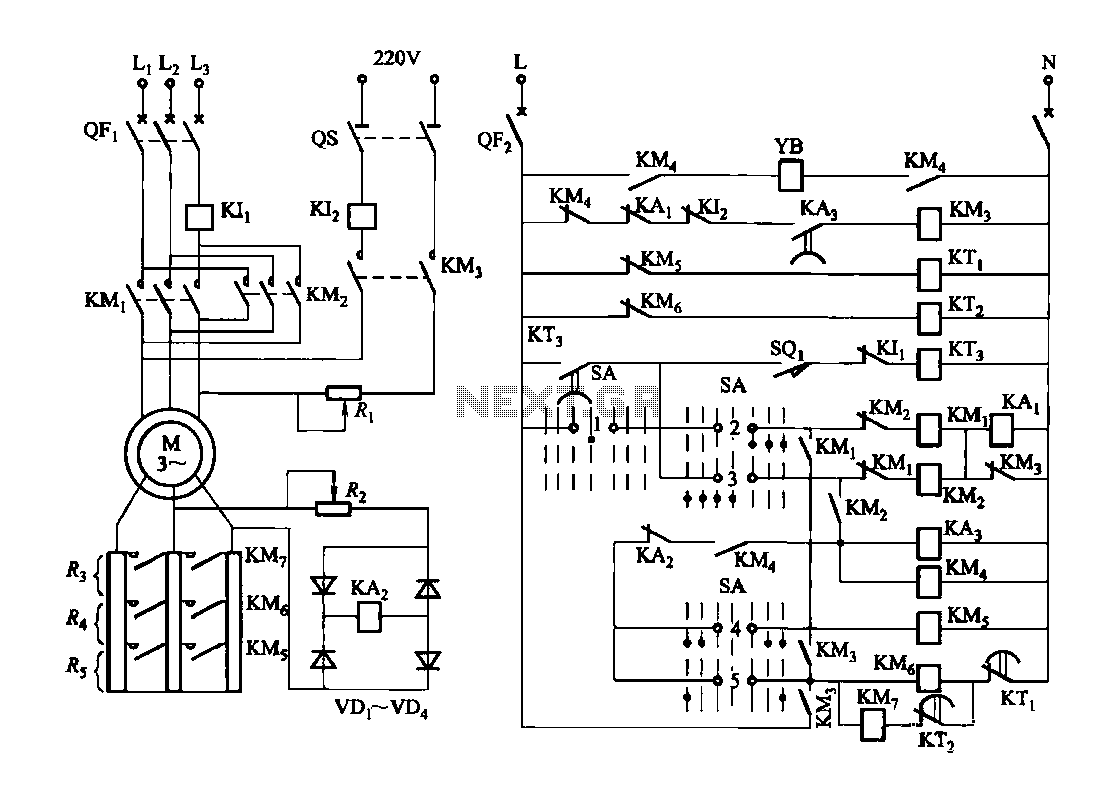
Forward and reverse speed control circuit can be integrated with a brake function
Figure 3173 illustrates a control circuit for a wound rotor induction motor that enables mechanical braking, dynamic braking, and reverse braking functions. The circuit includes various components such as relays, contactors, and time relays to manage the motor's speed in...
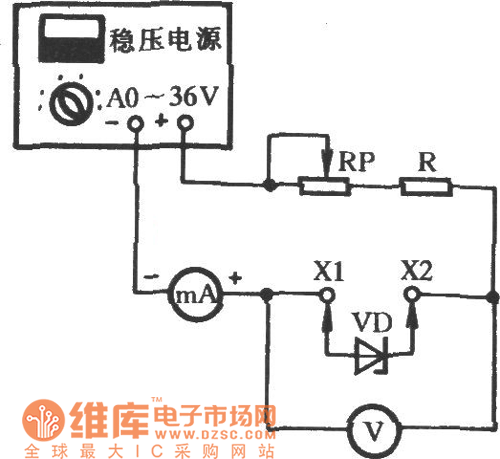
Thyristor Work Performance Quick TestCircuit
Connect the diode VD under test to sockets X1 and X2. A stabilized power supply applies reverse breakdown voltage to VD, allowing the stabilized voltage value Uz to be read from voltage meter V. The stable operating current value can...
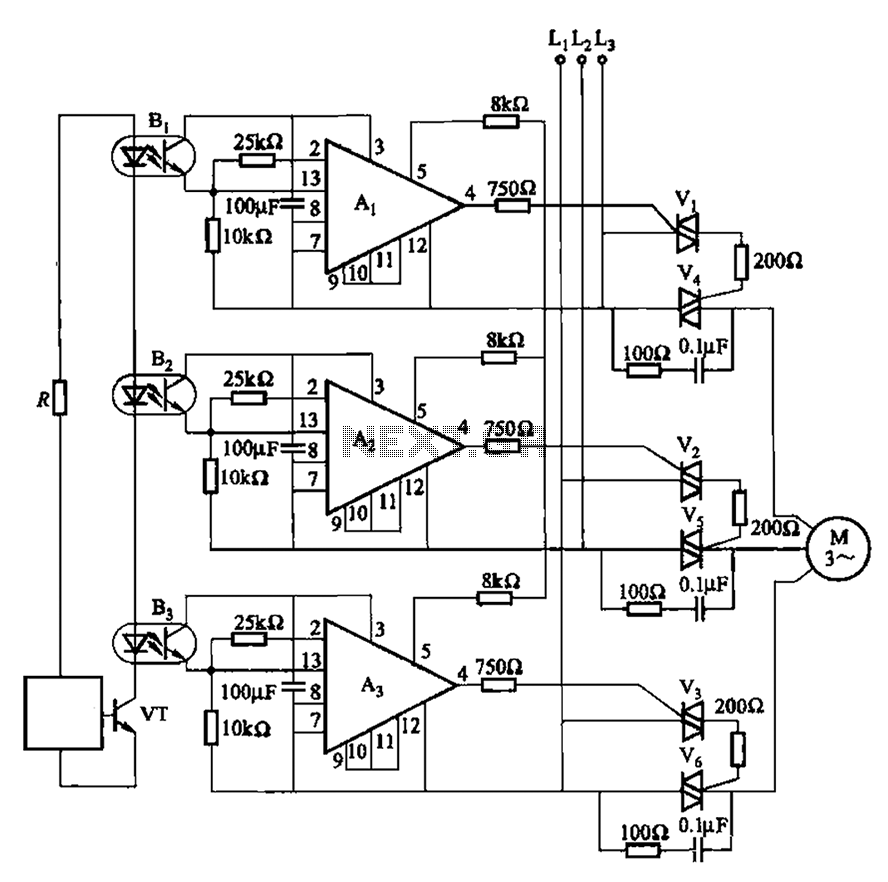
Thyristor controlled forward start circuit
The 331 circuit depicted in the figure utilizes a two-way thyristor for controlling the start and stop functions of a motor. It operates without mechanical contacts, generating no noise or sparks, making it suitable for applications that require frequent operation.
The...
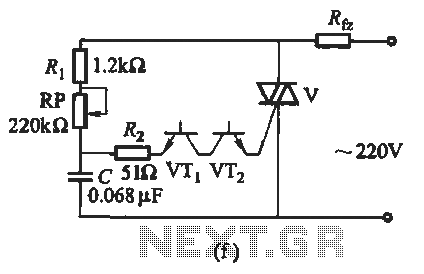
Using several resistive and capacitive phase shifting trigger circuit
The introduction for a unidirectional thyristor trigger circuit is also applicable to the TRIAC. Various configurations are presented in Figure 16-28. Figures 16-28 (a) and (b) illustrate a direct trigger circuit; Figure 16-28 (c) depicts a dual diode trigger circuit;...
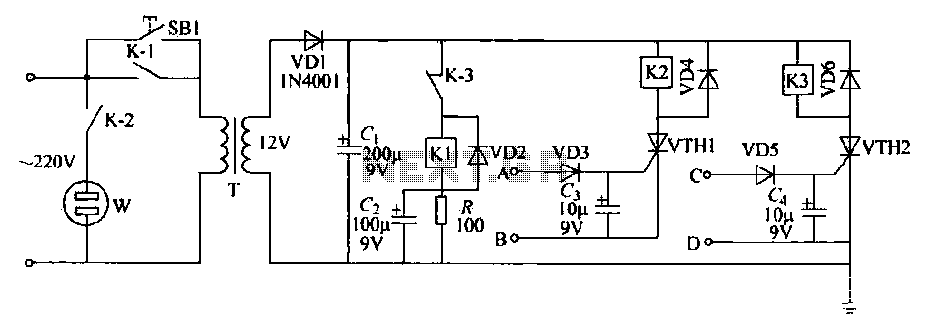
Dual timing circuit thyristor control table
This schematic circuit features two alarm outputs controlled by a timer using thyristors. The system can be turned on or off and will shut down after the power supply is interrupted. It employs a transformer on the primary side for...
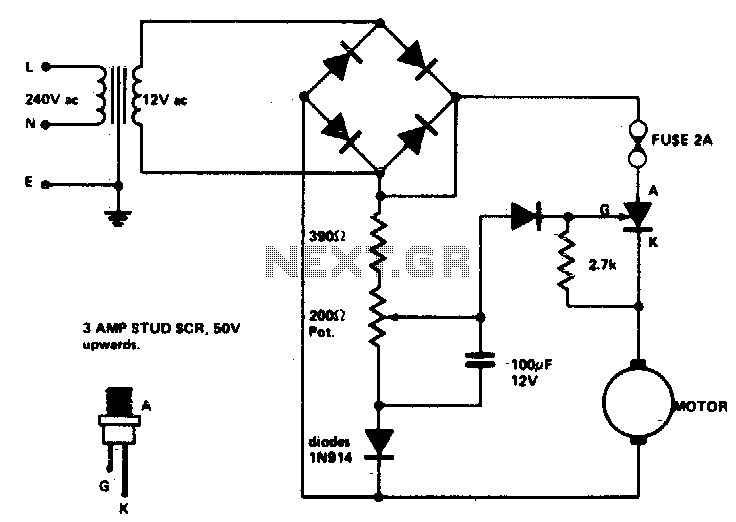
Speed control for model trains or cars
Low voltage speed control provides excellent starting torque and effective speed regulation. Additionally, a reversing switch can be integrated into the motor leads.
Low voltage speed control circuits are essential in applications where precise motor control is required, such as in...
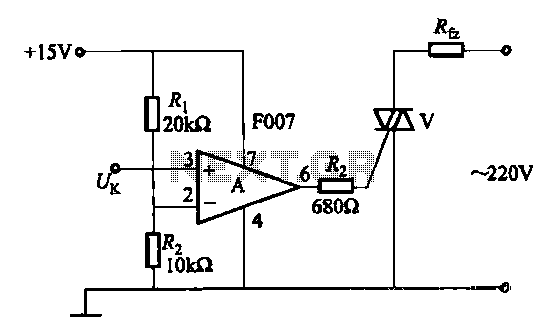
Thyristor interface circuit operational amplifier
A transistor optocoupler interface circuit, as described in section 15.1.6, has been implemented. This circuit serves as a transistor interface with other circuits.
The transistor optocoupler interface circuit utilizes a light-emitting diode (LED) and a phototransistor to achieve electrical isolation between...
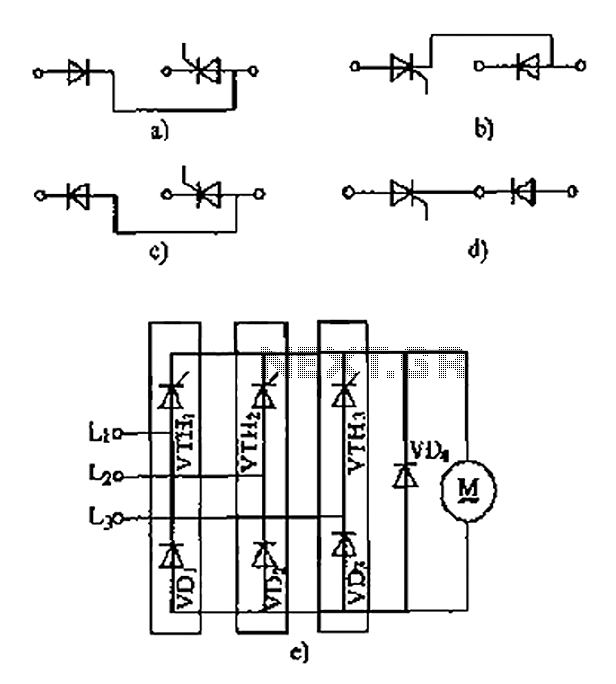
Thyristor - linking arm rectifier module three-phase half-controlled bridge rectifier circuit
The thyristor linking arm rectifier module is a three-phase half-controlled bridge rectifier circuit. The thyristor-rectifier module linking arm consists of a thyristor and a rectifier diode connected in series or parallel, designed to fulfill specific requirements in power circuits. The...
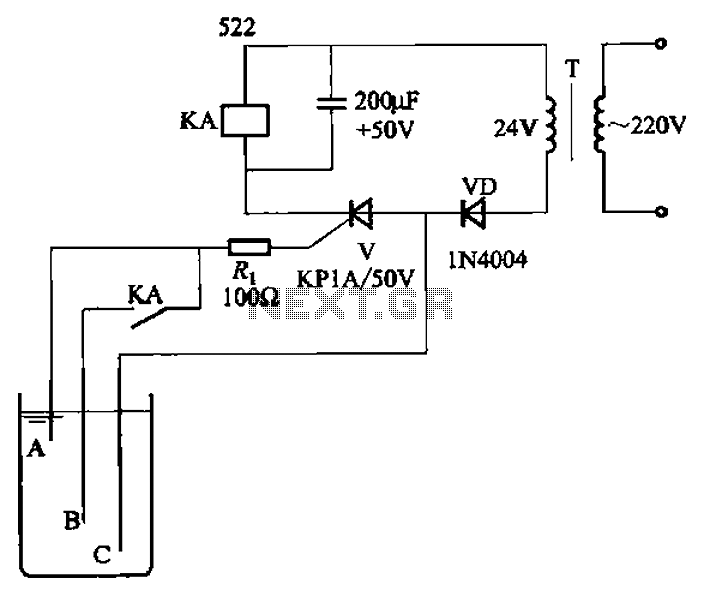
Level one thyristor-controlled circuit sink type b
The circuit depicted in Figure 11-14 utilizes a unidirectional thyristor within liquid level automatic control systems. It incorporates electrodes that serve as sensing elements for detecting the level of water or other conductive liquids. The circuit features a current limiting...