


BC517 Bipolar Stepper Motor Control
#BC517
#bipolar stepper motor
#motor control
#stepper motor driver
#winding control
#current control
#motor driver circuit
#bipolar motor
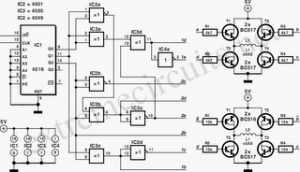
Description: BC517 Bipolar Stepper Motor Control Circuit Diagram. Features: Each winding can carry a positive current. A bipolar motor has two windings.
The BC517 bipolar stepper motor control circuit utilizes a BC517 transistor to manage the operation of a bipolar stepper motor. This type of motor is characterized by having two windings, which allows it to operate with positive current flowing through each winding independently. The circuit typically includes a microcontroller or a dedicated stepper motor driver IC that generates the necessary control signals for the transistors.
In this configuration, each winding of the stepper motor is connected to the collector of a BC517 transistor, which acts as a switch. When the microcontroller sends a high signal to the base of the transistor, it allows current to flow from the collector to the emitter, energizing the corresponding winding. By alternating the activation of the two windings, the stepper motor can be made to rotate in precise increments, providing accurate control over its position.
The circuit may also include additional components such as resistors to limit the base current to the transistors and diodes for flyback protection, preventing voltage spikes when the motor is turned off. Properly designed, this circuit enables efficient control of the stepper motor, making it suitable for various applications such as robotics, CNC machines, and other precision motion control systems.BC517 Bipolar Stepper Motor Control Circuit Diagram. Features: Each winding can carry a positive current, A bipolar motor has two windings .
The BC517 bipolar stepper motor control circuit utilizes a BC517 transistor to manage the operation of a bipolar stepper motor. This type of motor is characterized by having two windings, which allows it to operate with positive current flowing through each winding independently. The circuit typically includes a microcontroller or a dedicated stepper motor driver IC that generates the necessary control signals for the transistors.
In this configuration, each winding of the stepper motor is connected to the collector of a BC517 transistor, which acts as a switch. When the microcontroller sends a high signal to the base of the transistor, it allows current to flow from the collector to the emitter, energizing the corresponding winding. By alternating the activation of the two windings, the stepper motor can be made to rotate in precise increments, providing accurate control over its position.
The circuit may also include additional components such as resistors to limit the base current to the transistors and diodes for flyback protection, preventing voltage spikes when the motor is turned off. Properly designed, this circuit enables efficient control of the stepper motor, making it suitable for various applications such as robotics, CNC machines, and other precision motion control systems.BC517 Bipolar Stepper Motor Control Circuit Diagram. Features: Each winding can carry a positive current, A bipolar motor has two windings .
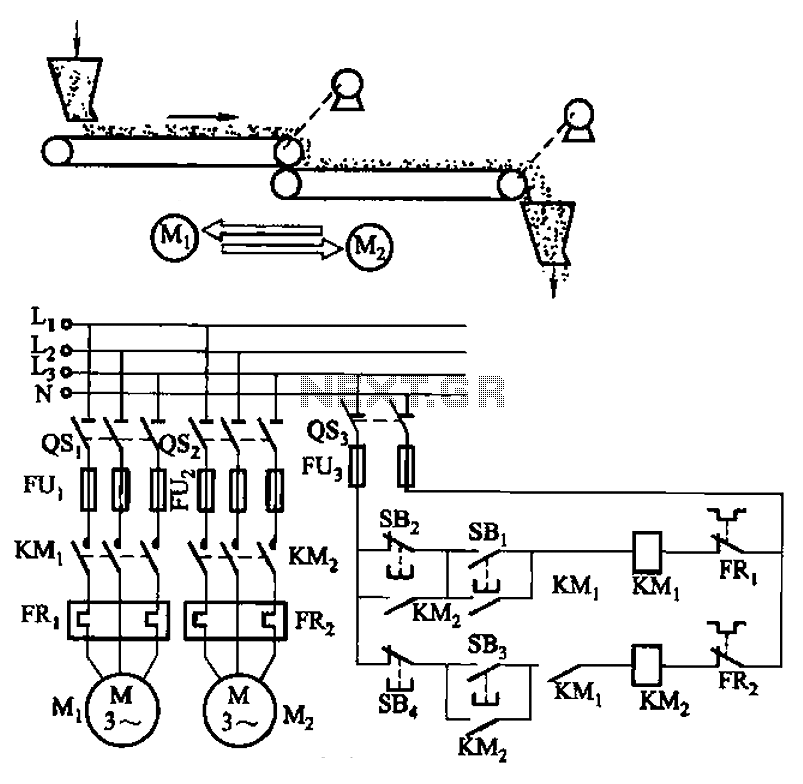
Belt conveyor interlock motor operation sequence control circuit
The circuit depicted in Figure 3-86 utilizes a line utilization time relay to control two motors, starting one before the other after an initial stall. The time relay KTi can be adjusted to modify the starting interval of the two...
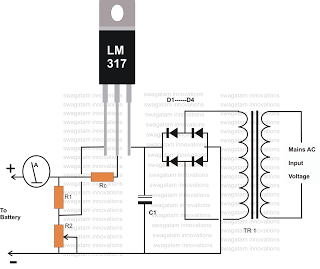
how to make inexpensive current
Charging any type of rechargeable battery is critical and requires attention, particularly regarding the current or rate at which the battery is charged. This factor is essential for maintaining the battery's lifespan and efficiency over time. The circuit diagram presented...
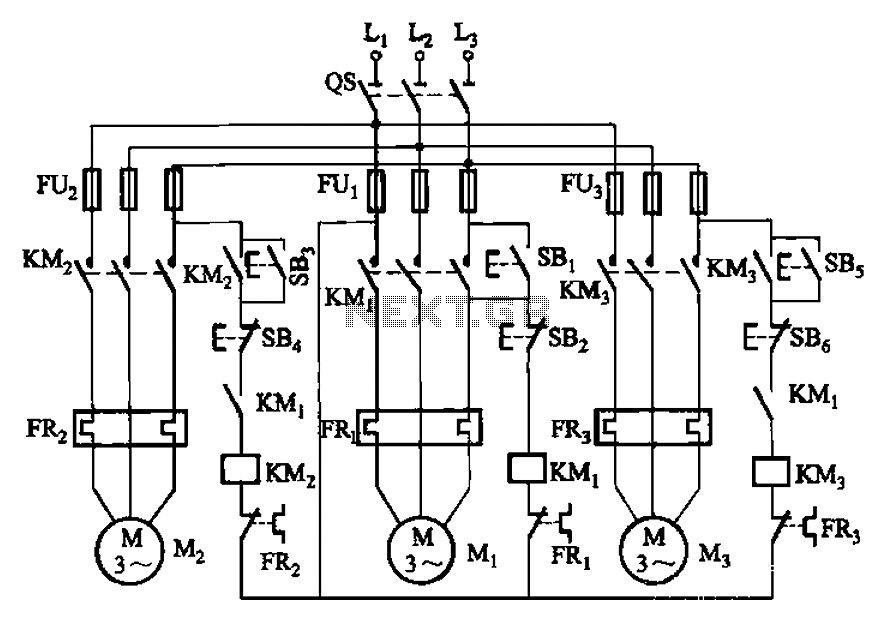
Three motor control circuit start and stop sequence requirements
The circuit shown in Figure 3-89 illustrates a system where starting motor M1 allows motors M2 and M3 to initiate operation. Upon shutdown, motor Mz can be stopped first; however, once motor M1 is stopped (by pressing switch SB2), motors...
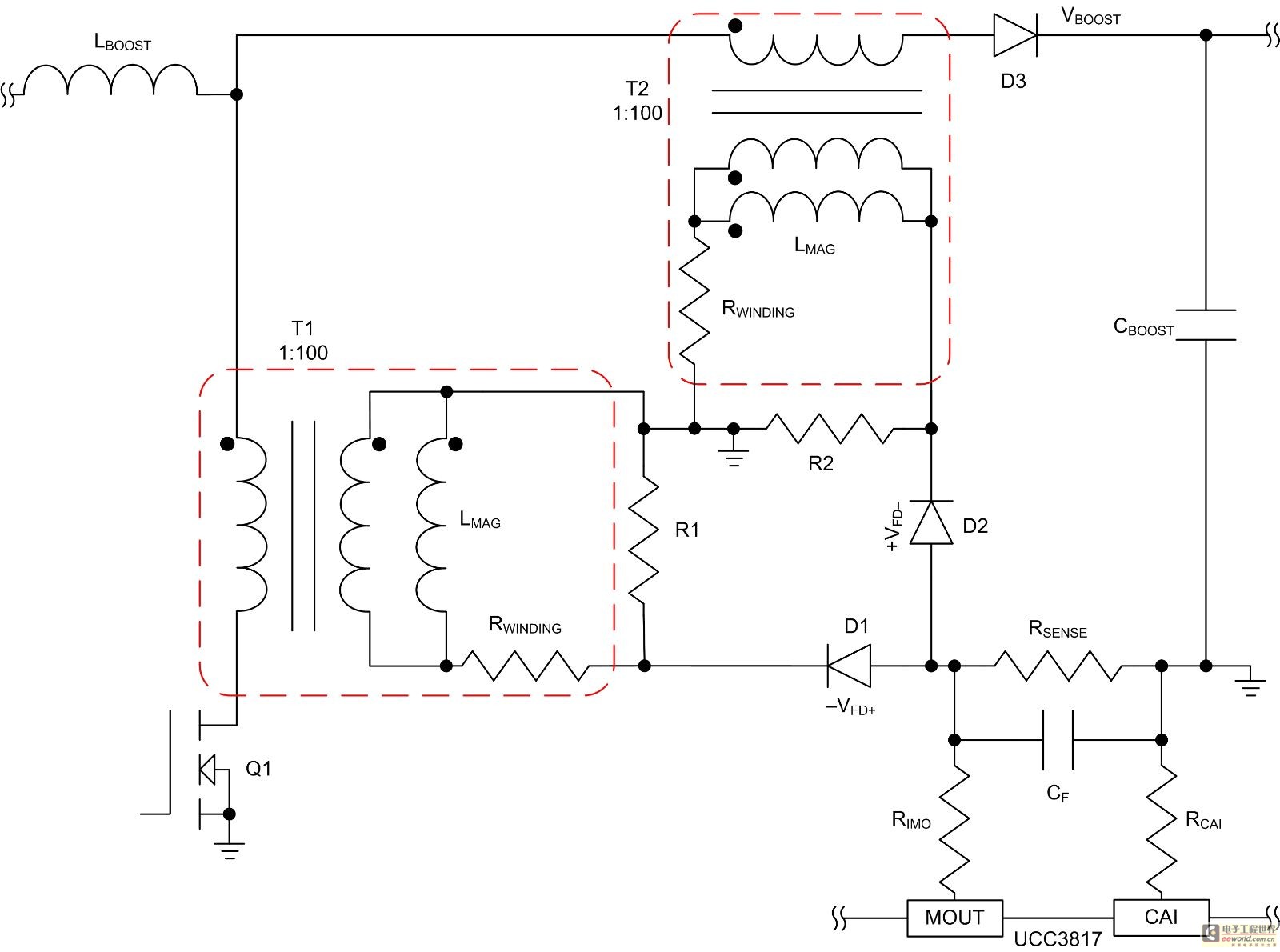
The electric current of mode control of the average current measures the circuit design of the voltage transformer
Mode control of the average current (CMC) is necessary to regulate the overall waveform of electric current during the rebuilding cycle. This text recommends selecting specific parameters related to the voltage transformer and outlines steps for designing a circuit that...
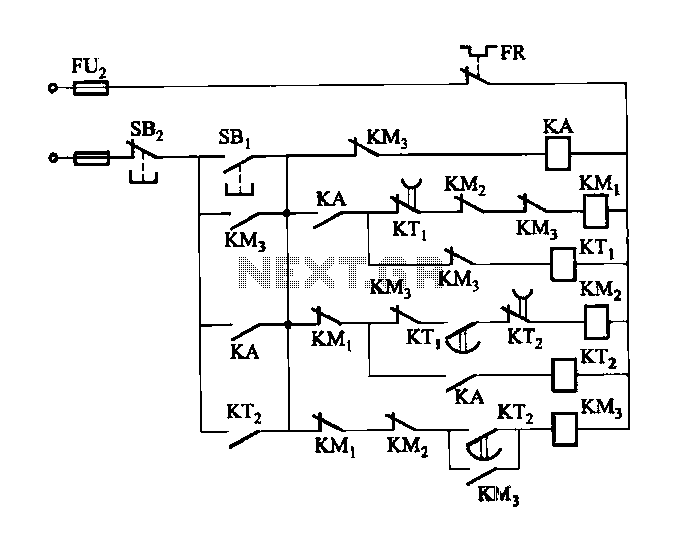
2 -Y- connection automatic three-speed motor acceleration control circuit
Figure 3-118 illustrates an automatic acceleration control circuit. This circuit employs a male contactor time relay, enabling the motor to start automatically at a low speed before transitioning to high-speed operation.
The automatic acceleration control circuit depicted in Figure 3-118 is...
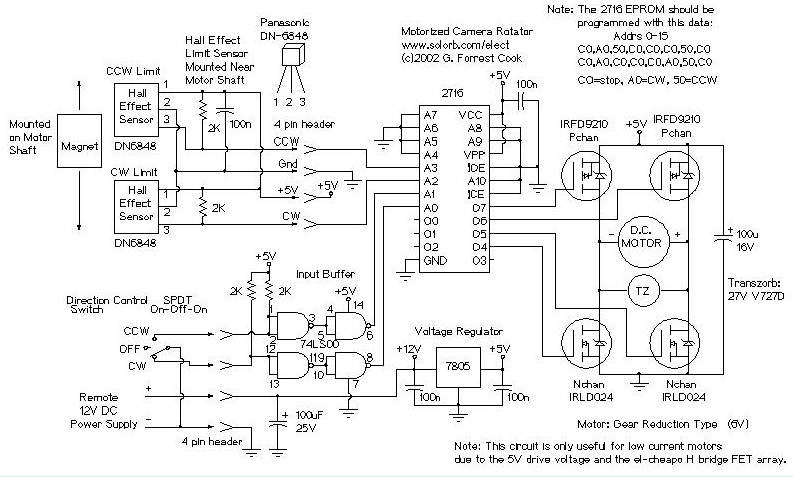
Motorized Video Camera Mount
The camera rotator circuit utilizes a 2716 EPROM to store a logic value table that governs the motor driver (H-bridge) circuit. The schematic illustrates the EPROM data. By employing the EPROM, a significant number of discrete gates are eliminated. The...
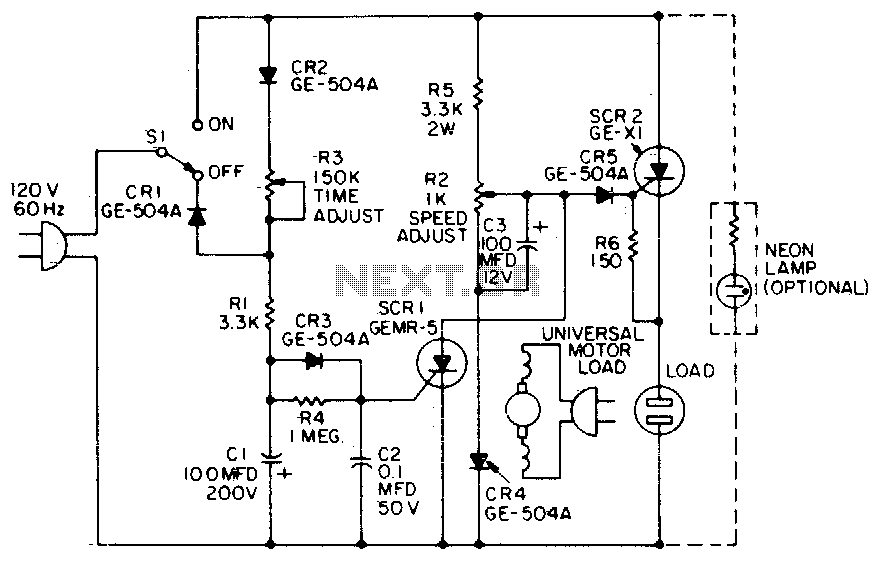
Universal motor control
When the time delay expires, SCR1 conducts and removes the gate signal from SCR2, which stops the motor. Both the time delay and motor speed are adjustable by potentiometers R2 and R3. If heavier motor loads are anticipated, use the...
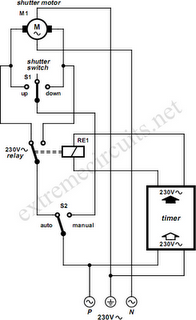
To Automate Rolling Shutter Motor
To automate the opening and closing of a rolling shutter using a time-controlled switch, additional wiring will be necessary.
To implement an automated system for a rolling shutter, a time-controlled switch can be utilized to manage the operation of the shutter....
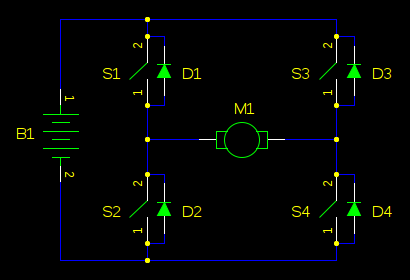
boost Why should I worry about a motor causing my supply voltage to shoot up when the back-EMF cant exceed the supply voltage
In motor control circuits, precautions must be taken to prevent the motor from feeding back into the power supply, which can cause the supply voltage to rise and potentially damage components. However, unless an external force is accelerating the motor,...