


motor driver circuit
#H-bridge
#DC motor
#robotics
#motor driver
#forward/reverse control
#electric brake
#integrated circuits
#discrete components
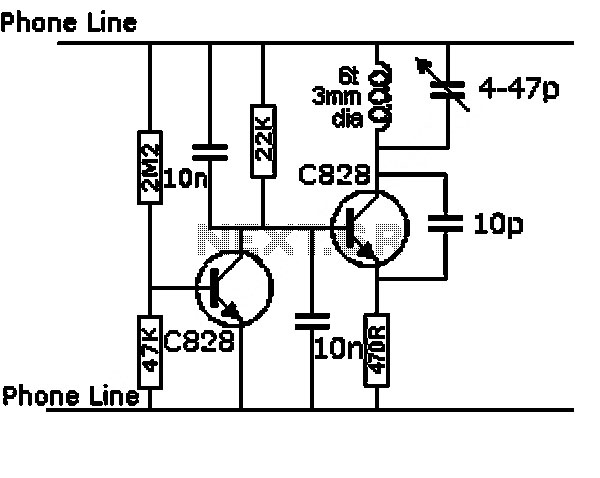
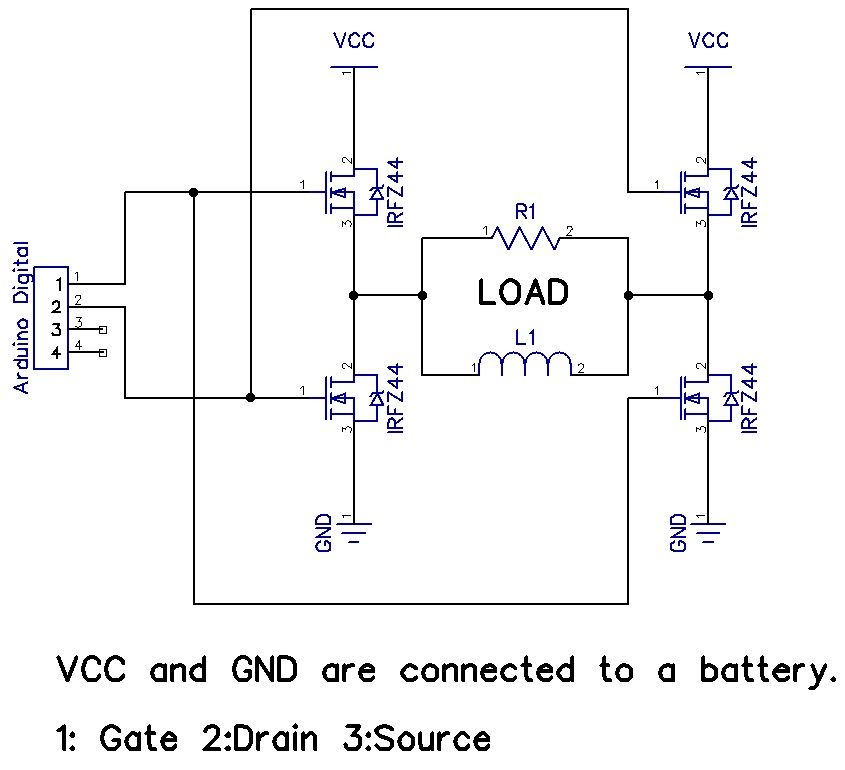
Description: These circuits are commonly utilized in robotics to enable DC motors to operate in both forward and reverse directions, as well as to provide an electric brake (short circuit condition). H-bridges can be found as integrated circuits or can be constructed using discrete components, as illustrated in figure 1.
H-bridge circuits are pivotal in controlling the direction and speed of DC motors in various applications, particularly in robotics. The H-bridge configuration consists of four switches (transistors or MOSFETs) arranged in a bridge formation, which allows the voltage to be applied across the motor in either direction. By selectively turning on and off these switches, the current flow through the motor can be reversed, enabling it to rotate in both clockwise and counterclockwise directions.
When implementing an H-bridge, it is essential to consider the control logic that dictates which switches are activated. Typically, two switches on one side of the bridge are turned on to allow current to flow in one direction, while the opposite pair is turned off. To reverse the motor's direction, the switches are toggled accordingly. Additionally, to achieve an electric braking effect, both switches on one side can be activated simultaneously, creating a short circuit across the motor terminals and rapidly dissipating the motor's kinetic energy.
H-bridges can be implemented using discrete components such as bipolar junction transistors (BJTs) or MOSFETs, allowing for custom designs tailored to specific requirements, such as current handling and switching speed. Alternatively, integrated circuits designed for H-bridge applications simplify the design process, providing built-in protection features and control logic, thus enhancing reliability and performance.
In summary, H-bridge circuits serve as a fundamental component in robotic systems, facilitating the precise control of DC motors through reversible operation and effective braking mechanisms. Their versatility in both integrated and discrete forms makes them suitable for a wide range of applications in modern electronics.These circuits are often used in robotics to allow DC motors to run forwards, backwards and to give electric break(short circuit condition). H bridges are available as integrated circuits, or can be built from discrete components as figure 1.
H-bridge circuits are pivotal in controlling the direction and speed of DC motors in various applications, particularly in robotics. The H-bridge configuration consists of four switches (transistors or MOSFETs) arranged in a bridge formation, which allows the voltage to be applied across the motor in either direction. By selectively turning on and off these switches, the current flow through the motor can be reversed, enabling it to rotate in both clockwise and counterclockwise directions.
When implementing an H-bridge, it is essential to consider the control logic that dictates which switches are activated. Typically, two switches on one side of the bridge are turned on to allow current to flow in one direction, while the opposite pair is turned off. To reverse the motor's direction, the switches are toggled accordingly. Additionally, to achieve an electric braking effect, both switches on one side can be activated simultaneously, creating a short circuit across the motor terminals and rapidly dissipating the motor's kinetic energy.
H-bridges can be implemented using discrete components such as bipolar junction transistors (BJTs) or MOSFETs, allowing for custom designs tailored to specific requirements, such as current handling and switching speed. Alternatively, integrated circuits designed for H-bridge applications simplify the design process, providing built-in protection features and control logic, thus enhancing reliability and performance.
In summary, H-bridge circuits serve as a fundamental component in robotic systems, facilitating the precise control of DC motors through reversible operation and effective braking mechanisms. Their versatility in both integrated and discrete forms makes them suitable for a wide range of applications in modern electronics.These circuits are often used in robotics to allow DC motors to run forwards, backwards and to give electric break(short circuit condition). H bridges are available as integrated circuits, or can be built from discrete components as figure 1.
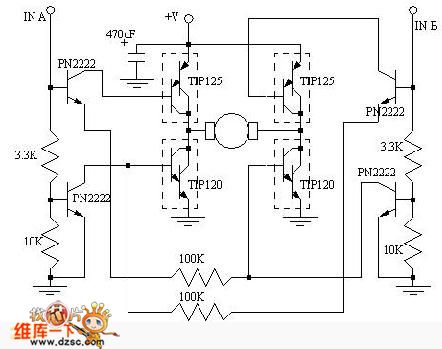
DC Motor Control
Regarding the DC motor control problem, this circuit is intended to assist individuals with specific requirements. The circuit's functions for co-rotation, rollback, deceleration, and stopping can be managed by the connected microcontroller unit (MCU).
The DC motor control circuit is designed...
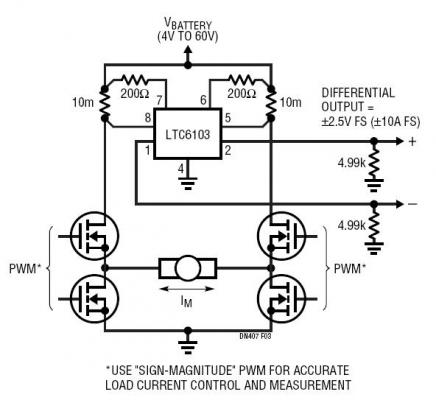
Bidirectional H-Bridge Monitoring with ADC-Friendly Differential Output
The dual outputs of the LTC6103 can be utilized independently for overload detection or combined as a differential pair to provide a bidirectional signal to an analog-to-digital converter (ADC). A typical circuit for a generic H-bridge application is illustrated. The...
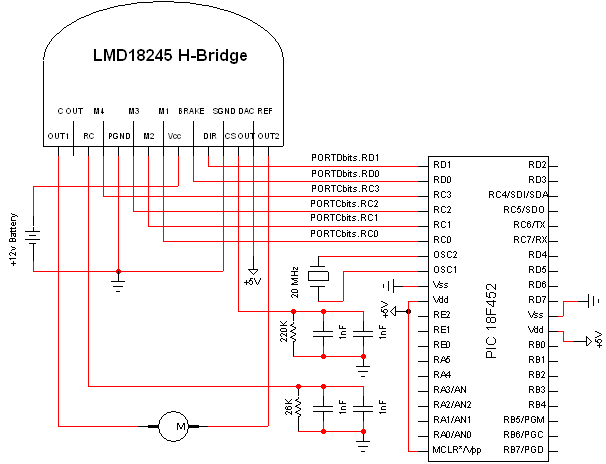
DC Motor Control circuit
The schematic presented below incorporates all the hardware components previously discussed. It is important to follow the tutorial precisely as shown. If a 220k resistor is unavailable, use the nearest higher value. Components are labeled to the best of the...
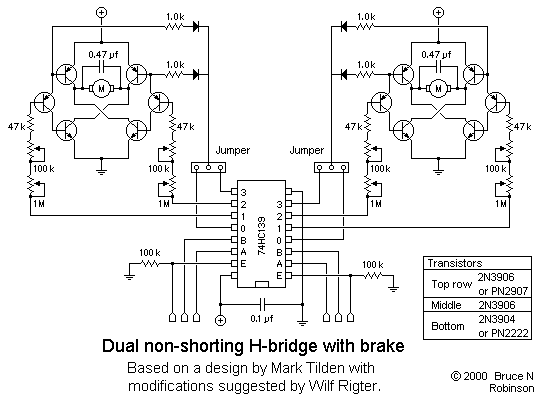
Full-featured Dual H-bridge
This is a slightly revised version of the 6-transistor H-bridge designed by Mark Tilden and found on the BEAM Tek website (now only available via archive). I encourage anyone interested in H-bridges to read Mark's article, as it gives an...
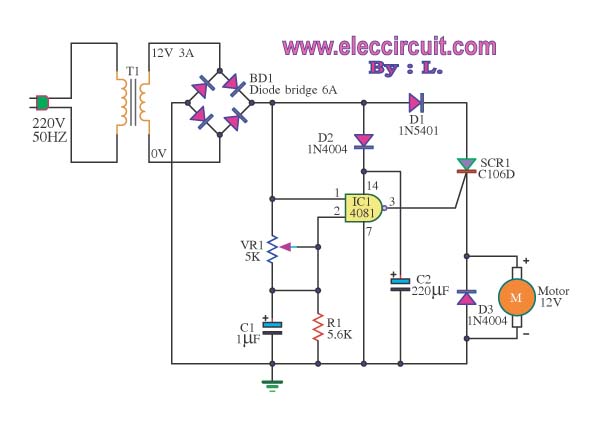
DC motor controller diagram with SCR and cmos ic
This is a speed motor controller circuit for a 12V DC motor. The speed of rotation of the spindle motor can be adjusted from 5 to 60 cycles per minute.
The speed motor controller circuit for a 12V DC motor typically...
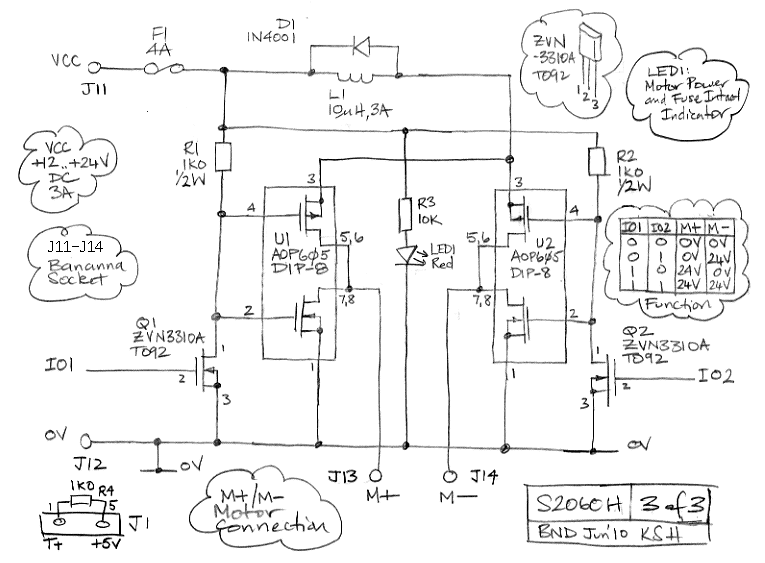
H-Bridge (A2060H) Manual
The A2060H is an H-Bridge extension for the Programmable Logic Head (A2060). Utilizing an external power supply to deliver motor current, the A2060H enables variable-speed, bi-directional control of DC motors. These motors can operate within a voltage range of 6...
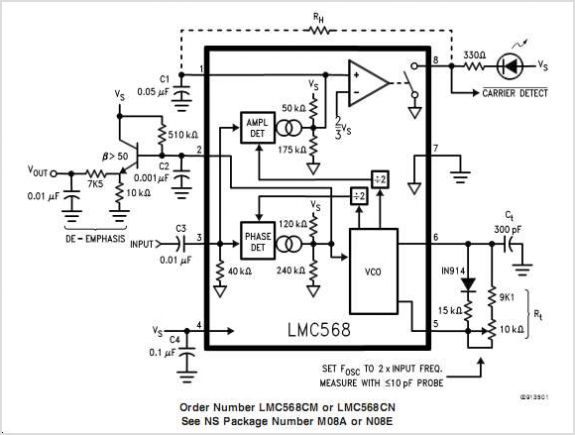
LMC568 Low Power Phase-Locked Loop
The LMD18200 is a 3A H-Bridge designed for motion control applications. The device is built using a multi-technology process that combines bipolar and CMOS control circuitry with DMOS power devices on the same monolithic structure. It is ideal for driving...
H-Bridge on a Breadboard
The H-Bridge is a circuit that can drive a motor in both forward and reverse directions. It can be a straightforward circuit that requires only a few components.
The H-Bridge circuit is a fundamental configuration used in motor control applications, allowing...
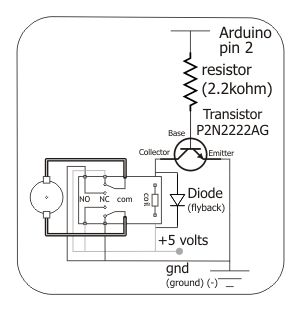
Motor controller H-bridge using relays
To control the motor, an H-bridge will be utilized in conjunction with a double-pole double-throw (DPDT) relay, as illustrated in the schematic below. For further details, additional resources are available.
The proposed circuit employs an H-bridge configuration to facilitate bidirectional control...