


Motor Speed Control Using PWM
#PWM
#electric motor
#speed control
#power efficiency
#motor driver
#microcontroller
#Arduino
#analog control
#electronics
#embedded systems
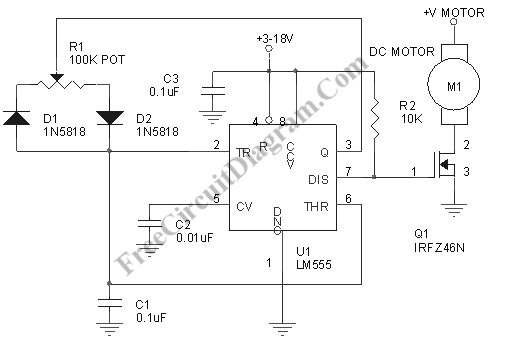
Description: Pulse width modulation, commonly referred to as PWM, is utilized to regulate the power supplied to a load without sacrificing efficiency. This technique is often employed in controlling the speed of an electric motor.
PWM operates by varying the width of the pulses in a signal while maintaining a constant frequency. This method allows for precise control of the average power delivered to an electrical device by adjusting the duty cycle, which is the ratio of the "on" time to the total cycle time. For instance, a 50% duty cycle means the signal is on half of the time and off the other half, resulting in an average power output that is half of the maximum.
In practical applications, PWM is widely used in motor speed control, dimming of lights, and in various power supply circuits. The implementation of PWM in motor control enables smooth acceleration and deceleration, reduces mechanical wear, and enhances energy efficiency. The use of high-frequency PWM signals minimizes audible noise in motors, as the switching frequency is typically above the audible range.
To design a PWM circuit for motor control, a microcontroller or a dedicated PWM controller can be employed. The microcontroller generates the PWM signal based on the desired speed input, which can be adjusted via a potentiometer or a digital interface. The PWM signal is then fed into a power stage, typically comprising a MOSFET or an IGBT, which acts as a switch that controls the motor's power supply.
The circuit should include protective components such as diodes to prevent back EMF from damaging the switching elements, as well as capacitors to filter voltage spikes. Feedback mechanisms, such as tachometers or encoders, can be integrated to provide real-time speed data, allowing for closed-loop control and further refinement of the PWM signal based on the motor's performance.
Overall, PWM stands as a versatile and efficient method for power regulation in various electronic applications, particularly in the control of electric motors.Pulse width modulation or familiarly known as PWM is used to control the delivered power to load without loosing the efficiency. The speed of an electric motor..
PWM operates by varying the width of the pulses in a signal while maintaining a constant frequency. This method allows for precise control of the average power delivered to an electrical device by adjusting the duty cycle, which is the ratio of the "on" time to the total cycle time. For instance, a 50% duty cycle means the signal is on half of the time and off the other half, resulting in an average power output that is half of the maximum.
In practical applications, PWM is widely used in motor speed control, dimming of lights, and in various power supply circuits. The implementation of PWM in motor control enables smooth acceleration and deceleration, reduces mechanical wear, and enhances energy efficiency. The use of high-frequency PWM signals minimizes audible noise in motors, as the switching frequency is typically above the audible range.
To design a PWM circuit for motor control, a microcontroller or a dedicated PWM controller can be employed. The microcontroller generates the PWM signal based on the desired speed input, which can be adjusted via a potentiometer or a digital interface. The PWM signal is then fed into a power stage, typically comprising a MOSFET or an IGBT, which acts as a switch that controls the motor's power supply.
The circuit should include protective components such as diodes to prevent back EMF from damaging the switching elements, as well as capacitors to filter voltage spikes. Feedback mechanisms, such as tachometers or encoders, can be integrated to provide real-time speed data, allowing for closed-loop control and further refinement of the PWM signal based on the motor's performance.
Overall, PWM stands as a versatile and efficient method for power regulation in various electronic applications, particularly in the control of electric motors.Pulse width modulation or familiarly known as PWM is used to control the delivered power to load without loosing the efficiency. The speed of an electric motor..

art364 / Standalone Arduino
To power the device, a clean and stable source of 5 volts DC is required. This can be achieved by using a switching 5V DC power supply from a supplier such as JK Electronics, ordering one from Jameco, or by...
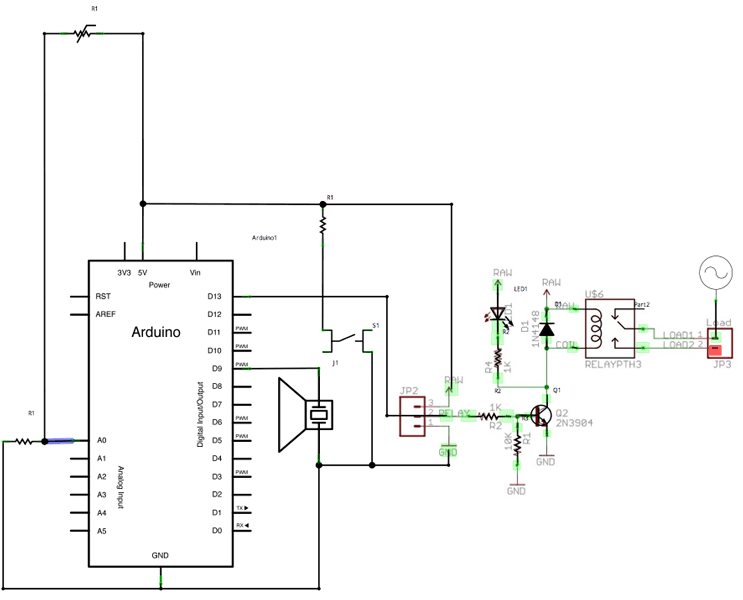
arduino yogurt maker
The crock pot is connected to a relay that can turn it on or off. The relay is controlled by a microcontroller based on readings from a temperature sensor (thermistor) located inside the crock pot. The objective is to heat...
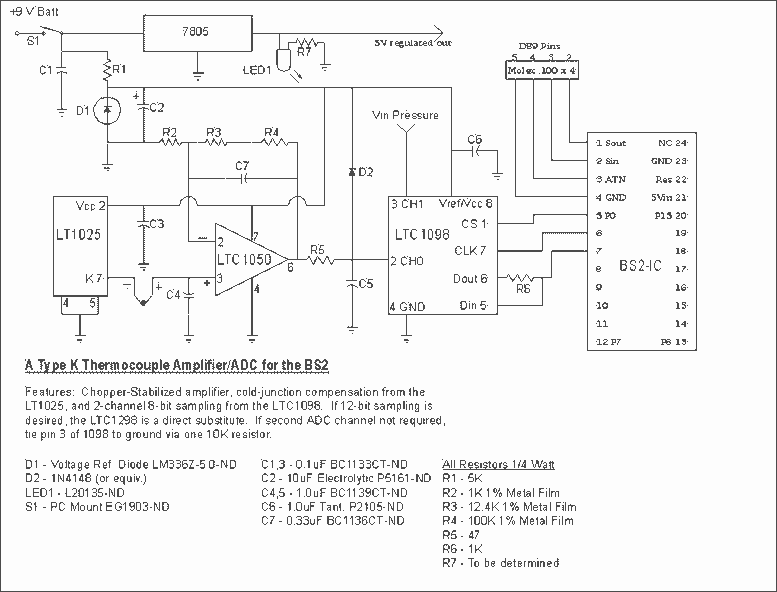
PWM Fan Controller schematic
The heart of the PWM Fan Controller is a PIC 12F675 microcontroller. This microcontroller is reading the analog output of a LM35 temperature sensor using a ADC (analog to digital converter). The resulting digital value is converted to a temperature...
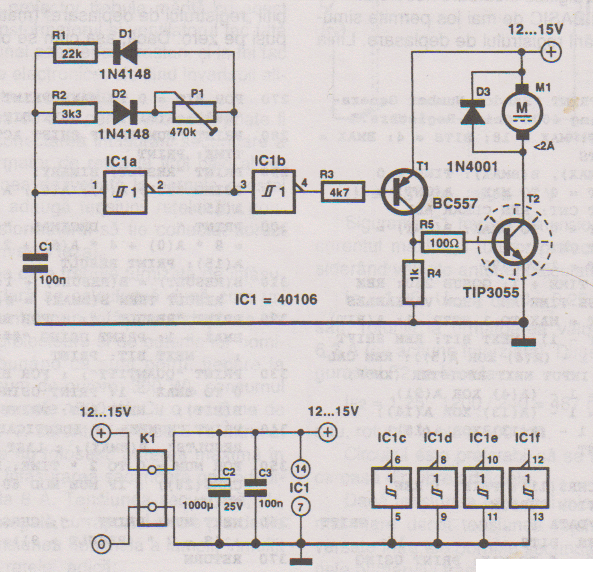
PWM Controller Circuit
This PWM controller circuit is suitable for managing small motors with a maximum current consumption of 2A. For higher currents, additional cooling is required.
The PWM (Pulse Width Modulation) controller circuit is designed to efficiently control the speed of small DC...
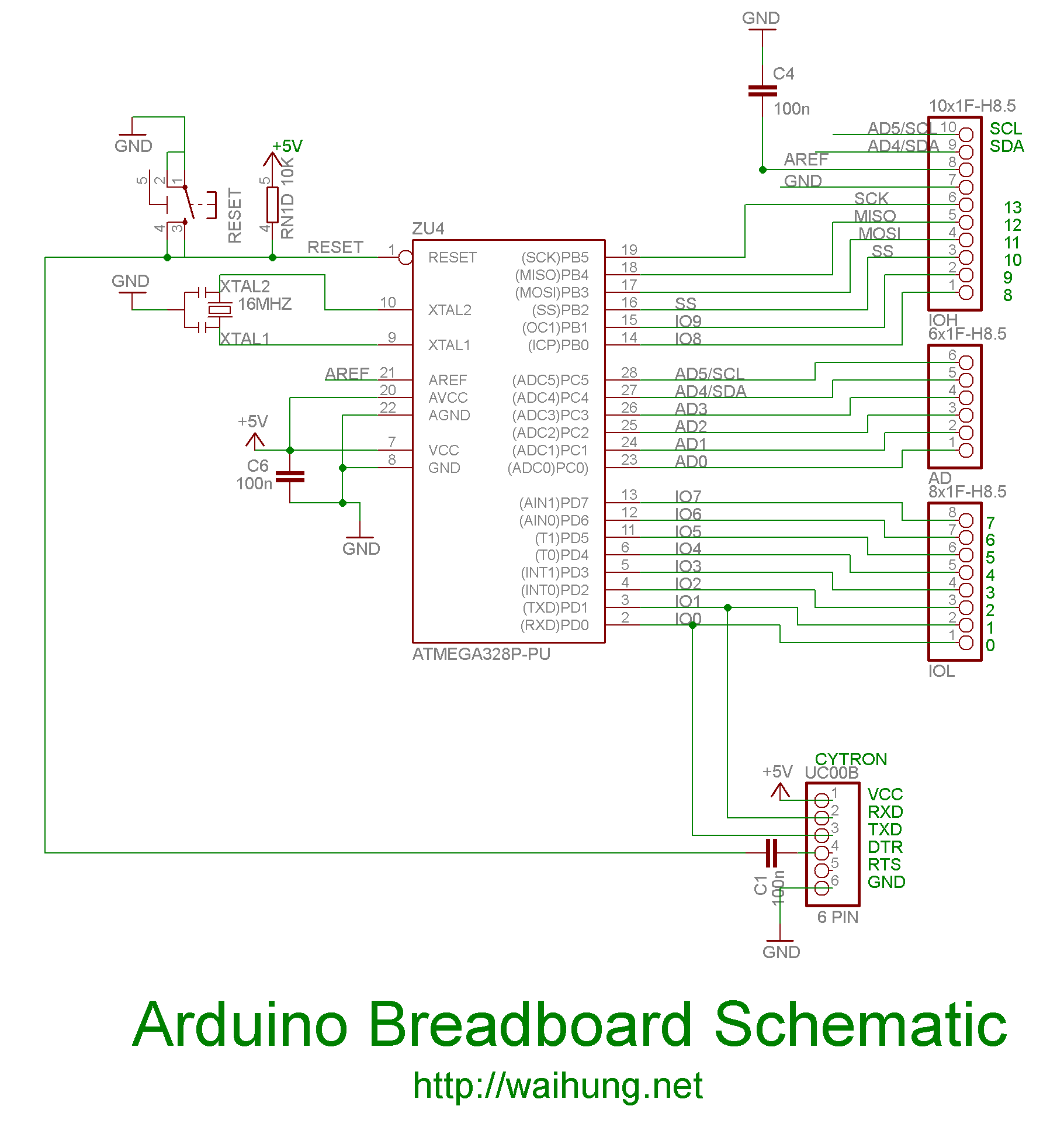
arduino on breadboard
On the Uno boards, there is an integrated circuit (IC) that functions as a USB to serial converter, enabling programming and communication with the Arduino from a computer. This IC is a surface-mounted device (SMD). The R3 version utilizes an...
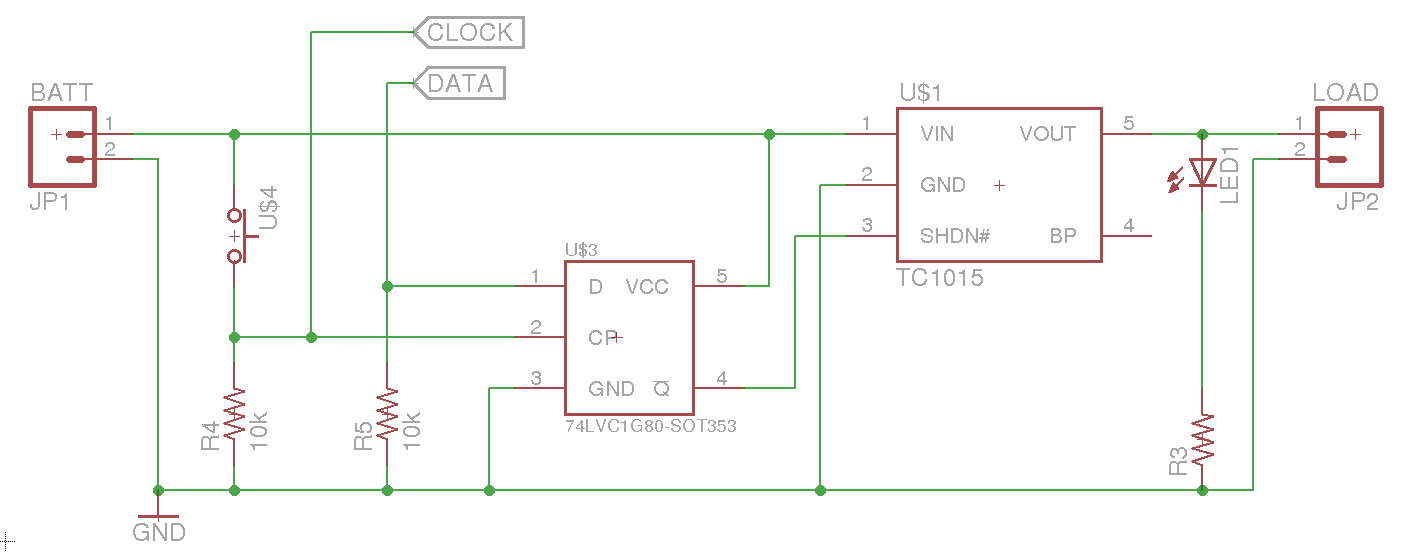
Protecting Microcontroller Input Pins from Soft Power Switch
A soft power switch for a microcontroller is designed such that a momentary switch can activate the circuit, including the microcontroller. When the switch is pressed a second time, the microcontroller is capable of shutting itself down after executing necessary...
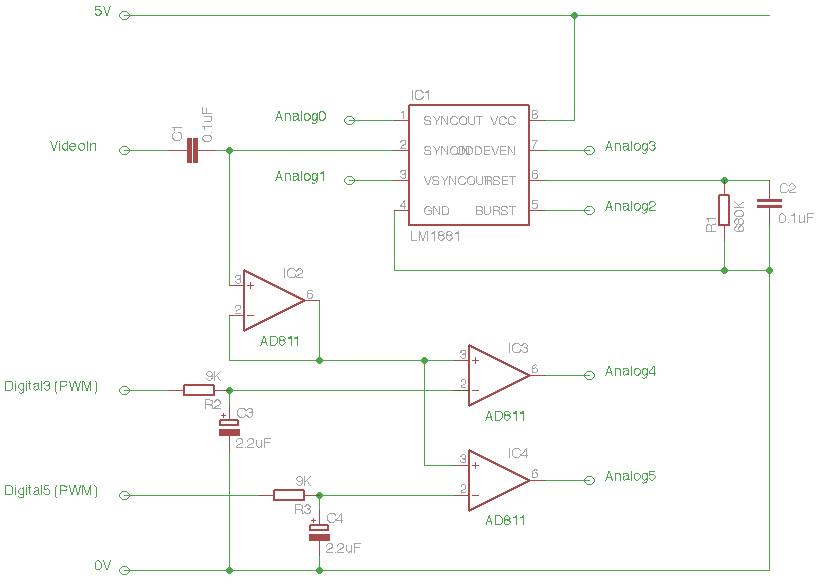
Arduino Eye Shield
The Arduino Eye Shield is a circuit board that can be plugged on top of the Arduino, enabling it to interpret analog video (PAL or NTSC) from a camera or other source. This provides the Arduino with visual capabilities, allowing...
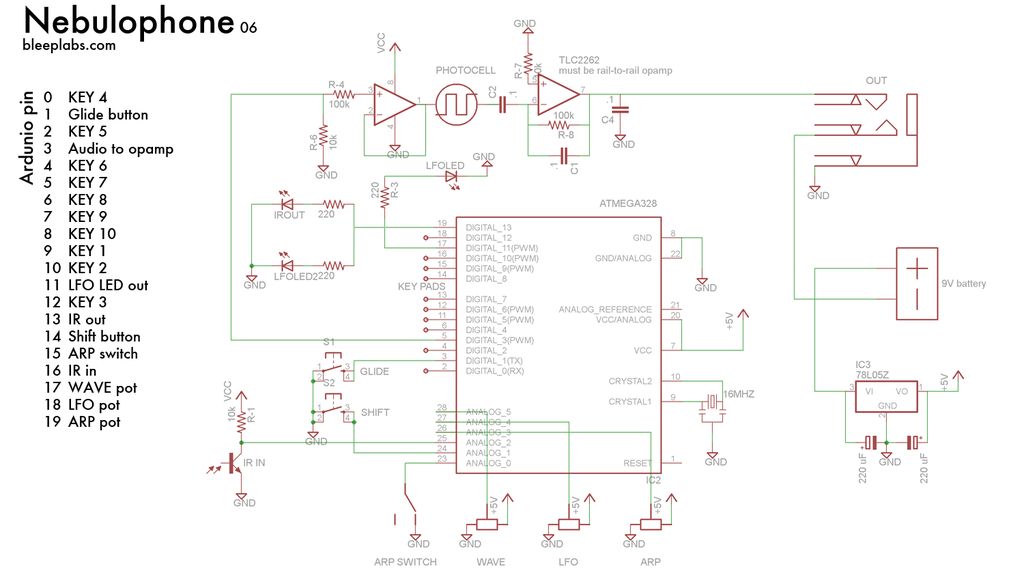
DIY Arduino Nebulophone Synth
The initial intention was to purchase a Nebulophone; however, the price exceeded the budget. It was discovered that programming an AtMega 328 using ArduinoISP was a feasible alternative. If the code was compatible with Arduino, it was logical to utilize...
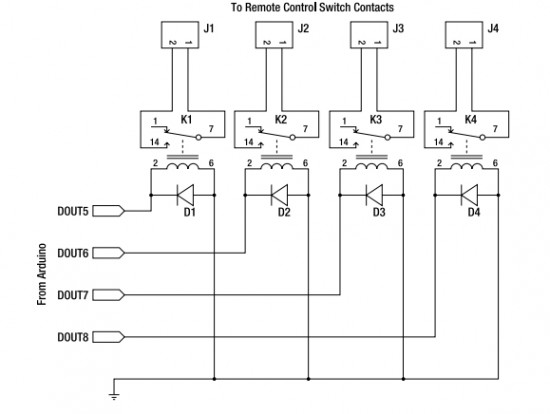
Appliance Remote Control Arduino Project
Starting today, interesting Arduino projects from various sources will be shared. The author is a novice in this field but is committed to understanding it fully. It should be noted that the projects are not developed by the author, and...