


SHD1006 type single positive pressure blower total pressure circuit
#blower
#fan control
#electronic module
#pressure control
#SHD series
#KZH control box
#HKD 1F
#single positive pressure
#electronic control
#industrial fan
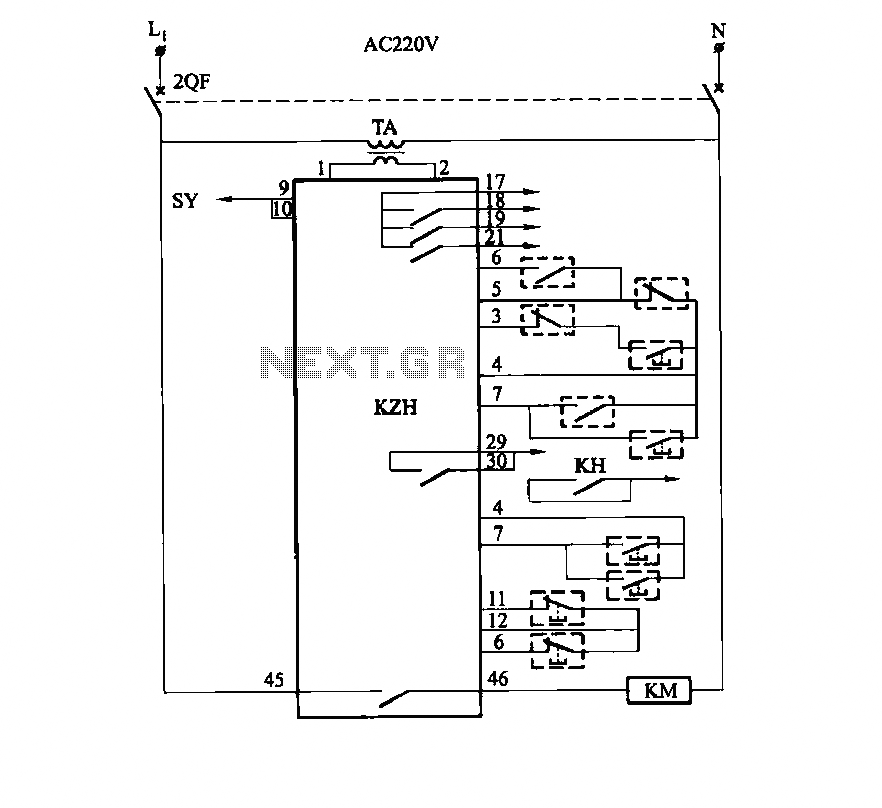
Description: It utilizes the SHD series of electronic control equipment modules. The fan control box KZH functions as the HKD 1F electronic module.
The SHD series of electronic control equipment is designed for various applications, including fan control systems. Within this series, the fan control box KZH serves a critical role, functioning as an electronic module identified as HKD 1F. This module enables precise control of fan operation, allowing for adjustments in speed and performance based on specific requirements.
The KZH fan control box incorporates several key components, including a microcontroller, power supply circuitry, and interface connections for user input and feedback. The microcontroller serves as the central processing unit, executing programmed instructions to manage the fan's operation effectively. Power supply circuitry ensures that the module receives the necessary voltage and current to function reliably.
User input can be facilitated through various interfaces, such as potentiometers for manual speed adjustments or digital interfaces for integration with automated systems. Feedback mechanisms, like temperature sensors or tachometers, may be included to provide real-time data to the microcontroller, enabling dynamic adjustments to fan speed based on environmental conditions.
The design of the KZH fan control box emphasizes efficiency, reliability, and ease of integration into existing systems. It is suitable for use in HVAC systems, industrial applications, and other environments where precise airflow control is necessary. The robust construction of the module ensures durability and longevity, making it a valuable component in electronic control systems.It uses SHD series of electronic control equipment electronic modules. Fan control box KZH as HKD 1F electronic module.
The SHD series of electronic control equipment is designed for various applications, including fan control systems. Within this series, the fan control box KZH serves a critical role, functioning as an electronic module identified as HKD 1F. This module enables precise control of fan operation, allowing for adjustments in speed and performance based on specific requirements.
The KZH fan control box incorporates several key components, including a microcontroller, power supply circuitry, and interface connections for user input and feedback. The microcontroller serves as the central processing unit, executing programmed instructions to manage the fan's operation effectively. Power supply circuitry ensures that the module receives the necessary voltage and current to function reliably.
User input can be facilitated through various interfaces, such as potentiometers for manual speed adjustments or digital interfaces for integration with automated systems. Feedback mechanisms, like temperature sensors or tachometers, may be included to provide real-time data to the microcontroller, enabling dynamic adjustments to fan speed based on environmental conditions.
The design of the KZH fan control box emphasizes efficiency, reliability, and ease of integration into existing systems. It is suitable for use in HVAC systems, industrial applications, and other environments where precise airflow control is necessary. The robust construction of the module ensures durability and longevity, making it a valuable component in electronic control systems.It uses SHD series of electronic control equipment electronic modules. Fan control box KZH as HKD 1F electronic module.
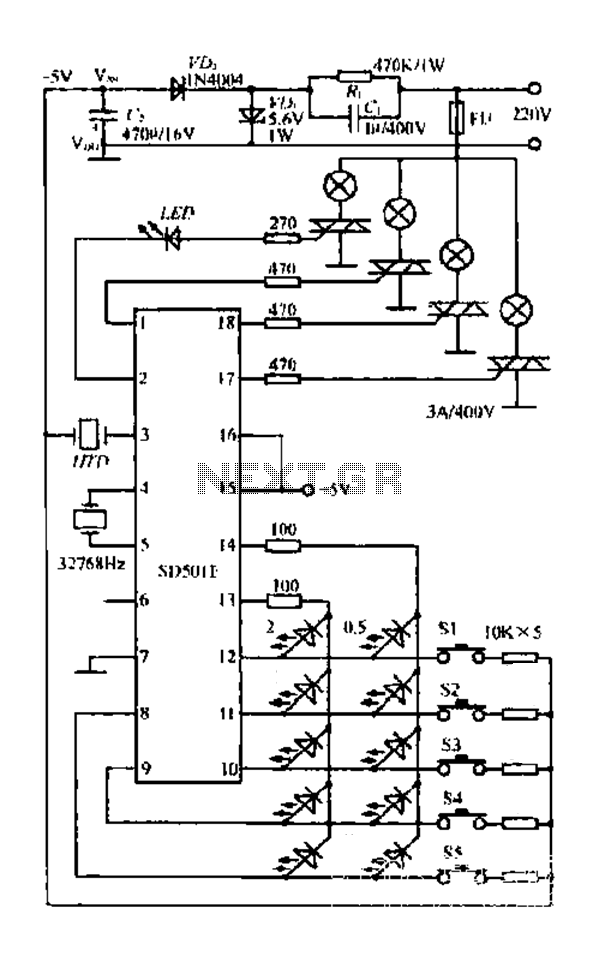
A novel control circuit Lantern
The FIG SD501E is a J tie fan integrated circuit (IC) characterized by progressive timing and three operational modes: strong, medium, and weak. It features three types of output settings and includes an electrical swing mechanism. The device is equipped...
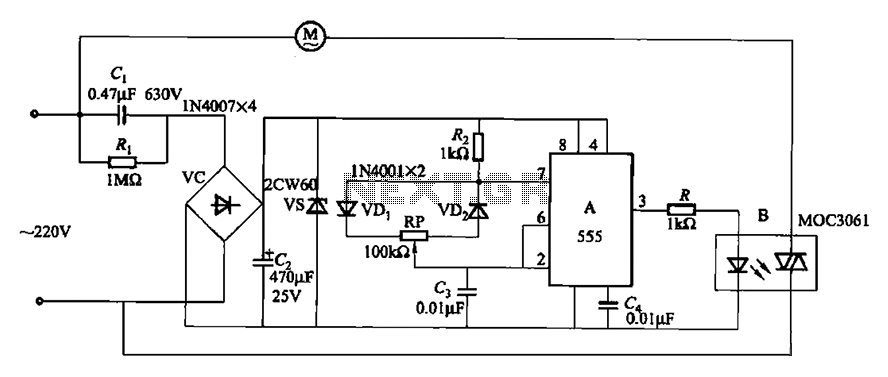
Fans of natural wind simulator circuit 2
The circuit depicted in Figure 3-9 shares similarities with Figure 3-8, with the distinction that the zero-off MOC3061 type photoelectric coupler is directly connected to control the operation of the fan.
The circuit utilizes the MOC3061, a phototransistor optoisolator, which serves...
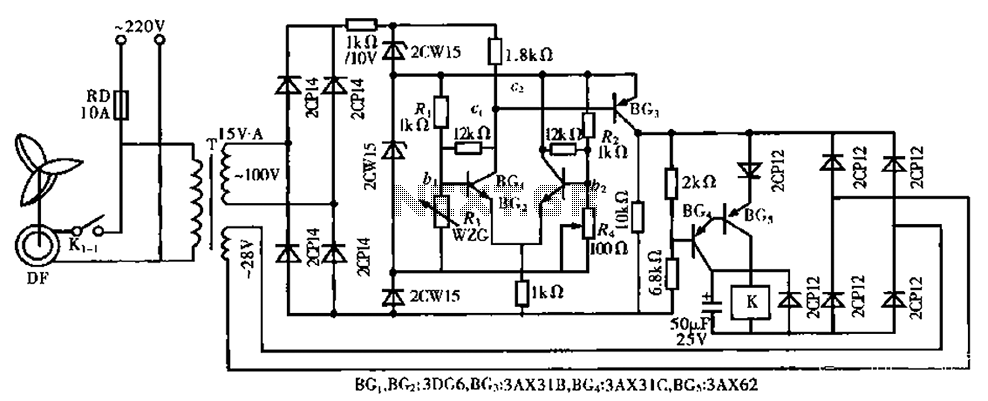
Fan automatic control circuit
The circuit is a bistable circuit where each bistable unit is controlled by high and low output levels. When power is supplied to the circuit, current flows through components R13, CL, and VD to VD2 for full-wave rectification. The ZD...
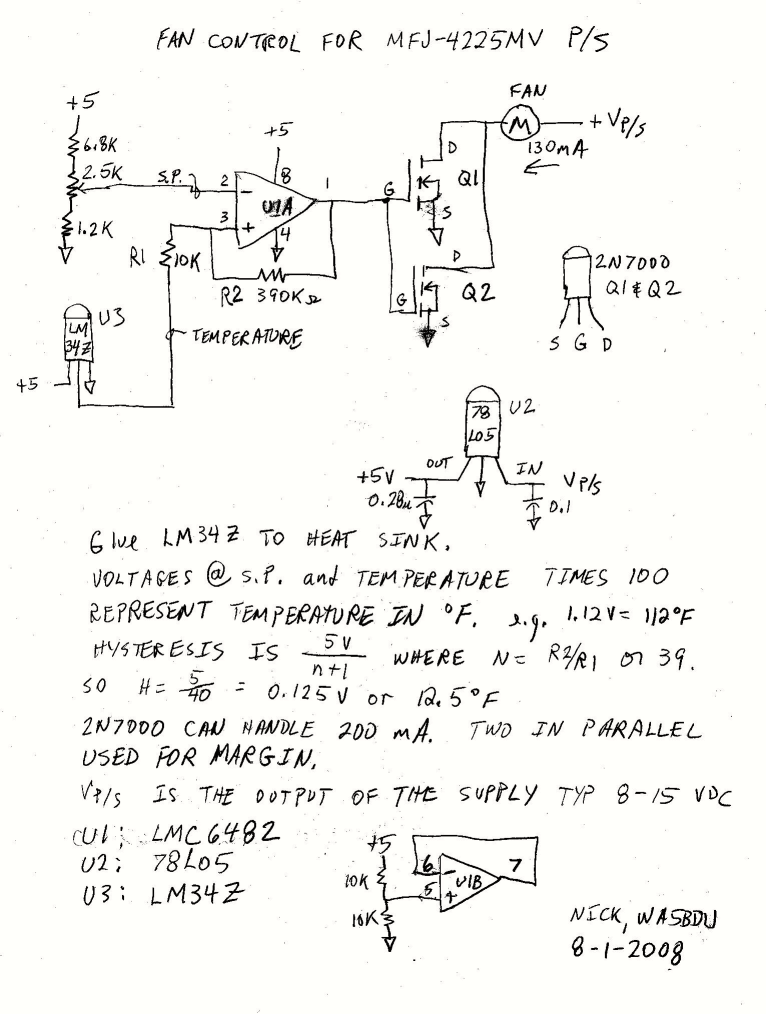
fan control
The MFJ-4225MV is a lightweight power supply that provides approximately 25 A output, with around 20 A suitable for continuous use. It is compatible with equipment such as the IC-706GII and K3. The fan operates quietly compared to other devices,...
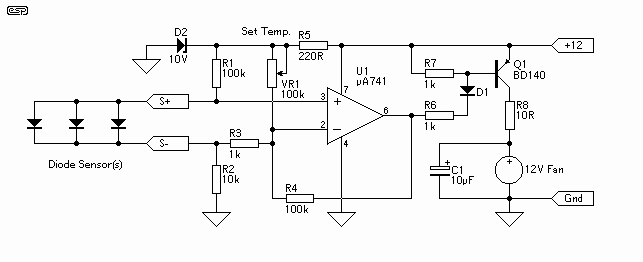
Motor Fan heat controller
The controller uses one or more ordinary silicon diodes as a sensor, and uses a cheap opamp as the amplifier. I designed this circuit to use 12V computer fans, as these are now very easy to get cheaply. These fans...
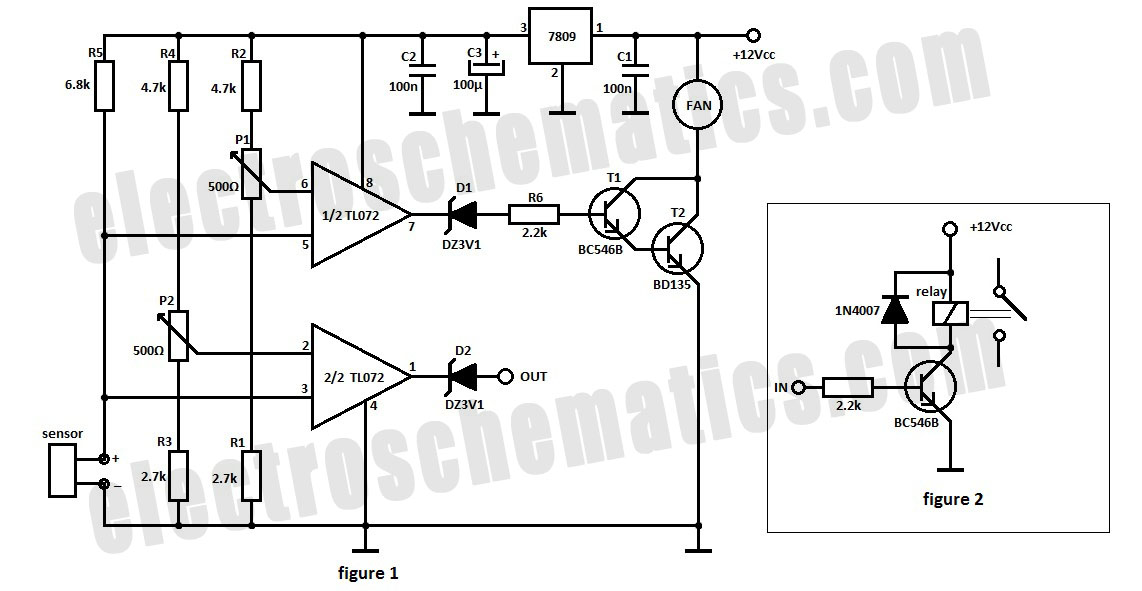
Automatic Fan Controller Circuit
The automatic fan controller circuit depicted in the schematic features two comparators with distinct triggering points that can be adjusted independently. LM135 or...
The automatic fan controller circuit is designed to regulate fan operation based on temperature variations. It employs two...
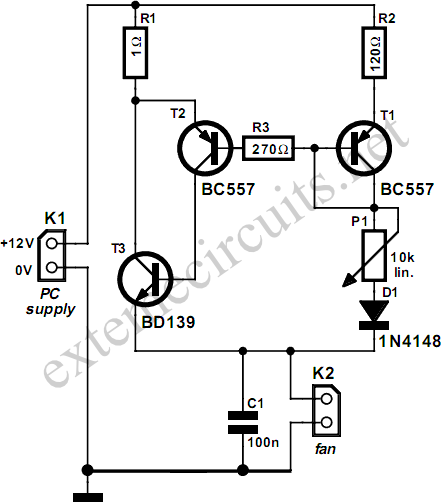
Processor Fan Control
Fans in PCs can be excessively loud. In many instances, the noise generated by the fan can be significantly reduced by decreasing its speed. Although this reduction will lower the cooling capacity, it does not pose a problem as long...
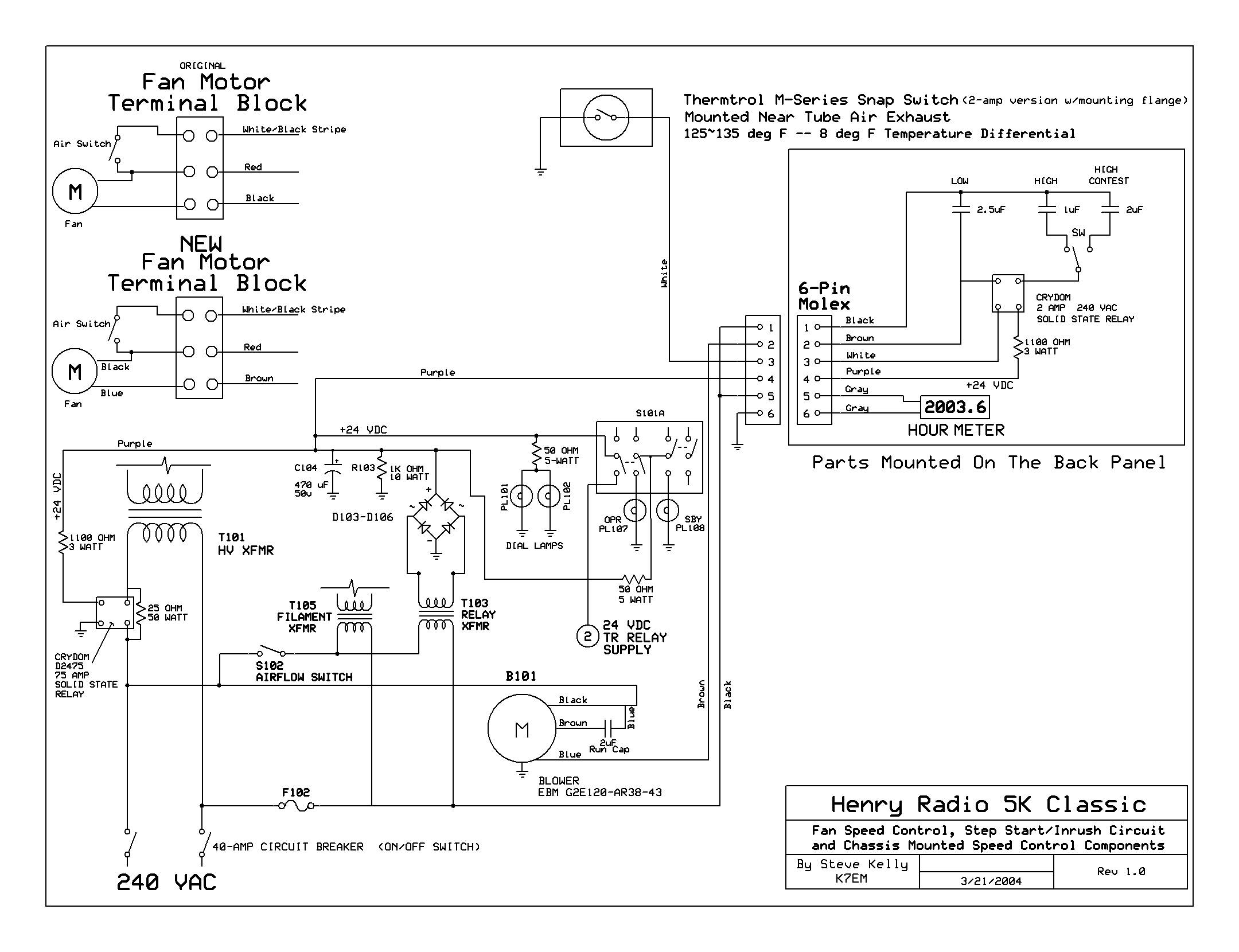
Henry Radio 5K Classic Blower Modifications
The back cover has been removed, revealing the upper deck of the power supplies and the original Dayton 2C915A blower (220VAC - 140CFM) mounted to the cabinet's underside. The RF deck enclosure has also been taken off. The upper deck...
Gentle Breeze
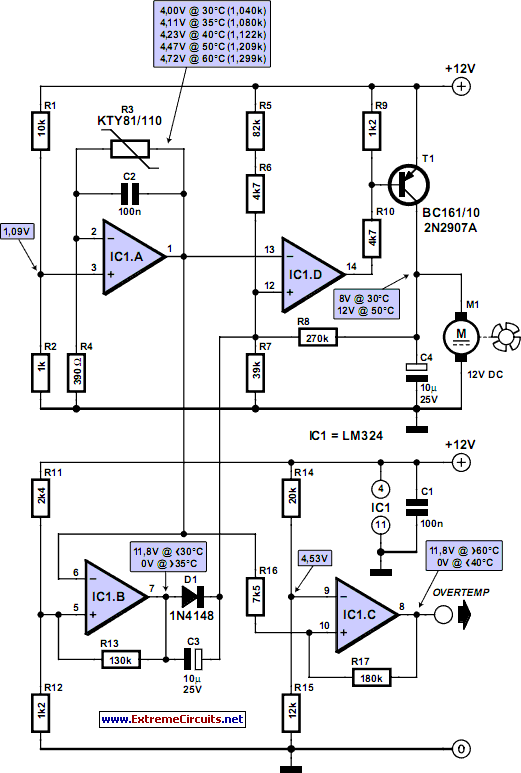
Where there is heat, let us bring cooling: a fan will do the job, but unfortunately, fans are usually noisy. In many cases, there is no need for the fan to run continuously at full speed, so it makes sense...