


Stitching Machine Motor Speed Control
#stitching machine
#speed control
#foot pedal
#carbon buttons
#motor
#speed regulation
#industrial
#sewing
#mechanical
#automation
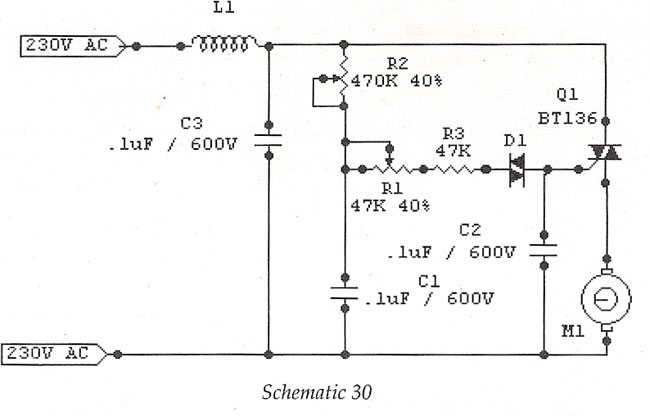
Description: The motor speed control for stitching machines utilizes a series of carbon buttons housed within an enclosure, which are activated by a foot pedal. As the pressure on the foot pedal increases, the motor speed is adjusted accordingly.
The motor speed control circuit for stitching machines is designed to provide precise control over the operation of the motor, allowing for varying stitching speeds based on user input. The system typically includes a foot pedal interface, which incorporates a variable resistor or potentiometer to detect the pressure applied by the operator.
When the foot pedal is pressed, the resistance changes, sending a corresponding voltage signal to the motor controller. This controller interprets the voltage level and adjusts the power supplied to the motor, thereby controlling its speed. The enclosure containing the carbon buttons serves as a protective housing, ensuring durability and reliability in a workshop environment.
Additional components may include a microcontroller for enhanced functionality, enabling features such as programmable speed settings and feedback mechanisms. Safety features such as overcurrent protection and thermal shutdown may also be integrated into the circuit to prevent damage to the motor and associated components.
The overall design emphasizes efficiency and user-friendliness, allowing operators to achieve optimal stitching results with minimal effort. Proper attention to the selection of materials and components is essential to ensure longevity and consistent performance in industrial applications.Stitching Machine Motor Speed Control, Motor operated stitching machines have a series of carbon buttons in an enclosure operated by foot pedal. As the pressure on the foot pedal is increase..
The motor speed control circuit for stitching machines is designed to provide precise control over the operation of the motor, allowing for varying stitching speeds based on user input. The system typically includes a foot pedal interface, which incorporates a variable resistor or potentiometer to detect the pressure applied by the operator.
When the foot pedal is pressed, the resistance changes, sending a corresponding voltage signal to the motor controller. This controller interprets the voltage level and adjusts the power supplied to the motor, thereby controlling its speed. The enclosure containing the carbon buttons serves as a protective housing, ensuring durability and reliability in a workshop environment.
Additional components may include a microcontroller for enhanced functionality, enabling features such as programmable speed settings and feedback mechanisms. Safety features such as overcurrent protection and thermal shutdown may also be integrated into the circuit to prevent damage to the motor and associated components.
The overall design emphasizes efficiency and user-friendliness, allowing operators to achieve optimal stitching results with minimal effort. Proper attention to the selection of materials and components is essential to ensure longevity and consistent performance in industrial applications.Stitching Machine Motor Speed Control, Motor operated stitching machines have a series of carbon buttons in an enclosure operated by foot pedal. As the pressure on the foot pedal is increase..
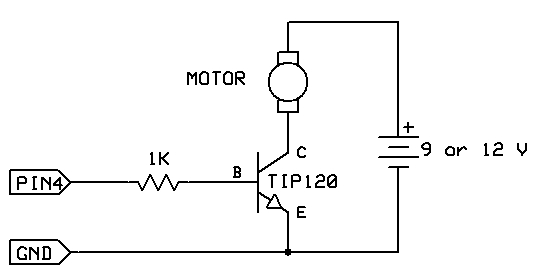
motor switch led circuit
The strategy involves assembling the circuit in stages, testing each component as it is integrated. Once all connections are established and can be controlled or read correctly by the computer, the main program can be developed with assurance that all...
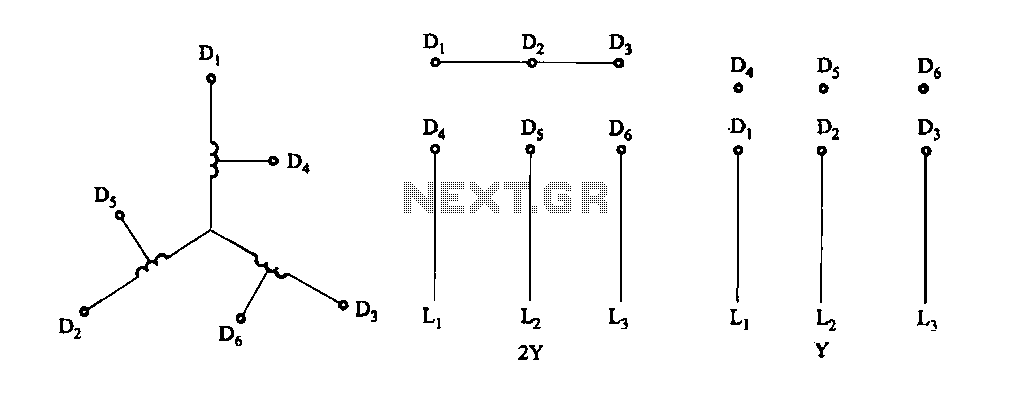
Two-speed motor stator winding 2Y-Y connection
Figure 3-100 illustrates the lead wiring diagram for the stator windings of a two-speed motor configured in a 2Y/Y connection.
The two-speed motor stator wiring diagram depicted in Figure 3-100 provides a clear representation of the electrical connections required for the...
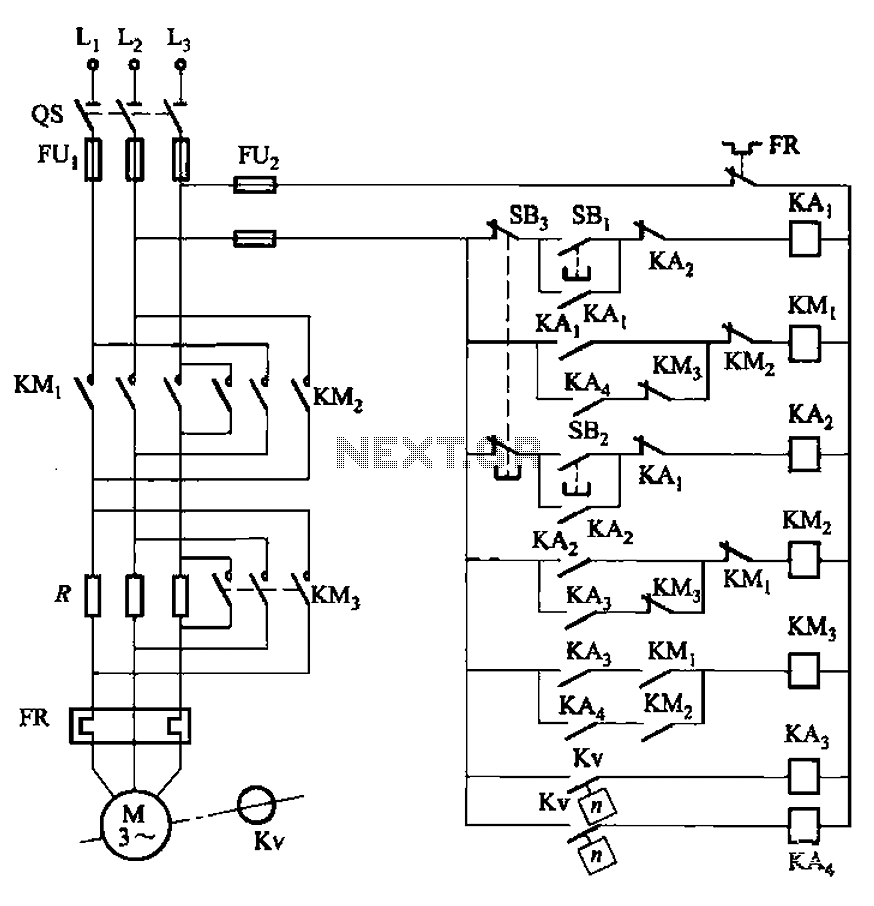
Three reversing operation of the reverse brake circuit
The circuit illustrated in Figure 3-130 differs from the circuit in Figure 3-129 in that when the stop button SB3 is pressed, the electric motor initiates braking. Furthermore, during both the startup and braking phases, the motor power lines are...
Swiss ML Testakica
The Unit is started by hand by revolving the two disks in opposite directions and continues to move without further input. This device has only two moving parts namely the bearing races at the centre of the disk. The disks...
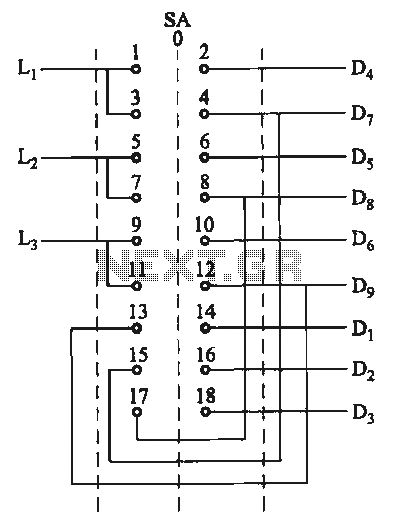
Switching two-speed motor control circuit
The motor switch control circuit depicted in the figure provides two speed settings for counter-steering, allowing for operation at two speeds in opposite directions.
The motor switch control circuit is designed to facilitate the operation of a motor at two distinct...
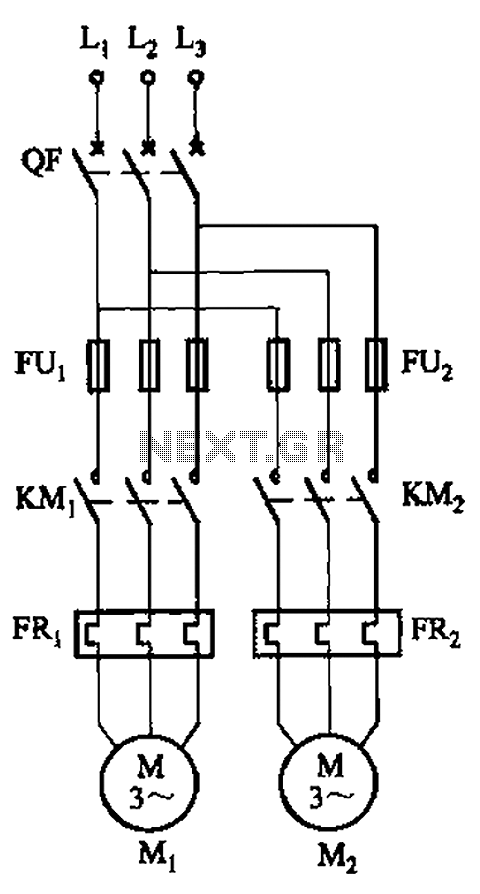
The use of a motor control switch automatic circuit a mutual investment
The circuit illustrated in Figure 3-64 operates with switch SA1 in the work position and switch SA2 in the standby position, allowing motor Mi to run while motor Mz remains on standby. In the event of downtime for motor Mi,...
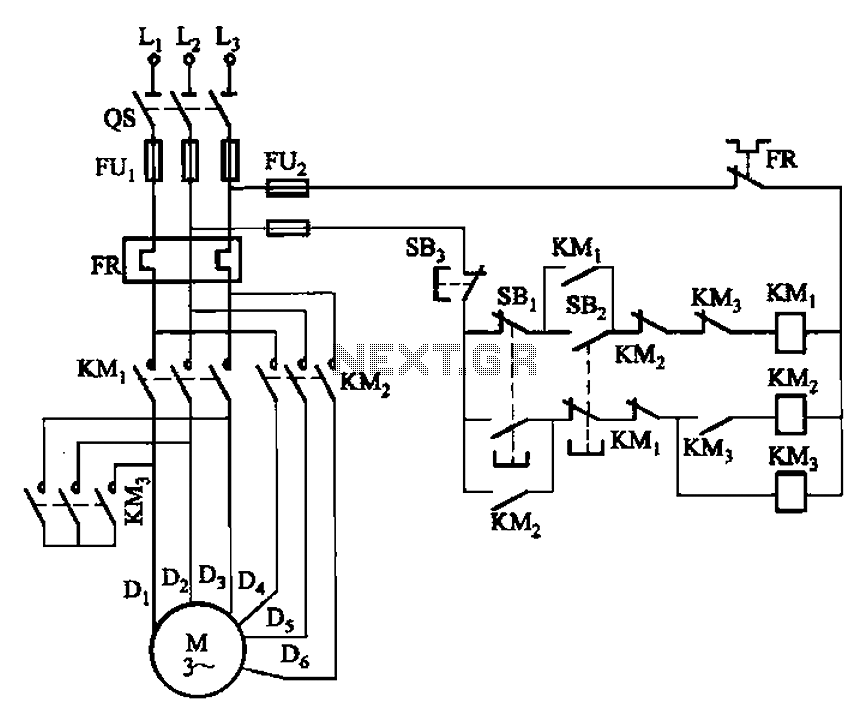
2Y- connection two-speed motor contactor control one circuit
The circuit depicted in Figure 3-96 features a low-speed operation button (SBz), a high-speed operation button (SBi), and a stop button (SB3). In this configuration, a motor is connected in such a way that when the low-speed button is pressed,...
Switching two-speed motor control circuit
The motor switch control circuit depicted in the figure provides two speed settings for counter-steering, allowing for operation at two speeds in opposite directions.
The motor switch control circuit is designed to facilitate the operation of a motor at two distinct...
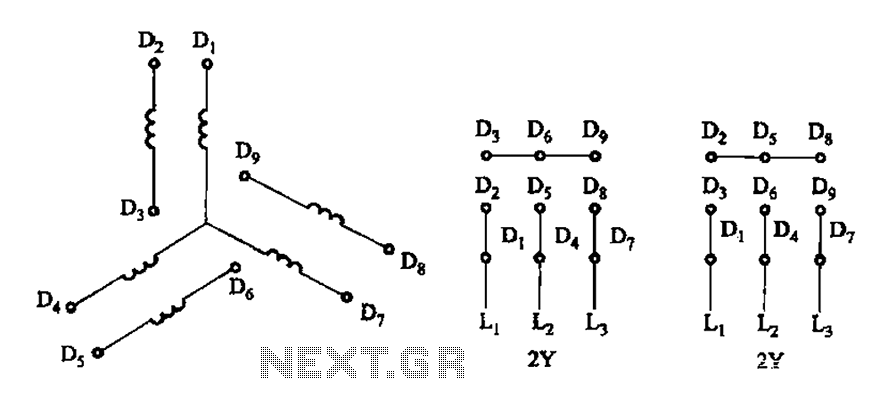
Two-speed motor stator winding 2Y-2Y connection
As illustrated in Figure 3-105, this diagram depicts the lead wiring configuration for a two-speed motor stator with a 2Y/2Y connection.
The two-speed motor stator wiring diagram is essential for understanding the configuration and operation of the motor. In this setup,...