


Charge amplifier circuit
#charge amplifier
#high-gain
#negative feedback
#capacitor
#punch hit measurement
#sensor interface
#signal conditioning
#op-amp
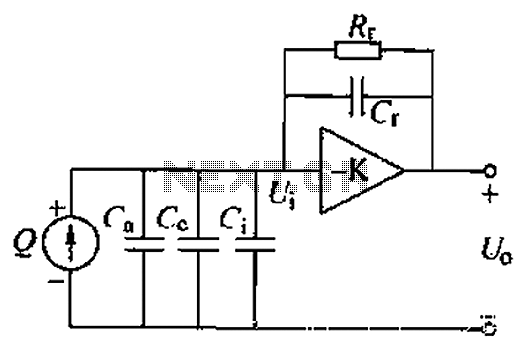
Description: A charge amplifier is an effective device for measuring punch hits. This amplifier utilizes a negative feedback capacitor in conjunction with a high-gain operational amplifier. The amplifier operates with minimal shunt, relying primarily on the feedback capacitor's charge (q CF) for its charging power. When the capacitance is significantly smaller than the resistance, the equivalent input impedance is affected.
A charge amplifier is designed to convert the charge produced by a sensor, such as a piezoelectric element, into a voltage signal that can be easily measured. The core of this circuit is a high-gain operational amplifier configured to operate with a feedback capacitor. This configuration allows the amplifier to achieve high sensitivity and low noise, which is crucial for accurately measuring dynamic events like impacts or vibrations.
The operational amplifier in this setup is typically configured in an inverting mode, where the input charge from the sensor is applied to the inverting terminal. The feedback capacitor, which is connected from the output to the inverting input, integrates the input charge and produces a voltage output proportional to the charge. The gain of the amplifier is determined by the ratio of the feedback capacitor to the input capacitance, allowing for precise control over the amplification level.
In practical applications, the charge amplifier exhibits a very high input impedance, which minimizes the loading effect on the sensor and ensures that the measurement is not influenced by external factors. The design must also consider the bandwidth of the amplifier, as it should be capable of responding quickly to transient events.
Additionally, the choice of components, such as the operational amplifier and the feedback capacitor, plays a critical role in the performance of the charge amplifier. Low-leakage capacitors are preferred to maintain the integrity of the charge measurement, while the operational amplifier should have low offset voltage and low noise characteristics to enhance measurement accuracy.
Overall, the charge amplifier is an essential component in various applications, including impact testing, acceleration measurement, and other dynamic force measurements, where precise and reliable data acquisition is required. Charge amplifier, it is a good punch hit measuring amplifier. This amplifier is actually a negative feedback capacitor having a depth of high-gain operational amplifier input o f the amplifier is almost no shunt, only the feedback capacitor charge q CF charging power. When the capacitance is much smaller than the resistance brother off to the equivalent impedance input,
A charge amplifier is designed to convert the charge produced by a sensor, such as a piezoelectric element, into a voltage signal that can be easily measured. The core of this circuit is a high-gain operational amplifier configured to operate with a feedback capacitor. This configuration allows the amplifier to achieve high sensitivity and low noise, which is crucial for accurately measuring dynamic events like impacts or vibrations.
The operational amplifier in this setup is typically configured in an inverting mode, where the input charge from the sensor is applied to the inverting terminal. The feedback capacitor, which is connected from the output to the inverting input, integrates the input charge and produces a voltage output proportional to the charge. The gain of the amplifier is determined by the ratio of the feedback capacitor to the input capacitance, allowing for precise control over the amplification level.
In practical applications, the charge amplifier exhibits a very high input impedance, which minimizes the loading effect on the sensor and ensures that the measurement is not influenced by external factors. The design must also consider the bandwidth of the amplifier, as it should be capable of responding quickly to transient events.
Additionally, the choice of components, such as the operational amplifier and the feedback capacitor, plays a critical role in the performance of the charge amplifier. Low-leakage capacitors are preferred to maintain the integrity of the charge measurement, while the operational amplifier should have low offset voltage and low noise characteristics to enhance measurement accuracy.
Overall, the charge amplifier is an essential component in various applications, including impact testing, acceleration measurement, and other dynamic force measurements, where precise and reliable data acquisition is required. Charge amplifier, it is a good punch hit measuring amplifier. This amplifier is actually a negative feedback capacitor having a depth of high-gain operational amplifier input o f the amplifier is almost no shunt, only the feedback capacitor charge q CF charging power. When the capacitance is much smaller than the resistance brother off to the equivalent impedance input,
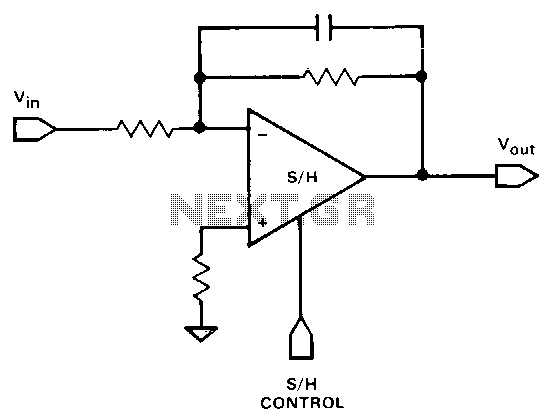
Filtered-sample-and-hold
It is often necessary to filter a signal prior to sampling. This can be achieved using a single device. Any of the inverting or non-inverting filters that can be constructed with operational amplifiers (op-amps) may be utilized. However, it is...
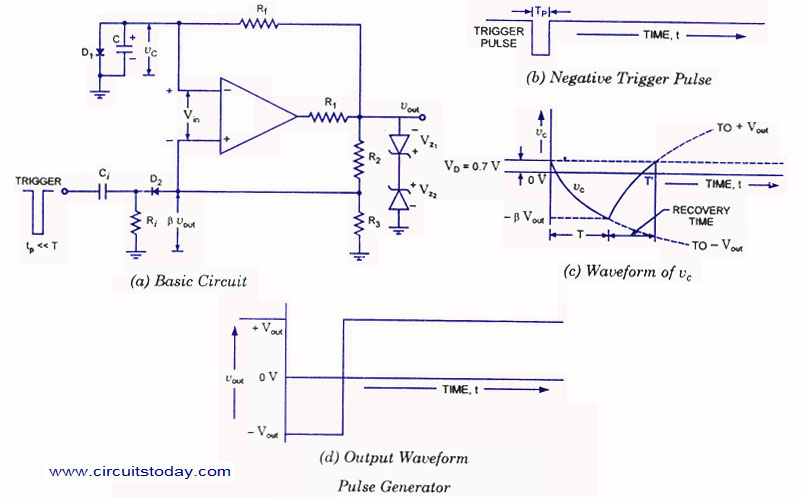
Pulse Generator using Op-Amp
A monostable multivibrator (MMV) features one stable state and one quasi-stable state. The circuit remains in its stable state until an external triggering pulse prompts a transition to the quasi-stable state. After a designated time period T, the circuit returns...
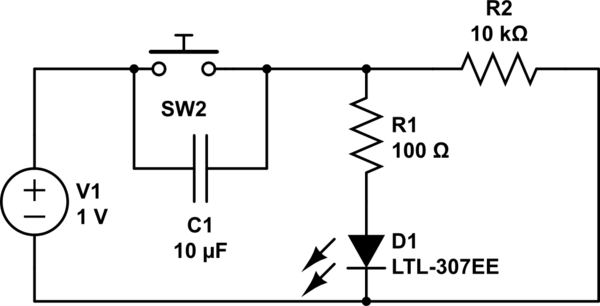
How the capacitor works (in a debouncing circuit)
Understand why the LED does not light up, as the capacitor appears to be bypassing the switch. When the capacitor is fully charged, it does not conduct electricity. Although the individual is a beginner, after 20 hours of studying various...
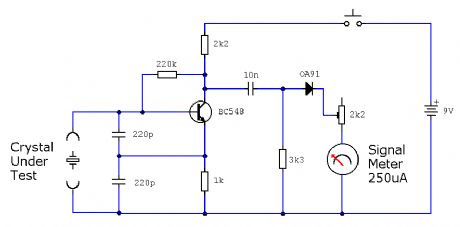
ELF MONITOR
The capacitor instrument is not intended for measuring the capacitance of capacitors; rather, it is designed to identify whether a capacitor is functional or defective, as well as to detect short circuits or open circuits. This functionality provides reliable quality...
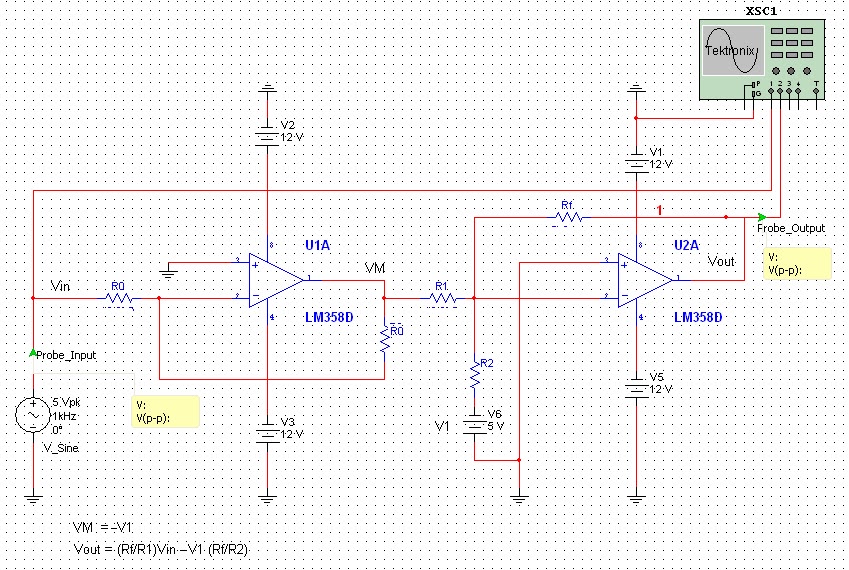
OpAmp based Voltage Translator Ciruit for ADC of Micro-controller
All naturally occurring phenomena such as sound, temperature, and pressure are analog in nature. To enable a microcontroller to read analog signals for the analog-to-digital conversion process using a built-in analog-to-digital converter (ADC), it is essential to condition the analog...
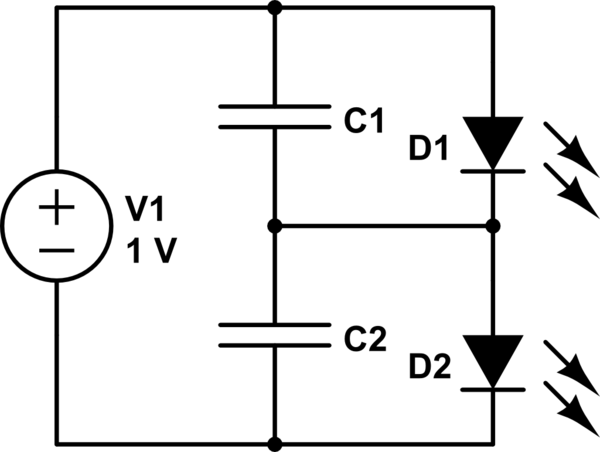
Charging a low-voltage high-C capacitor. Efficiently
The first option is a Zener diode. There are several 2.2V Zener diodes available that could adequately protect the capacitor. However, a significant drawback is that half the energy may be wasted across the diode short. The question arises whether...
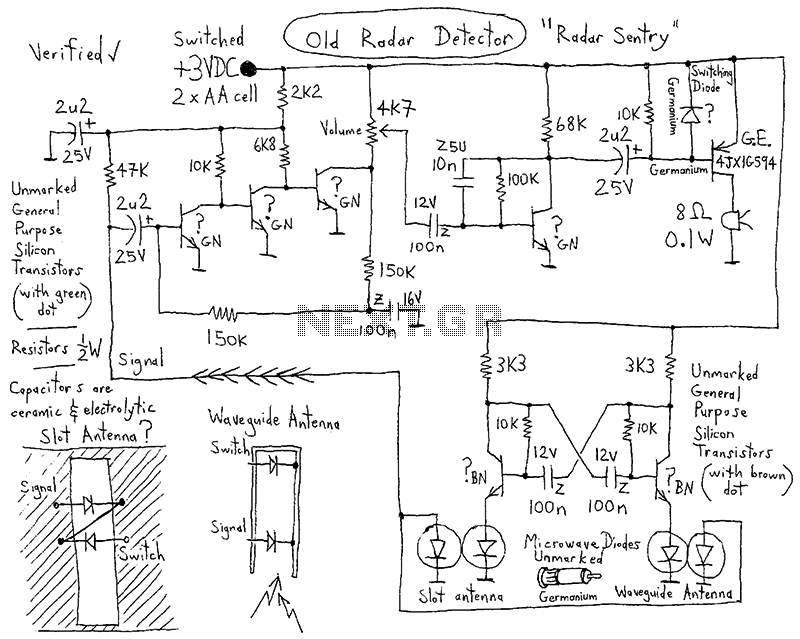
Anatek Lab Supply
The unit is designed around a standard operational amplifier and utilizes easily obtainable components. The reverse-engineered circuit diagram of the Anatek 50-1S variable power supply is shown below. The layout of the circuit board does not appear to be particularly...
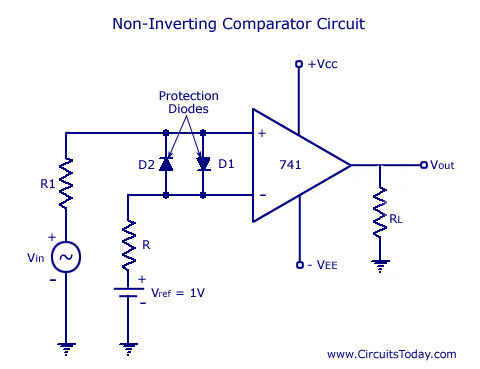
Op-Amp Comparator
A working schematic diagram and design of the uA741 integrated circuit (IC) operational amplifier comparator circuit is provided, including the waveforms for both inverting and non-inverting comparators.
The uA741 operational amplifier is a versatile component widely used in various applications, including...
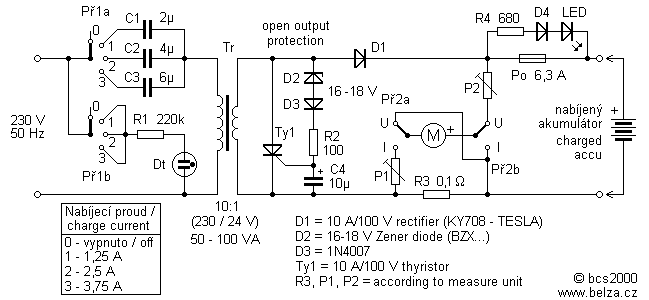
Capacitor Charger Lead Acid Battery
Leaving aside the complex chargers, "stuffed" electronics capacitor charger is one of the best connections. Charging current is limited by the resistor (or other element of the changing excess energy into heat), but the reactance of the capacitor to the...