


Current-to-voltage converter
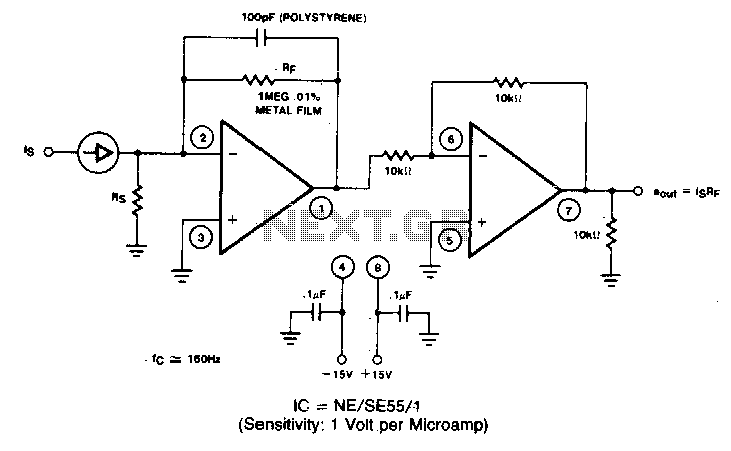
Description: A filter removes the DC component of the rectified AC, which is then scaled to RMS. The output is linear from 40 Hz to 10 kHz or higher.
The described circuit primarily consists of a filter designed to eliminate the direct current (DC) component from a rectified alternating current (AC) signal. This is typically achieved using a combination of capacitors and resistors configured in a low-pass filter arrangement. The purpose of this filter is to allow the alternating current component of the signal to pass while blocking any DC offset, thereby ensuring that the output signal accurately represents the AC waveform without any DC bias.
After the filtering process, the signal is scaled to represent its root mean square (RMS) value, which is a crucial measurement in AC signal processing. The RMS scaling can be performed using an RMS-to-DC converter, which provides a stable output voltage proportional to the RMS value of the input AC signal. This conversion is essential for applications where accurate power calculations or signal analysis are required.
The circuit’s output is specified to be linear across a frequency range from 40 Hz to 10 kHz or higher. This linearity indicates that the filter and scaling circuitry can accurately reproduce the input signal characteristics within this frequency range, making the circuit suitable for audio applications, signal processing, and other electronic systems where fidelity of the AC signal is critical. The ability to maintain linearity over this range ensures minimal distortion and accurate representation of the original signal, which is vital for high-quality audio and precise measurements in various electronic applications.A filter removes the dc component of the rectified ac, which is then scaled to RMS The output is linear from 40 Hz to 10 kHz or higher.
The described circuit primarily consists of a filter designed to eliminate the direct current (DC) component from a rectified alternating current (AC) signal. This is typically achieved using a combination of capacitors and resistors configured in a low-pass filter arrangement. The purpose of this filter is to allow the alternating current component of the signal to pass while blocking any DC offset, thereby ensuring that the output signal accurately represents the AC waveform without any DC bias.
After the filtering process, the signal is scaled to represent its root mean square (RMS) value, which is a crucial measurement in AC signal processing. The RMS scaling can be performed using an RMS-to-DC converter, which provides a stable output voltage proportional to the RMS value of the input AC signal. This conversion is essential for applications where accurate power calculations or signal analysis are required.
The circuit’s output is specified to be linear across a frequency range from 40 Hz to 10 kHz or higher. This linearity indicates that the filter and scaling circuitry can accurately reproduce the input signal characteristics within this frequency range, making the circuit suitable for audio applications, signal processing, and other electronic systems where fidelity of the AC signal is critical. The ability to maintain linearity over this range ensures minimal distortion and accurate representation of the original signal, which is vital for high-quality audio and precise measurements in various electronic applications.A filter removes the dc component of the rectified ac, which is then scaled to RMS The output is linear from 40 Hz to 10 kHz or higher.
calibration
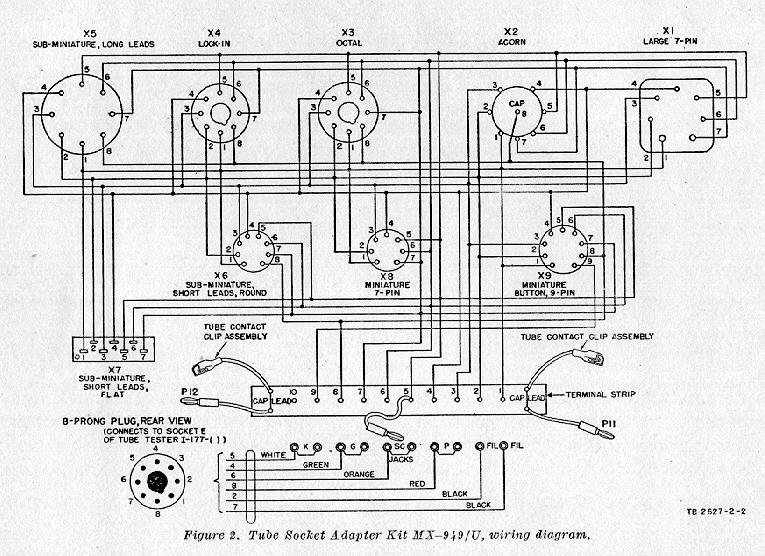
The 83 rectifier tube is a mercury vapor type designed to operate in a vertical orientation with the base pins directed toward the center of the Earth. It should be transported and stored in this position to avoid damage. This...
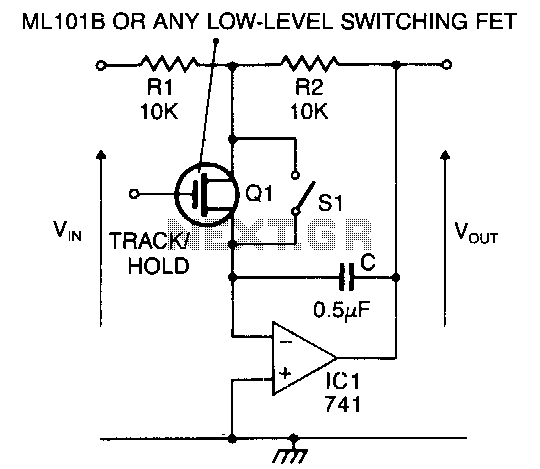
Signal-track-and-hold
When the switch is closed or the FET is conducting, the circuit functions as an inverting amplifier with a gain of R2/Rl. The inverting terminal of the op-amp acts as a virtual ground, allowing the capacitor to remain charged to...
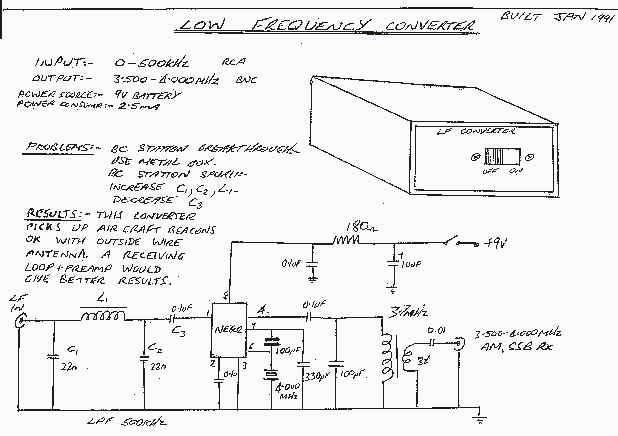
500kHz to 4 MHz Converter
This converter allows reception of signals below 500 kHz on a 3.5 to 4 MHz HF receiver. It should therefore be useful for those with receivers that do not receive the lower frequencies. Again the converter uses the popular NE602...
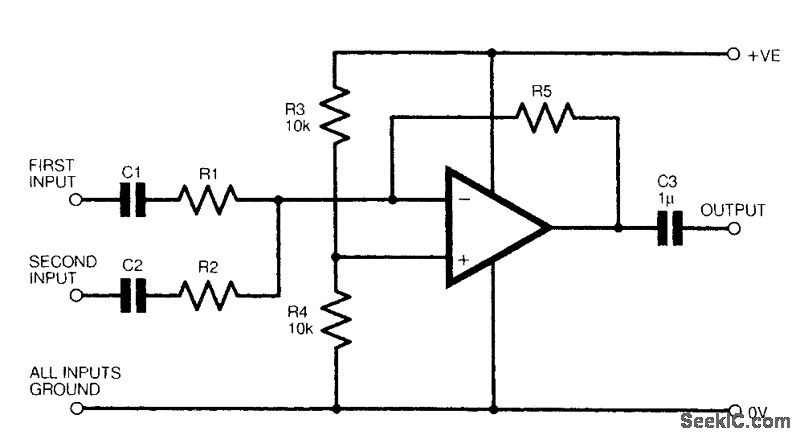
TWO CHANNEL AUDIO MIXER
The figure illustrates a fundamental two-channel operational amplifier (op-amp) mixer circuit. The gain for channel 1 is determined by the ratio of resistors R5 to R1, while for channel 2, it is determined by the ratio of R5 to R2....
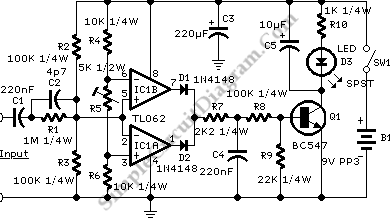
Audio Signal Clipping Indicator
A window comparator formed by two operational amplifiers packaged into IC1 is the heart of the circuit below. With this technique, we can detect precisely and symmetrically.
The window comparator circuit utilizes two operational amplifiers (op-amps) configured to create a defined...

op amp Why do some of my IE converter circuits have a large offset voltage
The inverting input is maintained at a low level via a 10K resistor when the circuit is powered on but not in use. During measurement activities, including calibration measurements where the input is floating, this resistor is disconnected. The circuit...
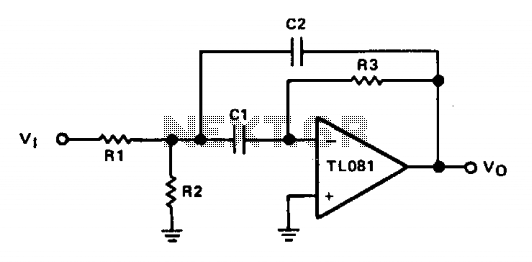
Multiple-feedback bandpass filter
The operational amplifier (op amp) is configured in inverting mode. Resistor R3 connects the output to the inverting input, establishing the gain and the current through the frequency-determining capacitor, C1. Capacitor C2 provides feedback from the output to the junction...
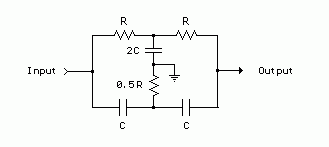
Twin-T RC Notch Filter
The two T-notch filter can be used to block unwanted frequencies or, if placed in an operational amplifier, as a bandpass filter. The notch frequency occurs where the capacitor...
The two T-notch filter is a specialized circuit configuration designed to attenuate...
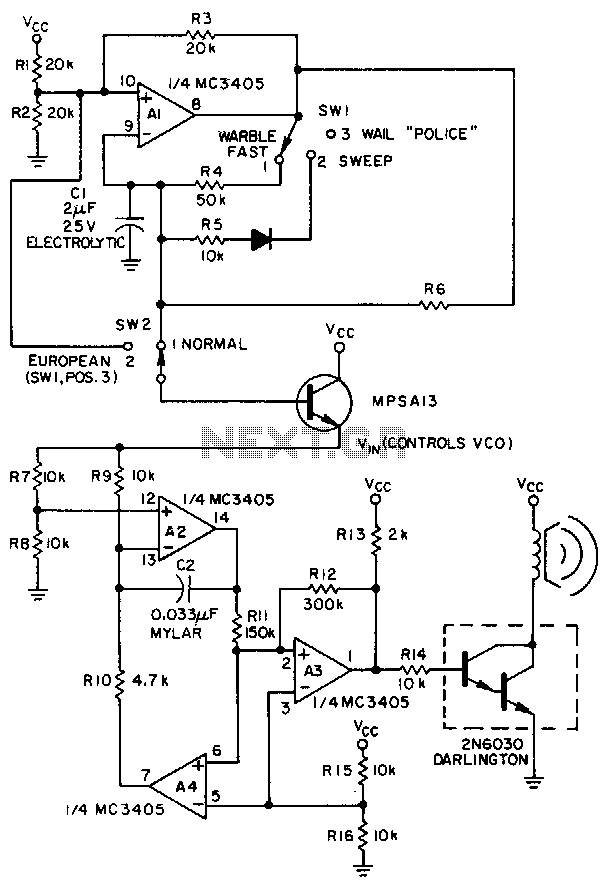
Linear-ic-siren
A low-frequency op-amp oscillator and a voltage-controlled oscillator (VCO), both configured using a single MC3405 dual op-amp and dual comparator, are the primary components in a siren circuit capable of producing various warbles and wails, or functioning as an audio...