


Voltage-controlled-attenuator
#voltage-controlled
#attenuator
#op-amp
#exponential converter
#distortion null
#dc shift
#trim networks
#control characteristic
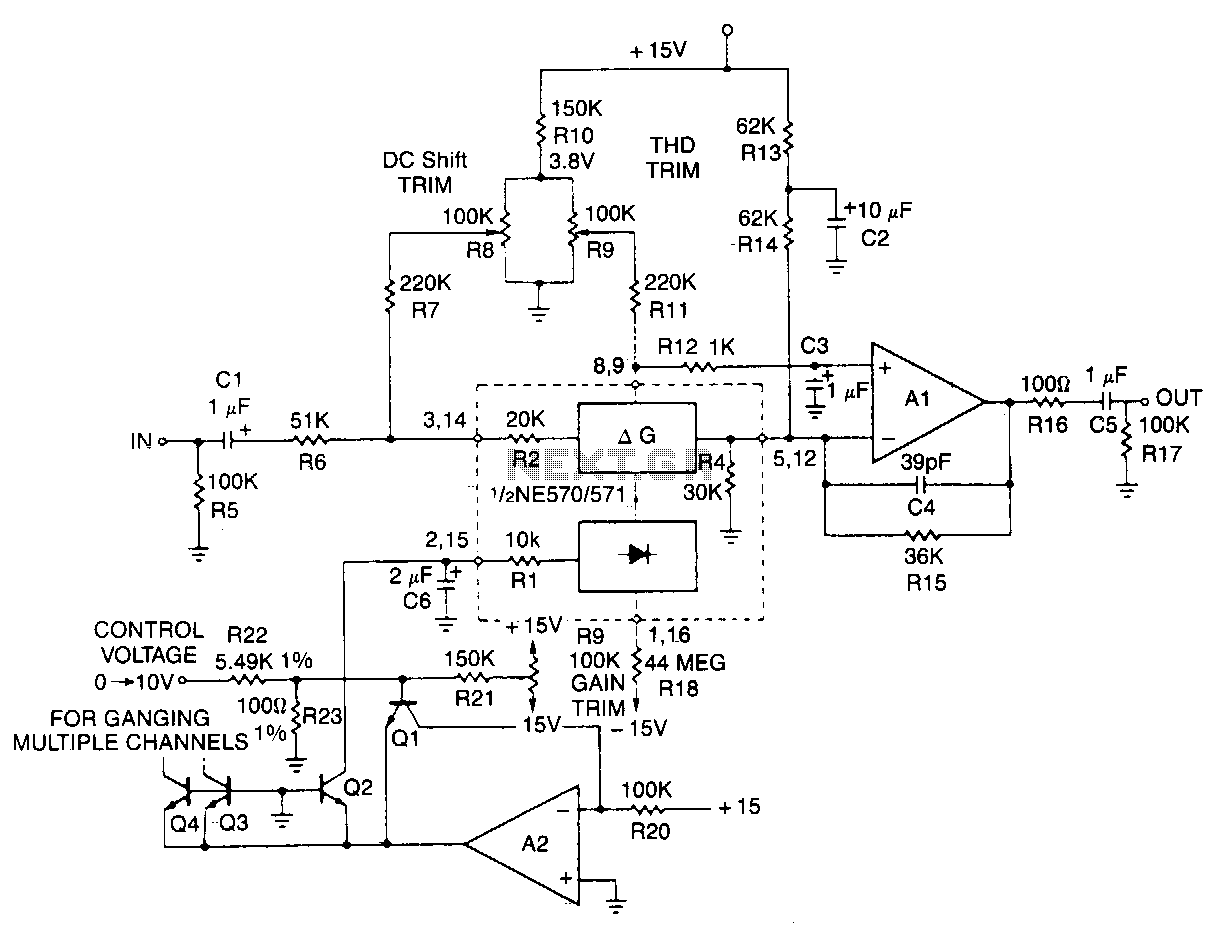
Description: This typical circuit utilizes an external operational amplifier for improved performance, along with an exponential converter to achieve a control characteristic of -6 dB per volt. Trim networks are incorporated to eliminate distortion and offset, as well as to finely adjust the gain to 0 dB with a control voltage of 0 V.
The circuit design features an external operational amplifier (op-amp) to enhance performance characteristics compared to internal solutions. The op-amp is configured in a feedback arrangement to provide high gain stability and low distortion. The exponential converter is essential for translating the linear control voltage into a logarithmic output, achieving the desired -6 dB per volt control characteristic. This allows for precise control over the gain of the circuit, which is particularly beneficial in applications requiring fine adjustments.
Trim networks are strategically included in the design to compensate for any distortion and offset that may arise during operation. These networks typically consist of variable resistors or potentiometers that can be adjusted to null out unwanted artifacts in the signal path. The ability to finely tune the gain to 0 dB at a control voltage of 0 V ensures that the circuit can operate effectively across its specified range without introducing additional noise or distortion.
Overall, this circuit configuration is ideal for applications where high performance, precision control, and low distortion are critical, such as in audio processing, instrumentation, and communication systems. The careful integration of the op-amp, exponential converter, and trim networks contributes to the circuit's robustness and reliability in various electronic applications.This typical circuit uses an external op amp for better perlormance and an exponential converter to get a control characteristic of -6 dB IV. Trim networks are shown to null out distortion and de shift, and to fine trim the gain to 0 dB with 0 V of control voltage.
The circuit design features an external operational amplifier (op-amp) to enhance performance characteristics compared to internal solutions. The op-amp is configured in a feedback arrangement to provide high gain stability and low distortion. The exponential converter is essential for translating the linear control voltage into a logarithmic output, achieving the desired -6 dB per volt control characteristic. This allows for precise control over the gain of the circuit, which is particularly beneficial in applications requiring fine adjustments.
Trim networks are strategically included in the design to compensate for any distortion and offset that may arise during operation. These networks typically consist of variable resistors or potentiometers that can be adjusted to null out unwanted artifacts in the signal path. The ability to finely tune the gain to 0 dB at a control voltage of 0 V ensures that the circuit can operate effectively across its specified range without introducing additional noise or distortion.
Overall, this circuit configuration is ideal for applications where high performance, precision control, and low distortion are critical, such as in audio processing, instrumentation, and communication systems. The careful integration of the op-amp, exponential converter, and trim networks contributes to the circuit's robustness and reliability in various electronic applications.This typical circuit uses an external op amp for better perlormance and an exponential converter to get a control characteristic of -6 dB IV. Trim networks are shown to null out distortion and de shift, and to fine trim the gain to 0 dB with 0 V of control voltage.
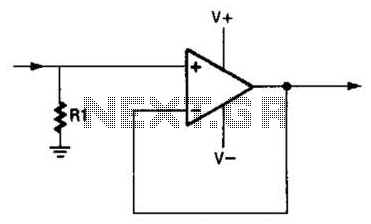
Noninverted Unity-Gain Amplifier Circuit
An operational amplifier (op amp) can function as a unity gain amplifier by connecting its output to its inverting input as illustrated. The load resistance (Rl) should be sufficiently low to prevent the op amp's bias current from introducing a...
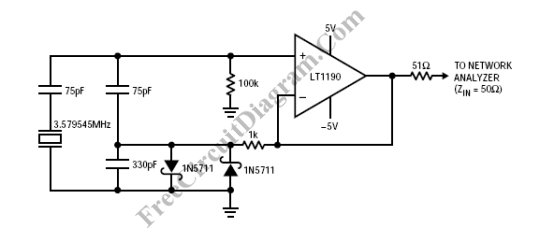
op amp Op Amp based Colpitts oscillator
An op-amp based Colpitts oscillator in Multisim displays a "timestep too small" error when the run button is pressed. Despite extensive research and attempts to resolve the issue, the error persists. The design features a C-L-C pi circuit that is...
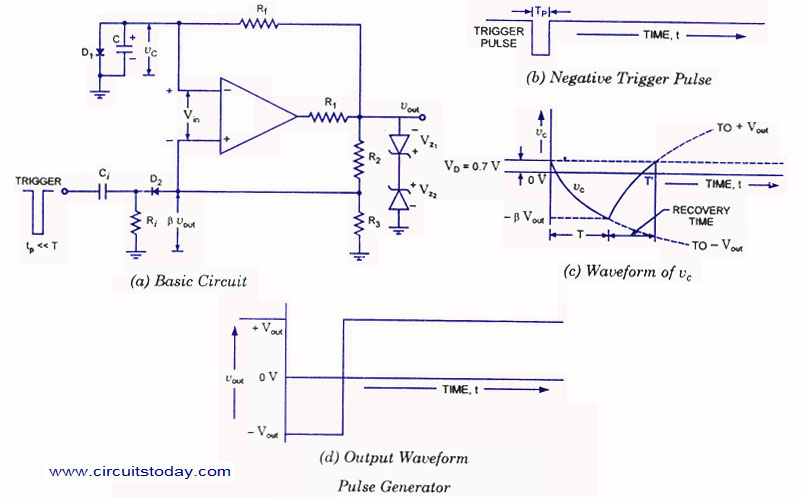
Pulse Generator using Op-Amp
A monostable multivibrator (MMV) features one stable state and one quasi-stable state. The circuit remains in its stable state until an external triggering pulse prompts a transition to the quasi-stable state. After a designated time period T, the circuit returns...
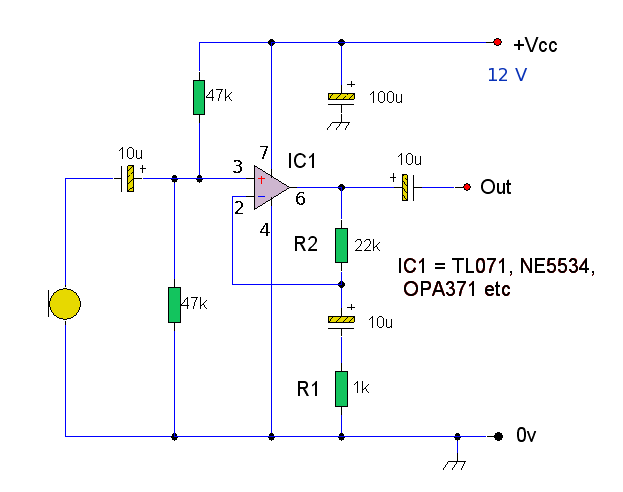
Op-Amp Microphone Preamp
A high-quality microphone preamplifier utilizing a single power supply, suitable for both dynamic and electret microphones. The operational amplifier (op-amp) employed can be any low-noise, high-performance type, such as the NE5534, TL071, or OPA 371. The schematic illustrates the configuration...
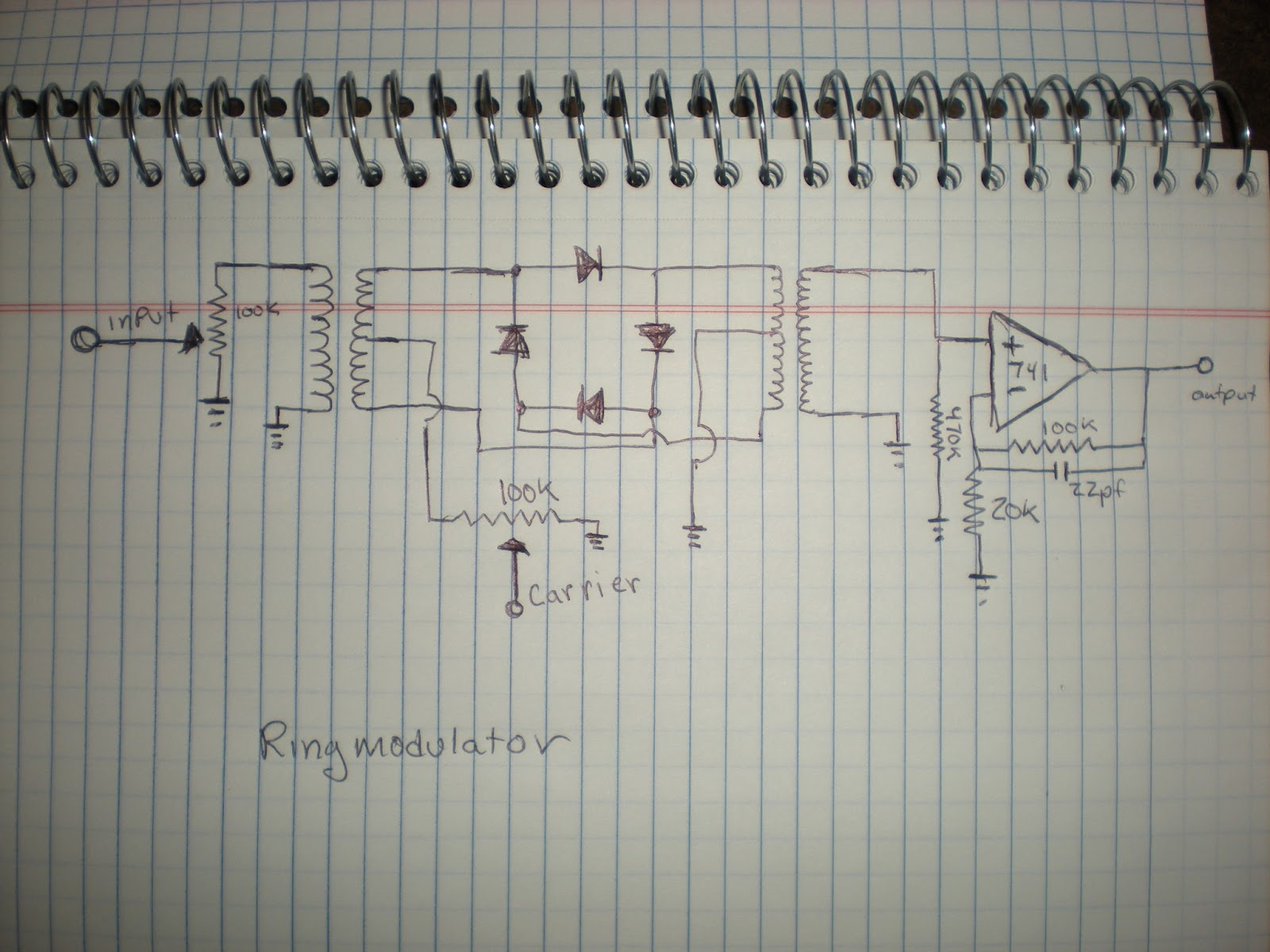
Ring Modulator
The author has created various modules since the last blog post and has gained a deeper understanding of electronics, particularly with operational amplifiers (Op Amps). The author does not guarantee the designs shared, as they are an amateur learning through...
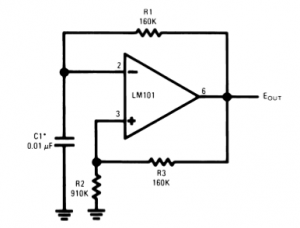
The Universal Linear Component
Operational amplifiers are the simplest and most effective means of executing a variety of linear functions, ranging from basic amplification to intricate analog computations.
Operational amplifiers (op-amps) are versatile components widely utilized in electronic circuits for various applications. These devices can...
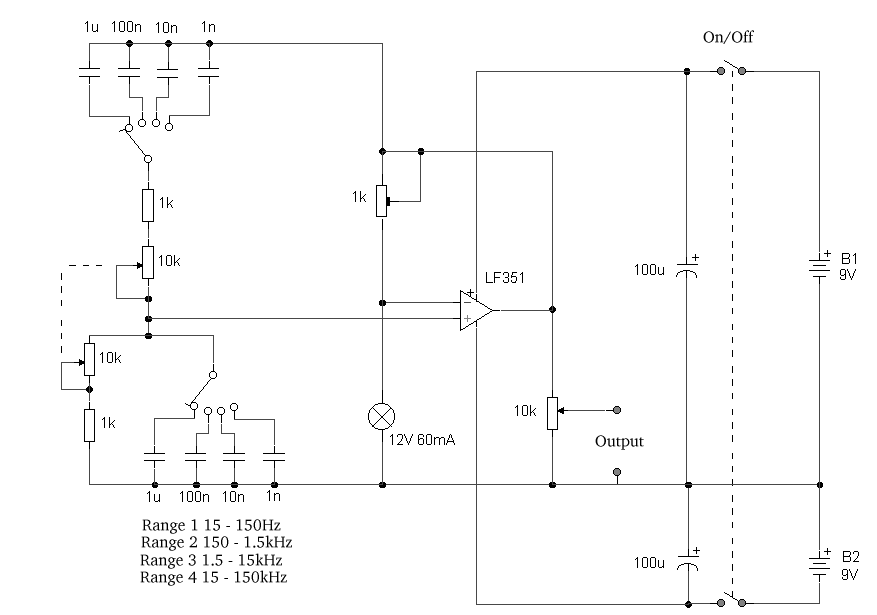
Op-Amp-Based Wien Bridge Oscillator
The circuit was designed based on the functionality of an operational amplifier to create a Wien bridge oscillator that generates sine waves in the frequency range of 15 Hz.
The Wien bridge oscillator is a type of electronic oscillator that produces...

op amp Basic Frequency Control Circuit
R4 prevents the output voltage from drifting toward one of the supply rails of the operational amplifier. It is understood that R4 should have a high resistance, although the reason for this is unclear. The schematic appears to be from...
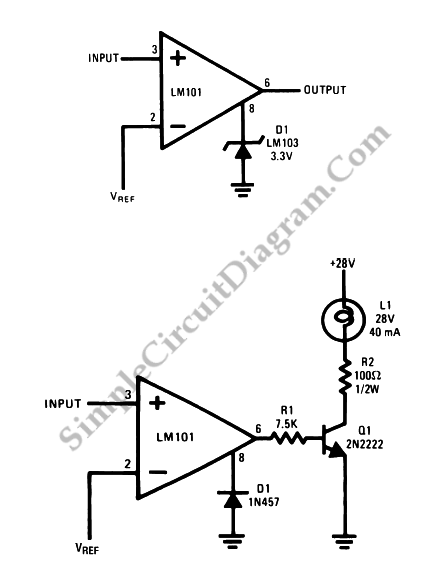
Op-Amp Application: Voltage Comparators
Two reasons why the LM101 is well-suited for comparator applications are its large differential input voltage range and the ease of clamping the output.
The LM101 operational amplifier is particularly advantageous for use in comparator circuits due to its significant differential...