


1KHz Sinewave Generators
#sinewave
#Wien bridge
#low distortion
#audio testing
#variable output
#low output impedance
#filament lamp
#1KHz
#signal generator
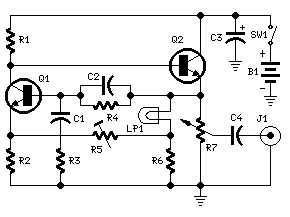
Description: This circuit generates a stable 1 kHz sine wave using the inverted Wien bridge configuration (C1-R3 & C2-R4). It features a variable output, low distortion, and low output impedance to ensure good overload capability. A small filament lamp provides a stable long-term output amplitude waveform. This circuit is useful for testing an Audio Millivoltmeter, Audio Power Meter, and other audio circuits. Set R5 to read 1V RMS on an Audio Millivoltmeter connected to the output with R7 fully clockwise, or to observe a sine wave of 2.828V peak-to-peak on an oscilloscope.
The inverted Wien bridge oscillator is a well-regarded circuit for generating sine waves with low distortion and high stability. In this configuration, capacitors C1 and C2, along with resistors R3 and R4, form the frequency-determining network. The frequency of oscillation is primarily set by the values of these resistors and capacitors, allowing for precise tuning of the output frequency to 1 kHz.
The variable output feature is achieved through the use of a potentiometer or variable resistor (R5), which allows for adjustment of the amplitude of the output sine wave. Low distortion is maintained through careful selection of the components and the feedback mechanism, which ensures that the output closely resembles a true sine wave.
The low output impedance characteristic of the circuit is crucial for driving loads effectively without significant voltage drop, which is particularly important when interfacing with measurement equipment such as audio millivolmeters or power meters. The circuit's design incorporates a small filament lamp, which serves as a thermal feedback element. This lamp stabilizes the amplitude of the output waveform by providing a consistent load that compensates for variations in output voltage.
For practical application, the circuit can be calibrated by adjusting R5, allowing for a reading of 1V RMS on an audio millivoltmeter connected to the output. When R7 is set fully clockwise, this configuration enables observation of a sine wave with a peak-to-peak voltage of 2.828V on an oscilloscope, facilitating accurate testing and analysis of audio circuits. This versatility makes the inverted Wien bridge oscillator an essential tool for audio engineers and technicians.This circuit generates a good 1KHz sinewave using the inverted Wien bridge configuration (C1-R3 & C2-R4). Features a variable output, low distortion and low output impedance in order to obtain good overload capability.
A small filament lamp ensures a stable long term output amplitude waveform. Useful to test the Audio Millivoltmeter, Audio Power M eter and other audio circuits published in this site. Set R5 to read 1V RMS on an Audio Millivoltmeter connected to the output with R7 fully clockwise, or to view a sinewave of 2. 828V Peak-to-Peak on the oscilloscope.
The inverted Wien bridge oscillator is a well-regarded circuit for generating sine waves with low distortion and high stability. In this configuration, capacitors C1 and C2, along with resistors R3 and R4, form the frequency-determining network. The frequency of oscillation is primarily set by the values of these resistors and capacitors, allowing for precise tuning of the output frequency to 1 kHz.
The variable output feature is achieved through the use of a potentiometer or variable resistor (R5), which allows for adjustment of the amplitude of the output sine wave. Low distortion is maintained through careful selection of the components and the feedback mechanism, which ensures that the output closely resembles a true sine wave.
The low output impedance characteristic of the circuit is crucial for driving loads effectively without significant voltage drop, which is particularly important when interfacing with measurement equipment such as audio millivolmeters or power meters. The circuit's design incorporates a small filament lamp, which serves as a thermal feedback element. This lamp stabilizes the amplitude of the output waveform by providing a consistent load that compensates for variations in output voltage.
For practical application, the circuit can be calibrated by adjusting R5, allowing for a reading of 1V RMS on an audio millivoltmeter connected to the output. When R7 is set fully clockwise, this configuration enables observation of a sine wave with a peak-to-peak voltage of 2.828V on an oscilloscope, facilitating accurate testing and analysis of audio circuits. This versatility makes the inverted Wien bridge oscillator an essential tool for audio engineers and technicians.This circuit generates a good 1KHz sinewave using the inverted Wien bridge configuration (C1-R3 & C2-R4). Features a variable output, low distortion and low output impedance in order to obtain good overload capability.
A small filament lamp ensures a stable long term output amplitude waveform. Useful to test the Audio Millivoltmeter, Audio Power M eter and other audio circuits published in this site. Set R5 to read 1V RMS on an Audio Millivoltmeter connected to the output with R7 fully clockwise, or to view a sinewave of 2. 828V Peak-to-Peak on the oscilloscope.

Wien bridge oscillator
In this version of the oscillator, Rb is a small incandescent lamp. Typically, R1 = R2 = R and C1 = C2 = C. During normal operation, Rb self-heats to the point where its resistance is Rf/2. A Wien bridge...
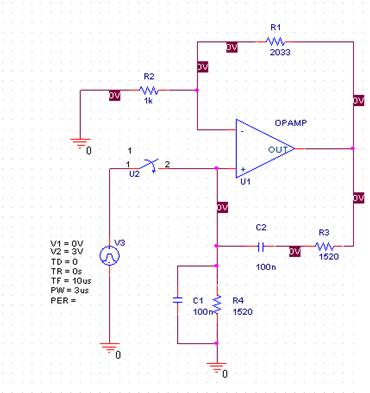
Wien bridge oscillator circuit
In this laboratory experiment, the objective is to design the frequency-determining network for a 1 kHz sinusoidal oscillator. The specified values are as follows: Capacitance = 100 nF and Resistance = 1520 ohms.
The output voltage waveform of the oscillator...
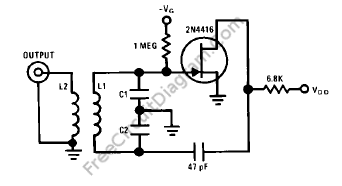
Low Distortion Oscillator
The 2N4416 JFET exhibits very low harmonic distortion, making it ideal for smooth oscillation in electronic circuits. It is particularly effective in applications where minimal harmonic content is essential for high-performance mixer circuits. Below is the circuit diagram of a...
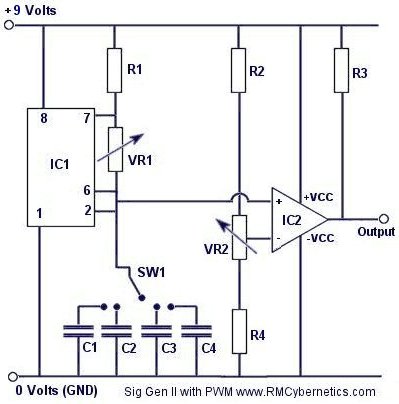
DIY Homemade Signal Generator with Pulse Width Modulation
Construct a signal generator using readily available components. It should produce a square wave with variable frequency and adjustable pulse width. This device can be utilized for various applications, including DC motor speed regulation, dimming of lamps or LEDs, transformer...

The Multi-purpose signal generator circuit
The multi-purpose signal generator circuit consists of integrated circuit oscillators and frequency dividers. It generates square waves ranging from high frequencies to sub-audio frequencies and also produces a frequency standard in the VHF range. The alternative oscillator section feeds the...

4KHz-170MHz Wide Band RF Signal Generator I
Most commercial-grade signal generators provide more than just sinusoidal waveform output, but they tend to be expensive for casual use. This article presents a simple wideband signal generator built around Linear Technology's LTC6905 Silicon Oscillator, capable of generating frequencies from...
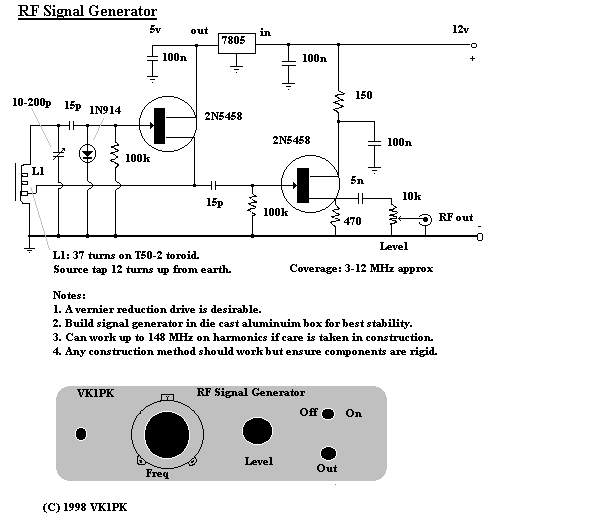
Signal Generators Circuits
Converting periodic waveforms to square waves is essential for extracting clock signals from data, creating waveform generators, and developing timing-pulse generators. A square-wave conversion circuit is more advantageous when the duty cycle of the square wave is variable and controllable....
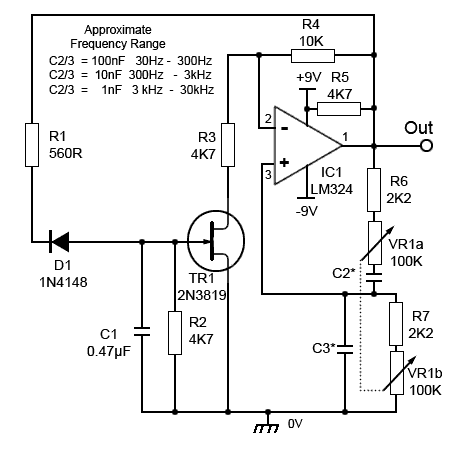
Wien Bridge Oscillators
A basic Wien Bridge Oscillator utilizes a filament lamp in conjunction with an operational amplifier (op-amp). The property of filament lamps, specifically the non-linear increase in resistance of the tungsten filament as it heats, plays a crucial role in this...
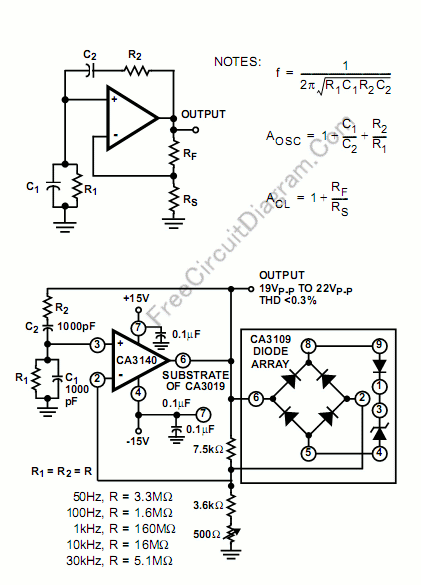
Wien Bridge Oscillator: The Circuit Schematic Diagram and The Design Formula
The high input impedance, high slew rate, and high voltage characteristics of the CA3140 operational amplifier make it suitable for use in a Wien-bridge sine wave oscillator. The basic circuit configuration for the Wien-bridge sine wave oscillator is depicted in...