


Chua's Oscillator circuit
#Chua's circuit
#chaos
#oscillation
#simulation
#capacitors
#voltage measurement
#subharmonic cascade
#nonlinear dynamics
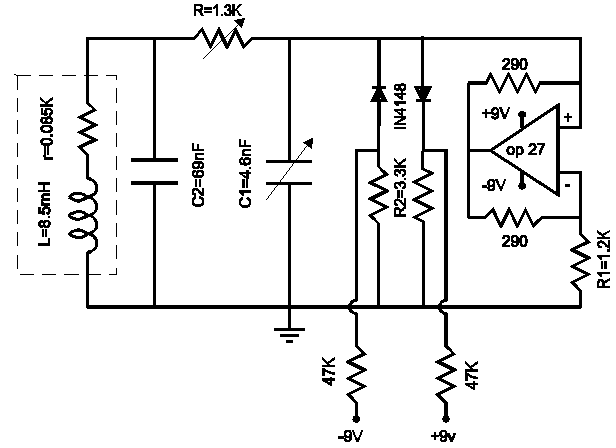
Description: The applet shows a simulation of Chua's circuit, plotting the voltage measured across C1 against the voltage measured across C2. This corresponds to the display on an X-Y oscilloscope with probes connected across these capacitors. The initial values of the parameters used in the applet correspond to the component values in the circuit diagram, and show a simple periodic orbit (oscillation). The transition to chaotic dynamics can be found by carefully decreasing R or C1, (e.g. decrease R in steps of 0.01 to 1.2K). The simulation compares well with what is actually seen on an oscilloscope. Chaos seems to develop via a subharmonic cascade. If you do not have access to an oscilloscope, you can use the voltage across C1 or C2 as the input to a high input impedance audio amplifier (with the component values shown the frequency of the oscillations is in the audio range). It turns out that the ear is very sensitive to the development of a weak subharmonic. The subharmonic becomes the fundamental an octave below the original tone, and the ear hears the note drop an octave even when the intensity of the new fundamental is very weak. The first two or three transitions in the subharmonic cascade route to chaos, and the onset of chaos (noise!) are very audible.
Chua's circuit is a well-known example of a nonlinear electronic oscillator that exhibits chaotic behavior under certain conditions. The circuit typically consists of a nonlinear resistor (Chua's diode), two capacitors (C1 and C2), and an inductor, along with resistors that define the circuit's parameters. The voltage across the capacitors is a critical aspect of the circuit's operation, as it illustrates the relationship between energy storage in the capacitors and the nonlinear dynamics of the circuit.
In the described applet simulation, the X-Y oscilloscope representation allows for a visual analysis of the circuit's behavior by plotting the voltage across C1 against that across C2. This graphical representation reveals the oscillatory nature of the circuit, where periodic orbits indicate stable oscillations. As the resistance (R) or capacitance (C1) is varied, the circuit transitions from periodic oscillations to chaotic dynamics. This transition is characterized by a subharmonic cascade, where the system's frequency components become increasingly complex, leading to chaotic noise.
For practical applications, if an oscilloscope is unavailable, the voltage outputs from C1 or C2 can be routed to a high-impedance audio amplifier. This approach allows for auditory observation of the oscillations, as the frequencies produced by the circuit fall within the audible range. The human ear can detect subtle changes in frequency, particularly the emergence of subharmonic tones, which can create an auditory experience of chaos as the circuit's dynamics evolve. The perception of these subharmonics, even at low intensities, highlights the sensitivity of human hearing to complex waveforms and chaotic behavior in electronic circuits. The initial transitions in the subharmonic cascade are particularly significant, as they mark the onset of chaos and can be perceived as a notable change in tone, providing an engaging way to explore the dynamics of Chua's circuit.The applet shows a simulation of Chua's circuit, plotting the voltage measured across C1 against the voltage measured across C2. This corresponds to the display on an X-Y oscilloscope with probes connected across these capacitors.
The initial values of the parameters used in the applet correspond to the component values in the circuit diagram, and show a simple periodic orbit (oscillation). The transition to chaotic dynamics can be found by carefully decreasing R or C1, (e.g. decrease R in steps of 0.01 to 1.2K). The simulation compares well with what is actually seen on an oscilloscope. Chaos seems to develop via a subharmonic cascade. If you do not have access to an oscilloscope, you can use the voltage across C1 or C2 as the input to a high input impedance audio amplifier (with the component values shown the frequency of the oscillations is in the audio range). It turns out that the ear is very sensitive to the development of a weak subharmonic. The subharmonic becomes the fundamental an octave below the original tone, and the ear hears the note drop an octave even when the intensity of the new fundamental is very weak.
The first two or three transitions in the subharmonic cascade route to chaos, and the onset of chaos (noise!) are very audible.
Chua's circuit is a well-known example of a nonlinear electronic oscillator that exhibits chaotic behavior under certain conditions. The circuit typically consists of a nonlinear resistor (Chua's diode), two capacitors (C1 and C2), and an inductor, along with resistors that define the circuit's parameters. The voltage across the capacitors is a critical aspect of the circuit's operation, as it illustrates the relationship between energy storage in the capacitors and the nonlinear dynamics of the circuit.
In the described applet simulation, the X-Y oscilloscope representation allows for a visual analysis of the circuit's behavior by plotting the voltage across C1 against that across C2. This graphical representation reveals the oscillatory nature of the circuit, where periodic orbits indicate stable oscillations. As the resistance (R) or capacitance (C1) is varied, the circuit transitions from periodic oscillations to chaotic dynamics. This transition is characterized by a subharmonic cascade, where the system's frequency components become increasingly complex, leading to chaotic noise.
For practical applications, if an oscilloscope is unavailable, the voltage outputs from C1 or C2 can be routed to a high-impedance audio amplifier. This approach allows for auditory observation of the oscillations, as the frequencies produced by the circuit fall within the audible range. The human ear can detect subtle changes in frequency, particularly the emergence of subharmonic tones, which can create an auditory experience of chaos as the circuit's dynamics evolve. The perception of these subharmonics, even at low intensities, highlights the sensitivity of human hearing to complex waveforms and chaotic behavior in electronic circuits. The initial transitions in the subharmonic cascade are particularly significant, as they mark the onset of chaos and can be perceived as a notable change in tone, providing an engaging way to explore the dynamics of Chua's circuit.The applet shows a simulation of Chua's circuit, plotting the voltage measured across C1 against the voltage measured across C2. This corresponds to the display on an X-Y oscilloscope with probes connected across these capacitors.
The initial values of the parameters used in the applet correspond to the component values in the circuit diagram, and show a simple periodic orbit (oscillation). The transition to chaotic dynamics can be found by carefully decreasing R or C1, (e.g. decrease R in steps of 0.01 to 1.2K). The simulation compares well with what is actually seen on an oscilloscope. Chaos seems to develop via a subharmonic cascade. If you do not have access to an oscilloscope, you can use the voltage across C1 or C2 as the input to a high input impedance audio amplifier (with the component values shown the frequency of the oscillations is in the audio range). It turns out that the ear is very sensitive to the development of a weak subharmonic. The subharmonic becomes the fundamental an octave below the original tone, and the ear hears the note drop an octave even when the intensity of the new fundamental is very weak.
The first two or three transitions in the subharmonic cascade route to chaos, and the onset of chaos (noise!) are very audible.
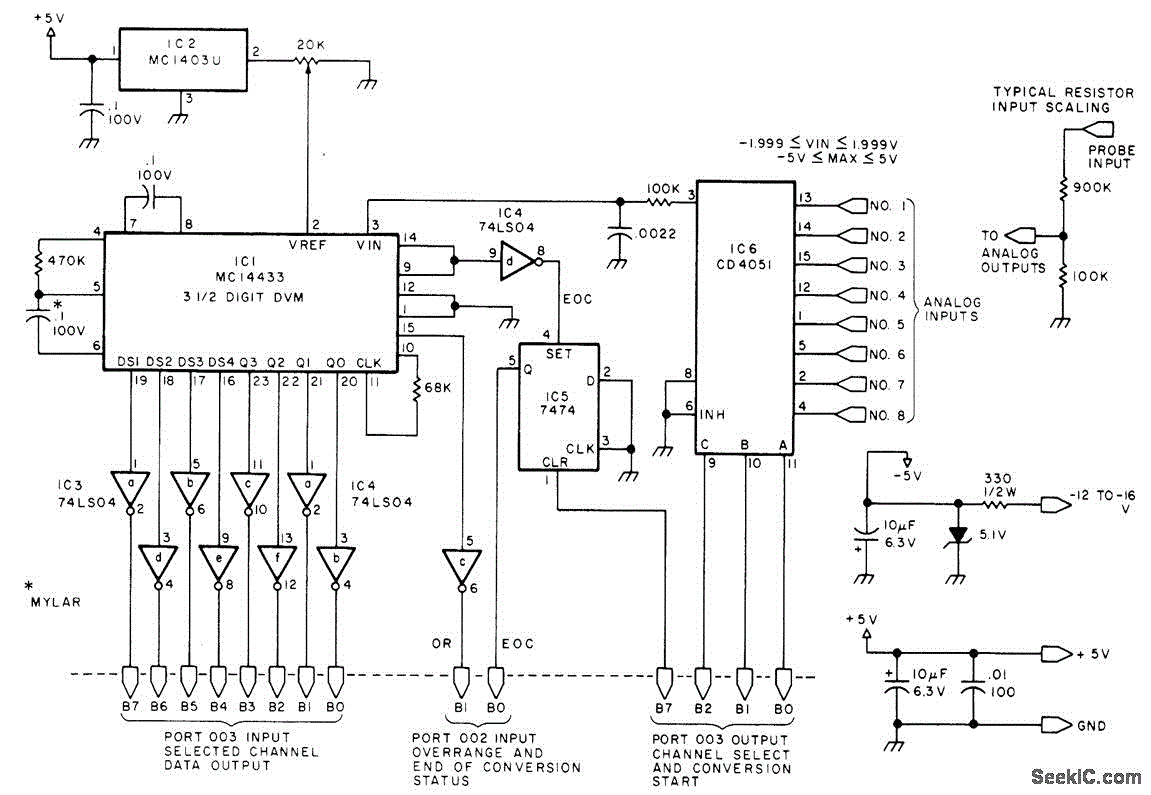
EIGHT CHANNEL COMPUTERIZED 3SUP1 SUP SUB2 SUB DIGIT_VM
Displays up to eight different DC voltages on a CRT terminal of a microprocessor under keyboard control, using BASIC commands and a BASIC routine provided in the article. Utilizes a modified Motorola MC14433 dual-lamp integrating analog-to-digital converter. An unknown voltage...
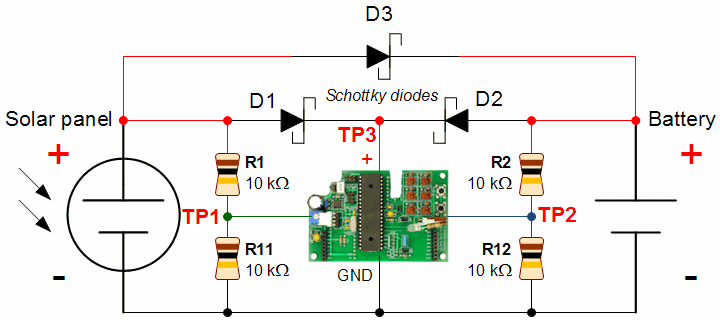
Circuit to Measure Power Supply Voltages
To obtain the power supply graphs on the previous page, the circuit is designed to independently monitor the power sources with the addition of a few resistors. Diode D3 allows the solar panel voltage to charge the batteries, while the...
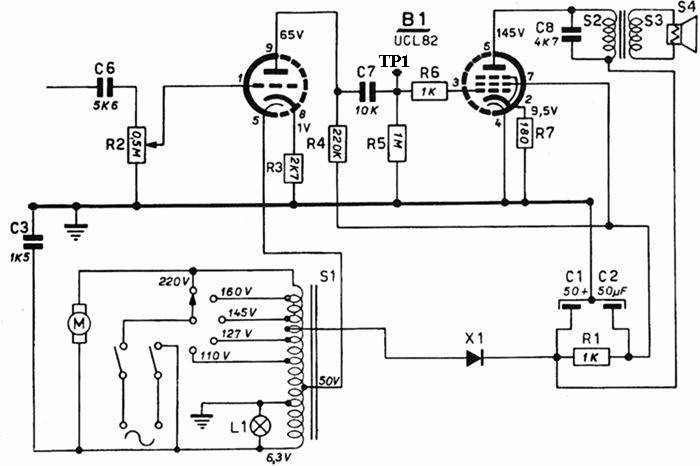
Replacing old capacitors
Original components, when still functional, exhibit stability and are not subject to infant mortality. Individual opinions may vary based on personal experiences. However, responses can differ due to several factors: the quality of the design utilizing appropriate components, the type...
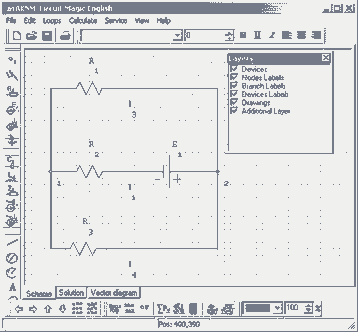
Circuit Magic
Circuit Magic is an electrical circuits simulation program specifically designed for students teaching basics electronics, electrical laws & circuit theory. Unlike many electronic circuit analyzers, Circuit Magic can analyze circuits like a man. Circuits are simulated step by step, using...
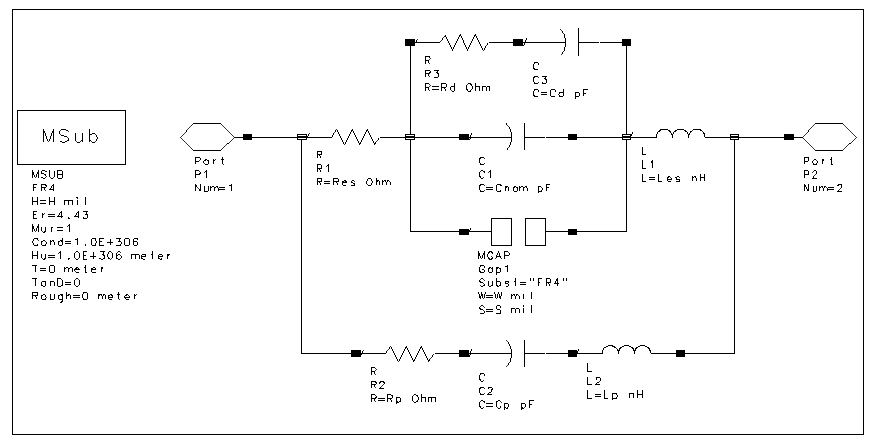
muRata Manufacturing Measurement-Based SMT Capacitors
The schematic design of the equivalent circuit model for Murata Manufacturing's measurement-based GRH series SMT capacitors is derived from device measurements and modeling conducted by Murata. This model is applicable to capacitors mounted on an FR4 substrate, with constant substrate...
Circuit to Measure Power Supply Voltages
To obtain the power supply graphs on the previous page, the circuit is designed to independently monitor the power sources with the addition of a few resistors. Diode D3 allows the solar panel voltage to charge the batteries, while the...
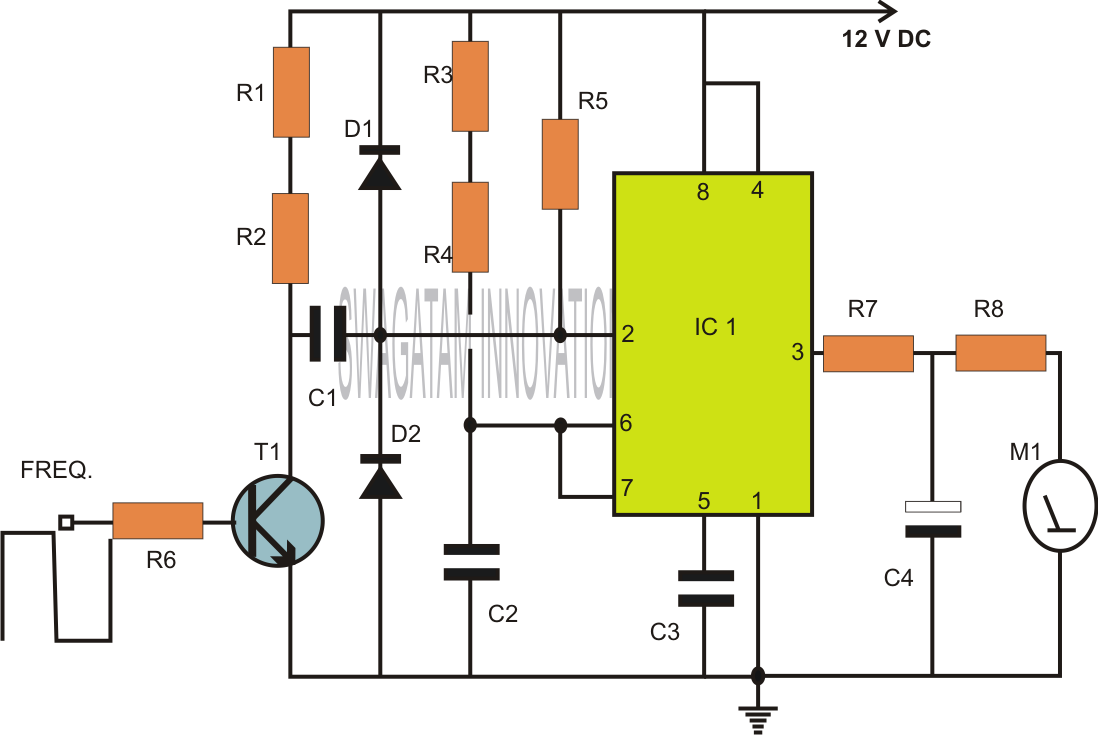
how to build inexpensive frequency
Capacitors are major electronic components classified as passive components. They are extensively used in electronic circuits, and virtually no circuit can be constructed without these essential parts. The primary function of a capacitor is to block direct current (DC) while...
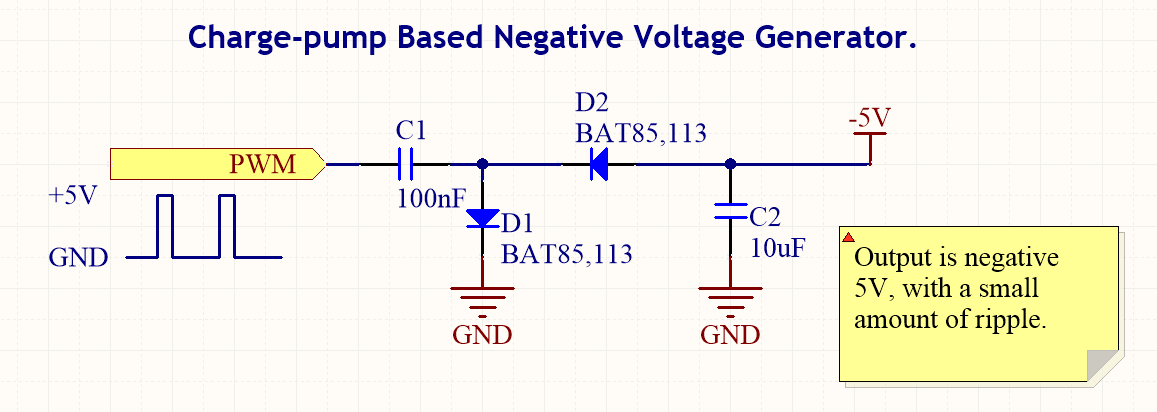
Capacitors
Capacitor types, their uses, formulas for common capacitance calculations, descriptions of charge pumps, information on dielectric soakage, and how to repair.
Capacitors are essential components in electronic circuits, serving various functions depending on their type and application. The primary types of...
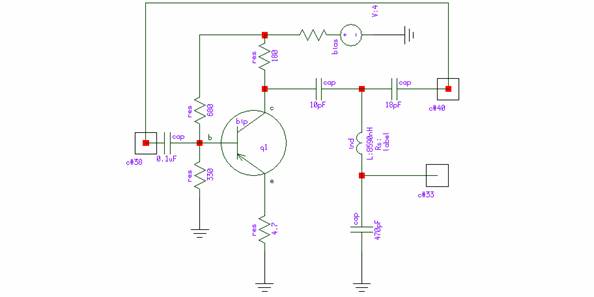
Oscillator Simulation Example Using RINCON
To demonstrate Rincon's capability to simulate autonomous circuits, a one-transistor oscillator utilizing a phase-inverting resonance T-shape LC circuit is considered. The schematic of this simulator is illustrated in Figure 1. The design of the simulator is detailed in reference [2]....