


Colpitts harmonic oscillator
#Colpitts
#harmonic oscillator
#series resonance
#frequency
#analytical complexity
#electronic oscillator
#RF
#circuit design
#resonance
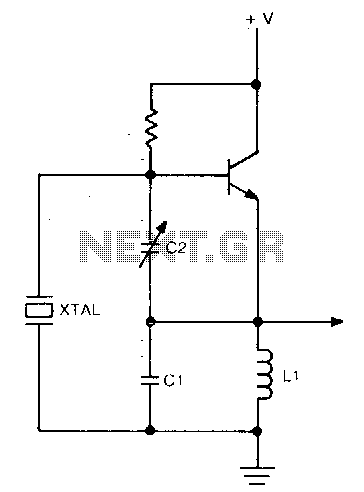
Description: This circuit operates at a frequency range of 30-200 parts per million (ppm) above the series resonance. It is physically simple, yet analytically complex. Additionally, it is cost-effective and exhibits reasonable frequency stability.
The described circuit functions within a specific frequency range, indicating its application in precise frequency modulation or signal generation tasks. Operating at 30-200 ppm above the series resonance suggests that the circuit is likely part of an oscillator or filter design, where maintaining a stable frequency is essential for performance.
The simplicity of the physical design may imply the use of basic components such as resistors, capacitors, and inductors, arranged in a configuration that allows for easy assembly and integration into larger systems. However, the analytical complexity indicates that the behavior of the circuit may involve intricate calculations or simulations to fully understand its performance under various conditions.
Frequency stability is crucial in applications such as communication systems, where signal integrity can be affected by variations in temperature, voltage, and component tolerances. The mention of "fair frequency stability" suggests that while the circuit may not offer the highest precision, it remains adequate for many practical applications, making it a viable choice for cost-sensitive projects.
Overall, this circuit design balances simplicity and performance, making it suitable for a range of electronic applications where moderate frequency stability is acceptable. Further analysis may be required to optimize component values and configurations to meet specific operational requirements.This circuit operates 30-200 ppm above series resonance. Physically simple, but analytically complex It is inexpensive with fair frequency stability.
The described circuit functions within a specific frequency range, indicating its application in precise frequency modulation or signal generation tasks. Operating at 30-200 ppm above the series resonance suggests that the circuit is likely part of an oscillator or filter design, where maintaining a stable frequency is essential for performance.
The simplicity of the physical design may imply the use of basic components such as resistors, capacitors, and inductors, arranged in a configuration that allows for easy assembly and integration into larger systems. However, the analytical complexity indicates that the behavior of the circuit may involve intricate calculations or simulations to fully understand its performance under various conditions.
Frequency stability is crucial in applications such as communication systems, where signal integrity can be affected by variations in temperature, voltage, and component tolerances. The mention of "fair frequency stability" suggests that while the circuit may not offer the highest precision, it remains adequate for many practical applications, making it a viable choice for cost-sensitive projects.
Overall, this circuit design balances simplicity and performance, making it suitable for a range of electronic applications where moderate frequency stability is acceptable. Further analysis may be required to optimize component values and configurations to meet specific operational requirements.This circuit operates 30-200 ppm above series resonance. Physically simple, but analytically complex It is inexpensive with fair frequency stability.
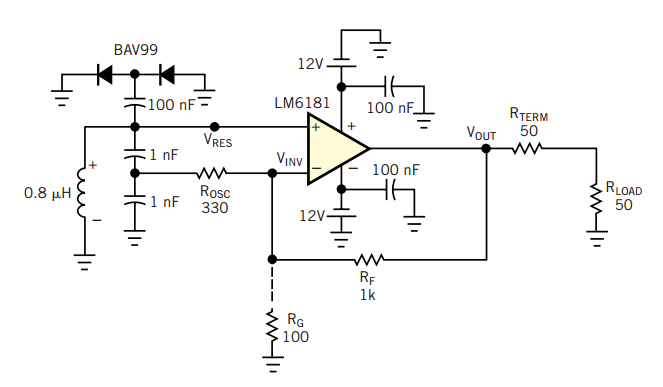
RF oscillator uses current-feedback op amp
A current-feedback amplifier is a well-known component with many uses. Its basic block diagram shows that its input stage is a voltage follower in practice, a symmetrical emitter follower. The configuration samples the output current, converts it to voltage across...
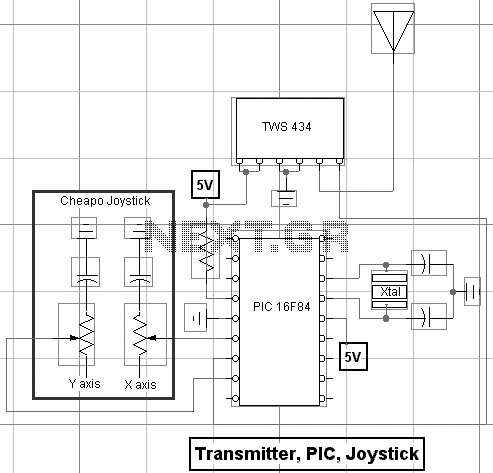
Building an RF Remote Control System For Robotics Control
With a handful of inexpensive components, a little creativity, and the power of PicBasic, you can build some pretty outstanding robotics creations as Rob Arnold proves with his Ruf-Bot project. RF remote control is just way too cool not to...
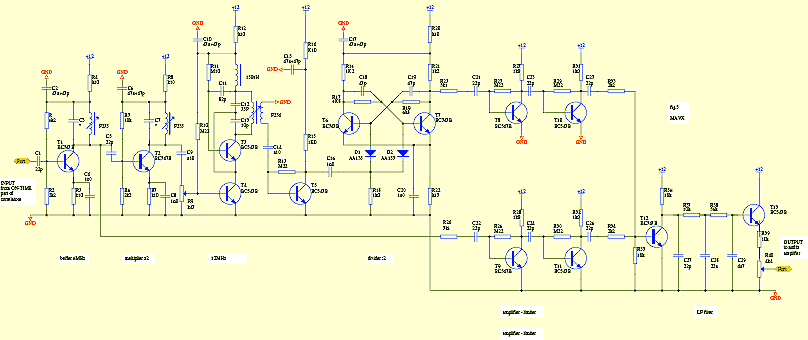
Amatorki projekt
The circuit is designed to add two identical branches to the existing despreading spectrum. The only difference between the branches is the phase of the PN sequences fed into each branch, specifically at the input of a double-balanced mixer. The...
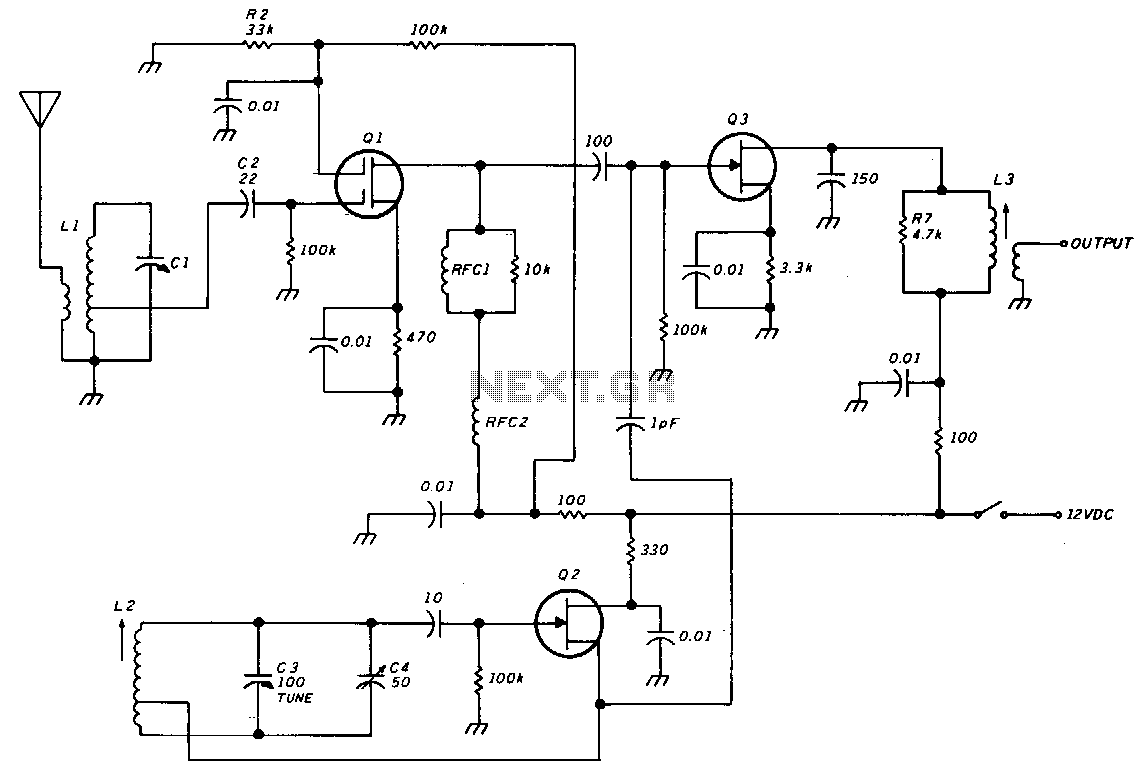
4-18Mhz-converter
The unit consists of an RF amplifier Q1, a local oscillator Q2, and a mixer Q3. The two frequency bands are covered without a band switch by utilizing an intermediate frequency (IF) of 3.5 MHz. The oscillator operates within a...
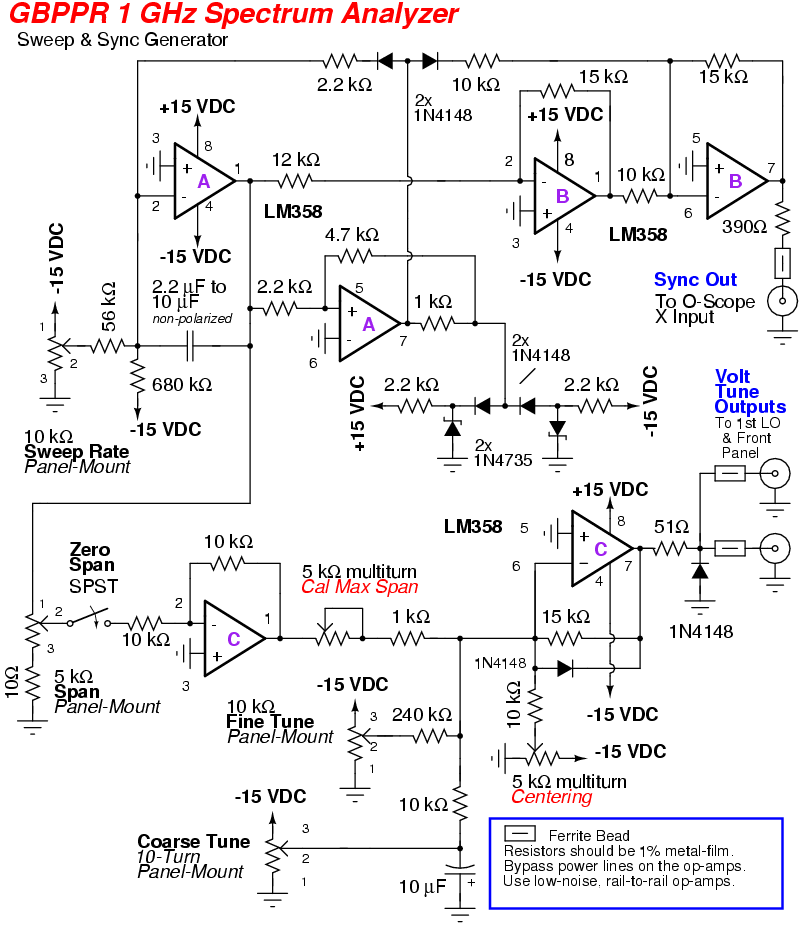
GBPPR 1 GHz RF Spectrum Analyzer
An RF spectrum analyzer is an essential tool for experimenters. The spectrum analyzer project described here is an enhancement of the "Spectrum Analyzer for the Radio Amateur" (Part 2) project by Wes Hayward (W7ZOI) and Terry White (K7TAU), which appeared...
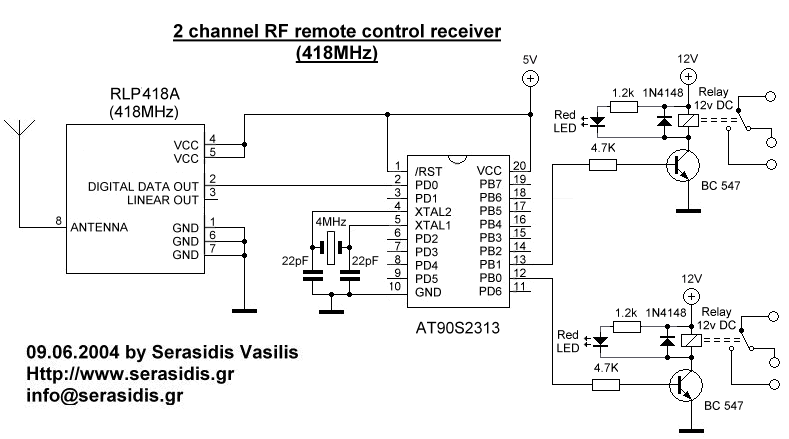
2 channel RF remote control
The basic small-range remote controls are Infrared and RF (Radio Frequency). One of the weaknesses of Infrared is that the signal cannot pass through walls. Therefore, to control a garage door, an RF remote control is necessary. The circuit (transmitter...
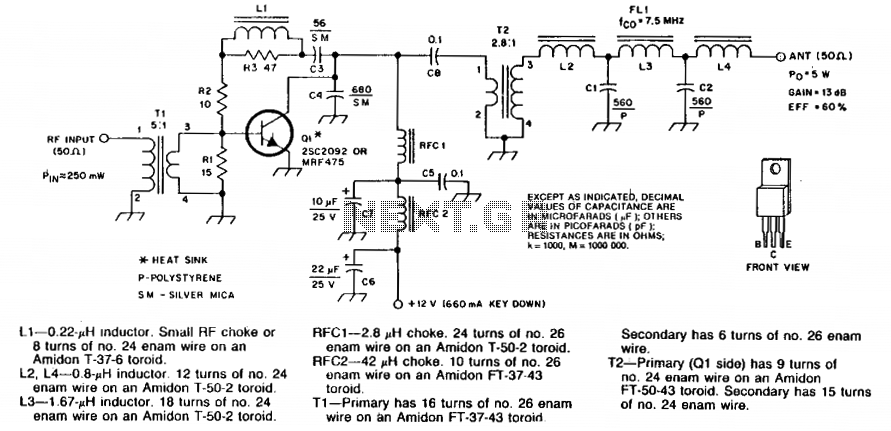
5W RF power amplifier
Numbered components are designated for PC-board layout purposes. C5 and C8 are disc ceramic capacitors. C6 and C7 are tantalum or electrolytic capacitors. R1, R2, and R3 are 1/4 W carbon composition resistors. Silver-mica capacitors may be substituted for polystyrene...
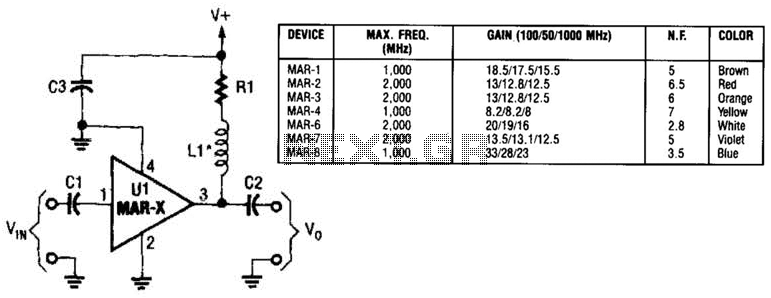
Rf Preamplifiers Circuit
In this basic MAR-x-based circuit, both the input and output consist of a single DC-blocking capacitor (C1 for the input and C2 for the output, respectively). The DC power supply network, which includes L1 and R1, is connected to the...
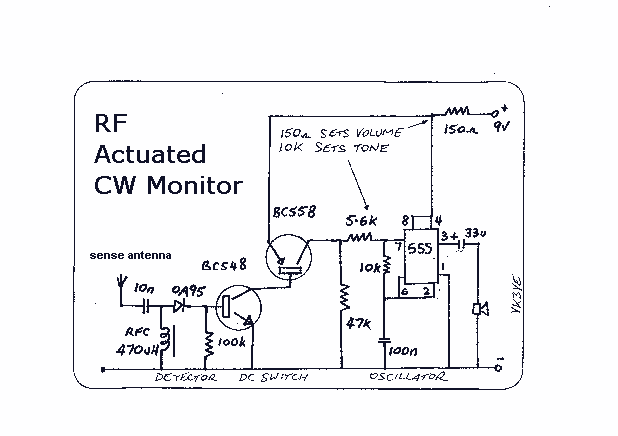
RF Actuated Keying Monitor
Sending Morse on a rig without a sidetone is not impossible, but is not particularly pleasant either. This battery-powered monitor has been designed to provide an audible indication of keying for those whose rigs lack a CW sidetone. Its sensor...