


Electronic circuit diagram of frostbite treatment device
#ASIC SL9711
#oscillation circuit
#power amplifier
#sine wave generator
#step-up transformer
#100Hz
#3Hz
#medical device
#frostbite treatment
#controller
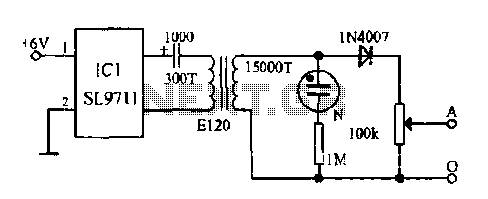
Description: The electronic frostbite treatment instrument ASIC SL9711 consists of an oscillation circuit, a power amplifier, and a controller. It generates a sine wave at frequencies of 100 Hz and 3 Hz, followed by a step-up transformer with potentiometer adjustment for the EA loop current. The output of the diode is added, resulting in a pulsating current waveform flowing through the body. This stimulation of the motor nerves induces muscle tremors. After several seconds, the sensation of trembling subsides, and sensory and motor nerves are suppressed, which raises the pain threshold and provides an analgesic effect. This occurs due to the inhibition of AC ripple current and the denaturation and decomposition of nerve proteins, leading to the release of vasoactive peptide substances. Once the pulsating current ceases, local blood circulation improves, enhancing the post-analgesic effect.
The ASIC SL9711 is designed specifically for the treatment of frostbite through controlled electrical stimulation. The oscillation circuit generates precise sine waveforms at specified frequencies, which are crucial for eliciting the desired physiological response. The 100 Hz and 3 Hz frequencies are selected based on their effectiveness in stimulating peripheral nerves and promoting muscle activity, which can be beneficial in treating conditions related to frostbite.
The power amplifier is integral to the circuit, as it boosts the low-level signals generated by the oscillation circuit to a level suitable for therapeutic application. The inclusion of a step-up transformer allows for the adjustment of the output voltage, which can be fine-tuned using a potentiometer. This capability ensures that the current delivered to the body can be customized for individual treatment needs, optimizing the therapeutic effects while maintaining safety.
The output stage of the device incorporates a diode that shapes the current into a pulsating waveform. This waveform is essential for stimulating nerve fibers effectively. The pulsating nature of the current induces a series of muscle contractions, which can lead to increased blood flow and pain relief. The initial muscle tremors experienced by the patient are a direct result of motor nerve activation, and as these tremors diminish, the analgesic effect begins to take place.
The mechanism behind the analgesic effect involves the suppression of sensory and motor nerve activity, which elevates the pain threshold. This is further enhanced by the inhibition of AC ripple currents, which can contribute to discomfort. Additionally, the denaturation of nerve proteins leads to biochemical changes that facilitate the release of vasoactive peptides, promoting vasodilation and improving local circulation.
Upon cessation of the pulsating current, the enhanced blood flow can aid in the recovery of frostbitten tissues, thereby supporting the healing process. The design of the ASIC SL9711 exemplifies a sophisticated approach to therapeutic electrical stimulation, combining precise engineering with a deep understanding of human physiology to address the complex challenges associated with frostbite treatment.Electronic frostbite treatment instrument ASIC SL9711 constitute an oscillation circuit, a power amplifier and controller, and generates 100Hz 3Hz sine wave, after the step-up transformer potentiometer adjustment EA loop current. Since the output of the diode added, and thus the current flowing through the body of pulsating current waveform. In the human body, motor nerve stimulation causes muscle tremor sense. After several seconds, Ma trembling feeling disappeared, sensory and motor nerves begin to be suppressed, and the pain threshold rose rendering analgesic effect due to inhibition of AC ripple current and the current through the nerve protein denaturation decomposition occurs trace, open into vasoactive peptide substance, which after a pulsating current is stopped, there improve local blood circulation and post analgesic effect.
The ASIC SL9711 is designed specifically for the treatment of frostbite through controlled electrical stimulation. The oscillation circuit generates precise sine waveforms at specified frequencies, which are crucial for eliciting the desired physiological response. The 100 Hz and 3 Hz frequencies are selected based on their effectiveness in stimulating peripheral nerves and promoting muscle activity, which can be beneficial in treating conditions related to frostbite.
The power amplifier is integral to the circuit, as it boosts the low-level signals generated by the oscillation circuit to a level suitable for therapeutic application. The inclusion of a step-up transformer allows for the adjustment of the output voltage, which can be fine-tuned using a potentiometer. This capability ensures that the current delivered to the body can be customized for individual treatment needs, optimizing the therapeutic effects while maintaining safety.
The output stage of the device incorporates a diode that shapes the current into a pulsating waveform. This waveform is essential for stimulating nerve fibers effectively. The pulsating nature of the current induces a series of muscle contractions, which can lead to increased blood flow and pain relief. The initial muscle tremors experienced by the patient are a direct result of motor nerve activation, and as these tremors diminish, the analgesic effect begins to take place.
The mechanism behind the analgesic effect involves the suppression of sensory and motor nerve activity, which elevates the pain threshold. This is further enhanced by the inhibition of AC ripple currents, which can contribute to discomfort. Additionally, the denaturation of nerve proteins leads to biochemical changes that facilitate the release of vasoactive peptides, promoting vasodilation and improving local circulation.
Upon cessation of the pulsating current, the enhanced blood flow can aid in the recovery of frostbitten tissues, thereby supporting the healing process. The design of the ASIC SL9711 exemplifies a sophisticated approach to therapeutic electrical stimulation, combining precise engineering with a deep understanding of human physiology to address the complex challenges associated with frostbite treatment.Electronic frostbite treatment instrument ASIC SL9711 constitute an oscillation circuit, a power amplifier and controller, and generates 100Hz 3Hz sine wave, after the step-up transformer potentiometer adjustment EA loop current. Since the output of the diode added, and thus the current flowing through the body of pulsating current waveform. In the human body, motor nerve stimulation causes muscle tremor sense. After several seconds, Ma trembling feeling disappeared, sensory and motor nerves begin to be suppressed, and the pain threshold rose rendering analgesic effect due to inhibition of AC ripple current and the current through the nerve protein denaturation decomposition occurs trace, open into vasoactive peptide substance, which after a pulsating current is stopped, there improve local blood circulation and post analgesic effect.
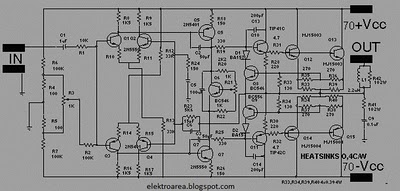
power amplifier mj15003 mj15004 circuit
The design of this amplifier aims to enhance the reproduction of complex music and voice. While high electrical properties are emphasized, the primary objective is to achieve superior sound quality, vivid imaging, and exceptional spatial clarity. Although the average listening...
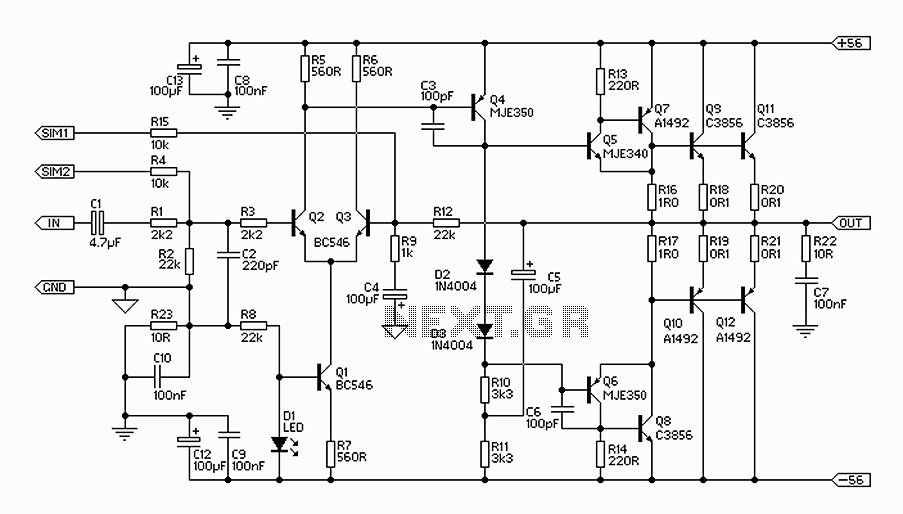
Schematic Diagram 300W Power Amplifier For Subwoofer
The 300W amplifier circuit presented is a conventional design. It includes connections for the internal SIM and incorporates filtering for RF protection (R1, C2). The input is facilitated through a 4.7µF bipolar capacitor, which offers substantial capacitance in a compact...
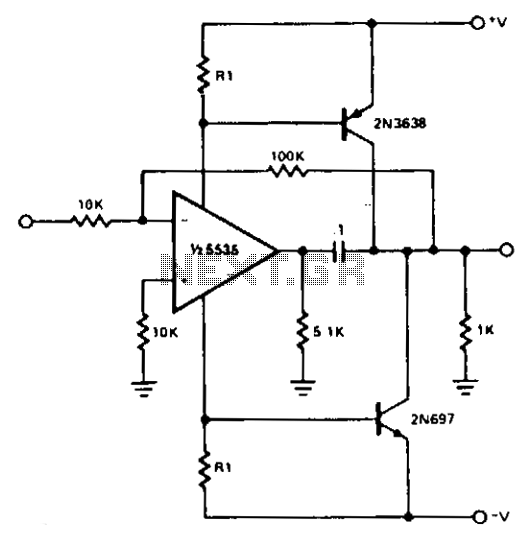
Power amplifier
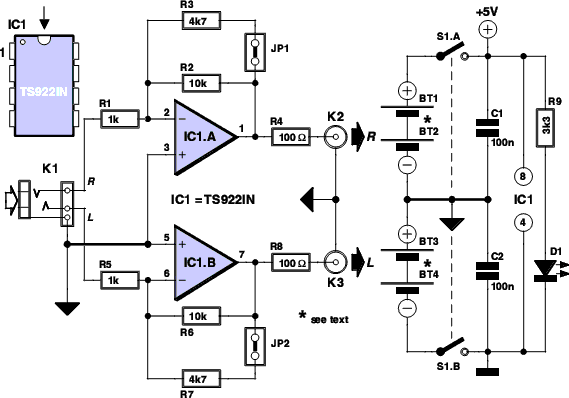
For most applications, the power provided by operational amplifiers (op amps) is adequate. However, there are instances where a greater power handling capability is required. A straightforward power booster that can drive moderate loads utilizes the NE5535 device. Other amplifiers...
Power Amplifier 6
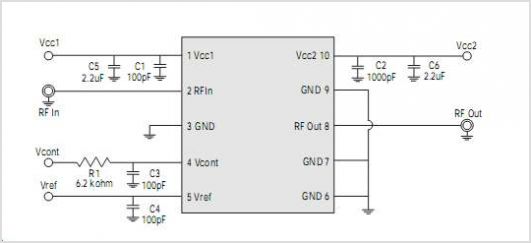
This simple circuit is designed to provide an output power of approximately 1 watt when connected to a 9-volt power supply. The key advantage of this circuit is its use of a dual Darlington configuration, which increases the input impedance...
WS2512 4 X 4 Power Amplifier Module
The WSH412 is designed to integrate a Hall sensor with complementary output drivers and a frequency generator on a single chip. It is suitable for applications such as speed measurement, revolution counting, positioning, and DC brushless motors. The device includes...
20W 40-500kHz PA 01
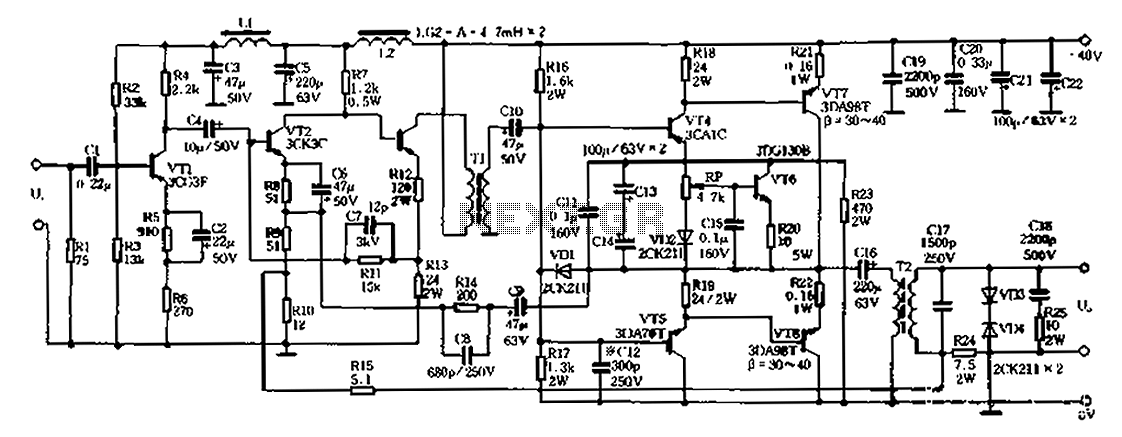
A 20W power amplifier circuit is illustrated in Figure 8-3. It features a pre-release level and enhances the power level through three stages to minimize significant phase shifts in the feedback loop. PNP silicon transistors are selected for both the...
1500W Power Amplifier Circuit
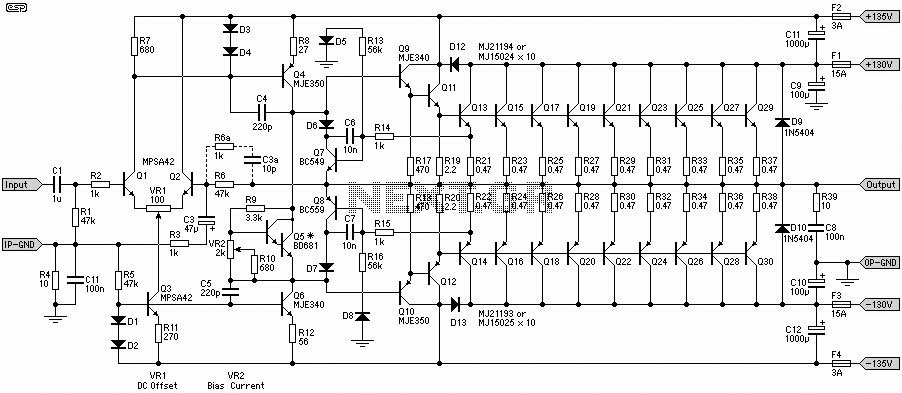
This 1500W Power Amplifier Circuit Diagram contains two images of the circuit. For more complete information, refer to the main post titled "1500 Watt Power Amplifier." It includes a list of component parts for the 1500W Power Amplifier Circuit Diagram....
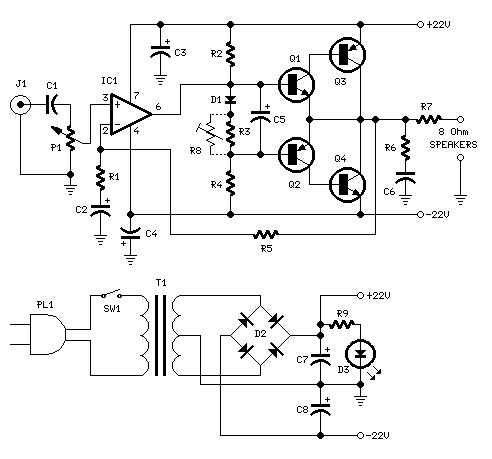
18 watt power amplifier using tle2141c
This is a circuit schematic diagram for a power amplifier utilizing the IC TLE2141C. The TLE2141C is a low-noise, high-voltage, high-slew-rate operational amplifier. It offers a frequency response from 30 Hz to 20 kHz with a variation of 1 dB....
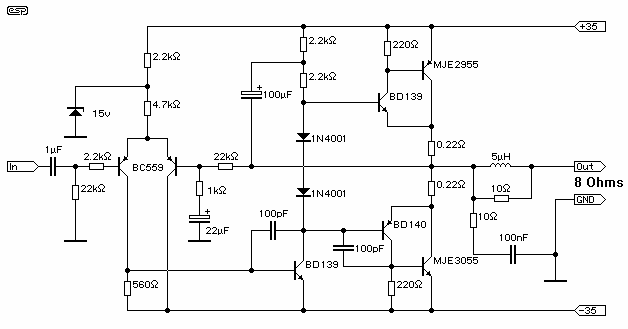
60 Watt Into 8 Ohms Power Amplifier
Cleaned Input: This amplifier does not claim to be state of the art, and in fact the base design is now over 20 years old. It is a simple amp to build, uses commonly available parts and is stable and...