


Frequency Modulated FM Oscillator Circuit
#FM oscillator
#frequency modulation
#wireless audio
#microphone
#part-15
#stable frequency
#radio frequency
#audio transmission
#modulation
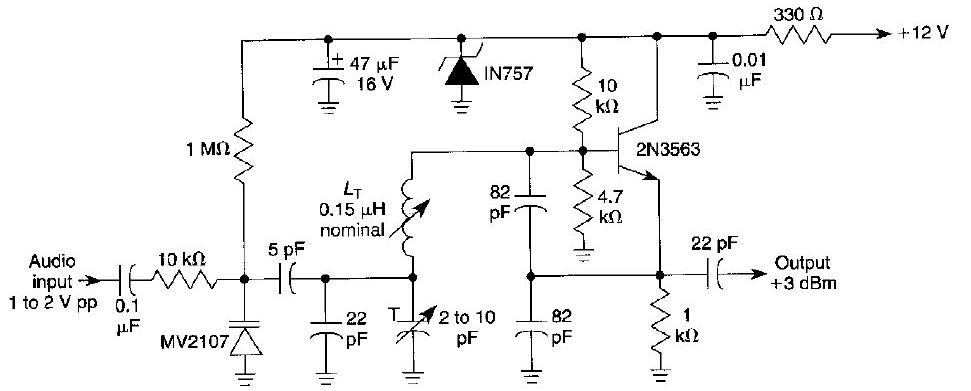
Description: This FM oscillator can be utilized for wireless audio, microphone, and part-15 applications where a stable frequency-modulated oscillator is required.
The FM oscillator is an essential component in various communication systems, particularly in wireless audio transmission and microphone applications. It operates by varying the frequency of the output signal in accordance with the amplitude of the input audio signal, allowing for the transmission of audio information over radio waves.
The circuit typically consists of a voltage-controlled oscillator (VCO) that generates a carrier frequency, which is modulated by the input audio signal. Key components include a transistor or integrated circuit configured to produce the oscillation, along with passive components such as resistors, capacitors, and inductors that determine the frequency range and stability of the oscillator.
In applications where regulatory compliance is required, such as part-15 devices, the oscillator must maintain a stable frequency while minimizing harmonic distortion and ensuring that the output power remains within specified limits. The design may also incorporate feedback mechanisms to enhance stability and performance, ensuring that the FM oscillator can reliably operate under varying conditions.
Additionally, careful consideration of power supply decoupling and grounding techniques is crucial in minimizing noise and interference, which can adversely affect the quality of the transmitted audio signal. Overall, the FM oscillator serves as a vital building block in modern wireless communication systems, enabling efficient and high-quality audio transmission.This FM oscillator can be used for wireless audio, microphone and part-15 applications where stable frequency modulated oscillators is needed. Lt can be va..
The FM oscillator is an essential component in various communication systems, particularly in wireless audio transmission and microphone applications. It operates by varying the frequency of the output signal in accordance with the amplitude of the input audio signal, allowing for the transmission of audio information over radio waves.
The circuit typically consists of a voltage-controlled oscillator (VCO) that generates a carrier frequency, which is modulated by the input audio signal. Key components include a transistor or integrated circuit configured to produce the oscillation, along with passive components such as resistors, capacitors, and inductors that determine the frequency range and stability of the oscillator.
In applications where regulatory compliance is required, such as part-15 devices, the oscillator must maintain a stable frequency while minimizing harmonic distortion and ensuring that the output power remains within specified limits. The design may also incorporate feedback mechanisms to enhance stability and performance, ensuring that the FM oscillator can reliably operate under varying conditions.
Additionally, careful consideration of power supply decoupling and grounding techniques is crucial in minimizing noise and interference, which can adversely affect the quality of the transmitted audio signal. Overall, the FM oscillator serves as a vital building block in modern wireless communication systems, enabling efficient and high-quality audio transmission.This FM oscillator can be used for wireless audio, microphone and part-15 applications where stable frequency modulated oscillators is needed. Lt can be va..
Low Voltage Microphone Preamplifier Circuit
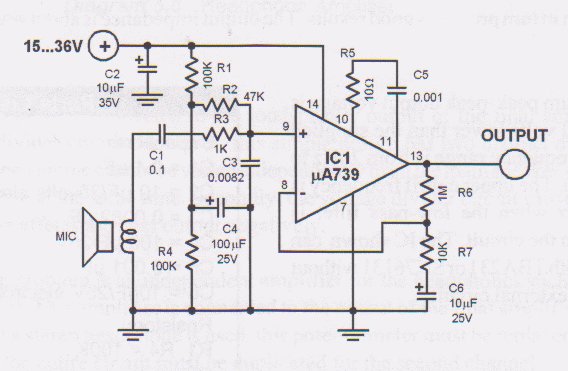
This circuit is a low voltage microphone preamplifier that operates with a 1.5V power supply. It features a reference with a 500 kHz unity-gain bandwidth, functioning as a preamplifier with a gain of 100. The output from this stage is...
Vox box
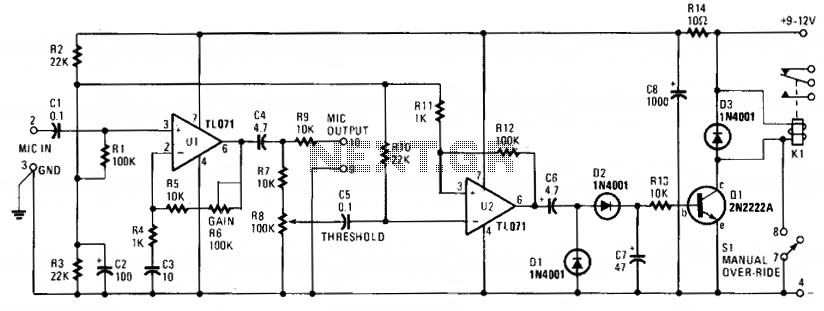
The electronic circuit in the VOX Box consists of three main components: a microphone preamplifier, a Schmitt trigger, and a relay driver. Input signals received at the microphone preamplifier (U1) are amplified and sent to a THRESHOLD control (R8). When...
Suggestions for mic pre schematics
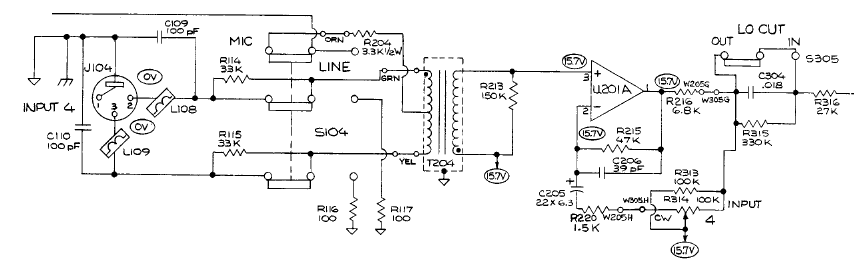
A student is working on a project related to active electronics as part of their second year in a bachelor's program in audio production.
Active electronics refers to electronic circuits that require an external power source to operate, typically involving components...
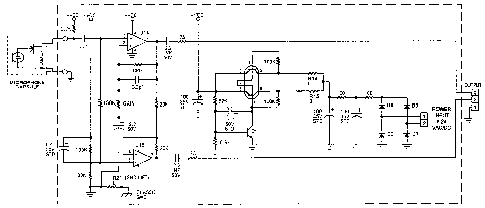
Conference MIC
If the audio output is connected to equipment with a balanced input circuit that has a separate ground connection, the ground connects to OUTPUT terminal #1. The PZ-2LA can be powered by an external AC or DC source ranging from...
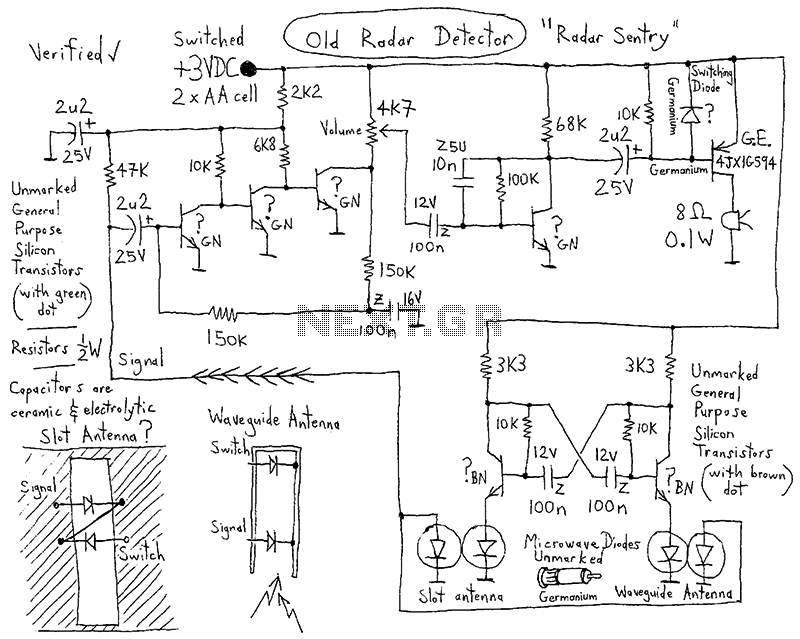
Dynamic Mic Preamp
A similar circuit can be utilized with an 8-ohm speaker; in this instance, it should be placed in the position of the emitter resistor. This circuit functions as a replacement for a carbon microphone.
The described circuit is intended for applications...
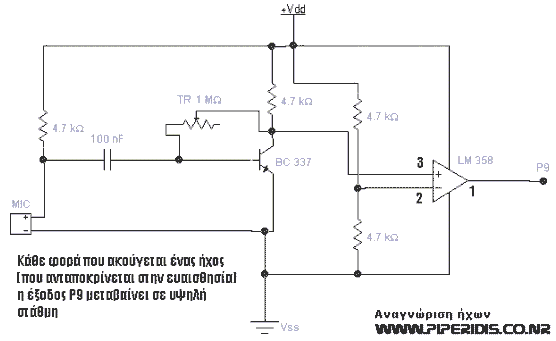
Microphone Amp
This circuit is designed to detect sounds using a common condenser microphone, with variable sensitivity. The output of the circuit is high whenever a sound is detected and low otherwise. It can be utilized in simple robotic applications for sound...

Radio remote control lighting switch CD4017 RCM1 schematic
The circuit consists of a radio remote lighting switch utilizing RCM1 type radio-controlled remote control transmitter and receiver components. It features the RCM1A/B component, which facilitates the remote control functionality. Additionally, the design incorporates a remote control transmitter and receiver...
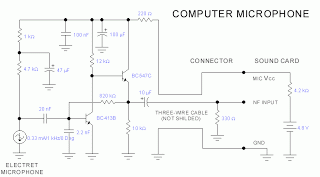
Microphone Circuit-PC Sound Card
This microphone circuit was submitted by Lazar Pancic from Yugoslavia. The sound card for a PC typically features a microphone input, speaker output, and occasionally line inputs and outputs. The microphone input is designed specifically for dynamic microphones with an...
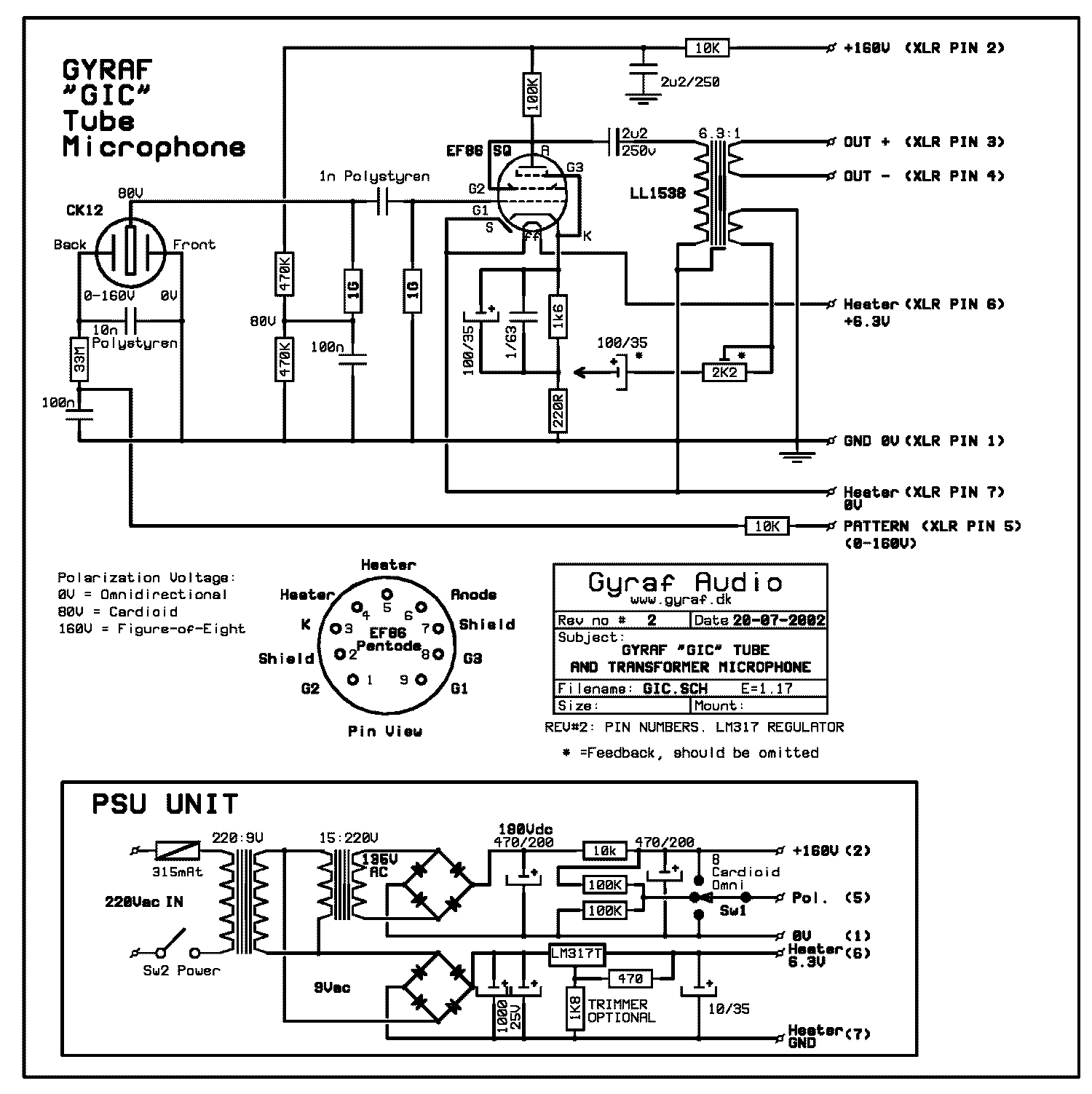
gic
The design resembles a combination of circuits from M49 and U47, utilizing the tube from U67. It features a true variable-pattern microphone capable of omnidirectional, cardioid, and figure-of-eight patterns. This is achieved by polarizing the front and back diaphragms of...