


Voltage to Frequency Converter Using UJT
#UJT
#voltage to frequency converter
#VCO
#oscillator circuit
#timing capacitor
#frequency modulation
#signal conversion
#transistor
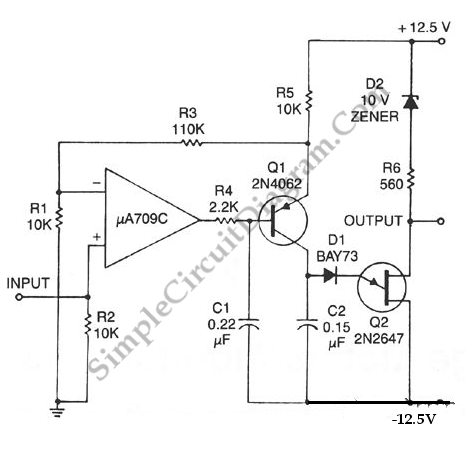
Description: The voltage to frequency converter (V/FC - VCO) circuit consists of a UJT (uni-junction transistor) oscillator in which the timing charge capacitor C2 is utilized.
The voltage to frequency converter circuit operates by converting an input voltage into an output frequency. In this design, a UJT oscillator is employed, which is known for its simplicity and effectiveness in generating oscillations. The UJT is characterized by its three terminals: the emitter (E), and two base terminals (B1 and B2).
The timing capacitor, C2, plays a crucial role in determining the frequency of oscillation. As the input voltage varies, it influences the charge and discharge cycles of C2. The UJT oscillator operates by charging C2 through a resistor until the voltage across C2 reaches a certain threshold, at which point the UJT turns on, discharging C2 rapidly and generating a pulse. This cycle repeats, producing a continuous output frequency that corresponds to the input voltage level.
The frequency output can be adjusted by varying the resistance in the charging path or by changing the capacitance value of C2. This flexibility allows for a wide range of frequency outputs based on the input voltage, making the V/FC circuit suitable for various applications, including signal processing and frequency modulation.
Overall, the UJT oscillator configuration in the voltage to frequency converter circuit provides a straightforward and efficient method for frequency generation based on varying input voltage levels.The following voltage to frequency converter (V/FC - VCO) circuit consist of a UJT (uni-junction transistor) oscillator in which the timing charge capacitor C2..
The voltage to frequency converter circuit operates by converting an input voltage into an output frequency. In this design, a UJT oscillator is employed, which is known for its simplicity and effectiveness in generating oscillations. The UJT is characterized by its three terminals: the emitter (E), and two base terminals (B1 and B2).
The timing capacitor, C2, plays a crucial role in determining the frequency of oscillation. As the input voltage varies, it influences the charge and discharge cycles of C2. The UJT oscillator operates by charging C2 through a resistor until the voltage across C2 reaches a certain threshold, at which point the UJT turns on, discharging C2 rapidly and generating a pulse. This cycle repeats, producing a continuous output frequency that corresponds to the input voltage level.
The frequency output can be adjusted by varying the resistance in the charging path or by changing the capacitance value of C2. This flexibility allows for a wide range of frequency outputs based on the input voltage, making the V/FC circuit suitable for various applications, including signal processing and frequency modulation.
Overall, the UJT oscillator configuration in the voltage to frequency converter circuit provides a straightforward and efficient method for frequency generation based on varying input voltage levels.The following voltage to frequency converter (V/FC - VCO) circuit consist of a UJT (uni-junction transistor) oscillator in which the timing charge capacitor C2..
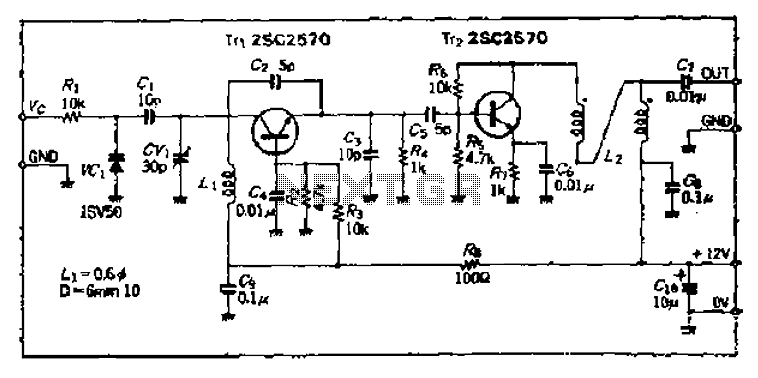
50 to 150MHz high frequency VCO circuit
The Bong circuit is a high-frequency Colpitts oscillator that utilizes a Ge coil (L). It features two heads and is designed for simple production. The frequency of oscillation can be determined, and testing is conducted to ascertain the value of...
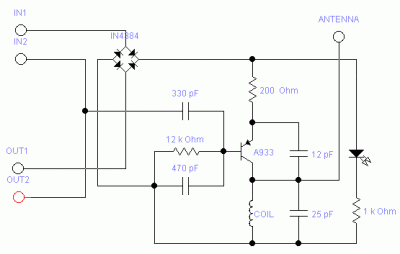
A933 Transistor Telephone Listening
The following circuit illustrates the A933 Transistor Telephone Listening Circuit Diagram. Features include the ability to tune from 88 to approximately 94 MHz and a simple design.
The A933 Transistor Telephone Listening Circuit is designed to function as a radio frequency...
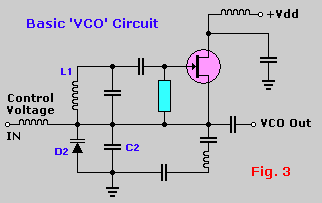
VCO circuit
The fundamental principle of the theremin is the heterodyne oscillator. In the development of the Open Theremin, a stable and reliable oscillator was essential. Various schematics featuring different components were researched and constructed on small boards, which were then connected...
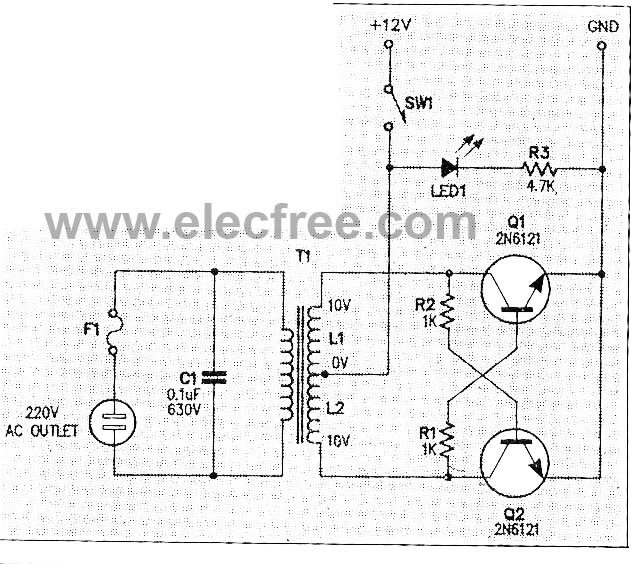
Micro Inverter by 2N6121
This micro inverter is a small-sized device that modifies energy from a battery, producing an output voltage of approximately 220V AC at 50Hz. The circuit comprises two transistors that function as a pulse oscillator or square wave generator, driving a...
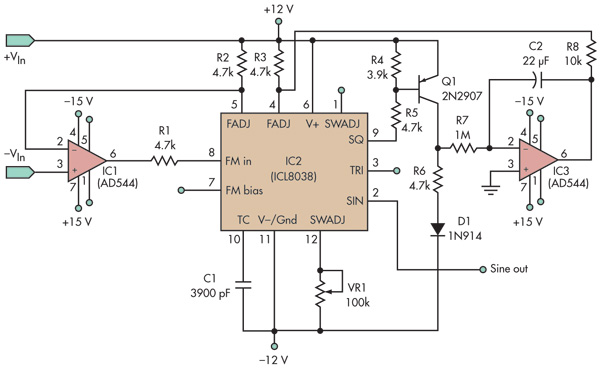
Symmetry Feedback Maximizes Function Generators Linear Sweep Range
This basic voltage-controlled oscillator (VCO) and waveform generator integrated circuit (IC) circuit features a voltage follower loop (formed with IC1) and a symmetry feedback loop (IC3) designed to eliminate asymmetric duty cycles that can lead to distortion at low frequencies....
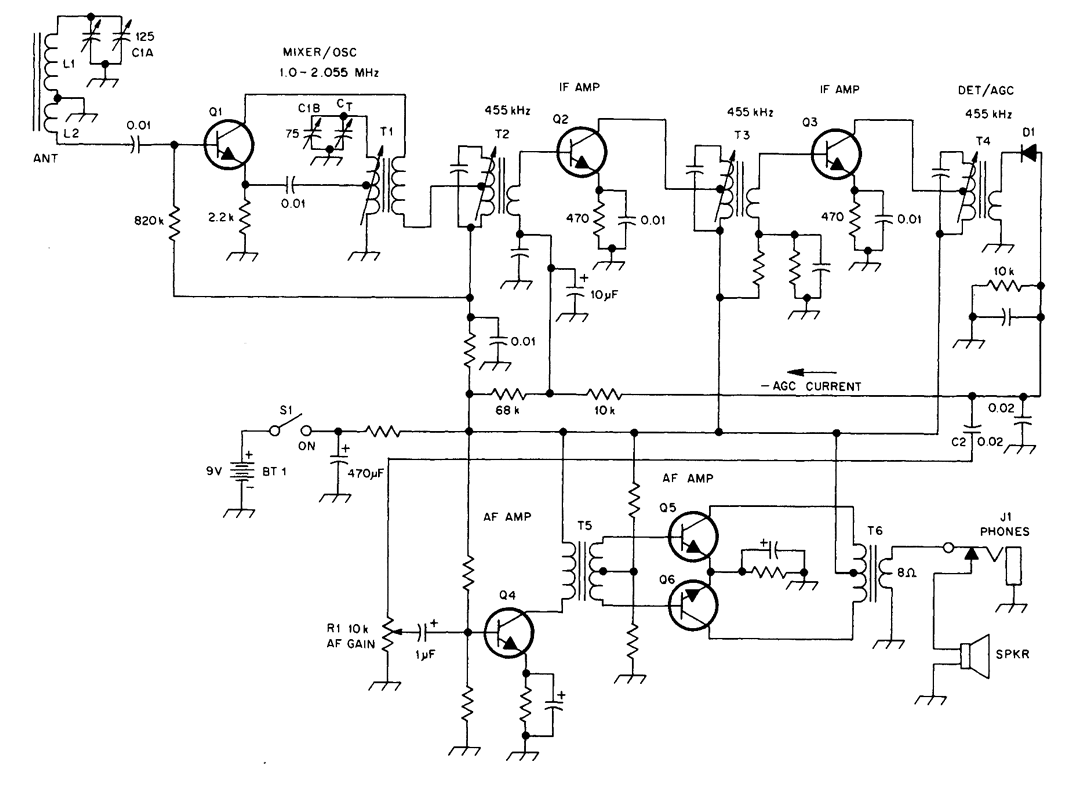
TRANSISTORIZED AM RADIO
The schematic illustrates a standard AM radio circuit utilizing NPN transistors. This generic circuit does not provide specific values for all components, serving instead as a reference point for experimenters to begin their projects.
The schematic of a typical transistor AM...
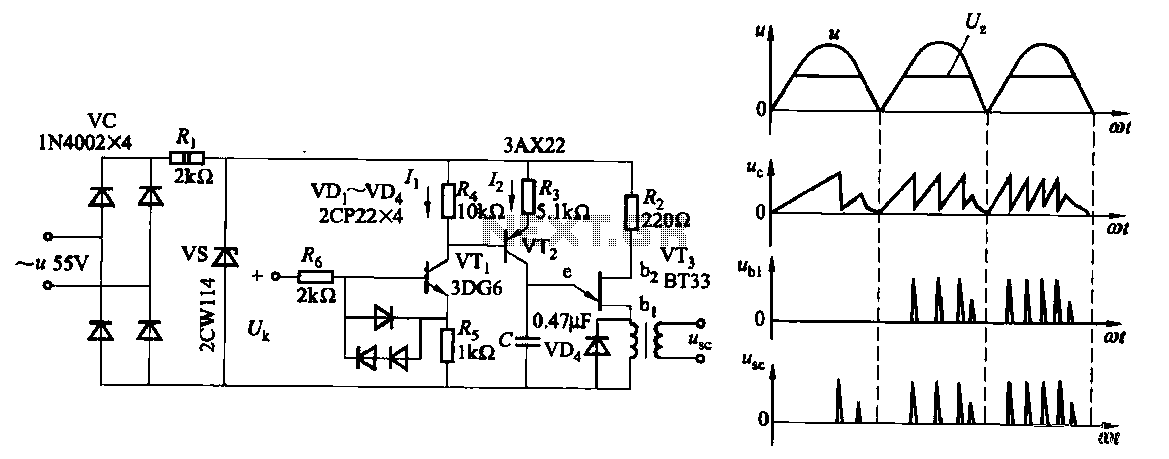
Single-junction transistor trigger circuit 2
Due to the increased level of the transistor amplifier circuit, the control circuit's performance in Figure 16-6 is more sensitive and can accept input control signals superimposed on others (such as voltage, current, and speed feedback signals) to meet system...
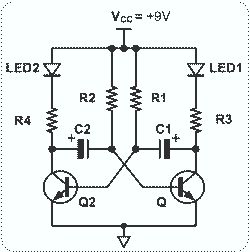
Astable Multivibrator with 2 Transistors
This circuit is straightforward and easy to construct, utilizing two transistors as active components along with several passive components such as resistors, capacitors, and two LEDs. The circuit employs the MPS2222 transistor, though any NPN type transistor can be used...
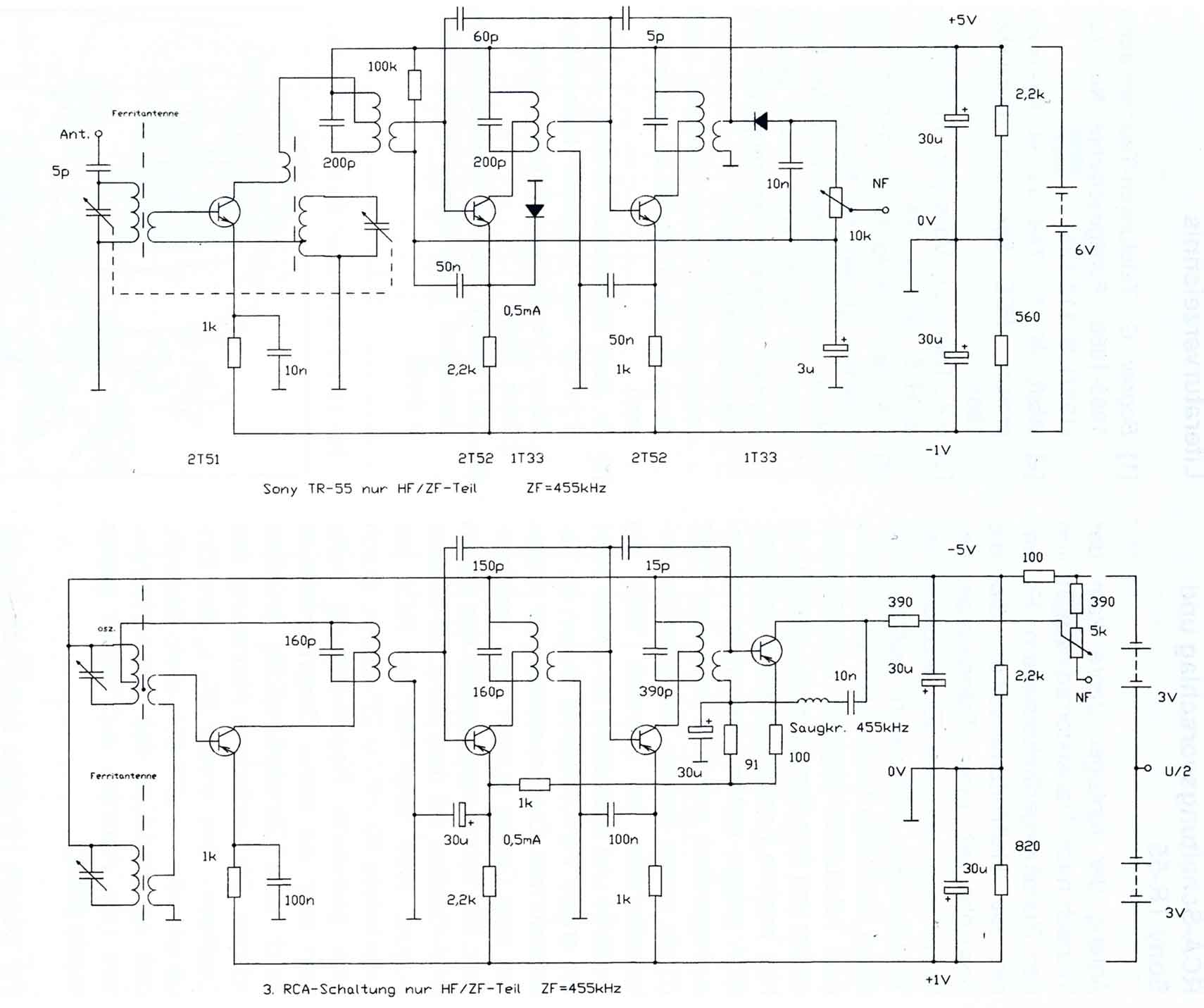
Comments on the Circuits of the first Transistor Radios
The circuitry of the Regency exhibits several unique characteristics. Notable features include the self-oscillating mixer stage, the base bias voltage of the second IF stage derived from the AF power stage, an unusual IF frequency of 262 kHz, and a...