


0-24VDC Digital PIC Power Supply circuit diagram
#PIC microcontroller
#variable power supply
#LCD display
#voltage control
#current control
#push button
#digital control
#0-24VDC
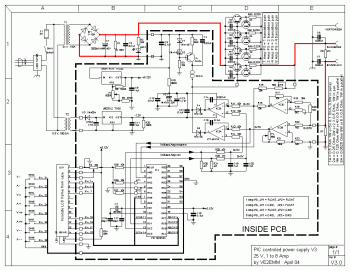
Description: This is a variable power supply controlled by a PIC microcontroller. An LCD display is included in the circuit to show the actual output voltage and current values. A push-button switch is used to adjust the output voltage and current. The top line of the display shows the settings, while the maximum current is displayed at all times. It is not necessary to short the output terminals to set the maximum current.
The variable power supply circuit utilizes a PIC microcontroller as the central control unit, which allows for precise adjustments and monitoring of the output voltage and current. The microcontroller interfaces with an LCD display to provide real-time feedback to the user, indicating the current operational parameters of the power supply.
The LCD display is configured to show two primary lines of information: the first line presents the adjustable output voltage and current settings, while the second line continuously displays the maximum current limit. This design eliminates the need for the user to manually short the output terminals to establish the maximum current, simplifying the operation and enhancing user experience.
The power supply employs a push-button switch, which is integrated into the microcontroller's firmware to facilitate the adjustment of output voltage and current. The switch's operation is debounced in the software to prevent erroneous readings or rapid toggling, ensuring stable adjustments. The user can increment or decrement the voltage and current settings through a simple press-and-hold action, allowing for fine-tuning of the output.
The circuit design may include a voltage regulator, current sensing resistors, and appropriate filtering capacitors to ensure stable output under various load conditions. Protection features, such as overcurrent and overvoltage safeguards, can be implemented to protect both the power supply and connected loads. Overall, this variable power supply circuit combines advanced microcontroller capabilities with user-friendly interfaces to provide a versatile and reliable power source for various electronic applications.This is a variable power supply controlled with PIC microcontroller. There is LCD display in this circuit which will show the actual value of power supply output. This power supply use push on switch to adjust the output voltage and current value. The top line shows the settings, the maximum current stays displayed at all times, it is not necessar y to short the output terminals to set the maximum current.
The variable power supply circuit utilizes a PIC microcontroller as the central control unit, which allows for precise adjustments and monitoring of the output voltage and current. The microcontroller interfaces with an LCD display to provide real-time feedback to the user, indicating the current operational parameters of the power supply.
The LCD display is configured to show two primary lines of information: the first line presents the adjustable output voltage and current settings, while the second line continuously displays the maximum current limit. This design eliminates the need for the user to manually short the output terminals to establish the maximum current, simplifying the operation and enhancing user experience.
The power supply employs a push-button switch, which is integrated into the microcontroller's firmware to facilitate the adjustment of output voltage and current. The switch's operation is debounced in the software to prevent erroneous readings or rapid toggling, ensuring stable adjustments. The user can increment or decrement the voltage and current settings through a simple press-and-hold action, allowing for fine-tuning of the output.
The circuit design may include a voltage regulator, current sensing resistors, and appropriate filtering capacitors to ensure stable output under various load conditions. Protection features, such as overcurrent and overvoltage safeguards, can be implemented to protect both the power supply and connected loads. Overall, this variable power supply circuit combines advanced microcontroller capabilities with user-friendly interfaces to provide a versatile and reliable power source for various electronic applications.This is a variable power supply controlled with PIC microcontroller. There is LCD display in this circuit which will show the actual value of power supply output. This power supply use push on switch to adjust the output voltage and current value. The top line shows the settings, the maximum current stays displayed at all times, it is not necessar y to short the output terminals to set the maximum current.
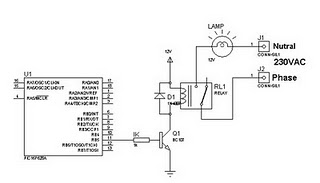
Control A Relay from PIC Microcontroller
A relay can be controlled using a PIC microcontroller. The circuit illustrates how to control a single relay with the PIC 16F628. When the RB5 port of the PIC is set to high, the relay will activate. This circuit is...
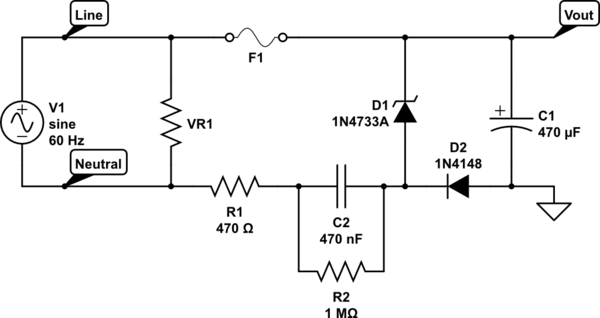
ac I need help matching parts
A PIC microcontroller operating at 5V will be utilized in conjunction with a transformerless power supply circuit and a phase control circuit to manage two AC motors, each rated at 4A. The design will ensure that only one motor operates...
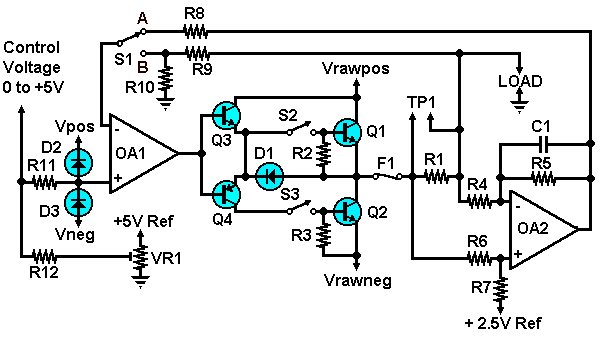
PC Controlled Voltage or Current Source
This project was begun as a means to charge and cycle NiCad batteries but has become a versatile tool for experiments requiring either a controlled voltage up to +30V and/or a current of +/- 2.5 Amps. If all you want...
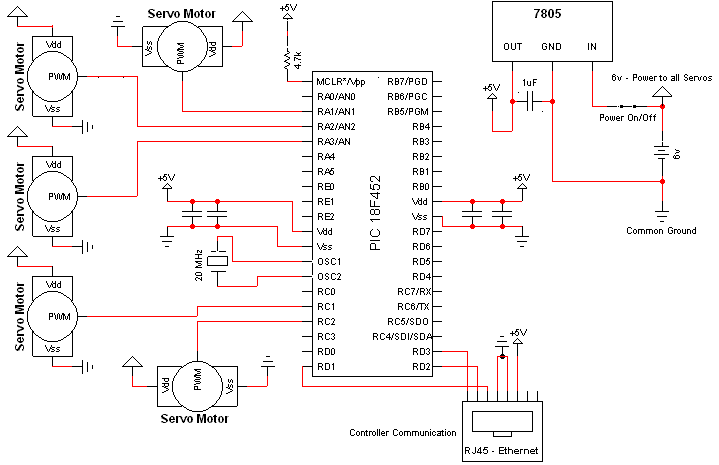
The Wooden Menace Circuit
The hardware schematic for the robotic arm, referred to as the wooden menace, is quite straightforward. The PIC microcontroller has one control line connected to each servo and also connects to an RJ45 connector, which is used to receive input...
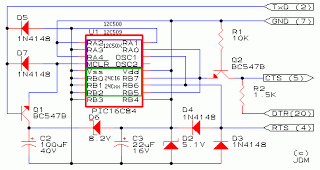
pic micro multiple servo motor
The program utilizes two pulse width variables, pw1 and pw2, along with two sets of routines—left1 and left2, and right1 and right2—designated for each motor. The schematic illustrates that the first servo is connected according to the previous circuit design....
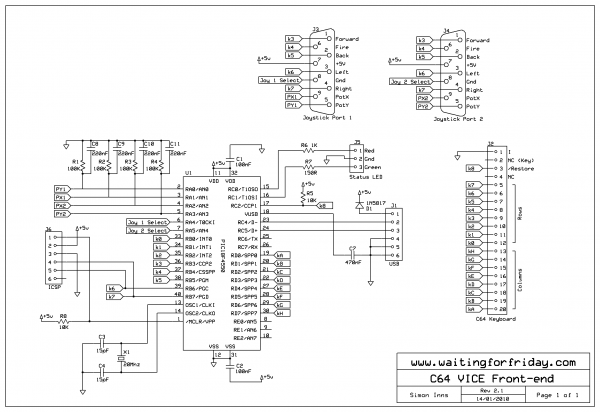
C64 VICE Front-End
The objective of this project was to develop a front-end for Commodore 64 emulation utilizing VICE. A significant challenge with emulators, particularly for devices from the 1980s, is the absence of a standardized keyboard layout. In this project, a malfunctioning...
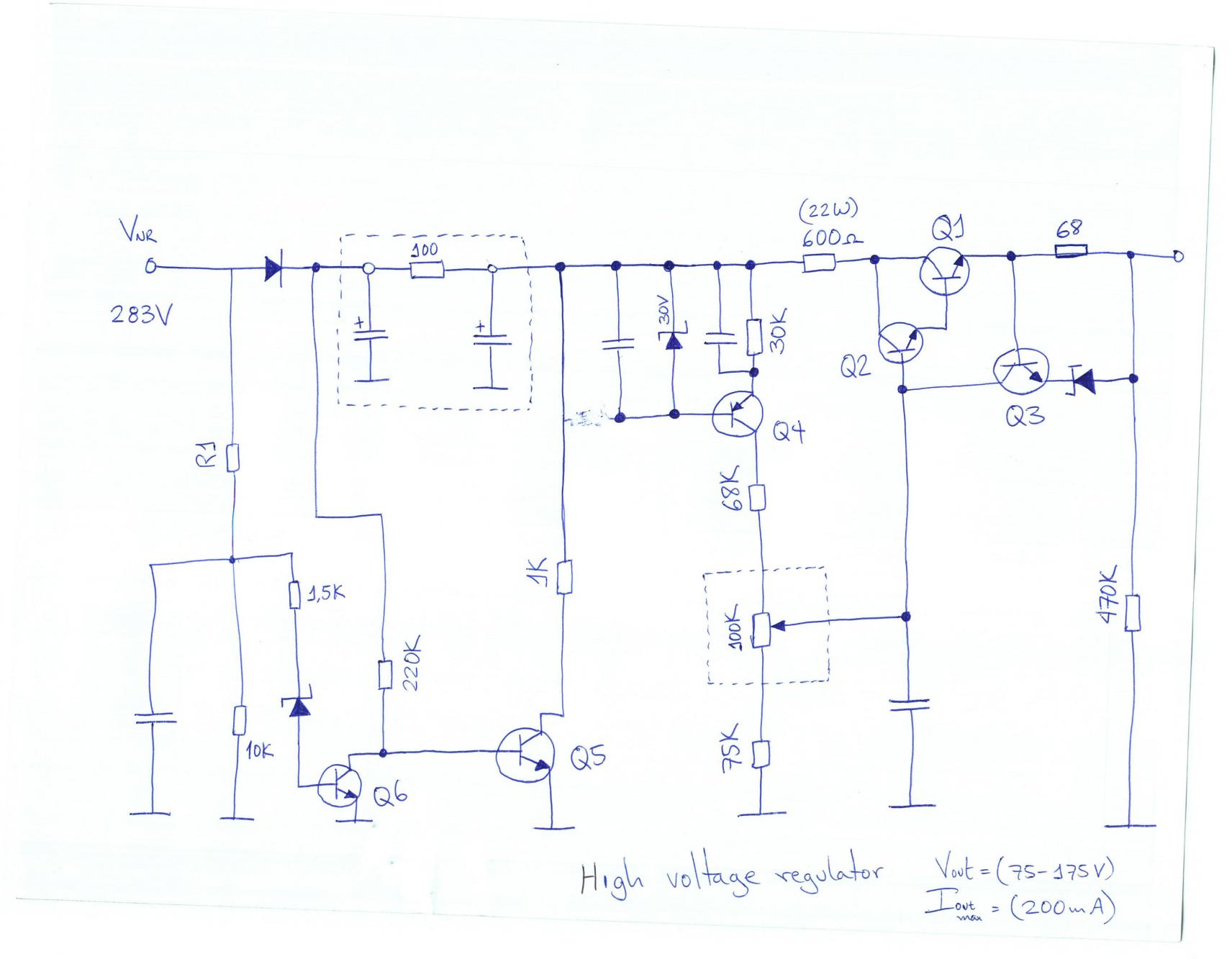
Variable power supply for supplying valve amp build
The voltage requirement for the Solidus is significantly higher than what your circuit currently provides.
The Solidus device operates at a voltage level that exceeds the specifications of the existing circuit. To accommodate this requirement, circuit modifications will need to be...
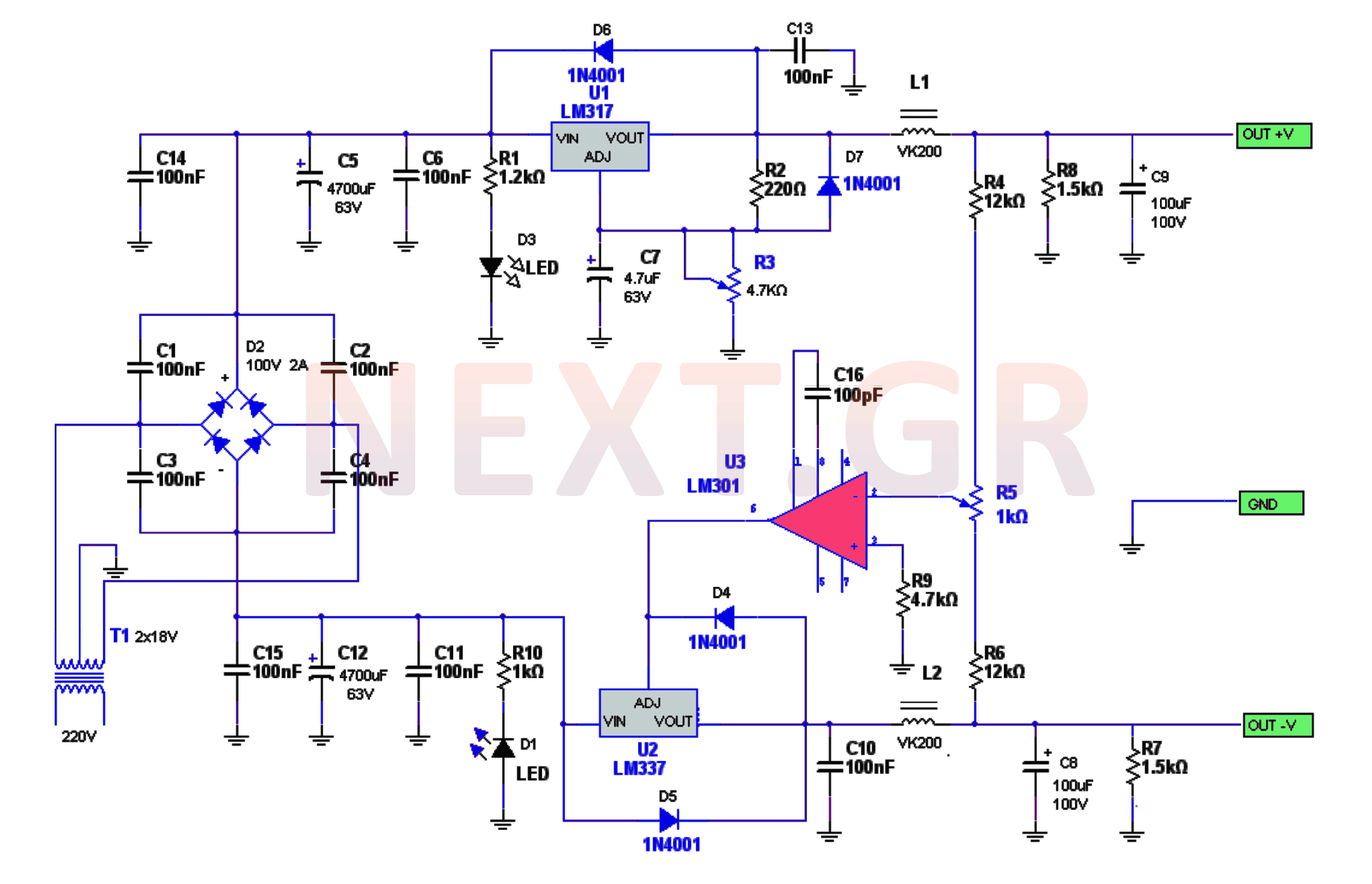
Lab Variable Symmetric Power Supply circuit 2x30V 3.5A
The power supply circuitry includes a 220/2 * 18V / 3.5A transformer, a rectifier, a smoothing filter, a power amplifier (LM301), and two regulators (LM317 and LM337). The voltage from the transformer is rectified by a bridge rectifier. Capacitors C1,...
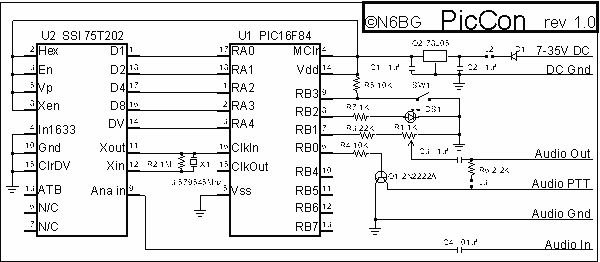
Hidden Radio Transmitter Controller
PicCon is a PIC microcontroller based radio controller designed for hidden transmitter hunting. When combined with a radio transmitter, it will produce tone sequences and Morse code messages at user-programmed times. It is completely field programmable via DTMF tones, utilizes...