


12 volt power supply using lt3845
#LT3845
#12V power supply
#burst mode
#high efficiency
#light load
#adjustable frequency
#external clock sync
#reverse inductor current
#discontinuous operation
#voltage regulation
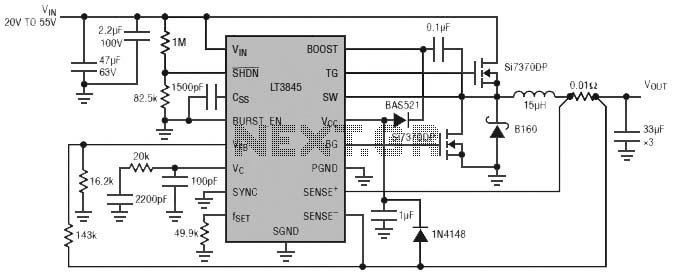
Description: Burst Mode operation maintains high efficiency at light loads by reducing IC quiescent current to 120 µA. Light load efficiency is also improved with the reverse inductor current inhibit function, which supports discontinuous operation. Additional features include an adjustable fixed operating frequency that can be synchronized to an external clock for noise-sensitive applications, gate drivers capable of driving large N-channel MOSFETs, a precision undervoltage lockout, 10 A shutdown current, short-circuit protection, and a programmable soft-start. This 12V power supply project will require an input voltage range between 20 and 55 volts and will deliver a maximum output power of 75 watts at a 12-volt output voltage. Using the LT3845 high-voltage controller, various power applications can be designed, as this controller accepts a wide input voltage range between 4 and 60 volts and can provide a maximum output voltage of around 36 volts. The LT3845 also features an adjustable constant frequency from 100 kHz up to 500 kHz.
The described power supply project utilizes the LT3845 high-voltage controller, which is well-suited for applications requiring efficient performance at varying load conditions. The Burst Mode operation is particularly advantageous for maintaining high efficiency during light load scenarios, where the integrated circuit (IC) quiescent current is significantly reduced to 120 µA. This reduction in quiescent current is crucial for enhancing overall power efficiency and minimizing energy consumption.
The reverse inductor current inhibit function allows the system to operate in discontinuous mode, further optimizing efficiency during low power demands. This feature is particularly beneficial in applications where power conservation is essential. The adjustable fixed operating frequency of the LT3845 can be synchronized with an external clock, making it ideal for noise-sensitive environments, thereby reducing electromagnetic interference (EMI) and ensuring stable operation.
The gate drivers integrated within the LT3845 are designed to handle large N-channel MOSFETs, which are commonly used in power conversion applications due to their high efficiency and fast switching capabilities. The inclusion of a precision undervoltage lockout ensures that the system remains operational only when the input voltage is within a safe range, preventing damage to the device and ensuring reliable operation.
The shutdown current capability of up to 10 A provides an additional layer of protection, allowing the system to safely handle fault conditions. Furthermore, the short-circuit protection feature is vital for safeguarding both the power supply and the connected load from potential damage due to excessive current flow.
The programmable soft-start feature is essential for minimizing inrush current during power-up, which can prevent voltage spikes that may adversely affect sensitive components. This is particularly important in applications where gradual power application is necessary to ensure system stability.
The specified input voltage range of 20 to 55 volts, along with the ability to deliver a maximum output power of 75 watts at 12 volts, makes this power supply versatile for various applications. The LT3845's capability to accept input voltages from 4 to 60 volts and provide a maximum output voltage of around 36 volts allows for flexibility in design, accommodating a wide range of operational requirements. The adjustable frequency range from 100 kHz to 500 kHz enables designers to tailor the switching frequency to optimize efficiency and performance based on specific application needs.Burst Mode operation maintains high efficiency at light loads by reducing IC quiescent current to 120 A. Light load efficiency is also improved with the reverse inductor current inhibit function which supports discontinuous operation.
Additional features include adjustable fixed operating frequency that can be synchronized to an external clock fo r noise sensitive applications, gate drivers capable of driving large N-channel MOSFETs, a precision undervoltage lockout, 10 A shutdown current, short-circuit protection and a programmable soft-start. This 12 power supply project will require an input voltage range between 20 and 55 volts and will deliver a maximum output power of 75 watts at 12 volts output voltage.
Using the LT3845 high voltage controller you can design various power applications, because this controller accepts a wide input voltage range between 4 and 60 volts and can provide a maximum output voltage around 36 volts. Also LT3845 has an adjustable constant frequency from 100kHz up to 500kHz.
The described power supply project utilizes the LT3845 high-voltage controller, which is well-suited for applications requiring efficient performance at varying load conditions. The Burst Mode operation is particularly advantageous for maintaining high efficiency during light load scenarios, where the integrated circuit (IC) quiescent current is significantly reduced to 120 µA. This reduction in quiescent current is crucial for enhancing overall power efficiency and minimizing energy consumption.
The reverse inductor current inhibit function allows the system to operate in discontinuous mode, further optimizing efficiency during low power demands. This feature is particularly beneficial in applications where power conservation is essential. The adjustable fixed operating frequency of the LT3845 can be synchronized with an external clock, making it ideal for noise-sensitive environments, thereby reducing electromagnetic interference (EMI) and ensuring stable operation.
The gate drivers integrated within the LT3845 are designed to handle large N-channel MOSFETs, which are commonly used in power conversion applications due to their high efficiency and fast switching capabilities. The inclusion of a precision undervoltage lockout ensures that the system remains operational only when the input voltage is within a safe range, preventing damage to the device and ensuring reliable operation.
The shutdown current capability of up to 10 A provides an additional layer of protection, allowing the system to safely handle fault conditions. Furthermore, the short-circuit protection feature is vital for safeguarding both the power supply and the connected load from potential damage due to excessive current flow.
The programmable soft-start feature is essential for minimizing inrush current during power-up, which can prevent voltage spikes that may adversely affect sensitive components. This is particularly important in applications where gradual power application is necessary to ensure system stability.
The specified input voltage range of 20 to 55 volts, along with the ability to deliver a maximum output power of 75 watts at 12 volts, makes this power supply versatile for various applications. The LT3845's capability to accept input voltages from 4 to 60 volts and provide a maximum output voltage of around 36 volts allows for flexibility in design, accommodating a wide range of operational requirements. The adjustable frequency range from 100 kHz to 500 kHz enables designers to tailor the switching frequency to optimize efficiency and performance based on specific application needs.Burst Mode operation maintains high efficiency at light loads by reducing IC quiescent current to 120 A. Light load efficiency is also improved with the reverse inductor current inhibit function which supports discontinuous operation.
Additional features include adjustable fixed operating frequency that can be synchronized to an external clock fo r noise sensitive applications, gate drivers capable of driving large N-channel MOSFETs, a precision undervoltage lockout, 10 A shutdown current, short-circuit protection and a programmable soft-start. This 12 power supply project will require an input voltage range between 20 and 55 volts and will deliver a maximum output power of 75 watts at 12 volts output voltage.
Using the LT3845 high voltage controller you can design various power applications, because this controller accepts a wide input voltage range between 4 and 60 volts and can provide a maximum output voltage around 36 volts. Also LT3845 has an adjustable constant frequency from 100kHz up to 500kHz.

psu
The Chameleon II Power Supply Circuits convert the raw input supply into stable voltage outputs necessary for the Chameleon interfaces. The outputs provided are +5V, +12V, and -12V.
The Chameleon II Power Supply Circuits are designed to ensure reliable operation of...
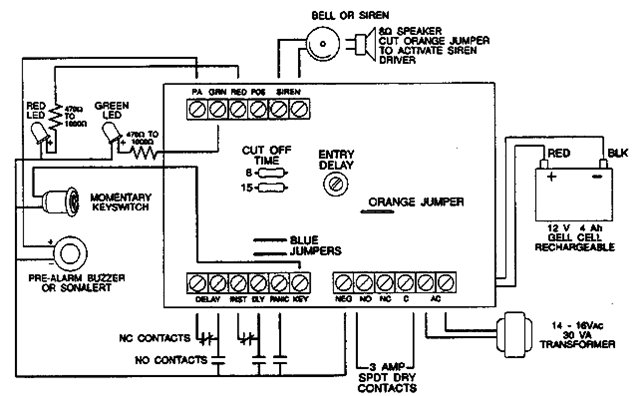
12V/1.5A Residential AlarmCircuit
The following alarm circuit is designed with features that may be suitable for residential and commercial alarm system applications. It has a 12V and 1.5A regulated power supply. Furthermore, this residential alarm circuit also includes a delay circuit, a 24-hour...
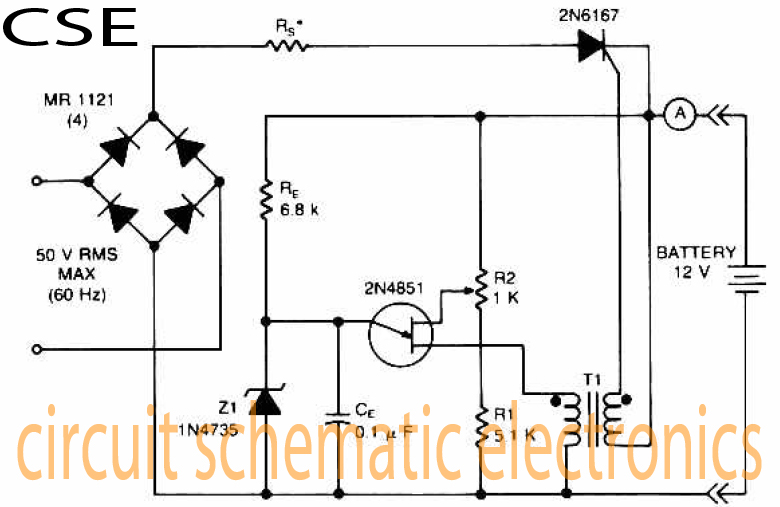
Variable charger circuit Schematic Diagram
The accumulator charger circuit must provide a voltage that matches the specifications of the batteries being charged. For a 12-volt accumulator, the output voltage should not exceed 12 volts, nor should it fall significantly below this threshold. Failure to maintain...
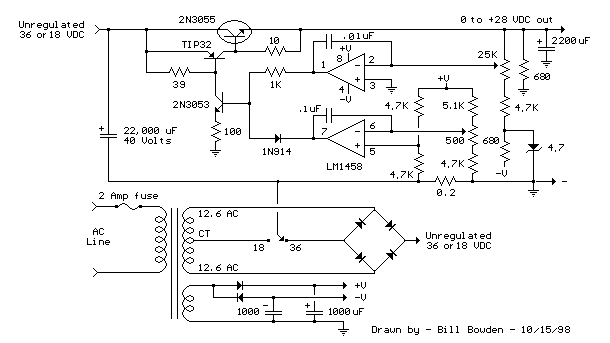
Current and Variable Voltage Power Supply
Another adjustment of application operational amplifiers to adapt a power supply is apparent below. The power supply requires an additional adjustment to supply the op-amps with a bipolar voltage (+/- 8 volts), and the negative voltage is also used to...
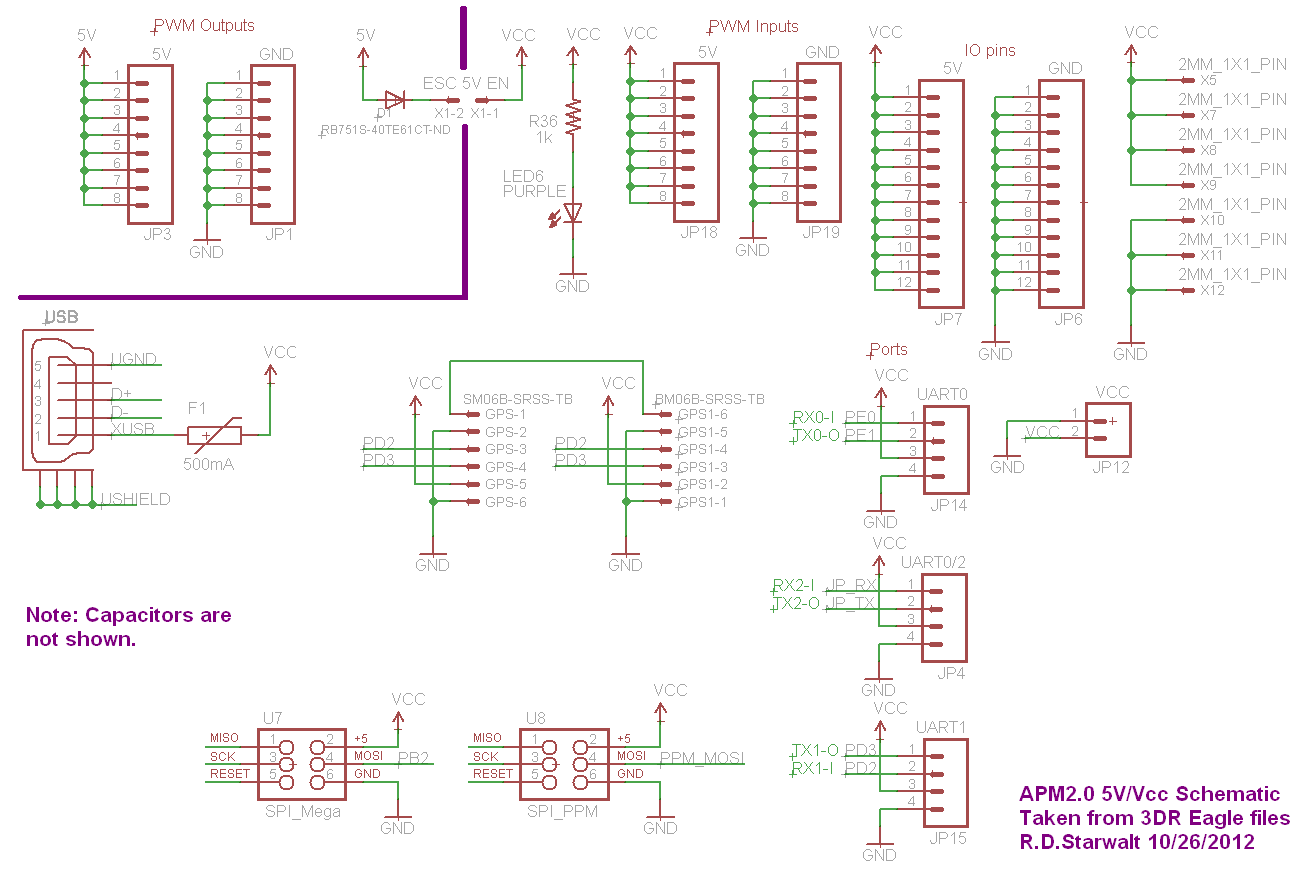
APM2.0 5V/Vcc Schematic
The PWM Output section has been separated into the upper left corner, delineated by a heavy purple line that is bridged by jumper JP1 on the APM2.0. This design choice highlights that diode D1 allows current to pass through JP1,...
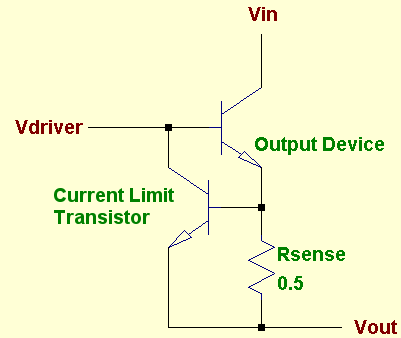
protected
A voltage regulator is designed to provide a fixed voltage to any load. This inherently means it must supply the necessary current through that load to satisfy Ohm's Law, I = V/R. As the resistance (R) approaches zero, such as...
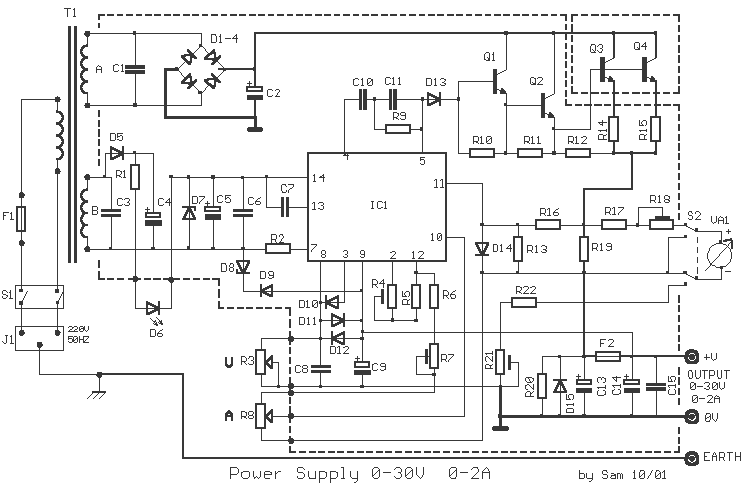
Power Supply 0-30V / 0-2A
The basic requirements for a laboratory power supply are to provide the necessary voltages and currents with low output resistance, low noise, minimal ripple, and good stabilization. These requirements are addressed within the circuit design. Many power supplies incorporate electronic...
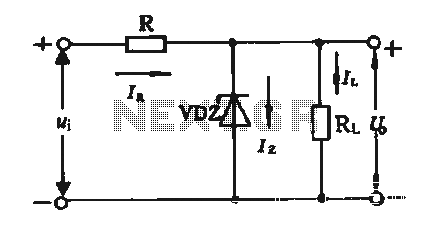
Regulator circuit silicon resistor formed
The simple voltage regulator circuit consists of a silicon regulator and a resistor. It is designed to rectify and filter DC voltage, as illustrated in the accompanying figure. The voltage regulator is connected in parallel with the load, and the...
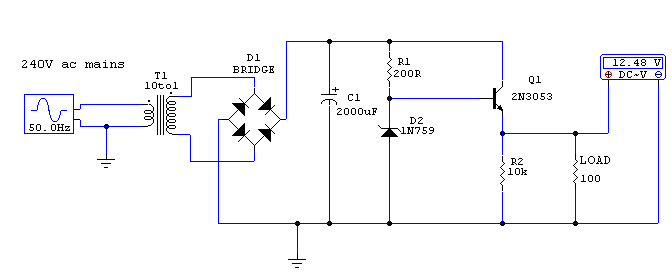
Regulated 12 Volt Supply
This circuit utilizes a 13-volt zener diode (D2) for voltage regulation. Approximately 0.7 volts are dropped across the base-emitter junction of the transistors, resulting in a higher current output of 12.3 volts. The circuit is capable of supplying loads up...