


CO2 gas shielded arc welding power supply electromagnetic vibration circuit
#welding
#electromagnetic
#CO2
#arc welding
#vibration circuit
#power supply
#gas shielded
#industrial
#high voltage
#electrical
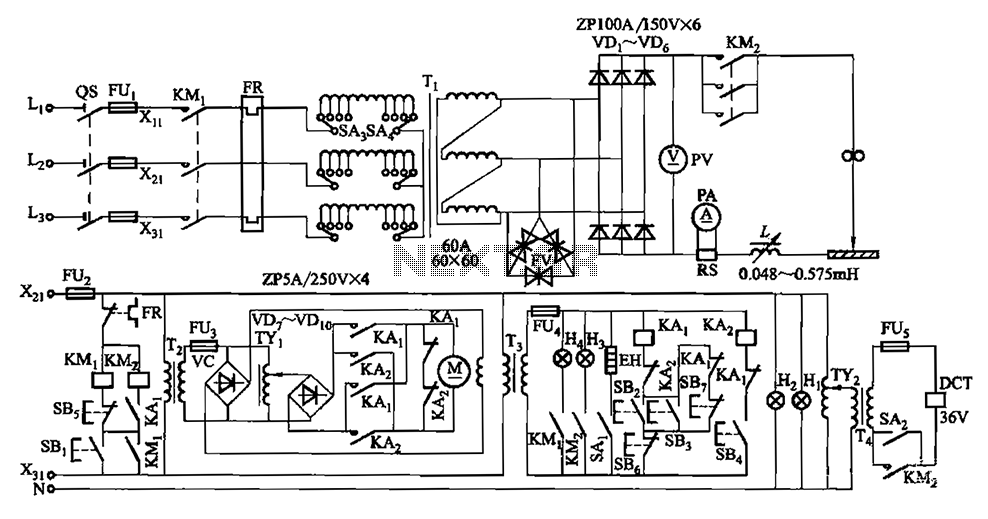
Description: CO2 gas shielded arc welding power supply electromagnetic vibration circuit is commonly used in farm machinery repair. The maximum arc voltage is 30V, with a maximum welding current of 300A. The wire feed speed ranges from 0 to 12 m/min (with continuous variable speed). The vibration frequency is 100 times per second, and the vibration amplitude ranges from 0 to 0.5 mm. The reactor adjustment range of the sub-block is from 0.048 to 0.575 mH. The circuit is depicted in Figure 9. The vibration welding power supply consists of a main circuit (including welding transformer Ti, rectifier bridge VDi ~ VDs, etc.) and a control circuit (which encompasses the main control, wire feed speed control, and vibration amplitude control circuit).
The CO2 gas shielded arc welding power supply incorporates an electromagnetic vibration circuit that enhances the welding process by introducing controlled vibrations. This method is particularly beneficial in applications such as farm machinery repair, where robust and durable welds are required.
The power supply is designed to operate with a maximum arc voltage of 30V and can deliver a peak welding current of 300A, providing sufficient energy for effective welding operations. The wire feed mechanism is adjustable, allowing for a continuous speed range from 0 to 12 m/min, facilitating precise control over the material deposition rate during the welding process.
Vibration plays a crucial role in this welding technique, with a frequency set at 100 Hz and an amplitude adjustable between 0 and 0.5 mm. This controlled vibration aids in improving the quality of the weld by reducing the occurrence of defects and enhancing the penetration of the weld into the base materials.
The reactor component within the circuit features an adjustment range of 0.048 to 0.575 mH, which allows for fine-tuning of the electromagnetic properties to optimize performance based on specific welding requirements.
The circuit architecture includes a main circuit that consists of critical components such as the welding transformer (Ti) and a rectifier bridge (VDi ~ VDs), which convert the alternating current (AC) into direct current (DC) suitable for the welding process. Additionally, the control circuit is integral to the system, incorporating the main control unit, wire feed speed control, and vibration amplitude control, ensuring that all parameters can be adjusted in real-time for optimal welding conditions.
This comprehensive design of the CO2 gas shielded arc welding power supply with electromagnetic vibration capabilities makes it a versatile tool for achieving high-quality welds in demanding agricultural environments. CO2 gas shielded arc welding power supply electromagnetic vibration circuit C02 gas shielded arc welding electromagnetic vibration, vibration welding abbreviation commonly used in farm machinery repair. The maximum arc voltage of 30V, the maximum welding current is 300A, the wire feed speed is 0 ~ 12m/min (Ci stepless speed), the vibration frequency of 100 times/s, the vibration amplitude of 0-0,5 mm, reactor the adjustment range of sub-block 12, as 0.048-0, 575mH. 18 shows the circuit in Figure 9. Vibration welding power supply consists of main circuit (welding transformer Ti, rectifier bridge VDi ~ VDs, etc.), the control circuit (including the main control, wire feed speed control and vibration amplitude control circuit)
The CO2 gas shielded arc welding power supply incorporates an electromagnetic vibration circuit that enhances the welding process by introducing controlled vibrations. This method is particularly beneficial in applications such as farm machinery repair, where robust and durable welds are required.
The power supply is designed to operate with a maximum arc voltage of 30V and can deliver a peak welding current of 300A, providing sufficient energy for effective welding operations. The wire feed mechanism is adjustable, allowing for a continuous speed range from 0 to 12 m/min, facilitating precise control over the material deposition rate during the welding process.
Vibration plays a crucial role in this welding technique, with a frequency set at 100 Hz and an amplitude adjustable between 0 and 0.5 mm. This controlled vibration aids in improving the quality of the weld by reducing the occurrence of defects and enhancing the penetration of the weld into the base materials.
The reactor component within the circuit features an adjustment range of 0.048 to 0.575 mH, which allows for fine-tuning of the electromagnetic properties to optimize performance based on specific welding requirements.
The circuit architecture includes a main circuit that consists of critical components such as the welding transformer (Ti) and a rectifier bridge (VDi ~ VDs), which convert the alternating current (AC) into direct current (DC) suitable for the welding process. Additionally, the control circuit is integral to the system, incorporating the main control unit, wire feed speed control, and vibration amplitude control, ensuring that all parameters can be adjusted in real-time for optimal welding conditions.
This comprehensive design of the CO2 gas shielded arc welding power supply with electromagnetic vibration capabilities makes it a versatile tool for achieving high-quality welds in demanding agricultural environments. CO2 gas shielded arc welding power supply electromagnetic vibration circuit C02 gas shielded arc welding electromagnetic vibration, vibration welding abbreviation commonly used in farm machinery repair. The maximum arc voltage of 30V, the maximum welding current is 300A, the wire feed speed is 0 ~ 12m/min (Ci stepless speed), the vibration frequency of 100 times/s, the vibration amplitude of 0-0,5 mm, reactor the adjustment range of sub-block 12, as 0.048-0, 575mH. 18 shows the circuit in Figure 9. Vibration welding power supply consists of main circuit (welding transformer Ti, rectifier bridge VDi ~ VDs, etc.), the control circuit (including the main control, wire feed speed control and vibration amplitude control circuit)
switching power supply 2
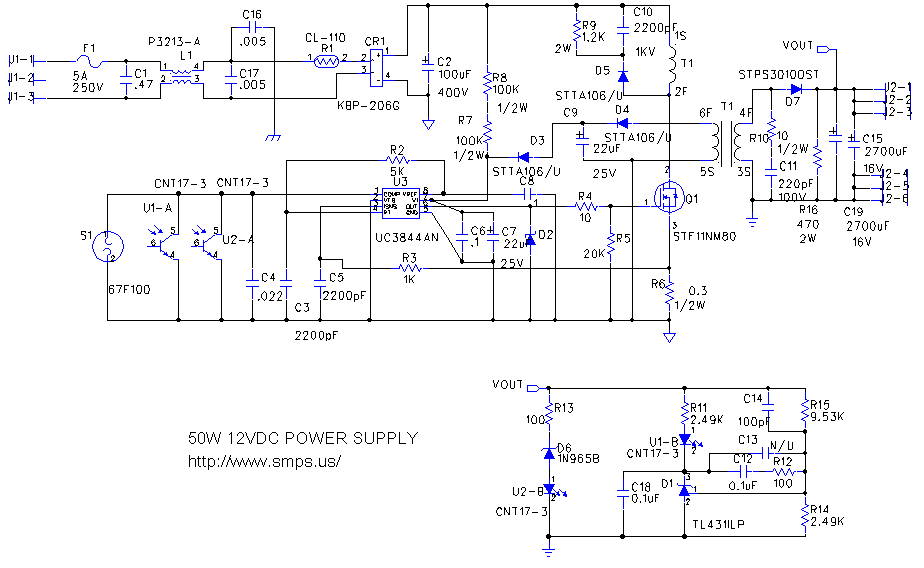
This circuit is designed to double nearly any DC input voltage while handling a substantial amount of current. For instance, it can work with input voltages ranging from 12 to 24V. With minor modifications, it can also provide any desired...
12KV High Voltage Generator
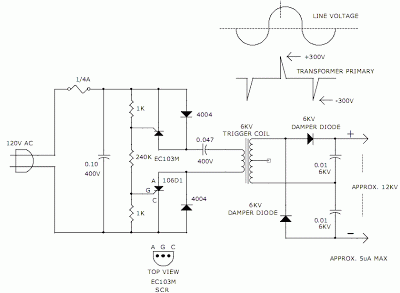
The hobby circuit described utilizes a unique method to generate approximately 12,000 volts with a current of about 5 microamperes. It employs two silicon-controlled rectifiers (SCRs) that form two pulse generator circuits. These SCRs discharge a 0.047 microfarad, 400-volt capacitor...
Power Supply for P.A. Class40
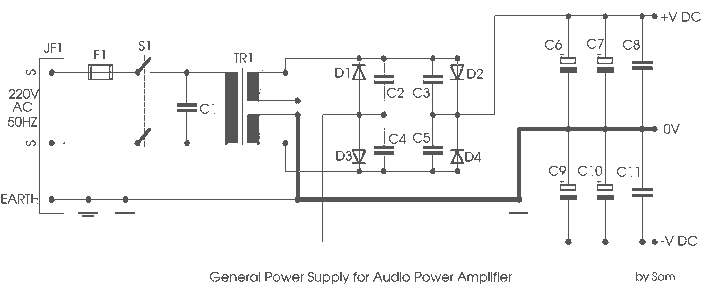
For its maximum result, the final stage of the amplifier should have the proper power supply, as the flowing currents are very high. A Class A amplifier requires attention. These are the rules for the power supply for the Class...
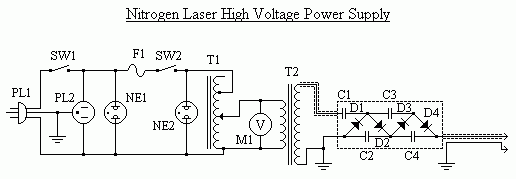
Nitrogen Laser High Voltage Power Supply
The schematic of the power supply is illustrated below. It operates using standard household power of 120VAC at a frequency of 50/60Hz, with an adjustable output that can reach up to 25kV or higher.
The power supply circuit is designed to...
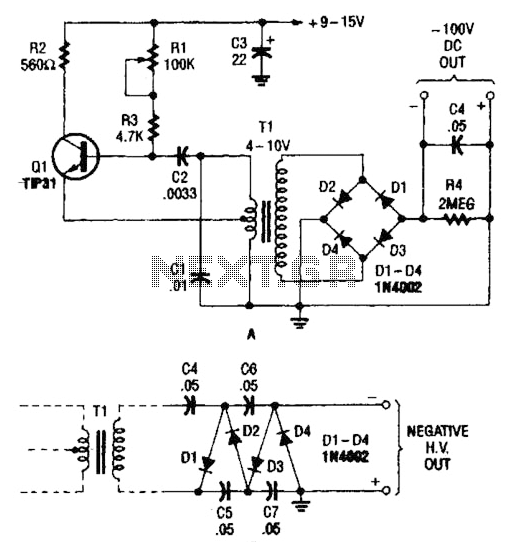
Hv Power Supply With 9 To 15Vdc Input Circuit
The combination of a Hartley oscillator and a step-up transformer can generate significant negative high voltage, particularly when the voltage output of the transformer is multiplied by the circuit in B.
The Hartley oscillator is a type of LC oscillator that...
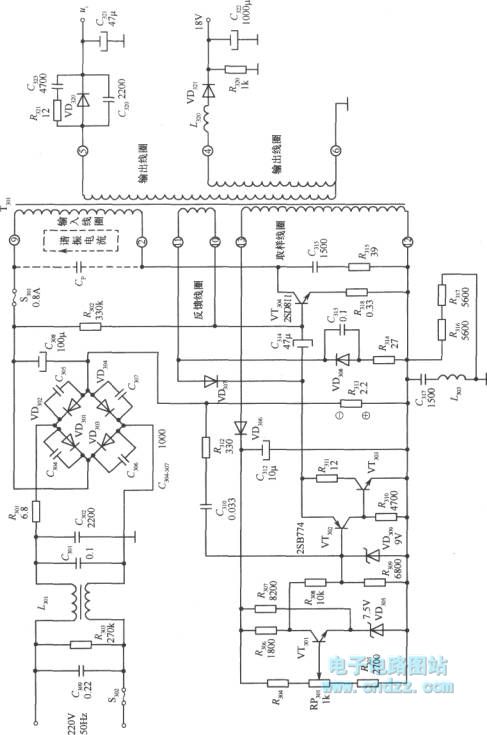
High voltage switching stabilized voltage supply circuit
A high voltage switching stabilized voltage supply circuit is illustrated in the diagram. This is the switching power supply for an 80P type color television. It utilizes auto-excitation and a PWM circuit. The output is isolated from the power system,...
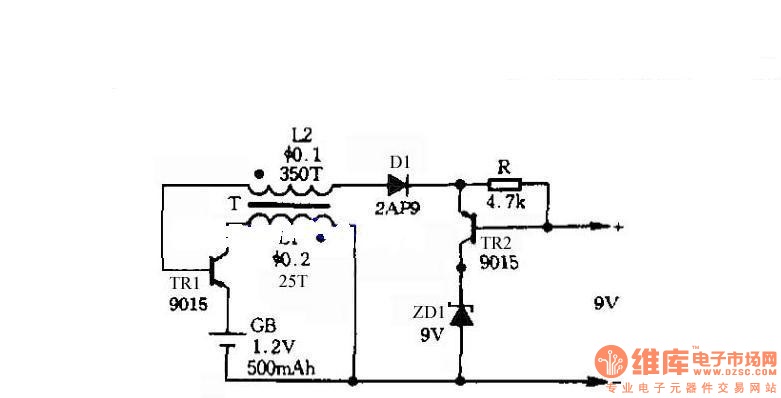
Self-control digital inverter power supply circuit diagram:1.2V rising to 9V
The circuit does not require a separate power switch or transformation to control the switches on the table. It offers advantages such as low power consumption, stability, reliability, and no impact on instrument accuracy. The transformer T in the circuit...
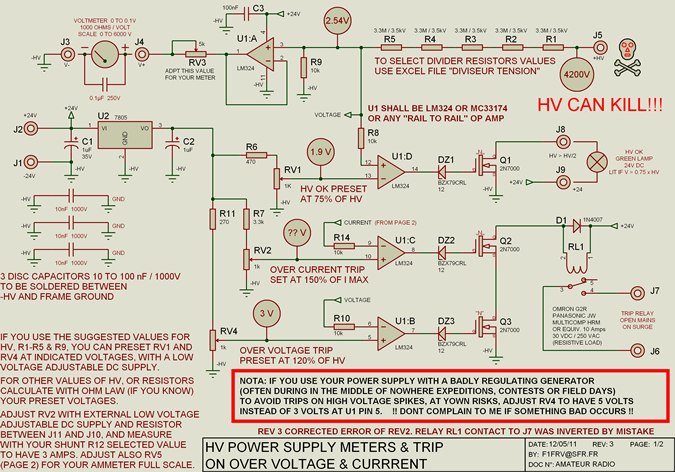
HV SUPPLY METERING & OVERVOLTAGE TRIP
High voltage resistors for the high voltage divider are SFERNICE or PHILIPS type VR37 (3.5 kV - 0.4 W). They are not expensive (even if they are sold in quantities of 25 or 50 units), and it is always useful...
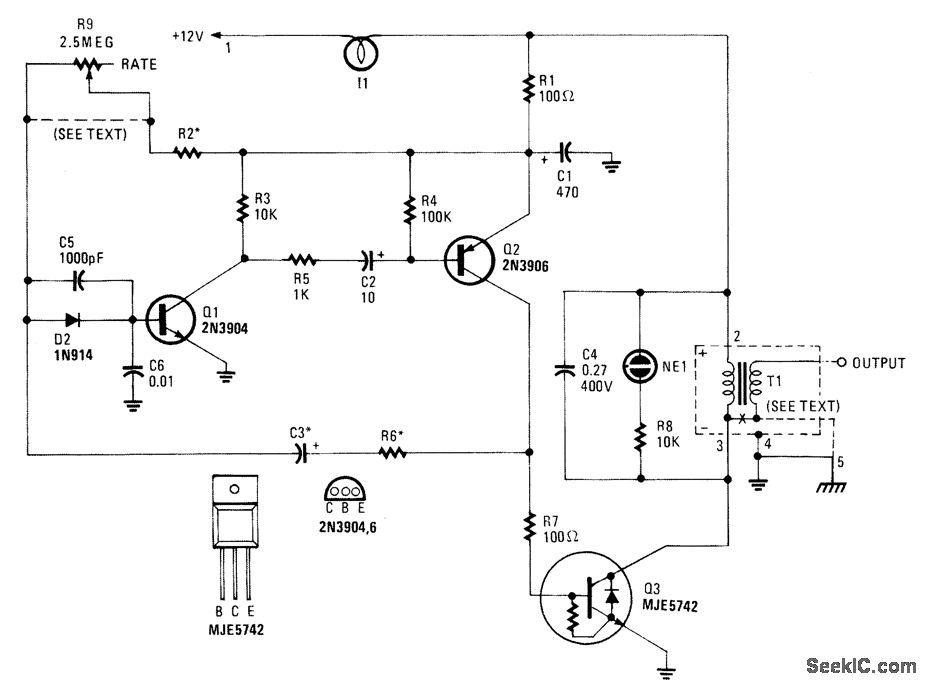
HIGH VOLTAGE PULSE SUPPLY
This high-voltage pulse supply generates pulses up to 30 kV. Transistors Q1 and Q2 create a multivibrator in conjunction with peripheral components R1 through R6 and capacitors C1, C2, C3, C5, C6, and diode D2. Resistor R9 adjusts the pulse...