


Designing your own gear
#flyback transformer
#high voltage
#television
#capacitor
#safety
#polarity
#dangerous
#electronics
#component handling
#voltage regulation
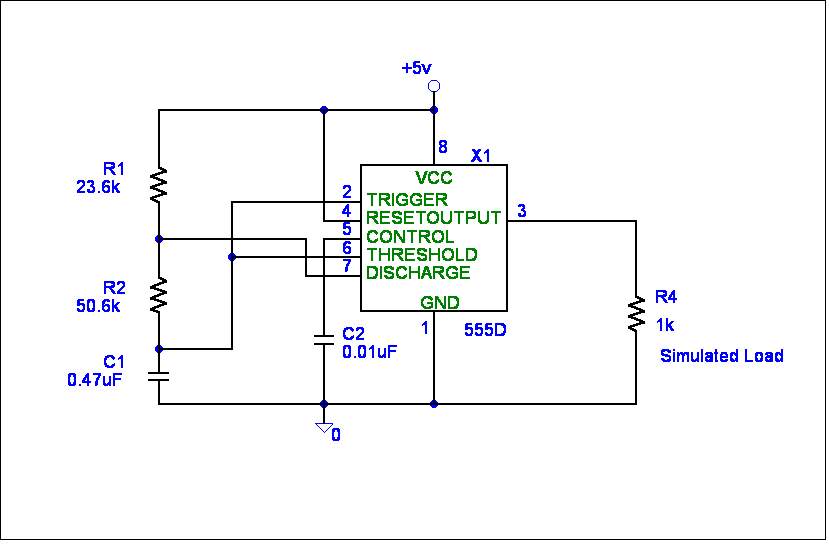
Description: Flyback transformers are commonly used in television sets and can generate up to 50,000 volts, which is sufficient to lift a 350-pound individual and throw them back 10 to 20 feet, potentially causing fatal injuries. The components are sensitive to polarity; reversing the polarity can damage the component. A capacitor connected with reversed polarity can smoke, catch fire, or even explode. In the event of a fire, it is crucial to use a fire extinguisher suitable for electrical fires. Water should never be used, as it can exacerbate the flames. Flammable materials, such as paper and liquids, should be stored in a metal container to keep them away from potential fires. It is important to ask questions when unsure about something, as this is a key aspect of learning. Cooking is also necessary while working, as it provides sustenance without the risk of injury from electrical conductors. Proper wire management is essential; color-coding wires helps differentiate between live and neutral wires. Red indicates positive or "hot" wires, while black denotes negative or "cold" wires. Learning to read a schematic is vital, as it provides a detailed representation of a device's components. There are numerous symbols used in schematics, and understanding them is crucial for effective electronic design. A printed circuit board (PCB) is often used to permanently mount these components.
Flyback transformers serve as essential components in various electronic devices, particularly in television sets, where they function to generate high voltage necessary for the operation of cathode ray tubes (CRTs) or other display technologies. These transformers operate by storing energy in a magnetic field during the flyback period and then releasing it as a high-voltage pulse. The output voltage can reach levels around 50,000 volts, which is significant enough to pose severe safety risks, including electric shock or fatal injury.
The sensitivity of electronic components to polarity is a critical consideration in circuit design. Reversing the polarity of components such as capacitors can lead to catastrophic failures, including smoking, fire, or explosion. Therefore, circuit designers must ensure that components are connected correctly to prevent damage.
Fire safety is paramount in any electronic work environment. In case of an electrical fire, it is essential to use an appropriate fire extinguisher rated for electrical fires. Water should never be used on electrical fires, as it can lead to further hazards. Instead, proper storage of flammable materials in metal containers can mitigate fire risks.
Color-coding wires is a best practice in electronics to ensure safety and clarity in circuit design. Red wires typically indicate positive voltage (hot), while black wires signify negative voltage (cold). This color-coding helps prevent accidental contact with live circuits, reducing the risk of electric shock.
Understanding schematics is vital for anyone involved in electronics. A schematic serves as a roadmap for the circuit, detailing the arrangement and function of various components. Mastery of the symbols used in schematics is necessary for effective communication and troubleshooting in electronic design. Printed circuit boards (PCBs) provide a reliable platform for mounting components, ensuring durability and consistency in electronic devices. Proper assembly and layout on a PCB can significantly enhance the performance and reliability of electronic circuits.Fly back transformers are commonly found in television sets and can put out 50, 000 volts, enough power to lift a 350 pound man up and throw him back 10-20 feet killing him instantly. Also the component`s are picky sometimes and reversing the polarity (positive in the negative and negative in the positive can break the component) a capacitor with reversed polarity can
smoke, catch fire and explode. same is true if you add too much electricty to it. 6) INCASE OF FIRE: get a fire extinguisher that is accepted for a electrical fire. if your new. your more likely to set something on fire. DO NOT USE WATER FOR THE LOVE OF GOD! NO WHISKEY AND CAPTAIN MORGAN WILL ONLY MAKE THE FLAMES RISE HIGHER! 7) FLAMABLES: paper, flamable liquids and stuff should be stored in a metal chest so that incase of fire, it`s away from the burning flames, unless your trying to burn your mad scientist lab on fire. or the house or the class room. 8) ASK QUESTIONS: why if you don`t know something it`s perfectly ok to ask questions, it`s how you learn.
you can also learn by actually burning things and starting fires but asking questions is safer. 10) COOKING: why, well you need to eat while you work, and need to know how to make hot pockets, it`s something you can make with one hand and not risk killing yourself. no need to you know hold a fork or anything that conducts electricity. and I`ve not tested the electric properties of melted cheese. 12) COLOR CORDINATE YOUR WIRES: why, so you don`t forget later on wich wires are live and dangerous vrs the ones on ground wich won`t hurt you.
RED is for wires that have positive electricty, or hot wires. BLACK is for wires that are cold or negatively charged. alternately you can use other colors to show WHAT HOT WIRES go to other circuits, and WHAT COLD WIRES go to other circuits. Moving on from safety, you need to know how to read a schematic. (a pin out for an entire device showing where all the whatsits doodads thinger majiggs whatchamacallits and gadgets and any other name you have for a component) Now there are tons of symbols thousands.
and if your unsure what it is already. then you might as well be looking at aramic. cause it don`t make much sence to you. So where to begin learning today`s aramic A big book of symbols isn`t too helpful for it takes ages to look it up. this is where google comes in handy. or you can go here. Well now we make it perminent. We mound it on a PCB (printed circuit board), my buddy m
Flyback transformers serve as essential components in various electronic devices, particularly in television sets, where they function to generate high voltage necessary for the operation of cathode ray tubes (CRTs) or other display technologies. These transformers operate by storing energy in a magnetic field during the flyback period and then releasing it as a high-voltage pulse. The output voltage can reach levels around 50,000 volts, which is significant enough to pose severe safety risks, including electric shock or fatal injury.
The sensitivity of electronic components to polarity is a critical consideration in circuit design. Reversing the polarity of components such as capacitors can lead to catastrophic failures, including smoking, fire, or explosion. Therefore, circuit designers must ensure that components are connected correctly to prevent damage.
Fire safety is paramount in any electronic work environment. In case of an electrical fire, it is essential to use an appropriate fire extinguisher rated for electrical fires. Water should never be used on electrical fires, as it can lead to further hazards. Instead, proper storage of flammable materials in metal containers can mitigate fire risks.
Color-coding wires is a best practice in electronics to ensure safety and clarity in circuit design. Red wires typically indicate positive voltage (hot), while black wires signify negative voltage (cold). This color-coding helps prevent accidental contact with live circuits, reducing the risk of electric shock.
Understanding schematics is vital for anyone involved in electronics. A schematic serves as a roadmap for the circuit, detailing the arrangement and function of various components. Mastery of the symbols used in schematics is necessary for effective communication and troubleshooting in electronic design. Printed circuit boards (PCBs) provide a reliable platform for mounting components, ensuring durability and consistency in electronic devices. Proper assembly and layout on a PCB can significantly enhance the performance and reliability of electronic circuits.Fly back transformers are commonly found in television sets and can put out 50, 000 volts, enough power to lift a 350 pound man up and throw him back 10-20 feet killing him instantly. Also the component`s are picky sometimes and reversing the polarity (positive in the negative and negative in the positive can break the component) a capacitor with reversed polarity can
smoke, catch fire and explode. same is true if you add too much electricty to it. 6) INCASE OF FIRE: get a fire extinguisher that is accepted for a electrical fire. if your new. your more likely to set something on fire. DO NOT USE WATER FOR THE LOVE OF GOD! NO WHISKEY AND CAPTAIN MORGAN WILL ONLY MAKE THE FLAMES RISE HIGHER! 7) FLAMABLES: paper, flamable liquids and stuff should be stored in a metal chest so that incase of fire, it`s away from the burning flames, unless your trying to burn your mad scientist lab on fire. or the house or the class room. 8) ASK QUESTIONS: why if you don`t know something it`s perfectly ok to ask questions, it`s how you learn.
you can also learn by actually burning things and starting fires but asking questions is safer. 10) COOKING: why, well you need to eat while you work, and need to know how to make hot pockets, it`s something you can make with one hand and not risk killing yourself. no need to you know hold a fork or anything that conducts electricity. and I`ve not tested the electric properties of melted cheese. 12) COLOR CORDINATE YOUR WIRES: why, so you don`t forget later on wich wires are live and dangerous vrs the ones on ground wich won`t hurt you.
RED is for wires that have positive electricty, or hot wires. BLACK is for wires that are cold or negatively charged. alternately you can use other colors to show WHAT HOT WIRES go to other circuits, and WHAT COLD WIRES go to other circuits. Moving on from safety, you need to know how to read a schematic. (a pin out for an entire device showing where all the whatsits doodads thinger majiggs whatchamacallits and gadgets and any other name you have for a component) Now there are tons of symbols thousands.
and if your unsure what it is already. then you might as well be looking at aramic. cause it don`t make much sence to you. So where to begin learning today`s aramic A big book of symbols isn`t too helpful for it takes ages to look it up. this is where google comes in handy. or you can go here. Well now we make it perminent. We mound it on a PCB (printed circuit board), my buddy m
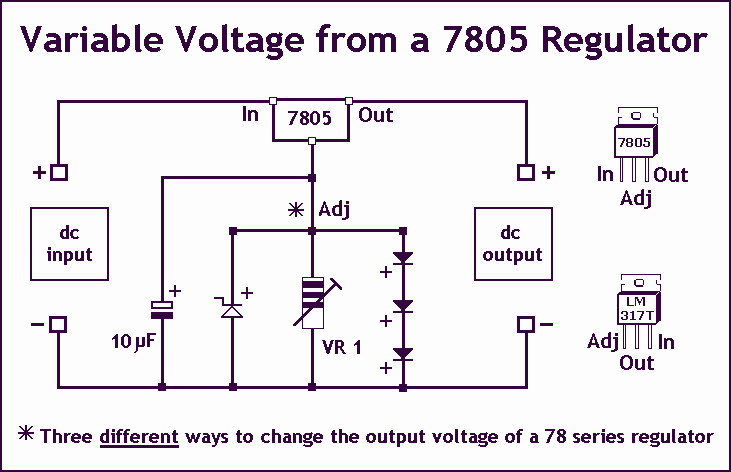
Variable Voltage Regulation
Controlling the output voltage from a regulator can be made variable in three ways:
1. Using a fixed reference zener diode to increase the output by the value of the zener
2. A variable resistor for variable output, note that...
own capacitor
The capacitor is composed of two sheets of aluminum foil. It is essential to keep the foil within the plastic packets and connect them using crocodile clips, ensuring that the clips do not touch each other. The initial frequency of...
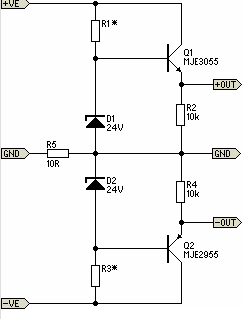
Simple Pre-Regulator
There will be many occasions when it is beneficial to utilize the P05 supply module sourced from a higher voltage supply. For instance, this could be advantageous when integrating balanced inputs.
The P05 supply module is designed to facilitate the conversion...
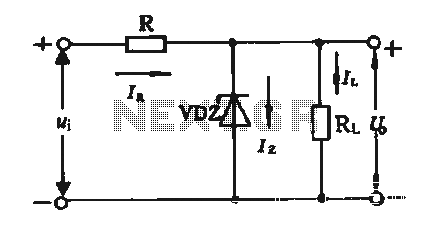
Regulator circuit silicon resistor formed
The simple voltage regulator circuit consists of a silicon regulator and a resistor. It is designed to rectify and filter DC voltage, as illustrated in the accompanying figure. The voltage regulator is connected in parallel with the load, and the...
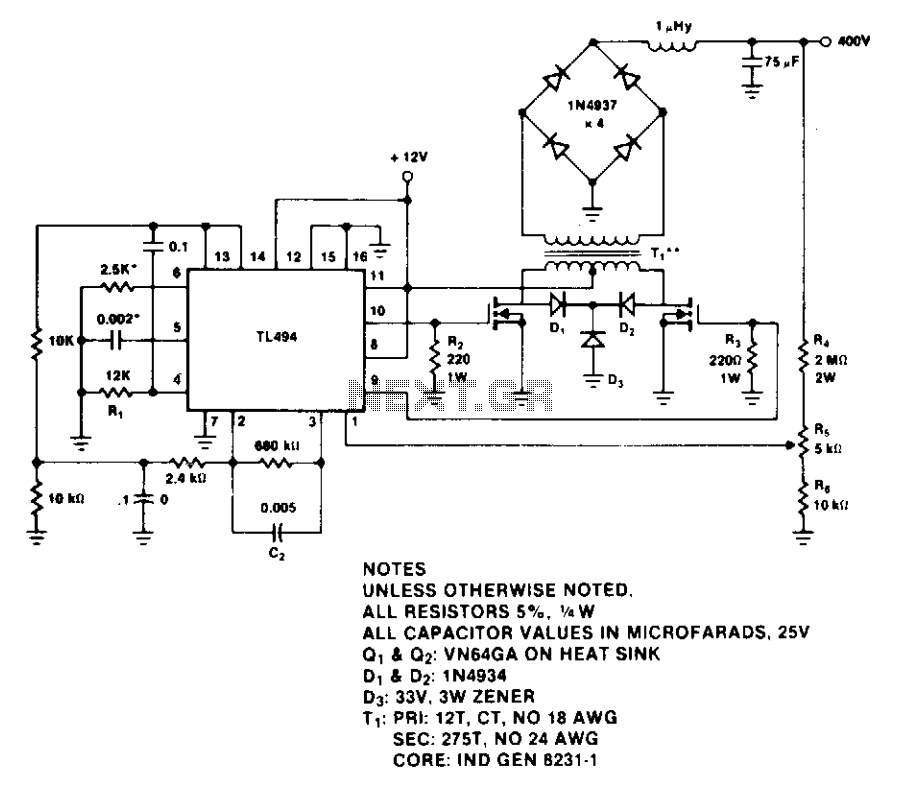
400-Volt 60-watt push-pull power supply
The design provides a regulated output of 400 V and 60 W. The TL494 switching regulator controls the operating frequency and output voltage regulation. Resistor R1 and capacitor C1 set the switching frequency, which is approximately 0.5 to 100 kHz...
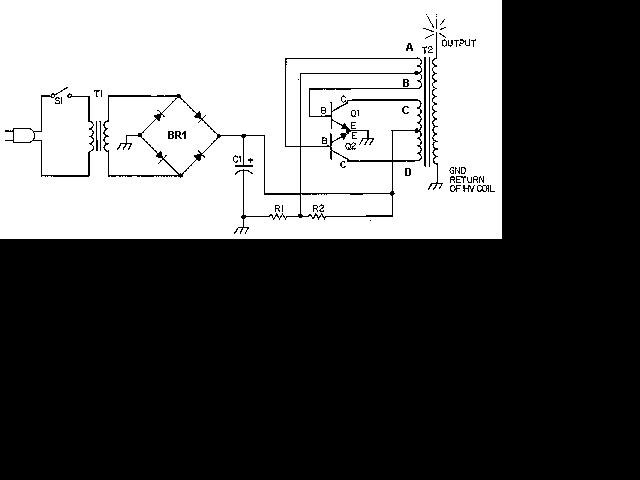
hv generator circuit
This circuit is designed to demonstrate high frequency and high voltage, capable of producing approximately 30kV, depending on the transformer utilized. It is cost-effective and straightforward to construct, primarily using a standard TV flyback transformer. This circuit can power lasers,...
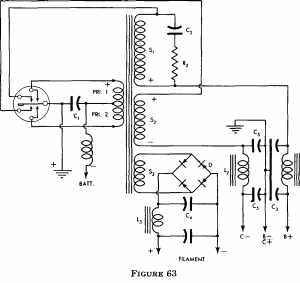
power supply design
The more one understands about any subject, the more interesting it becomes. As this article is read, it will be found that the subject of...
A comprehensive electronic schematic typically involves various components, each serving a specific function in the overall...
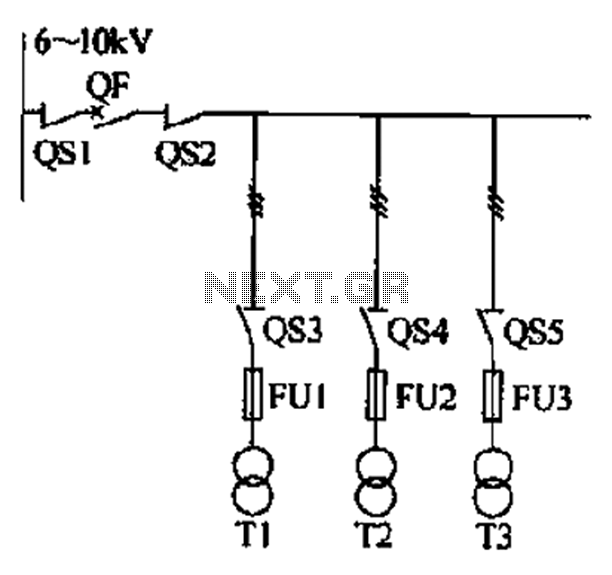
Trunk main wiring system diagram a formula
A 6-kV bus segment at the circuit breaker should be installed, but under certain circumstances, it may be equipped with an isolating switch, load switch, or isolating contact head group. These circumstances include: 1) when manual switching of the power...
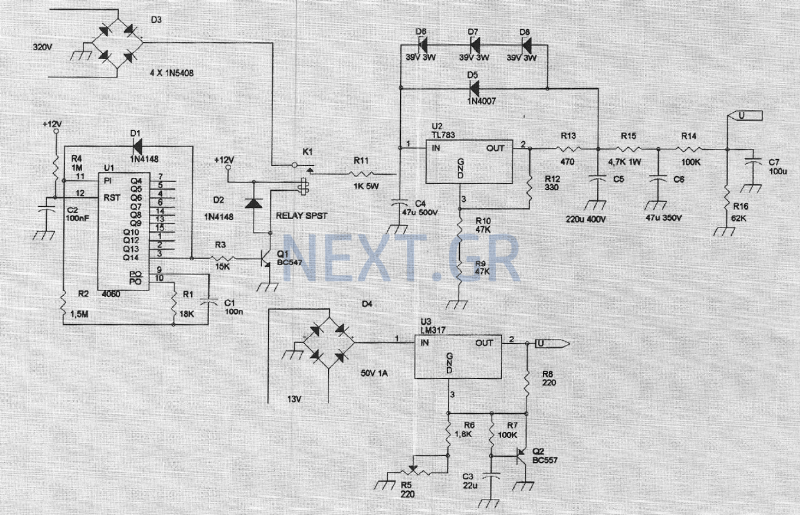
High Voltage Power Supply for Valve Preamplifiers
The amplifier feeding the final amplification stage operates with unstabilized voltage. The output stage, utilizing push-pull operation, exhibits significant rejection of the supply voltage. However, the earlier stages do not provide the same level of rejection, resulting in unwanted noise....