


LM4911 different power circuit conduction time recommended
#LM4911
#MOSFET
#shutdown control
#conduction time
#controller
#circuit design
#power management
#electronic components
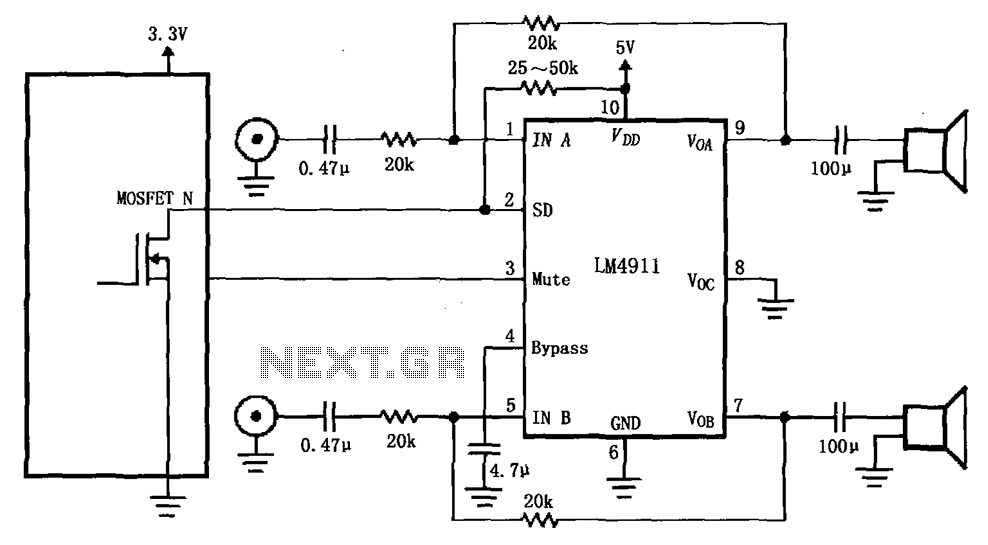
Description: The circuit for the LM4911 demonstrates different power conduction times. It utilizes a controller, specifically the MOSFET LM4911 shutdown control (SD) terminal, to regulate the on-time of the amplifier.
The LM4911 is a power amplifier designed for audio applications, providing high efficiency and low distortion. The circuit configuration allows for various power conduction times, which can be critical in applications requiring precise control over amplifier performance to optimize power consumption and thermal management.
In this circuit, the MOSFET serves as a switch that is controlled by the shutdown (SD) terminal of the LM4911. When the SD terminal is activated, it turns on the MOSFET, allowing current to flow through the amplifier. The duration for which the MOSFET remains on is regulated by the controller, ensuring that the amplifier operates within its specified parameters for optimal performance.
The on-time regulation is essential for applications where battery life is a concern, as it prevents the amplifier from drawing excessive current when not in use. This feature is particularly useful in portable audio devices, where power efficiency directly impacts battery longevity.
Additionally, the design may incorporate feedback mechanisms to monitor the output and adjust the on-time accordingly, further enhancing the amplifier's efficiency and performance. Proper layout and component selection are also critical in minimizing noise and ensuring stable operation across varying conditions.
Overall, the implementation of the LM4911 with a controlled MOSFET shutdown feature presents a robust solution for managing power in audio amplification applications. As shown for the LM4911 different power conduction time recommended circuit. This circuit uses a controller, use the controller of the MOSFET LM4911 shutdown control (SD) termi nal is controlled to achieve on-time regulation of the amplifier.
The LM4911 is a power amplifier designed for audio applications, providing high efficiency and low distortion. The circuit configuration allows for various power conduction times, which can be critical in applications requiring precise control over amplifier performance to optimize power consumption and thermal management.
In this circuit, the MOSFET serves as a switch that is controlled by the shutdown (SD) terminal of the LM4911. When the SD terminal is activated, it turns on the MOSFET, allowing current to flow through the amplifier. The duration for which the MOSFET remains on is regulated by the controller, ensuring that the amplifier operates within its specified parameters for optimal performance.
The on-time regulation is essential for applications where battery life is a concern, as it prevents the amplifier from drawing excessive current when not in use. This feature is particularly useful in portable audio devices, where power efficiency directly impacts battery longevity.
Additionally, the design may incorporate feedback mechanisms to monitor the output and adjust the on-time accordingly, further enhancing the amplifier's efficiency and performance. Proper layout and component selection are also critical in minimizing noise and ensuring stable operation across varying conditions.
Overall, the implementation of the LM4911 with a controlled MOSFET shutdown feature presents a robust solution for managing power in audio amplification applications. As shown for the LM4911 different power conduction time recommended circuit. This circuit uses a controller, use the controller of the MOSFET LM4911 shutdown control (SD) termi nal is controlled to achieve on-time regulation of the amplifier.
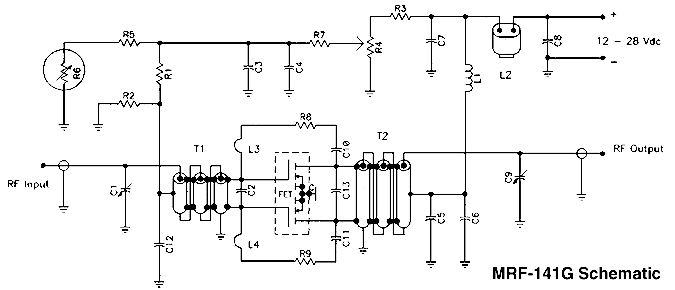
300 Watt MOSFET Broadband Amplifier Using MRF141G
The following segment provides the enhanced Motorola schematic for a typical application of the MRF141G, which includes parasitic stabilization features. The MRF141G is a broadband power RF MOSFET capable of delivering a conservatively rated 300 watts across the FM broadcast...
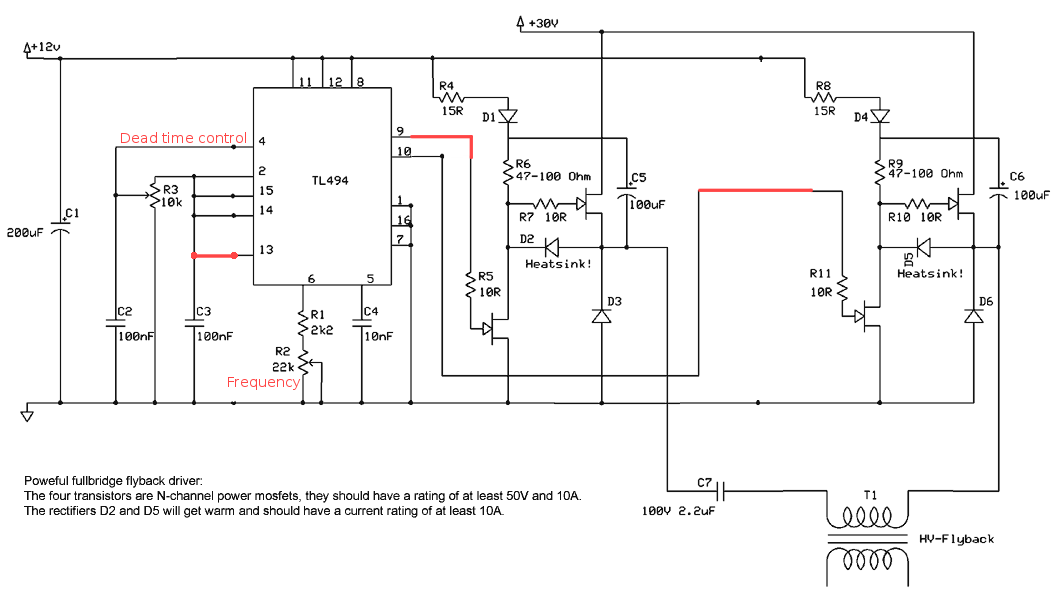
difference between half full bridge plasma speaker 2
The issue is that the MOSFET is overheating due to the circuit utilizing a half-bridge configuration without a dedicated MOSFET driver. Alternatives to the TC4429 IC are sought to mitigate the overheating problem. It is noted that while power MOSFETs...
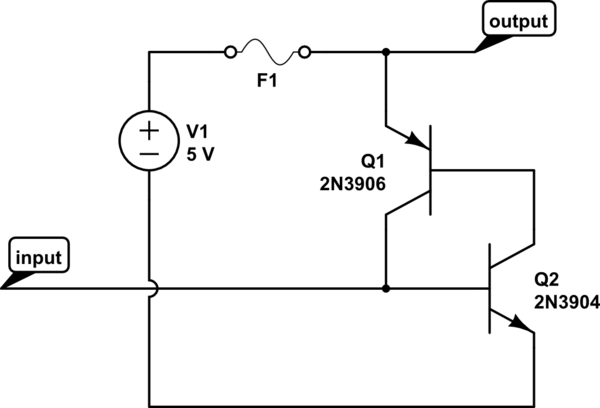
switches Default-on latch-off MOSFET power switch
The circuit should default to the "on" state when first connected. However, if a specific signal goes high for a brief duration (approximately 10 microseconds), the circuit should turn off and remain off. The challenge lies in achieving the "default...
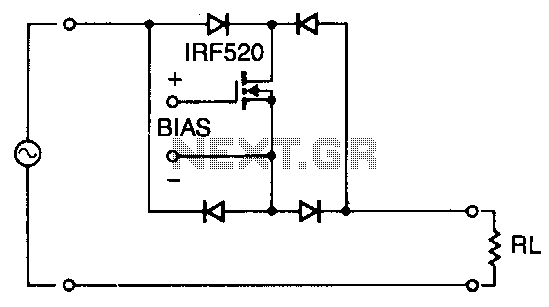
One-mospower-fet-analog-switch
Utilizing four diodes in an array enables the use of a single MOSPOWER transistor for analog switching. The current flow is managed by maintaining the source-base connection of the MOSFET towards the load. It is essential to select diodes that...
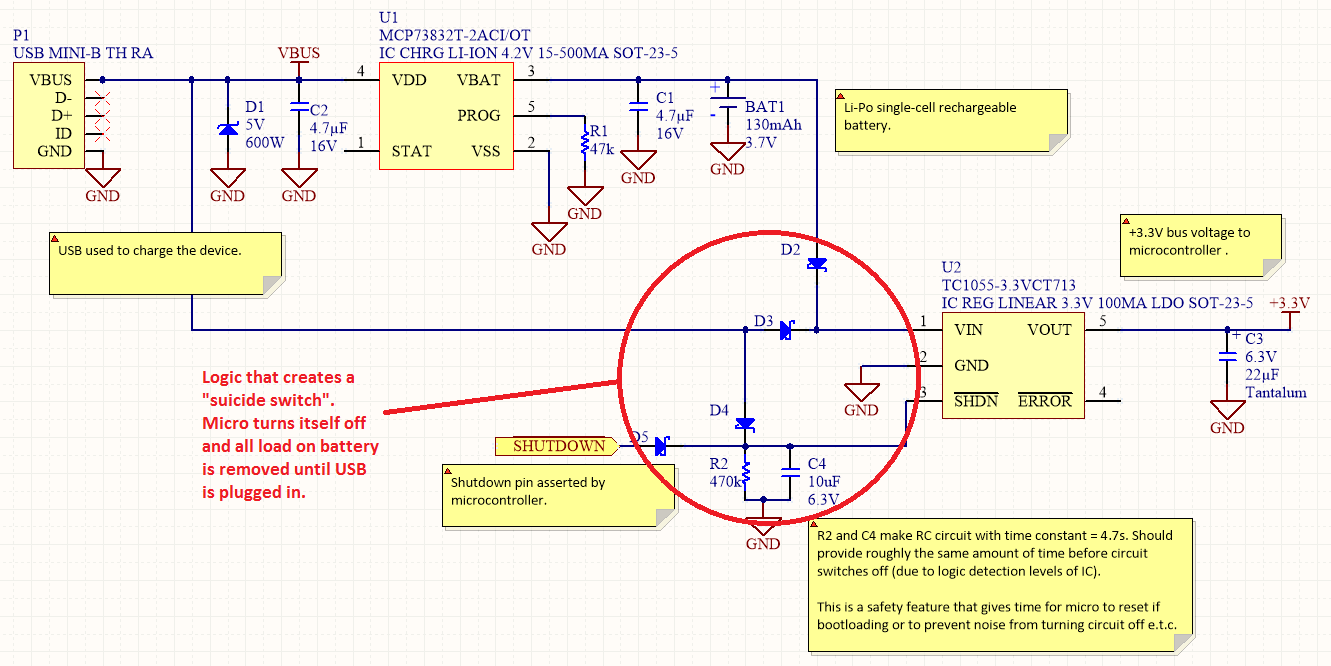
Power Management
Overview Disabling Sections of a Circuit The "Suicide Switch" Overview Power management is a significant design consideration for battery-powered devices.
Power management is a crucial aspect of circuit design, particularly in battery-powered applications where energy efficiency directly impacts the operational lifespan...
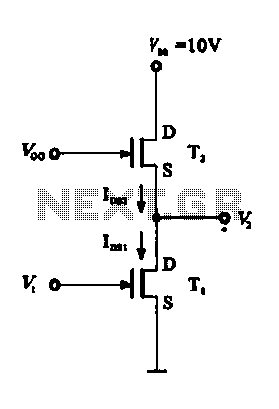
MOS FET inverter
A Field Effect Transistor (FET) can function as a linear amplifier, and it can also be utilized to create a logic gate circuit.
FETs are semiconductor devices that control the flow of current using an electric field. Due to their high...
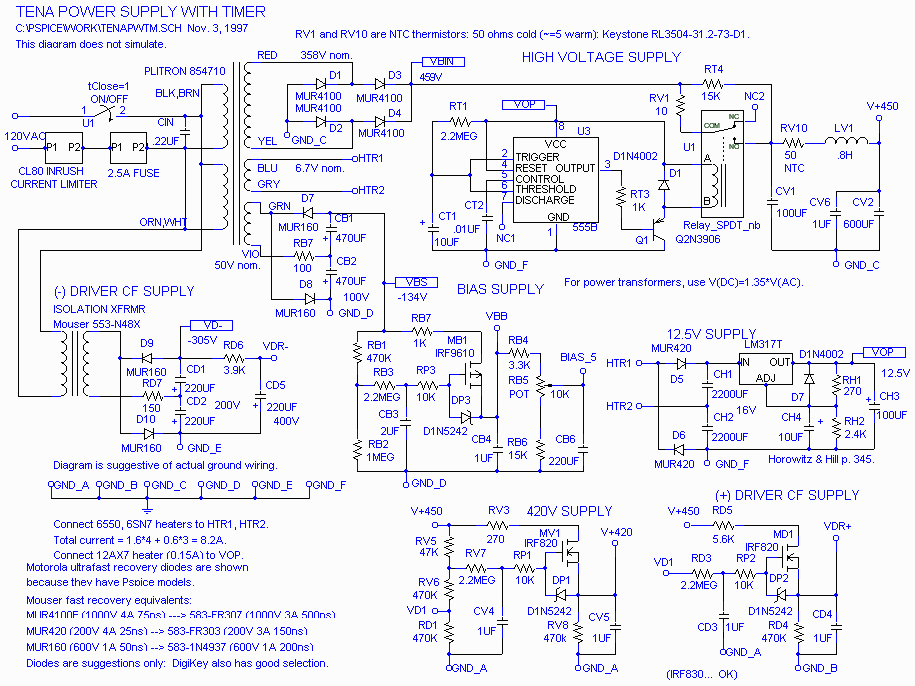
The Emperors New Amplifier
The power supply has been simplified. Power transformers and rectifiers have been omitted, and some components have been removed from the MOSFET voltage regulator circuits: 1N5242 zener diodes between the source and gate and 10k resistors in series with the...
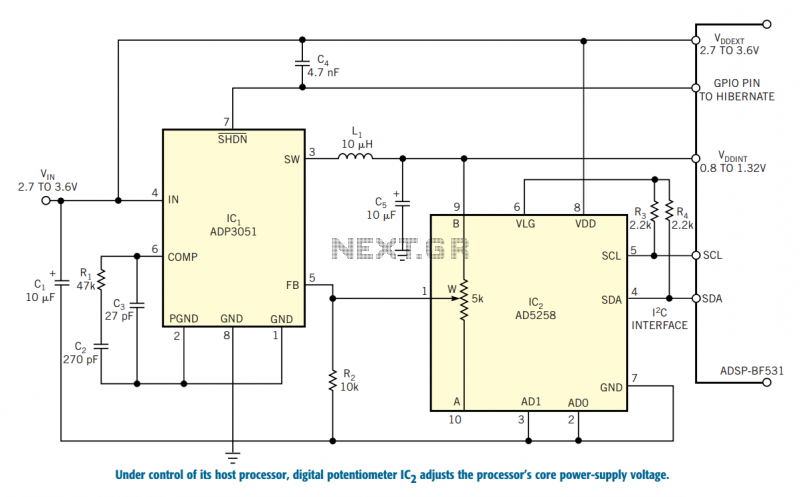
Control a processor`s power supply in real time
In battery-powered applications in which power management is key, a microprocessor may adjust its core voltage corresponding to an increase or a decrease in clock speed, allowing full processing power when necessary but not wasting excess power when idle. The...
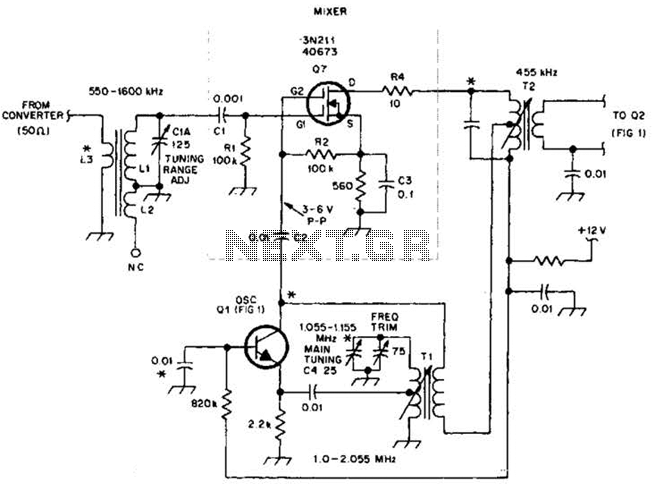
Mosfet Mixer-Oscillator Circuit For Am Receivers Circuit
This circuit is an enhanced front end for upgrading a transistor AM receiver. This front end is beneficial when the radio is intended to function as a tunable IF amplifier with shortwave converters.
The circuit described serves as a sophisticated enhancement...