


Off-line flyback regulator
#flyback regulator
#UC1842
#primary-side control
#feedback scheme
#transformer
#voltage regulation
#dc voltage
#error amplifier
#load regulation
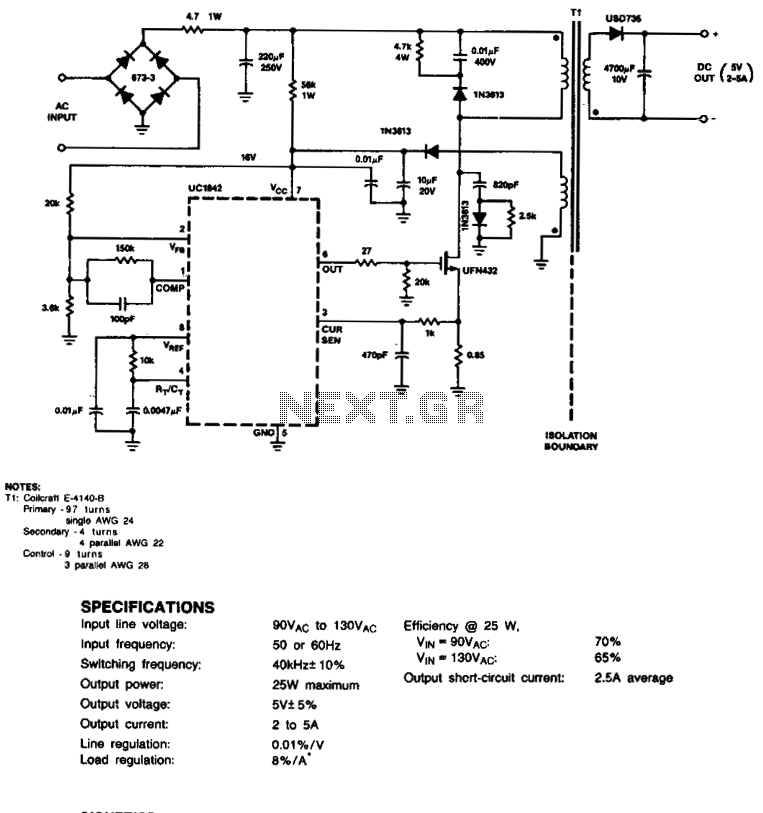
Description: This circuit employs a cost-effective feedback scheme where the direct current voltage generated from the primary-side control winding is monitored by the UC1842 error amplifier. Consequently, load regulation is influenced by the coupling between the secondary and control windings, as well as by the transformer leakage inductance. For applications that necessitate improved load regulation, the UC1901 Isolated Feedback Generator can be utilized to directly sense the output voltage.
The circuit is designed to provide efficient power management by utilizing a feedback mechanism that ensures stable output voltage despite variations in load conditions. The UC1842 error amplifier plays a crucial role in this process, receiving the voltage from the primary-side control winding and adjusting the output accordingly. The effectiveness of this feedback system is largely determined by the magnetic coupling between the secondary and control windings of the transformer, which can introduce variations in the output voltage due to leakage inductance.
In scenarios where enhanced load regulation is critical, the UC1901 Isolated Feedback Generator serves as an alternative solution. This device directly senses the output voltage, allowing for more accurate feedback and improved performance under varying load conditions. By integrating the UC1901 into the circuit, designers can achieve tighter control over the output voltage, leading to better overall system stability and efficiency.
The circuit layout should include proper placement of the UC1842 and UC1901, ensuring minimal interference from external noise sources. Additionally, attention must be paid to the design of the transformer, particularly its winding configuration, to optimize the coupling between the primary and secondary windings. Implementing adequate filtering and decoupling techniques will further enhance the performance and reliability of the circuit, making it suitable for a range of applications requiring precise voltage regulation.This circuit uses a low-cost feedback scheme in which the dc voltage developed from the primary-side control winding is sensed by the UC1842 error amplifier. Load regulation is therefore dependent on the jcoupling between secondary and control windings, and on transformer leakage inductance.
For applications requiring better load regulation, a UC1901 Isolated Feedback Generator can be used to directly sense the output voltage.
The circuit is designed to provide efficient power management by utilizing a feedback mechanism that ensures stable output voltage despite variations in load conditions. The UC1842 error amplifier plays a crucial role in this process, receiving the voltage from the primary-side control winding and adjusting the output accordingly. The effectiveness of this feedback system is largely determined by the magnetic coupling between the secondary and control windings of the transformer, which can introduce variations in the output voltage due to leakage inductance.
In scenarios where enhanced load regulation is critical, the UC1901 Isolated Feedback Generator serves as an alternative solution. This device directly senses the output voltage, allowing for more accurate feedback and improved performance under varying load conditions. By integrating the UC1901 into the circuit, designers can achieve tighter control over the output voltage, leading to better overall system stability and efficiency.
The circuit layout should include proper placement of the UC1842 and UC1901, ensuring minimal interference from external noise sources. Additionally, attention must be paid to the design of the transformer, particularly its winding configuration, to optimize the coupling between the primary and secondary windings. Implementing adequate filtering and decoupling techniques will further enhance the performance and reliability of the circuit, making it suitable for a range of applications requiring precise voltage regulation.This circuit uses a low-cost feedback scheme in which the dc voltage developed from the primary-side control winding is sensed by the UC1842 error amplifier. Load regulation is therefore dependent on the jcoupling between secondary and control windings, and on transformer leakage inductance.
For applications requiring better load regulation, a UC1901 Isolated Feedback Generator can be used to directly sense the output voltage.
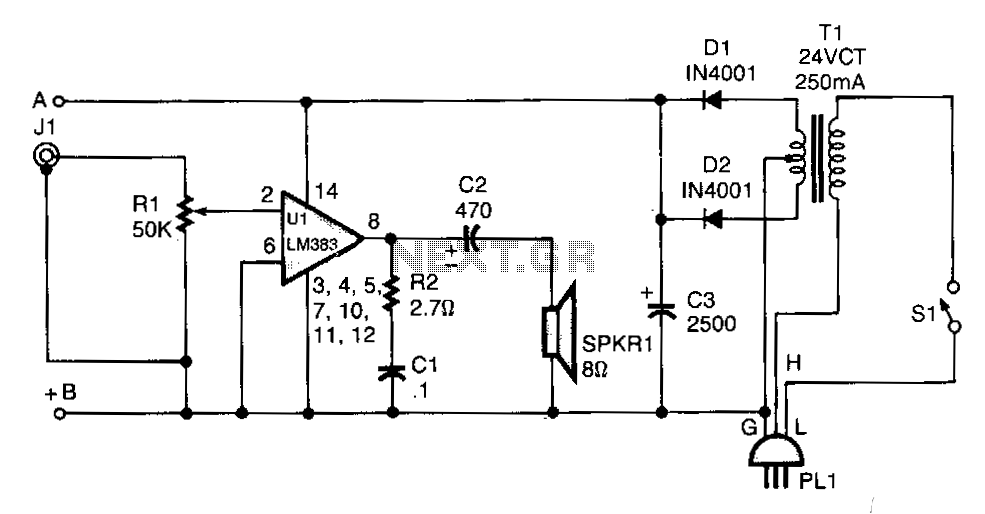
Line-operated-amplifier
T1 isolates the unit from the line and has a 24-V, center-tapped secondary. The output of the transformer is rectified by diodes D1 and D2 and filtered by capacitor C3 to provide 15 to 18 Vdc. The LM383 has built-in...
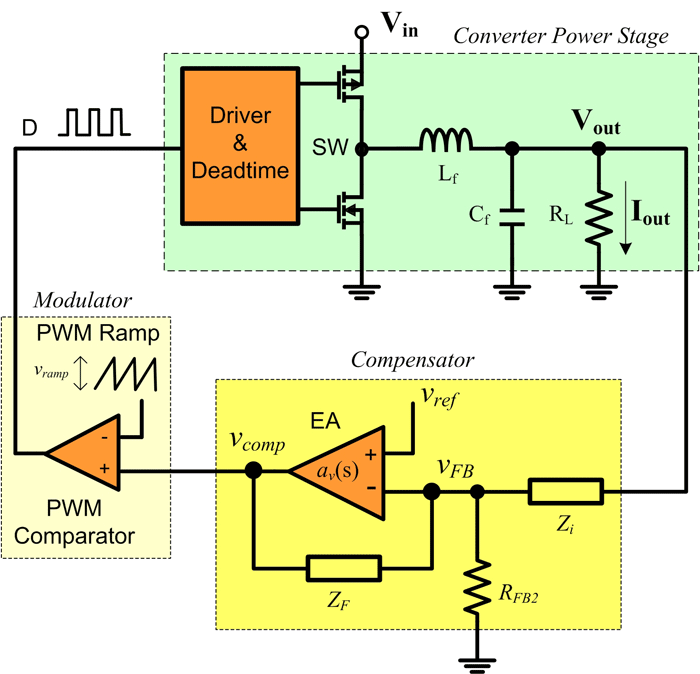
Error amplifier limitations in high-performance regulator applications
As power supply switching frequencies increase, higher loop crossover frequencies are necessary to keep pace with the escalating load transient slew rate demands and to reduce the number and size of filter components. For voltage-mode-controlled supplies, the voltage loop error...
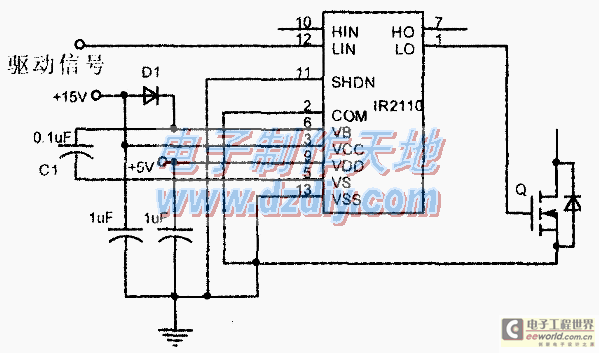
Design and making of the stabilized voltage supply of switch
Under the loading condition of the resistance, the output voltage (Uo) variable range is from 30V to 36V, with a maximum output current (Imax) of 2A. When the input voltage (U2) changes from 15V to 21V, the voltage regulation factor...
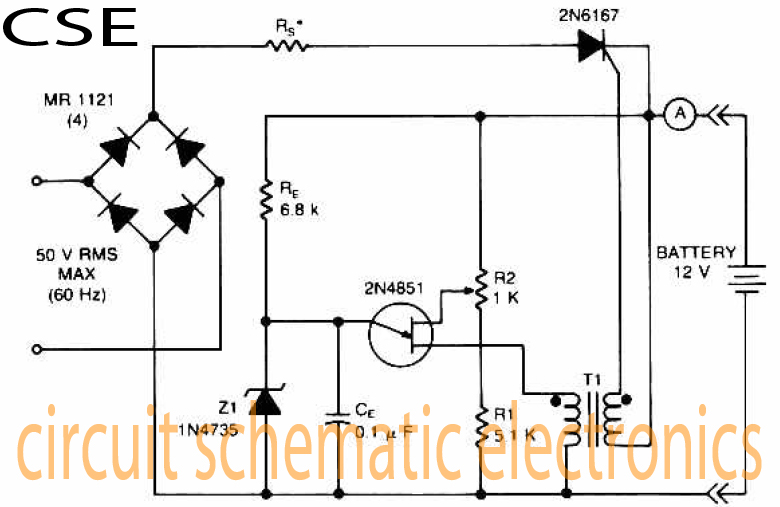
Variable charger circuit Schematic Diagram
The accumulator charger circuit must provide a voltage that matches the specifications of the batteries being charged. For a 12-volt accumulator, the output voltage should not exceed 12 volts, nor should it fall significantly below this threshold. Failure to maintain...
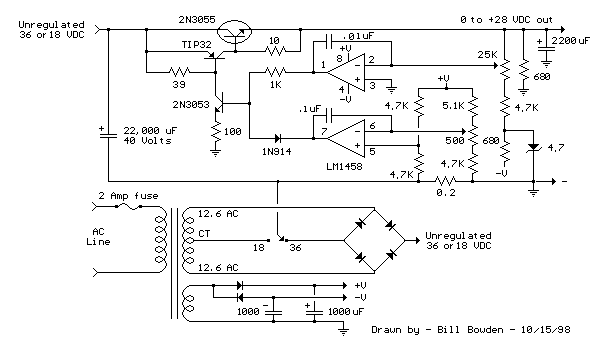
variable voltage and current power supply
An alternative method for utilizing operational amplifiers (op-amps) to regulate a power supply is illustrated below. The power transformer necessitates an additional winding to provide the op-amps with a bipolar voltage of +/- 8 volts. This negative voltage is also...
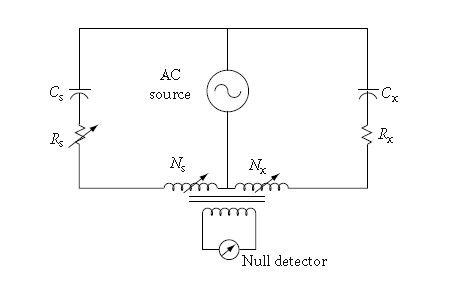
PF Test Equipment
A transformer ratio-arm bridge circuit is utilized as depicted in the simplified diagram of Figure 1. The circuit comprises a standard reference capacitor (CS) and the insulation under test (CX). A distinctive feature of the circuit is a specialized multi-winding...
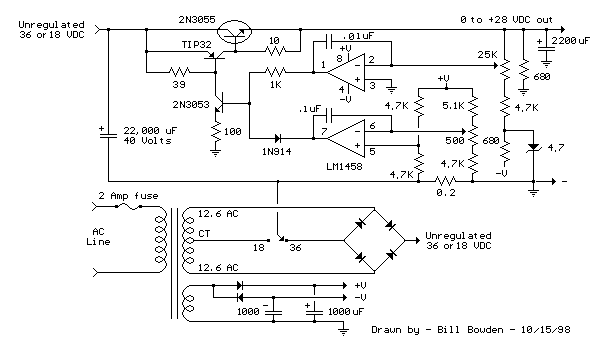
Current and Variable Voltage Power Supply
Another adjustment of application operational amplifiers to adapt a power supply is apparent below. The power supply requires an additional adjustment to supply the op-amps with a bipolar voltage (+/- 8 volts), and the negative voltage is also used to...
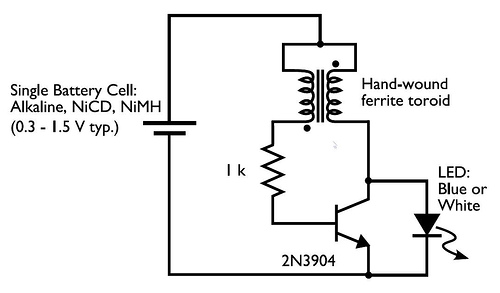
transformer Low voltage oscillator for joule thief
A transformer with two input leads and three output leads was used. An LED was connected to two of the output leads, and when a dead AA battery was connected to the input leads, the LED blinked for a brief...
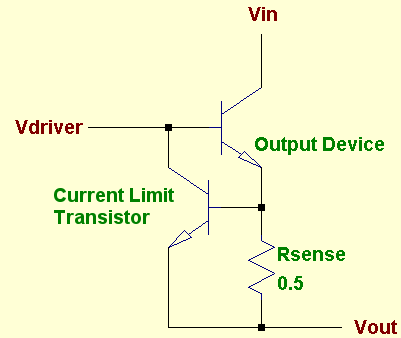
protected
A voltage regulator is designed to provide a fixed voltage to any load. This inherently means it must supply the necessary current through that load to satisfy Ohm's Law, I = V/R. As the resistance (R) approaches zero, such as...