


Protectors Circuit on SMPS (power supply) Schematic Diagram
#SMPS
#transistors
#feedback circuit
#voltage regulation
#over-voltage protection
#C3807
#A1015
#power transistors
#PCB safety
#output voltage

Description: The simplest example of a Switch Mode Power Supply (SMPS) utilizes three transistors (C3807, A1015, and power transistors). A common issue that arises is related to the feedback circuit, which can lead to an output voltage (B+) that exceeds safe limits, potentially endangering the entire system. This can result in failures such as capacitor explosions, PCB burns due to overheating, and short circuits in the horizontal transistor. Additionally, problems in the feedback circuit may damage the power regulator transistor due to overcurrent conditions, which can be exacerbated by incorrect resistor values in the secondary error detector circuit. A drop in input AC voltage can also lead to damage of the power regulator transistor due to overcurrent. Furthermore, if there is a short in the secondary power transistor, it can cause further overcurrent damage to the regulator.
The described SMPS circuit operates using three transistors: the C3807 and A1015, which serve as signal transistors, and a power transistor that handles the load. The feedback mechanism is crucial for maintaining the output voltage at a stable level. If the feedback circuit malfunctions, it can lead to an excessive output voltage, which poses a risk to the entire circuit. This situation can result in catastrophic failures, such as the explosion of electrolytic capacitors (elcos) or damage to the printed circuit board (PCB) due to overheating.
In particular, the feedback circuit's failure can cause the power regulator transistor to experience overcurrent conditions. This may occur if the resistor value in the secondary error detector circuit is not appropriately calibrated, leading to delayed feedback response. The resistor, typically rated at 47kΩ, plays a critical role in determining the stability and responsiveness of the feedback loop. If this value is incorrect, it can result in a slow response time, allowing the output voltage to rise to dangerous levels.
Additionally, fluctuations in the input AC voltage can further complicate the situation. A drop in input voltage can lead to increased current through the power regulator transistor, risking damage from overcurrent conditions. The design must account for such variations to ensure reliable operation.
Moreover, if there is a short circuit in the secondary power transistor, it can exacerbate the overcurrent situation, leading to additional damage to the power regulator. Therefore, it is essential to design robust protection mechanisms within the circuit, such as current limiting features or thermal shutdown capabilities, to safeguard against these potential failures.
In summary, careful consideration of the feedback circuit design, component selection, and protective measures is essential in the development of a reliable SMPS that minimizes the risk of component failure and ensures stable operation under varying load conditions.The simplest example SMPS which still uses 3 transistors (C3807, A1015 and power transistors) classic problem that often occurs is: -Problem in the feedback circuit can cause the output voltage B + over so that it can endanger the aircraft as a whole. For example elco erupted, pcb burnt burnt by over-heated, horizontal transistor short. - Problem on feedback circuits may cause power regulator transistor is damaged due to over current transistor (eg, due to the 47k resistor transistor circuit on the secondary error detector value is delayed). - If the input ac voltage drops can cause the power regulator transistor is damaged, due to over current transistor If the secondary there is a power transistor short can cause damage over current regulator.
The described SMPS circuit operates using three transistors: the C3807 and A1015, which serve as signal transistors, and a power transistor that handles the load. The feedback mechanism is crucial for maintaining the output voltage at a stable level. If the feedback circuit malfunctions, it can lead to an excessive output voltage, which poses a risk to the entire circuit. This situation can result in catastrophic failures, such as the explosion of electrolytic capacitors (elcos) or damage to the printed circuit board (PCB) due to overheating.
In particular, the feedback circuit's failure can cause the power regulator transistor to experience overcurrent conditions. This may occur if the resistor value in the secondary error detector circuit is not appropriately calibrated, leading to delayed feedback response. The resistor, typically rated at 47kΩ, plays a critical role in determining the stability and responsiveness of the feedback loop. If this value is incorrect, it can result in a slow response time, allowing the output voltage to rise to dangerous levels.
Additionally, fluctuations in the input AC voltage can further complicate the situation. A drop in input voltage can lead to increased current through the power regulator transistor, risking damage from overcurrent conditions. The design must account for such variations to ensure reliable operation.
Moreover, if there is a short circuit in the secondary power transistor, it can exacerbate the overcurrent situation, leading to additional damage to the power regulator. Therefore, it is essential to design robust protection mechanisms within the circuit, such as current limiting features or thermal shutdown capabilities, to safeguard against these potential failures.
In summary, careful consideration of the feedback circuit design, component selection, and protective measures is essential in the development of a reliable SMPS that minimizes the risk of component failure and ensures stable operation under varying load conditions.The simplest example SMPS which still uses 3 transistors (C3807, A1015 and power transistors) classic problem that often occurs is: -Problem in the feedback circuit can cause the output voltage B + over so that it can endanger the aircraft as a whole. For example elco erupted, pcb burnt burnt by over-heated, horizontal transistor short. - Problem on feedback circuits may cause power regulator transistor is damaged due to over current transistor (eg, due to the 47k resistor transistor circuit on the secondary error detector value is delayed). - If the input ac voltage drops can cause the power regulator transistor is damaged, due to over current transistor If the secondary there is a power transistor short can cause damage over current regulator.
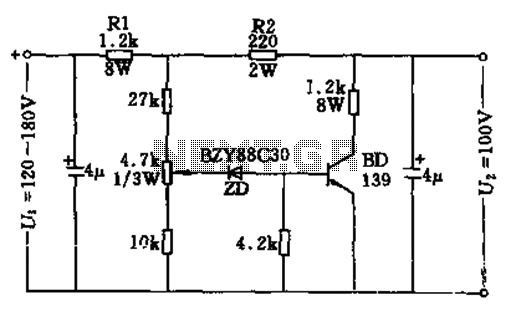
100v / 10ma regulator circuit
The circuit features no-load and short circuit protection mechanisms. To accommodate short circuit conditions, it is necessary to increase resistors R1 and R2 to allow for power dissipation; for example, R1 can be set to 1.2kΩ with a power rating...

psu
The Chameleon II Power Supply Circuits convert the raw input supply into stable voltage outputs necessary for the Chameleon interfaces. The outputs provided are +5V, +12V, and -12V.
The Chameleon II Power Supply Circuits are designed to ensure reliable operation of...
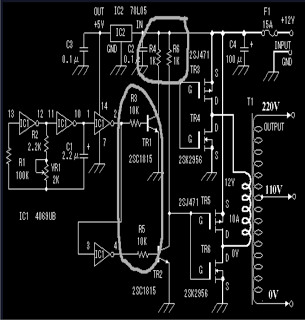
discussing output stage of square wave
The circuit includes 10K resistors at the bases of the transistors and 1K resistors at the collectors. It is essential to retain these components when relocating the transistors, as omitting the 10K resistors could result in transistor failure, and without...
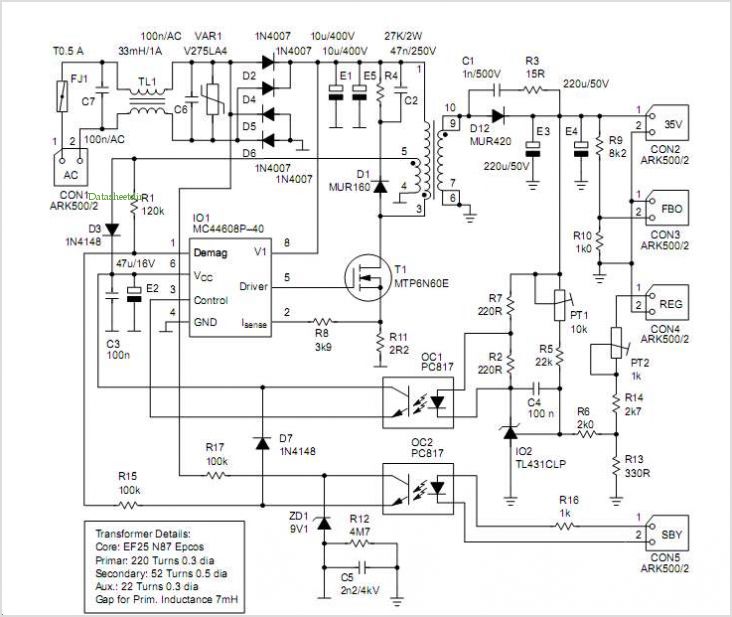
Mc44608 Smps Featuring Very Low Standby Power Consumption And Wide Range Output Voltage
MC44BS373CA: PLL Tuned UHF and VHF Audio Video High Integration Modulator MC44BS373CA The MC44BS373CA Audio and Video Modulator is designed for use in VCRs, set-top boxes, and similar devices. Manufactured by Freescale Semiconductor, Inc.
The MC44BS373CA is a highly integrated audio...
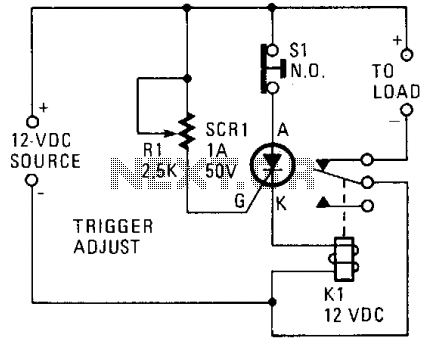
Over-voltage protection circuit
A silicon-controlled rectifier (SCR) is connected in parallel with the 12-V line and linked to a normally-closed 12-V relay, designated as K1. The gate circuit of the SCR is utilized to monitor the applied voltage. While the applied voltage remains...
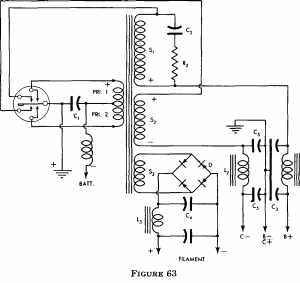
power supply design
The more one understands about any subject, the more interesting it becomes. As this article is read, it will be found that the subject of...
A comprehensive electronic schematic typically involves various components, each serving a specific function in the overall...
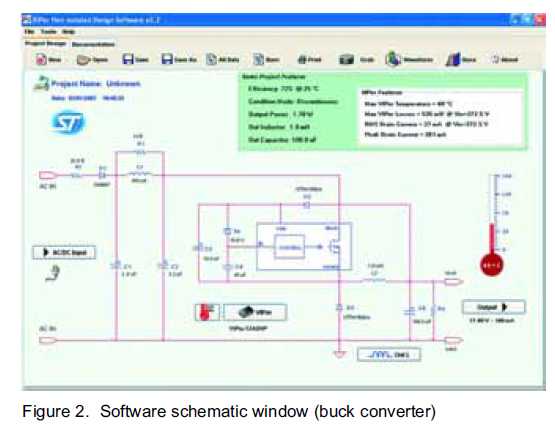
Design Software for Non Isolated SMPS
The new VIPer12A and VIPer22A software can be utilized to supply the numerous electronic components needed for home appliances. Various power supply topologies may be employed.
The VIPer12A and VIPer22A are integrated circuits designed for power supply applications, particularly suitable for...
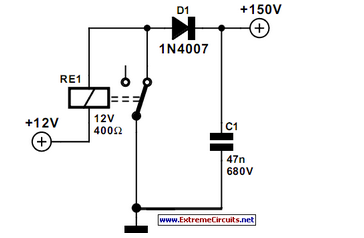
SMPSU With A Relay
Switched mode power supply units (SMPSUs) are popular but difficult to build oneself as well problematic when it comes to understanding their design principles.
Switched mode power supply units (SMPSUs) are widely utilized in various electronic applications due to their efficiency...
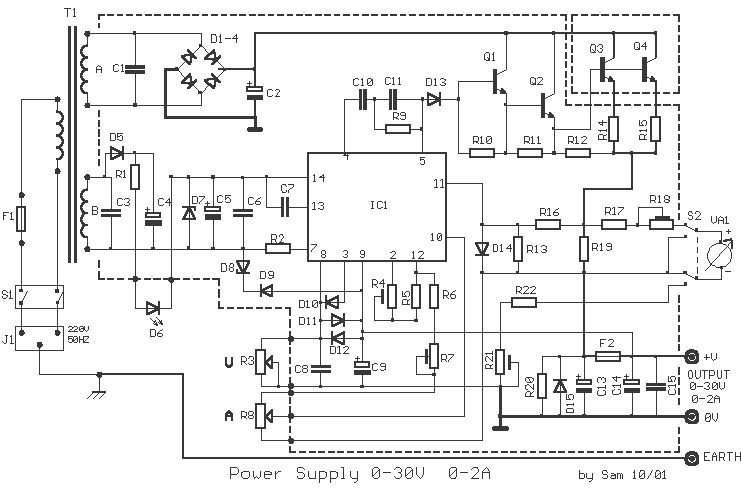
Power Supply 0-30V / 0-2A
The basic requirements for a laboratory power supply are to provide the necessary voltages and currents with low output resistance, low noise, minimal ripple, and good stabilization. These requirements are addressed within the circuit design. Many power supplies incorporate electronic...