


439.25Mhz Atv Downconverter Circuit
#ATV
#downconverter
#DSB
#VSB
#440MHz
#Amateur Television
#frequency conversion
#sideband
#repeaters
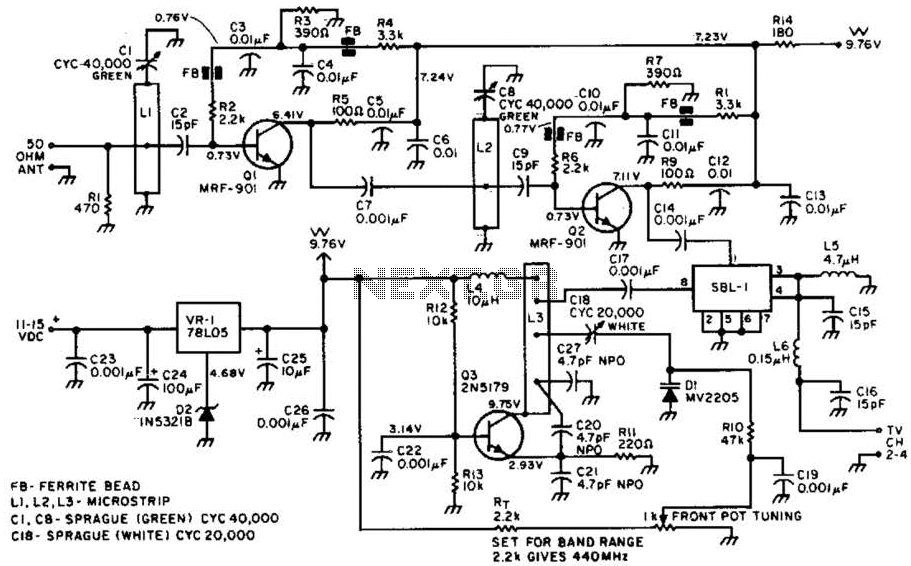
Description: Most ATV (Amateur Television) transmitters operate using a Double Sideband (DSB) signal, while commercial television stations utilize a Vestigial Sideband (VSB) signal. This distinction is leveraged in this converter to utilize the lower sideband, thereby reducing interference from repeaters operating within the 440 to 445 MHz frequency range. However, this method may encounter issues with VHF image responses from channel 29 if that channel is active in the vicinity.
The described converter for ATV transmitters is designed to optimize signal transmission by leveraging the characteristics of DSB and VSB signals. By focusing on the lower sideband, the converter minimizes potential interference from other signals, specifically those from repeaters that operate in the crowded 440-445 MHz band. This is particularly beneficial for amateur television operators who require a clean and stable transmission to ensure that their broadcasts are clear and free from unwanted noise.
To implement this converter effectively, it is essential to consider the components involved in the signal processing chain. Key elements typically include a mixer, which combines the input signal with a local oscillator signal to produce the desired lower sideband output. Filters are also critical in this design; they help eliminate unwanted frequencies and harmonics that could degrade the quality of the transmitted signal.
Additionally, attention must be paid to the potential for VHF image responses, particularly from channel 29. This channel operates in the VHF range and, if it is active in the area, it can create interference that may affect the performance of the ATV transmitter. To mitigate this risk, it may be necessary to incorporate additional filtering or frequency-selective components that can attenuate the signals from channel 29 while allowing the desired ATV frequencies to pass through with minimal loss.
Overall, the design of this converter should prioritize robustness against interference while maintaining signal integrity. Careful selection of components and circuit topology will ensure optimal performance for amateur television transmission, allowing operators to effectively broadcast their signals without significant degradation from external sources. Most ATV (Amateur Television) transmitters transmit a DSB signal and commercial television stations use a VSB (Vestigial Sideband) signal. This fact is made use of in this converter to use the lower sideband. This results in less interference from repeaters that occupy the 440- to 445-MHz portion of the band.
However, this approach might suffer from VHF image responses from channel 29, if that channel is active in your area.
The described converter for ATV transmitters is designed to optimize signal transmission by leveraging the characteristics of DSB and VSB signals. By focusing on the lower sideband, the converter minimizes potential interference from other signals, specifically those from repeaters that operate in the crowded 440-445 MHz band. This is particularly beneficial for amateur television operators who require a clean and stable transmission to ensure that their broadcasts are clear and free from unwanted noise.
To implement this converter effectively, it is essential to consider the components involved in the signal processing chain. Key elements typically include a mixer, which combines the input signal with a local oscillator signal to produce the desired lower sideband output. Filters are also critical in this design; they help eliminate unwanted frequencies and harmonics that could degrade the quality of the transmitted signal.
Additionally, attention must be paid to the potential for VHF image responses, particularly from channel 29. This channel operates in the VHF range and, if it is active in the area, it can create interference that may affect the performance of the ATV transmitter. To mitigate this risk, it may be necessary to incorporate additional filtering or frequency-selective components that can attenuate the signals from channel 29 while allowing the desired ATV frequencies to pass through with minimal loss.
Overall, the design of this converter should prioritize robustness against interference while maintaining signal integrity. Careful selection of components and circuit topology will ensure optimal performance for amateur television transmission, allowing operators to effectively broadcast their signals without significant degradation from external sources. Most ATV (Amateur Television) transmitters transmit a DSB signal and commercial television stations use a VSB (Vestigial Sideband) signal. This fact is made use of in this converter to use the lower sideband. This results in less interference from repeaters that occupy the 440- to 445-MHz portion of the band.
However, this approach might suffer from VHF image responses from channel 29, if that channel is active in your area.
Atv Video Sampler Circuit Circuit
This unit captures the ATV signal by sampling the transmission line with minimal insertion loss. It features two N connectors for input and output connections, and a BNC connector is utilized for the video output. The detected output is linked...
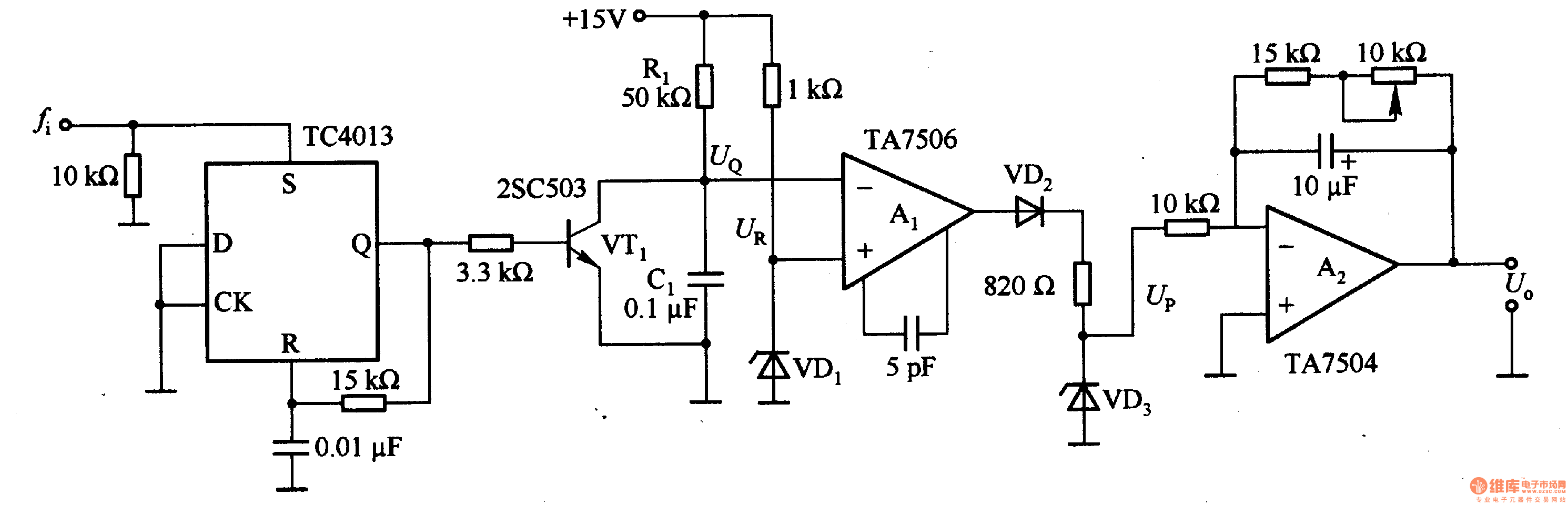
frequency conversion circuit composed of TC4013
This circuit can convert an input frequency ranging from 0 to 100 Hz into an output voltage of 0 to 10 V. It utilizes the TC4013 monostable multivibrator to shape and amplify the input pulse, which has a width of...
ATV Repeater System Exciter
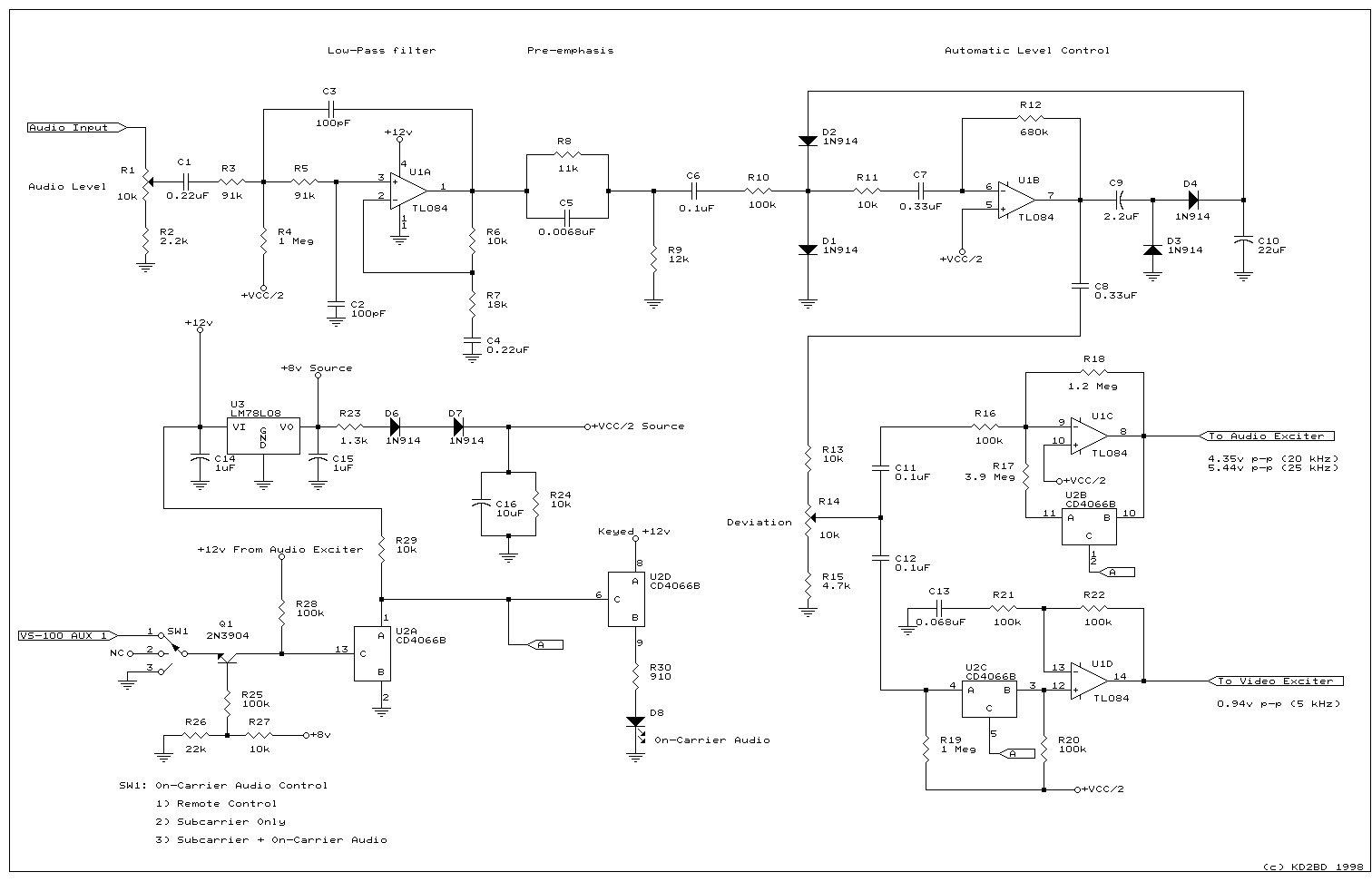
The ATV exciter described here uses a pair of Hamtronics model TA451 2-watt narrow-band FM voice transmitters to develop video and audio carriers on 439.250 MHz and 443.750 MHz. The TA451 is a single board, phase modulated exciter designed for...
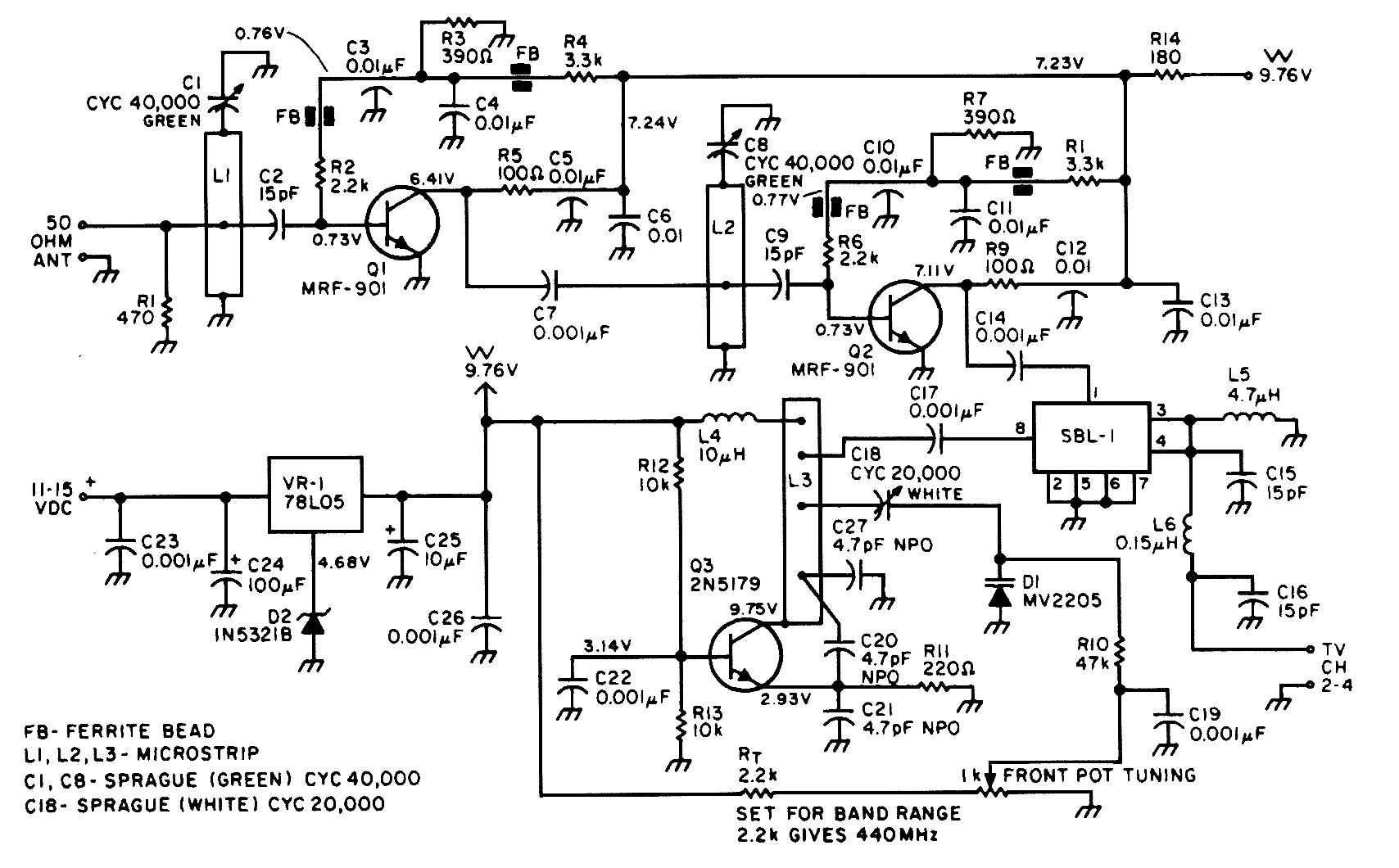
43925 MHz ATV DOWNCONVERTER
Most ATV (Amateur Television) transmitters use a DSB (Double Sideband) signal, while commercial television stations utilize a VSB (Vestigial Sideband) signal. This converter takes advantage of the lower sideband, leading to reduced interference from repeaters operating in the 440 to...
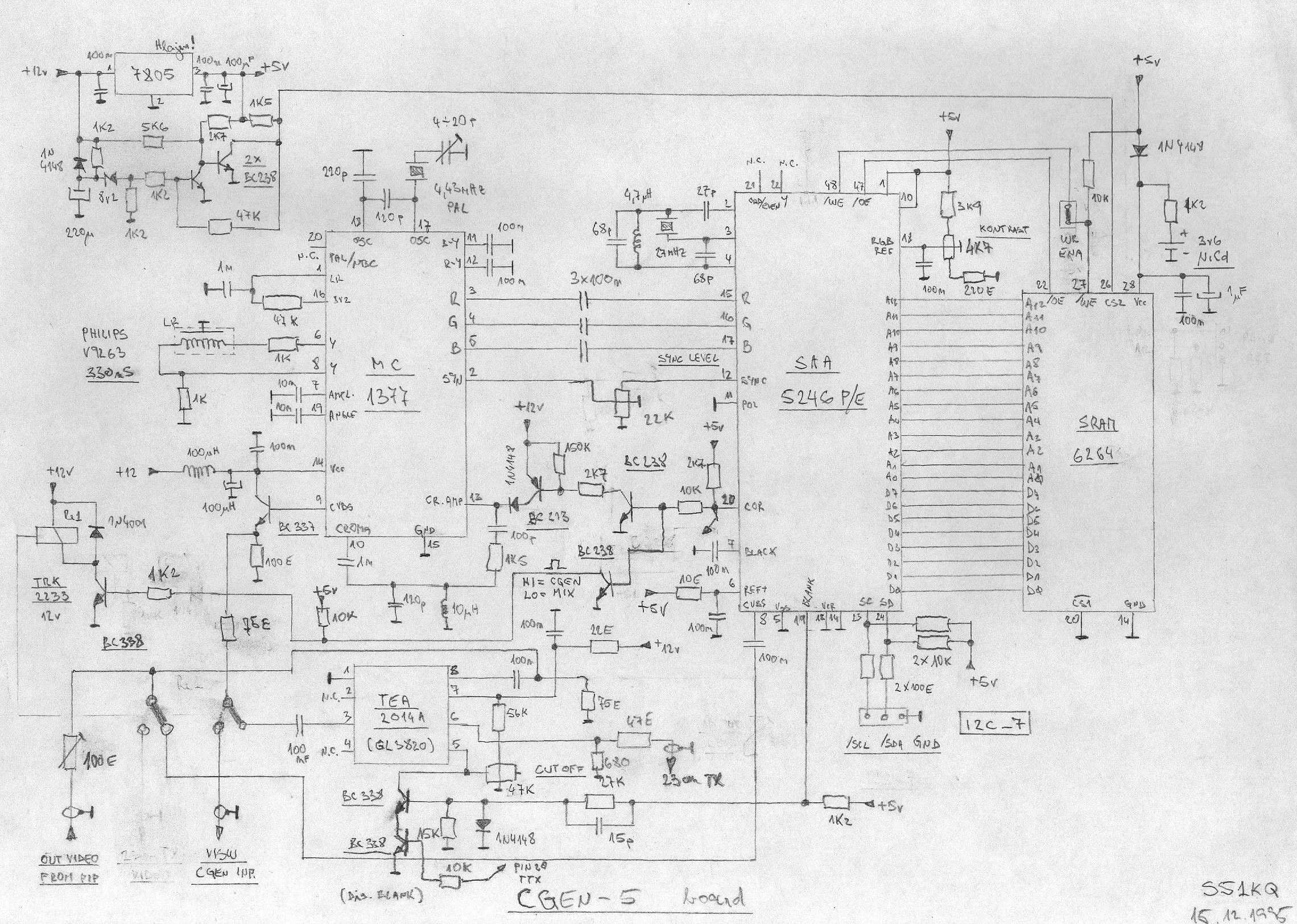
ATV repeater controllers
This is an image Schematic. No Description available.
The provided input indicates that there is an image schematic without any accompanying description. In scenarios where a schematic is presented, it typically contains graphical representations of electronic components and their interconnections,...
frequency conversion circuit composed of TC4013
This circuit can convert an input frequency ranging from 0 to 100 Hz into an output voltage of 0 to 10 V. It utilizes the TC4013 monostable multivibrator to shape and amplify the input pulse, which has a width of...
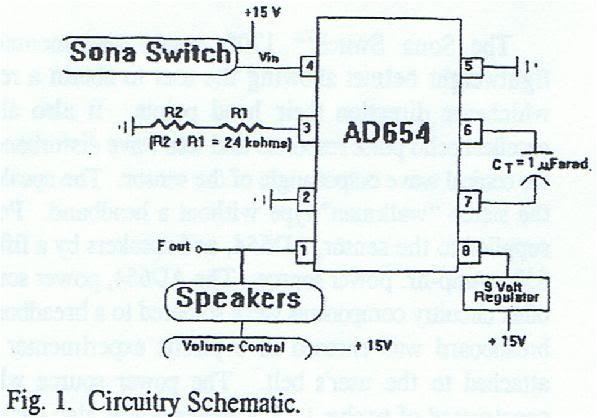
high frequency to low frequency
Assistance is required for converting high frequency to low frequency and vice versa. A project involving a sensor is currently in progress, and the schematic is provided below.
The conversion of high frequency signals to low frequency signals, as well as...
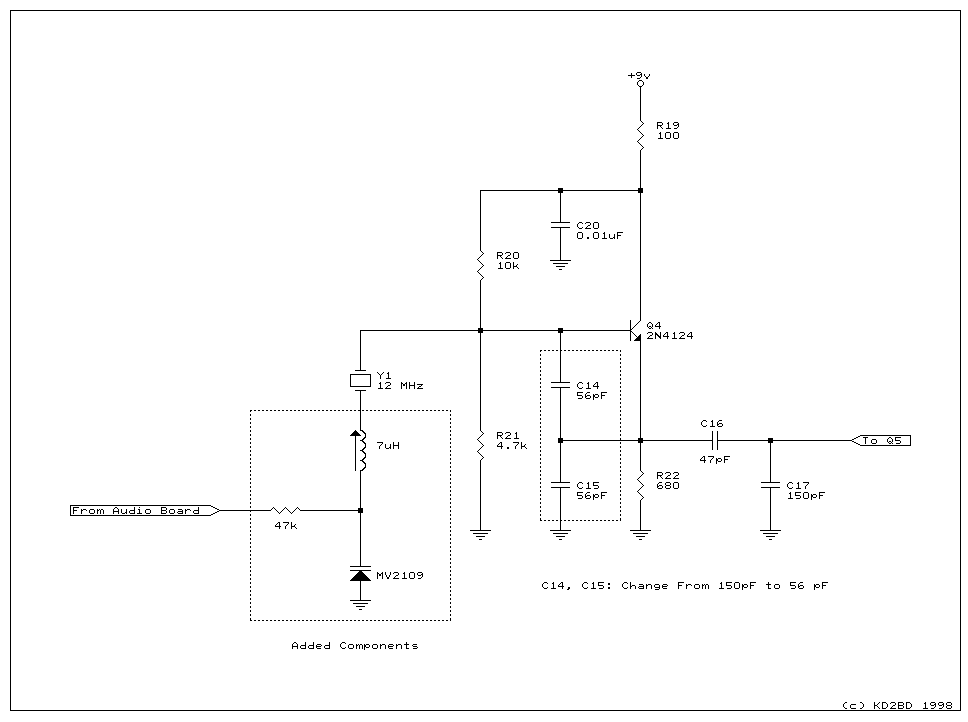
ATV Repeater System Exciter
A model RTX-70 exciter was originally utilized in the Brookdale ATV Repeater System. This document outlines the design considerations and new features of this exciter, including schematics of the circuits developed during its creation. The ATV exciter described employs a...