


Double-sideband-suppressed-carrier-modulator
#modulator
#RF
#carrier suppression
#differential pairs
#communication
#signal processing
#transmitter
#double-sideband
#electronics
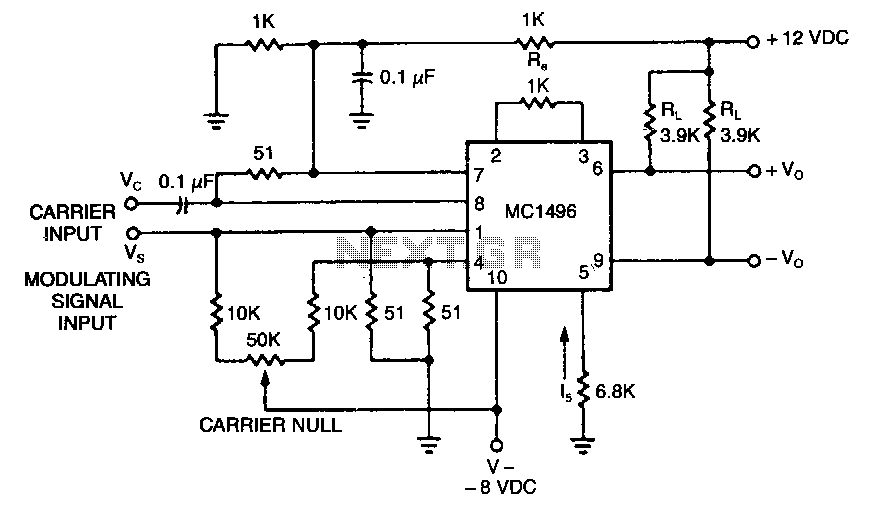
Description: The basic current allows no carrier to be present in the output. By adding offsets to the carrier differential pairs, controlled amounts of carrier appear at the output. The amplitude becomes a function of the modulation signal - AM modulation.
In electronic circuits, the described current configuration is foundational in achieving modulation without the presence of a carrier signal at the output. The principle involves utilizing differential pairs, which are pairs of transistors or other active devices that operate in a complementary manner. By introducing offsets to these differential pairs, it is possible to manipulate the output to include a controlled carrier signal.
This process is particularly relevant in Amplitude Modulation (AM), where the amplitude of the carrier wave is varied in accordance with the information signal. The modulation signal, which represents the information to be transmitted, influences the amplitude of the output signal. The careful adjustment of offsets allows for precise control over the amount of carrier signal that is mixed with the modulation signal, ensuring that the desired output characteristics are achieved without introducing unwanted distortion or noise.
In practical applications, this technique is often implemented in RF (radio frequency) transmitters and receivers, where maintaining signal integrity is crucial. The design of such circuits typically involves careful selection of components to ensure linearity and minimize interference. Additionally, feedback mechanisms may be employed to stabilize the output and enhance performance across varying operating conditions. Understanding the interplay between the modulation signal and the carrier signal is essential for optimizing the overall system design and achieving high-quality transmission of information.The basic current allows no carrier to be present in the output. By adding offsets to the carrier differential pairs, controlled amounts of carrier appear at the output. The amplitude becomes a function of the modulation signal-AM modulation.
In electronic circuits, the described current configuration is foundational in achieving modulation without the presence of a carrier signal at the output. The principle involves utilizing differential pairs, which are pairs of transistors or other active devices that operate in a complementary manner. By introducing offsets to these differential pairs, it is possible to manipulate the output to include a controlled carrier signal.
This process is particularly relevant in Amplitude Modulation (AM), where the amplitude of the carrier wave is varied in accordance with the information signal. The modulation signal, which represents the information to be transmitted, influences the amplitude of the output signal. The careful adjustment of offsets allows for precise control over the amount of carrier signal that is mixed with the modulation signal, ensuring that the desired output characteristics are achieved without introducing unwanted distortion or noise.
In practical applications, this technique is often implemented in RF (radio frequency) transmitters and receivers, where maintaining signal integrity is crucial. The design of such circuits typically involves careful selection of components to ensure linearity and minimize interference. Additionally, feedback mechanisms may be employed to stabilize the output and enhance performance across varying operating conditions. Understanding the interplay between the modulation signal and the carrier signal is essential for optimizing the overall system design and achieving high-quality transmission of information.The basic current allows no carrier to be present in the output. By adding offsets to the carrier differential pairs, controlled amounts of carrier appear at the output. The amplitude becomes a function of the modulation signal-AM modulation.
Radio Glen Transmitter
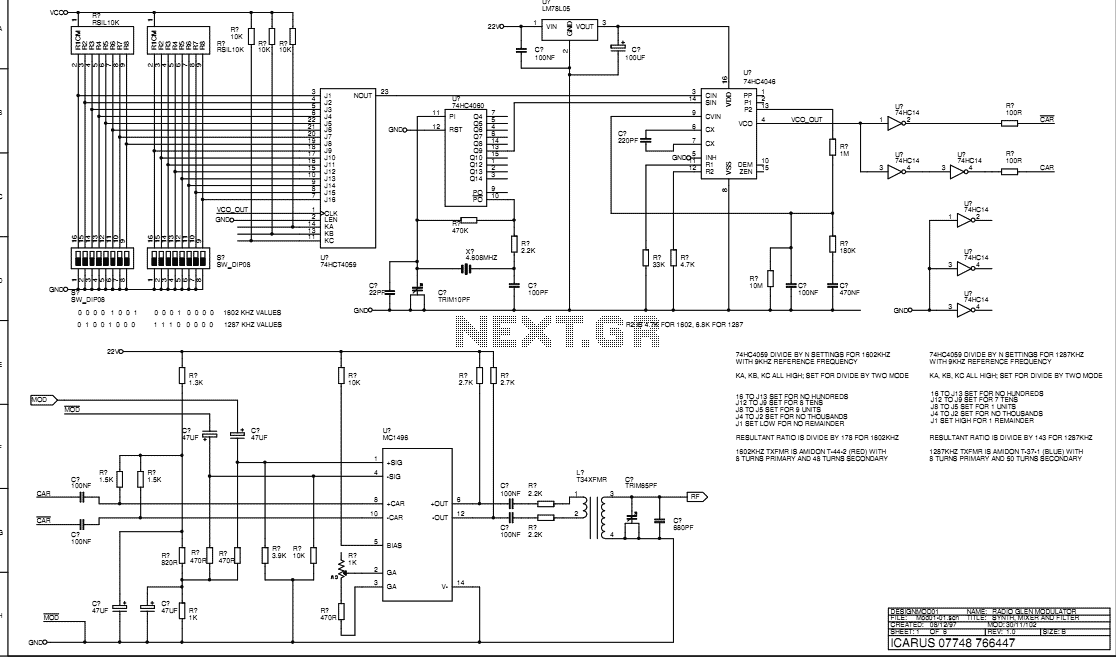
This document describes the transmitter system supplied to Radio Glen for testing as designed and constructed by Henry. The transmitter is supplied in prototype form and has the physical limitations of an instrument constructed using prototyping techniques. The transmitter has...
radio mf tx
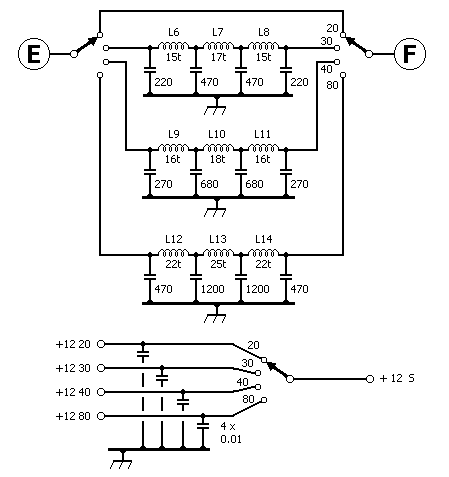
There has been a longstanding interest in constructing a simple VXO transmitter, though concerns regarding the limited tuning range typically associated with VXOs on busy HF bands have been present. The capability to switch between multiple crystals and cover various...
TA8136S Radio Control Transmitter Ic - Toshiba Semiconductor
TB6556FG is a 3-phase full-wave sine-wave PWM brushless motor controller. It features sine-wave PWM control and includes a built-in triangular-wave generator with a carrier cycle defined as fosc/252 (Hz). The device also offers a built-in lead angle control function that...
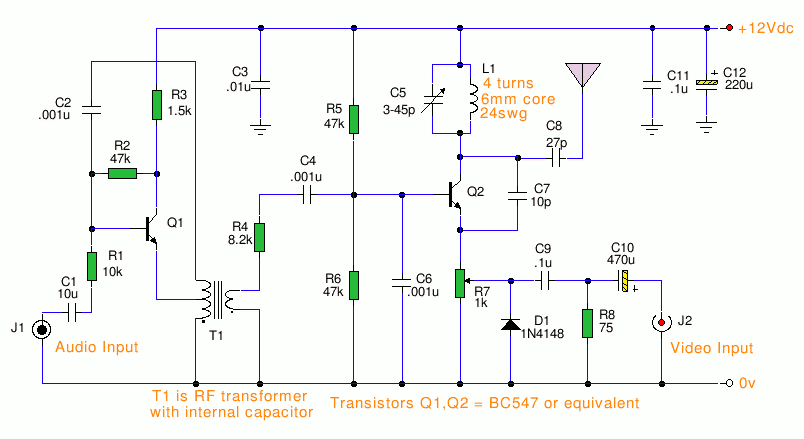
tv transmitter
The transmitter operates within the VHF and VLF frequency ranges on TV channels, though it has not been tested for UHF frequencies. The modulated sound signal spans 5.5 to 6 MHz, which can be adjusted by tuning capacitor C5. The...
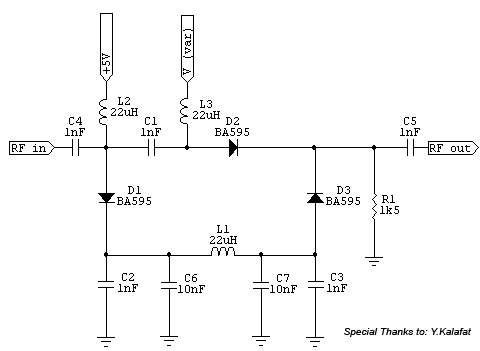
RF Signal Attenuator up to 30dB for 1MHz - 500MHz Input
This is a PIN diode-based RF signal attenuator circuit that operates with input frequencies ranging from 1 MHz to 500 MHz. PIN diodes are among the most commonly used components in RF applications.
The RF signal attenuator circuit utilizing PIN diodes...
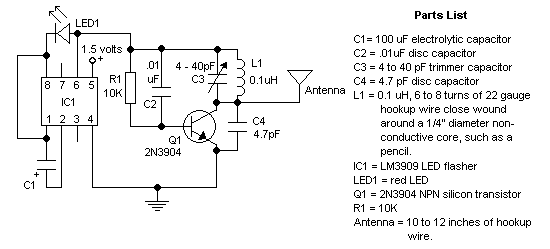
1.5 Volt Tracking Transmitter
A 1.5 Volt tracking transmitter utilizing simple circuits. The current draw for this tracker is 3.7 mA, allowing the 1.5V button cell to have a prolonged lifespan.
The 1.5 Volt tracking transmitter is designed to operate efficiently with a low current...
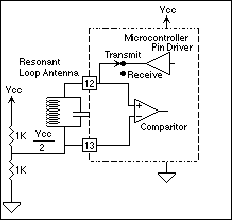
Wireless Coupler
Here's a way to get a short range bidirectional RF (Radio Frequency) channel on a microcontroller, using the controller's tristatable I/O pins and on-chip comparator with a few passive components. The range with the firmware and simple I came up...
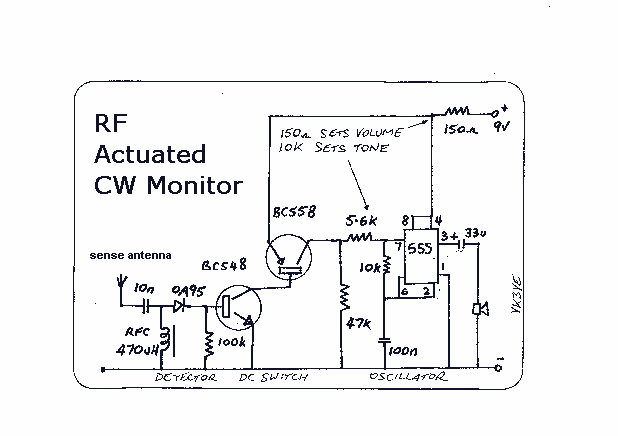
RF Actuated Keying Monitor
Sending Morse on a rig without a sidetone is not impossible, but is not particularly pleasant either. This battery-powered monitor has been designed to provide an audible indication of keying for those whose rigs lack a CW sidetone. Its sensor...
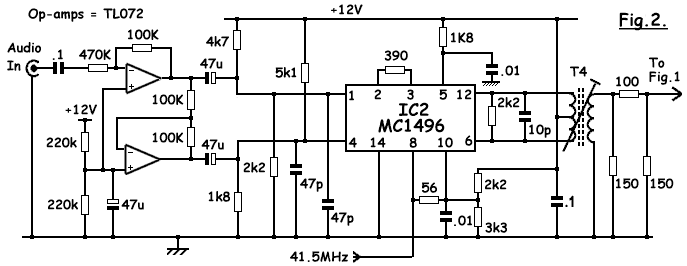
SYSTEM A MODULATOR
With the impending shutdown of the 405-line transmitter network, individuals with collections of early television sets must find new methods to supply them with appropriate signals. Regardless of the scheme implemented, a method for converting baseband audio and video into...