


Clap operated Remote Control for Fans with description
#clap switch
#fan control
#remote control
#speed control
#sound activated
#home automation
#DIY
#electronics project
#sensor circuit
#AC motor control
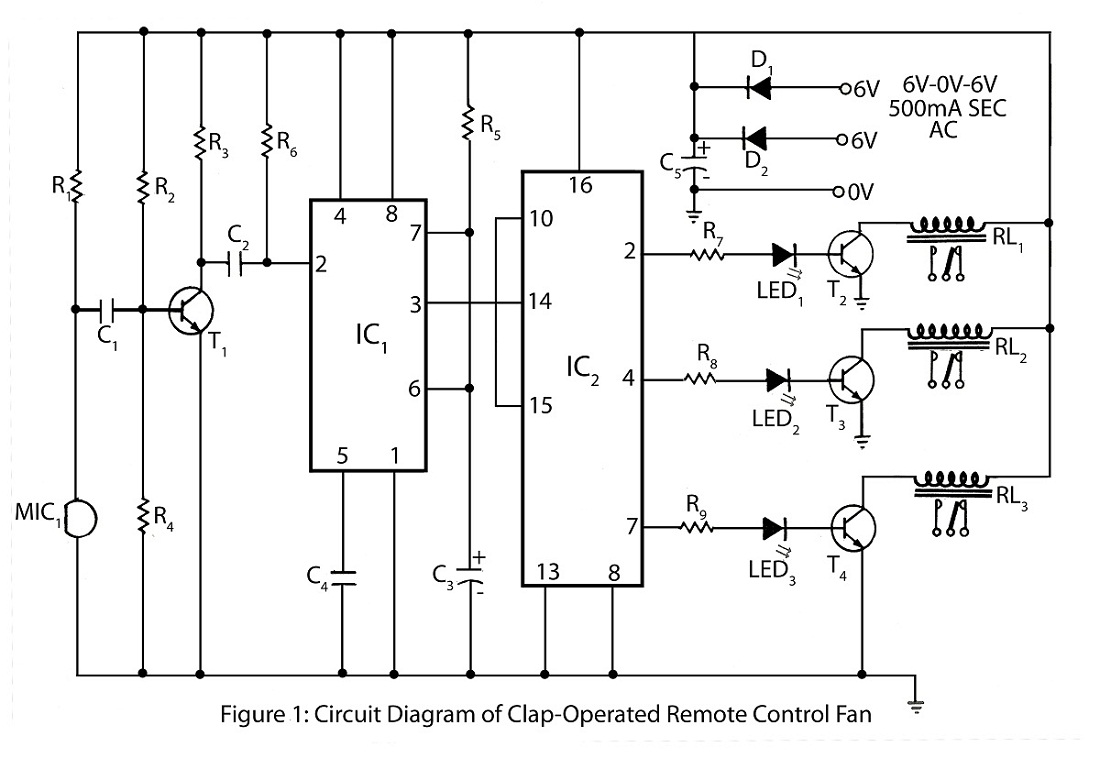
Description: The clap-operated remote control for fans is designed to control a ten-step speed fan circuit. This includes a circuit diagram and a description of the clap-operated remote control system for fans.
The clap-operated remote control system utilizes sound recognition to activate the fan's speed settings. The core component of the system is a sound sensor, typically a microphone or a specialized sound detection module that can recognize the specific frequency and amplitude of a clap. When the sound sensor detects a clap, it sends a signal to a microcontroller, which processes the input and adjusts the fan speed accordingly.
The circuit diagram for this system includes several key components: the sound sensor, the microcontroller, a motor driver, and the fan itself. The sound sensor is connected to the microcontroller's input pin, allowing it to monitor for clap sounds. The microcontroller is programmed to interpret the sound input and control the motor driver, which in turn regulates the power supplied to the fan motor.
The motor driver is essential for managing the fan's speed, as it can handle the higher currents required by the fan motor. It receives commands from the microcontroller to switch between different speed settings, allowing for a total of ten distinct speeds. This is typically achieved using a pulse-width modulation (PWM) technique, which adjusts the average power delivered to the motor, thus controlling the fan speed smoothly.
Additionally, the circuit may include a power supply unit to ensure that all components receive the necessary voltage and current for operation. Proper filtering and decoupling capacitors may be included to stabilize the power supply and reduce noise, enhancing the reliability of the system.
Overall, this clap-operated remote control for fans offers a convenient and innovative way to adjust fan speeds without the need for physical interaction, making it particularly useful in situations where hands-free operation is desirable.Clap operated Remote Control for Fans in this website is used control ten-step speed of fan circuit diagram and description of Clap operated Remote Control for Fans.
The clap-operated remote control system utilizes sound recognition to activate the fan's speed settings. The core component of the system is a sound sensor, typically a microphone or a specialized sound detection module that can recognize the specific frequency and amplitude of a clap. When the sound sensor detects a clap, it sends a signal to a microcontroller, which processes the input and adjusts the fan speed accordingly.
The circuit diagram for this system includes several key components: the sound sensor, the microcontroller, a motor driver, and the fan itself. The sound sensor is connected to the microcontroller's input pin, allowing it to monitor for clap sounds. The microcontroller is programmed to interpret the sound input and control the motor driver, which in turn regulates the power supplied to the fan motor.
The motor driver is essential for managing the fan's speed, as it can handle the higher currents required by the fan motor. It receives commands from the microcontroller to switch between different speed settings, allowing for a total of ten distinct speeds. This is typically achieved using a pulse-width modulation (PWM) technique, which adjusts the average power delivered to the motor, thus controlling the fan speed smoothly.
Additionally, the circuit may include a power supply unit to ensure that all components receive the necessary voltage and current for operation. Proper filtering and decoupling capacitors may be included to stabilize the power supply and reduce noise, enhancing the reliability of the system.
Overall, this clap-operated remote control for fans offers a convenient and innovative way to adjust fan speeds without the need for physical interaction, making it particularly useful in situations where hands-free operation is desirable.Clap operated Remote Control for Fans in this website is used control ten-step speed of fan circuit diagram and description of Clap operated Remote Control for Fans.
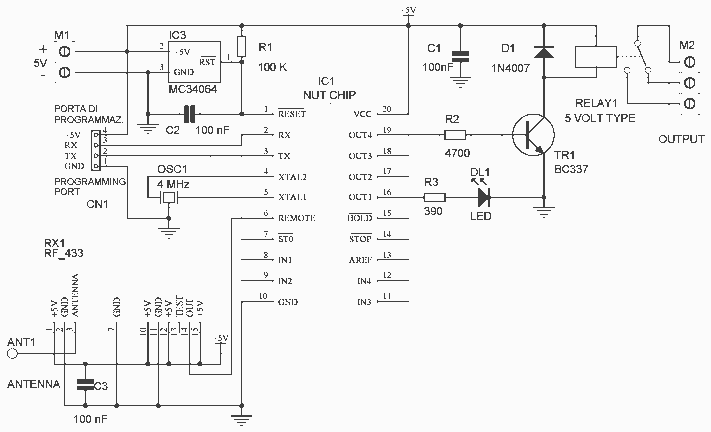
Single-channel remote control
In this project, we will see how to build a single-channel remote control. It is an easy project to do: by using a pre-assembled radio module, we will get a compact card without sacrificing major performance. The insert function allows...
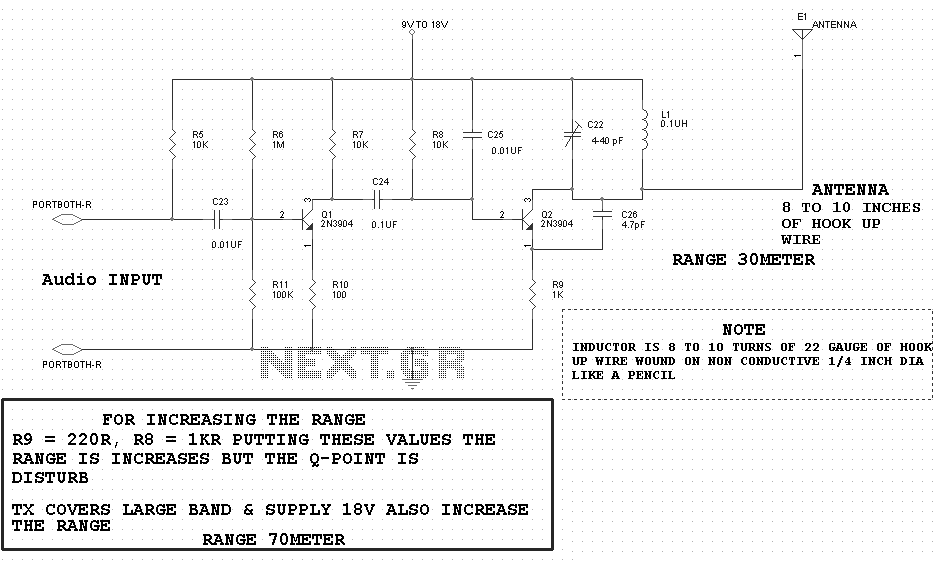
Atari Joystick Wired Remote Control for Robots
The simplest solution for implementing joystick control for a robot is to program the actions in software on a microcontroller. However, many users prefer off-the-shelf components, thus this circuit is designed using diodes, resistors, transistors, and a FAN8200 motor driver...
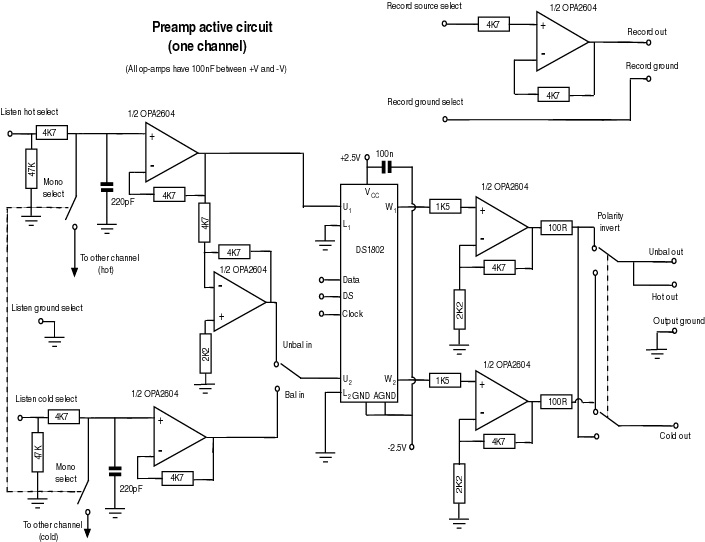
Remote-controlled preamplifier
This document serves as a compilation of design notes, providing practical details as construction progresses, along with some photographs that will be included in due course. Currently, it functions as a progress report, blending immediate plans with actual construction, resulting...
Wifi Robot
A remote control car can be operated over the internet or wirelessly from a laptop up to 500 meters away. It features a live-feed network camera for driving without line of sight and a horn for signaling. The project utilizes...
Domestic And Industrial
This is a simple and inexpensive clap-operated switch that utilizes only four transistors along with a resistor-capacitor network. The project name indicates its application, which can be used for level control in hydroponic projects and for kitchen purposes, such as...
Multi-point circuit diagram of a remote control switch
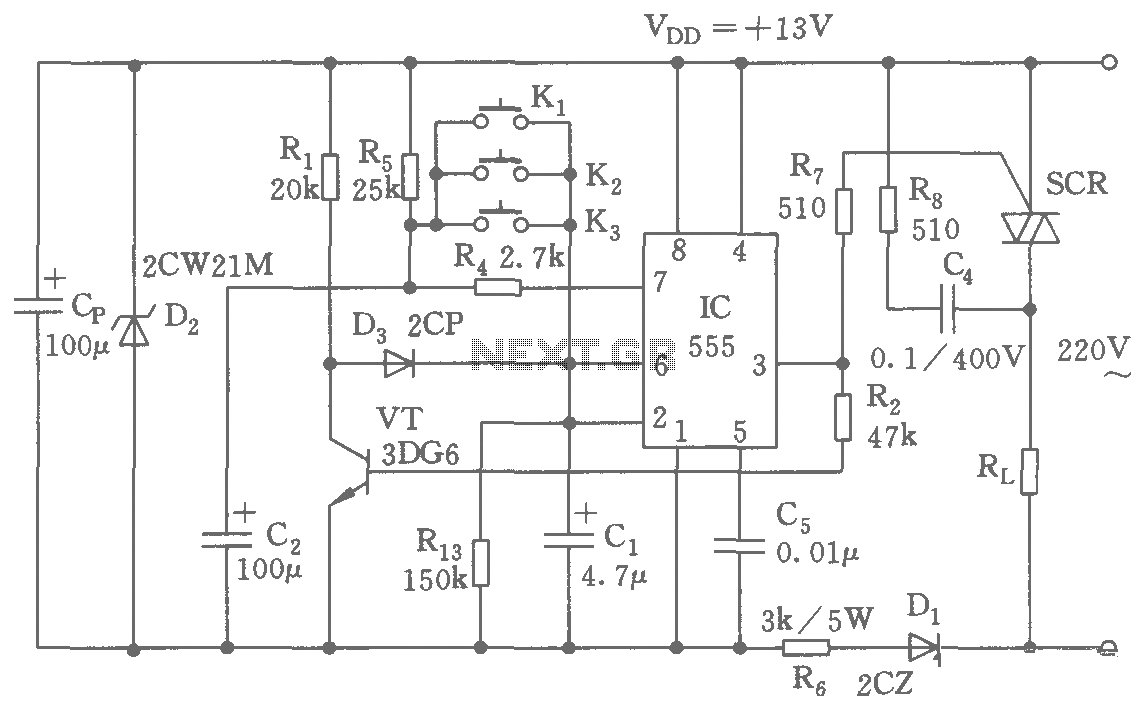
The switching circuit consists of a buck rectifier circuit, a bistable trigger circuit, and a thyristor control circuit, enabling remote control for electrical equipment to be turned on or off. The buck rectifier circuit supplies the controller with a DC...
Variable Fan Controller
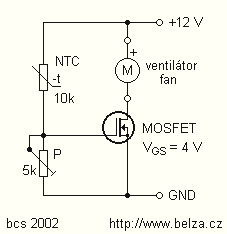
When the fan seized up in my source and I changed it to a type with much less noise, turned on my computer, the largest source of noise CPU cooler fan. The computer I have a boxed Pentium III processor...
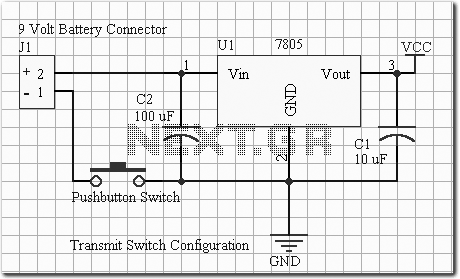
How to build a simple remote control system
Due to the huge interest in this project, I have just recently finished the NEW schematics. The older schematics were scanned and pretty poor quality. These new ones should make it considerably easier to recognize the parts used for the...
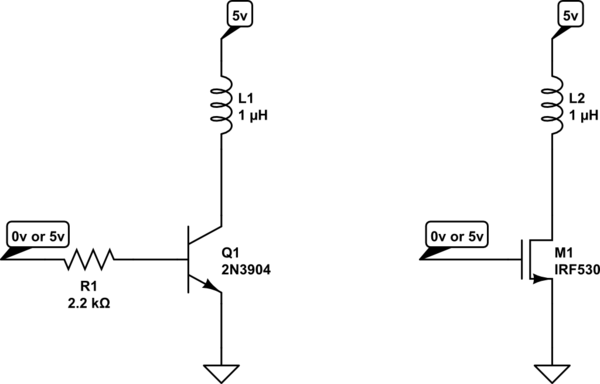
DC Fan Control (Switching on/off)
The project involves using an MC25060V2 fan, which needs to be controlled through software for on and off switching without utilizing PWM or complex methods. The proposed solution involves using either an NPN BJT or an N-channel MOSFET on the...