


teleplone circuit
#telephone
#remote control
#automation
#communication
#telecommunication
#home automation
#complex functions
#development
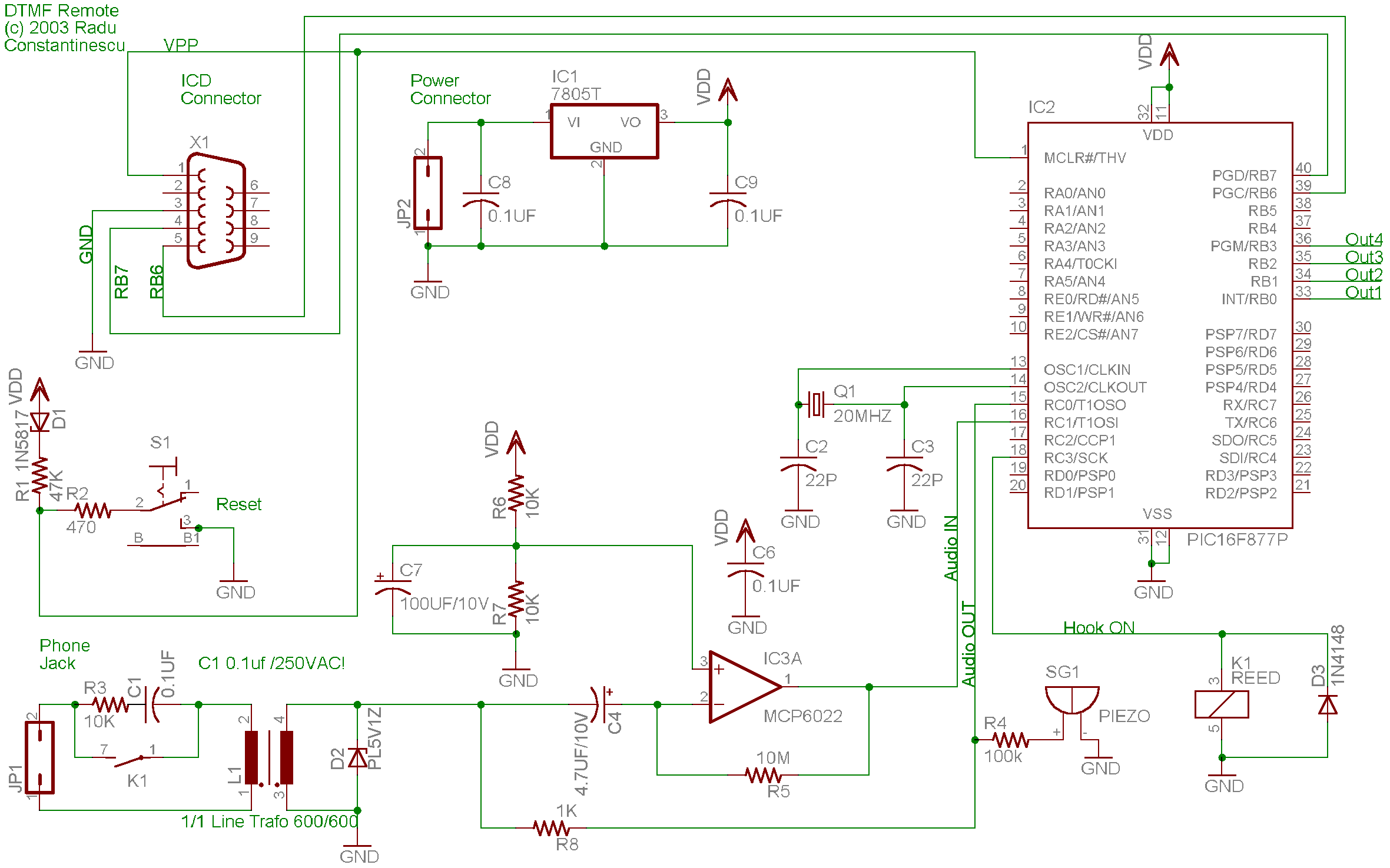
Description: A telephone remote control system allows users to perform various functions remotely using their phone. This system automates complex tasks, simplifying the development and operation of telephone systems.
The telephone remote control system is designed to enhance user interaction with telecommunication devices by enabling remote management of specific functions. The circuit typically consists of a microcontroller, which serves as the central processing unit, and various input/output interfaces that facilitate communication between the user’s phone and the controlled device.
The microcontroller is programmed to interpret signals received from the phone, which may be transmitted via SMS, DTMF tones, or through a dedicated app. The input module can include a GSM module for SMS communication or a tone decoder for DTMF signal processing. Upon receiving a command, the microcontroller executes the corresponding function, which may involve activating relays, controlling motors, or interfacing with other electronic components.
The circuit design may include a power supply module to ensure stable operation, along with protection circuits to safeguard against voltage spikes. Additionally, the layout should consider signal integrity, minimizing noise and interference to maintain reliable communication between the phone and the remote control system.
To facilitate user interaction, the system may be equipped with status indicators such as LEDs to provide visual feedback on the operation of various functions. The overall design aims to create a user-friendly interface that allows for seamless control over the desired functionalities, thereby improving the efficiency and convenience of telephone operations.Telephone remote control for some of the ideas is the time, now can let you own a phone to do remote control, this is the procedure and circuit. Automatically executed complex functions. Facilitate the development of a telephone.
The telephone remote control system is designed to enhance user interaction with telecommunication devices by enabling remote management of specific functions. The circuit typically consists of a microcontroller, which serves as the central processing unit, and various input/output interfaces that facilitate communication between the user’s phone and the controlled device.
The microcontroller is programmed to interpret signals received from the phone, which may be transmitted via SMS, DTMF tones, or through a dedicated app. The input module can include a GSM module for SMS communication or a tone decoder for DTMF signal processing. Upon receiving a command, the microcontroller executes the corresponding function, which may involve activating relays, controlling motors, or interfacing with other electronic components.
The circuit design may include a power supply module to ensure stable operation, along with protection circuits to safeguard against voltage spikes. Additionally, the layout should consider signal integrity, minimizing noise and interference to maintain reliable communication between the phone and the remote control system.
To facilitate user interaction, the system may be equipped with status indicators such as LEDs to provide visual feedback on the operation of various functions. The overall design aims to create a user-friendly interface that allows for seamless control over the desired functionalities, thereby improving the efficiency and convenience of telephone operations.Telephone remote control for some of the ideas is the time, now can let you own a phone to do remote control, this is the procedure and circuit. Automatically executed complex functions. Facilitate the development of a telephone.
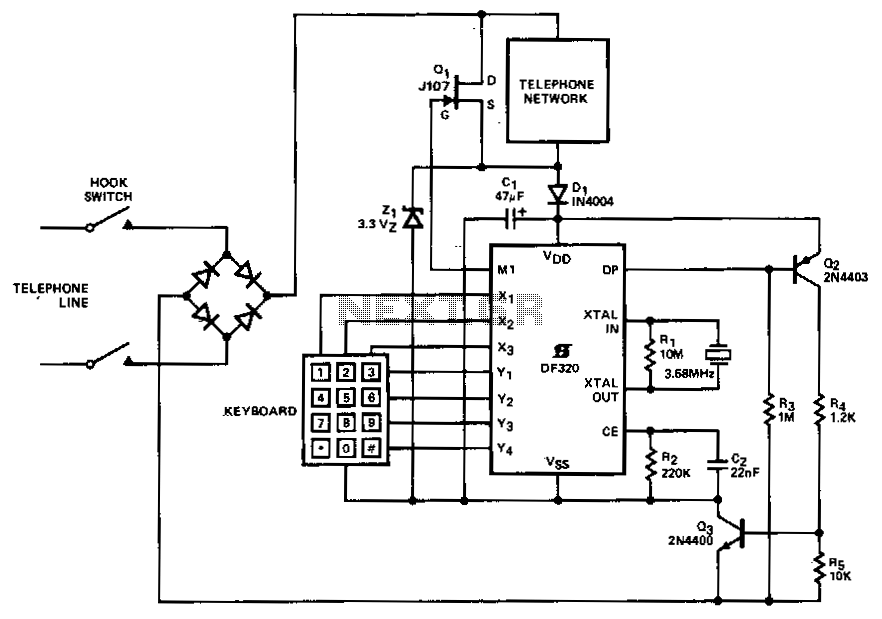
Series-telephone-connection
A straightforward method of connecting in series within a telephone set is suitable for PABX or short line applications. When the telephone handset is lifted, capacitor C1 is charged through diode D1 to (Vz1 - 0.7) V, initiating a DF320...
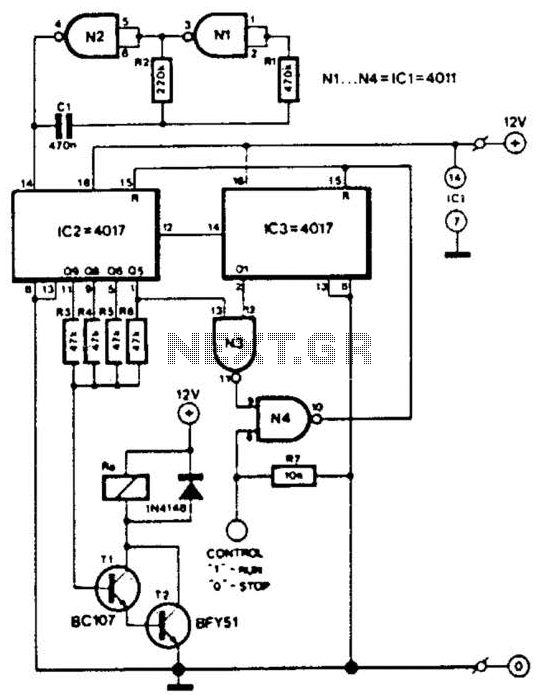
Telephone Bell Simulator Circuit
This circuit is designed for a small private telephone installation. The ringing tone sequence consists of 400 ms on, 200 ms off, 400 ms on, and 2 ms off. In the accompanying diagram, N1 and N2 create an oscillator that...
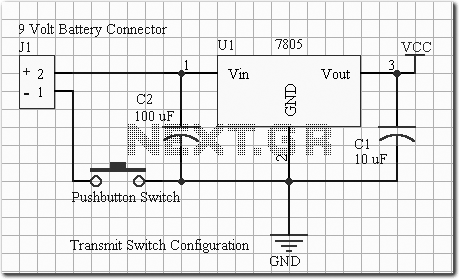
How to build a simple remote control system
Due to the huge interest in this project, I have just recently finished the NEW schematics. The older schematics were scanned and pretty poor quality. These new ones should make it considerably easier to recognize the parts used for the...
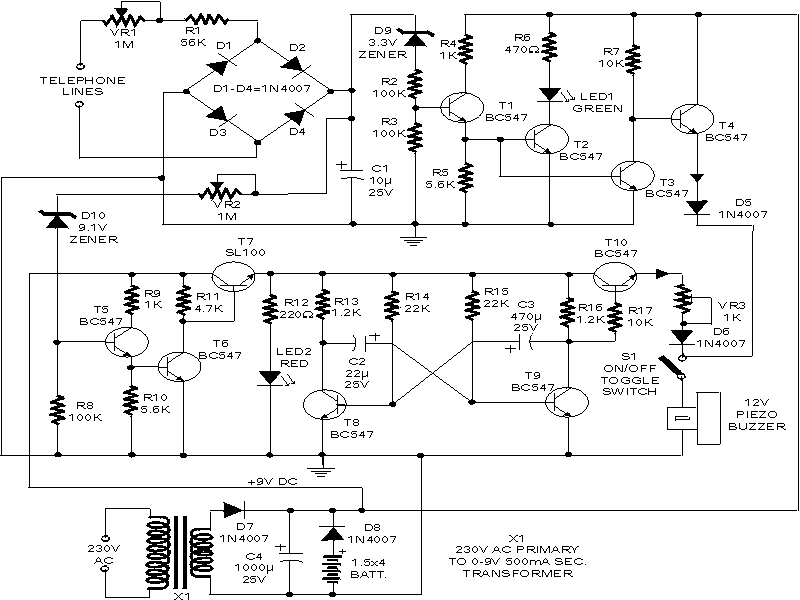
telephone line loger
Here is a telephone line vigilant circuit to guard against misuse of your telephone lines. It monitors telephone lines round the clock and provides visual as well as an audio warning (when someone is using your telephone lines) which can...
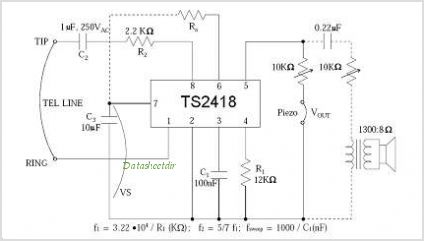
TS2418 Telephone Tone Ringer With Bridge Diode
The TS4956 is a comprehensive audio system device featuring three dedicated outputs: one for stereo headphones, one for loudspeaker drive, and one mono output for a hands-free set. The stereo headphone output can deliver over 25 mW per channel of...

Telephone Ringer
This circuit generates the sound of the electronic ringer found in modern telephones, replacing the two-bell electromechanical ringers used previously. The ringing pattern adheres to the United States standard of 2 seconds on and 4 seconds off. During the "on"...
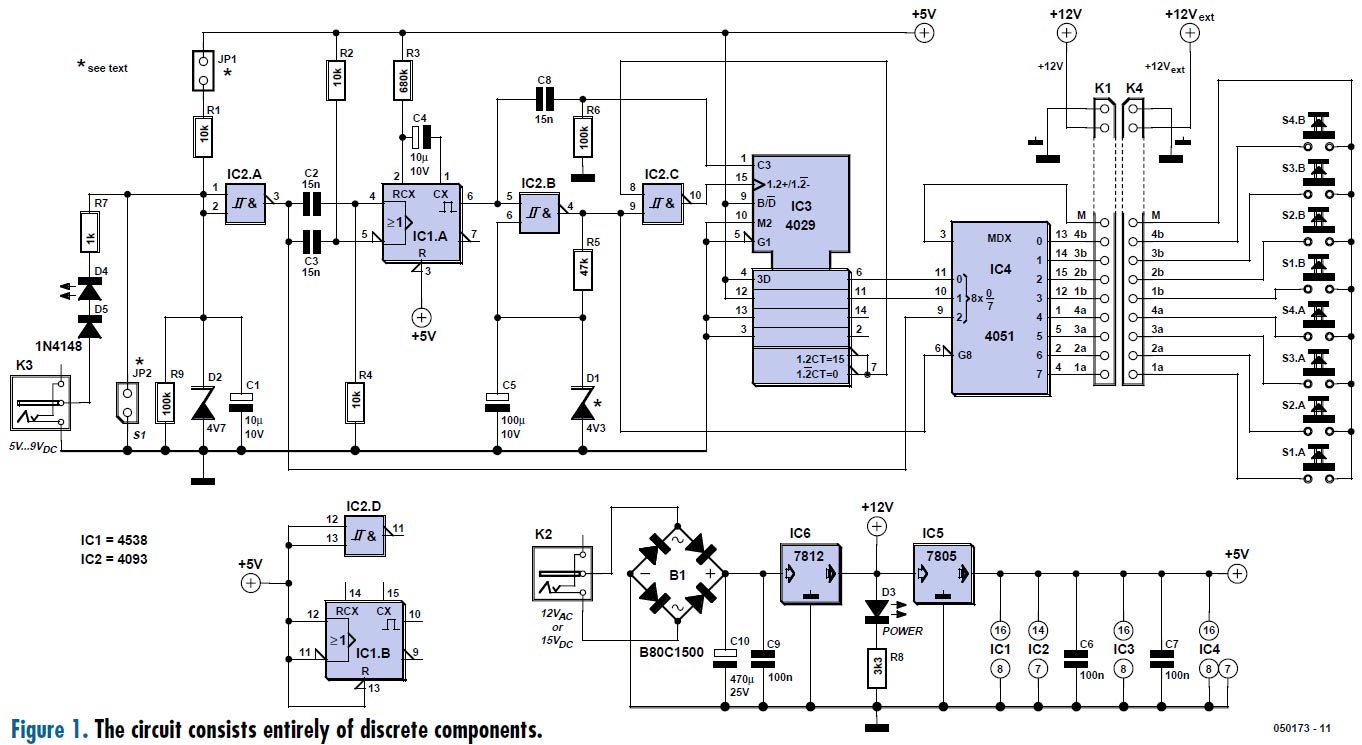
Remote Control Operator
Remote-controlled light switches are increasingly popular. DIY stores offer affordable sets that include multiple light switches and a remote control unit, allowing users to manage lighting from their armchairs. However, controlling the lighting while away from home can be a...
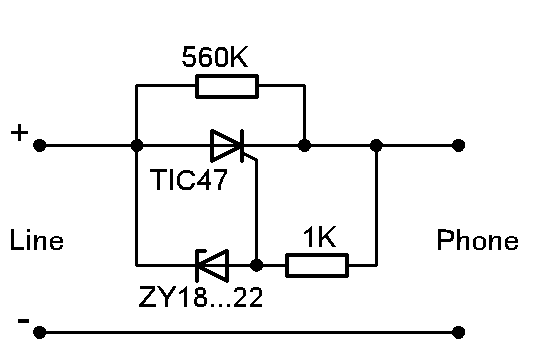
Telephone privacy circuit
The circuit was quickly assembled from components available in a home lab and performed well during initial tests using a telephone line simulator and a line connected to a PBX. Reports indicate that this circuit functions effectively in Australia. It...
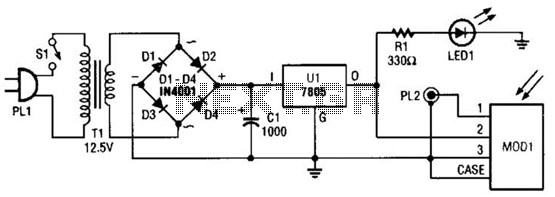
Remote-Control Analyzer Circuit
A schematic diagram for the remote analyzer is presented. The circuit is powered by a simple 5-V supply, which includes components such as PL1, SI, Tl, a bridge rectifier formed by diodes D1 through D4, capacitor CI, and a standard...