


Rocket Launch Camera Triggers
#rocket launch
#camera trigger
#sensor
#launch detection
#clip sensor
#height detection
#launch pad
#DIY electronics
#hobbyist projects
Description: To sense a rocket launch, this clip is simply clipped onto one of the fins of the rocket. The cable is taped or tied to a leg or other part of the launch pad, with the length of cable after the tie point being adjusted to cause the clip to pull off the rocket fin at whatever height is desired.
The described system serves as a mechanical launch detection mechanism for rockets, utilizing a simple clip attached to one of the rocket's fins. The clip functions as a physical sensor, designed to detach from the rocket at a predetermined altitude during the launch sequence. This detachment can be configured by adjusting the length of the cable that connects the clip to the launch pad.
The clip is typically made from a lightweight material to minimize any aerodynamic interference with the rocket's flight. The cable, which is securely taped or tied to a stable structure of the launch pad, should be of sufficient strength to withstand the initial forces of the rocket's launch without breaking. The adjustment of the cable length is critical; it allows for precise control over the height at which the clip will disengage from the rocket. This height can be tailored based on the specific requirements of the launch, such as the type of rocket or the desired timing for data acquisition.
Once the clip detaches, it can trigger a secondary system or sensor, which may be used to record data or initiate other processes related to the launch event. The design emphasizes simplicity and reliability, ensuring that the mechanism operates effectively in the high-stress environment of a rocket launch. Overall, this system provides a straightforward yet effective solution for sensing the launch of a rocket.To sense a rocket launch, this clip is simply clipped onto one of the fins of the rocket. The cable is taped or tied to a leg or other part of the launch pad, with the length of cable after the tie point being adjusted to cause the clip to pull off the rocket fin at whatever height is desired.
The described system serves as a mechanical launch detection mechanism for rockets, utilizing a simple clip attached to one of the rocket's fins. The clip functions as a physical sensor, designed to detach from the rocket at a predetermined altitude during the launch sequence. This detachment can be configured by adjusting the length of the cable that connects the clip to the launch pad.
The clip is typically made from a lightweight material to minimize any aerodynamic interference with the rocket's flight. The cable, which is securely taped or tied to a stable structure of the launch pad, should be of sufficient strength to withstand the initial forces of the rocket's launch without breaking. The adjustment of the cable length is critical; it allows for precise control over the height at which the clip will disengage from the rocket. This height can be tailored based on the specific requirements of the launch, such as the type of rocket or the desired timing for data acquisition.
Once the clip detaches, it can trigger a secondary system or sensor, which may be used to record data or initiate other processes related to the launch event. The design emphasizes simplicity and reliability, ensuring that the mechanism operates effectively in the high-stress environment of a rocket launch. Overall, this system provides a straightforward yet effective solution for sensing the launch of a rocket.To sense a rocket launch, this clip is simply clipped onto one of the fins of the rocket. The cable is taped or tied to a leg or other part of the launch pad, with the length of cable after the tie point being adjusted to cause the clip to pull off the rocket fin at whatever height is desired.
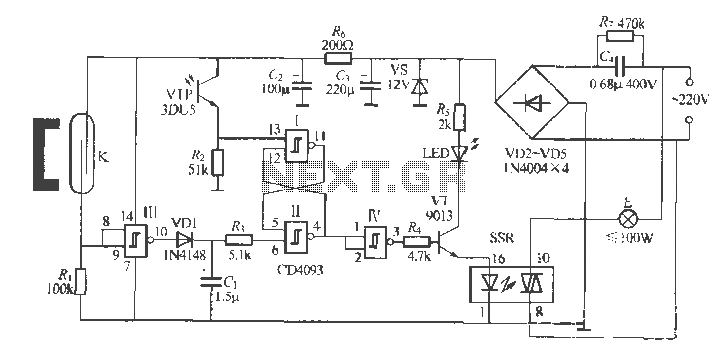
Gate automatic lamp circuit
The circuit utilizes multiple integrated circuits to form an automatic lighting device that is activated by door and window sensors. It includes CD4093 digital integrated circuits, a relay, and a power supply circuit. The system typically remains closed when a...
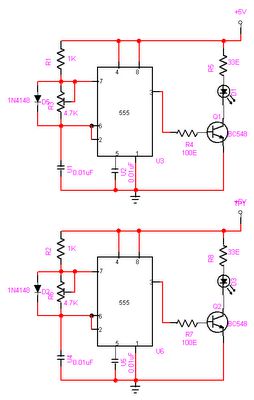
Automatic Room light Control With Bi Directional Visitor Counter
The objective of this project is to create a controller-based model that counts the number of individuals entering a specific room and activates the lighting accordingly. This is achieved through the use of sensors that detect the current number of...
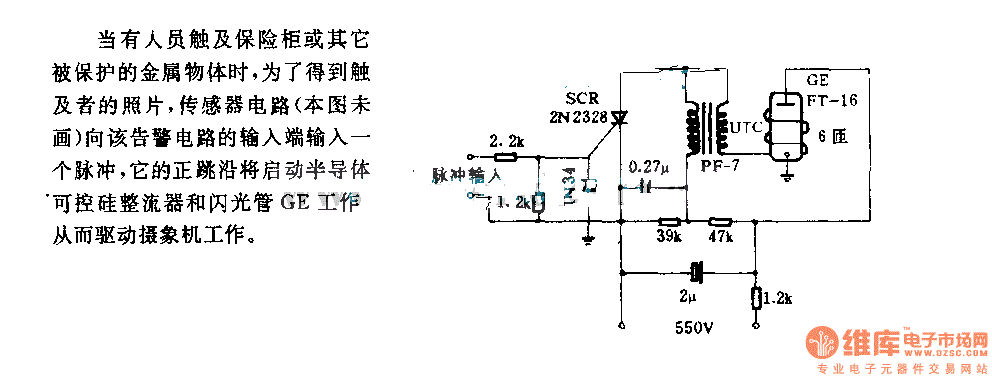
The alarm circuit diagram for safety box and other metal objects
When an individual touches the safety box or other protected metal objects, the sensor circuit generates a pulse to the alarm circuit. The positive edge of this pulse activates the semiconductor and thyristor flash GE, subsequently triggering the camera to...
Pots water alarm circuit
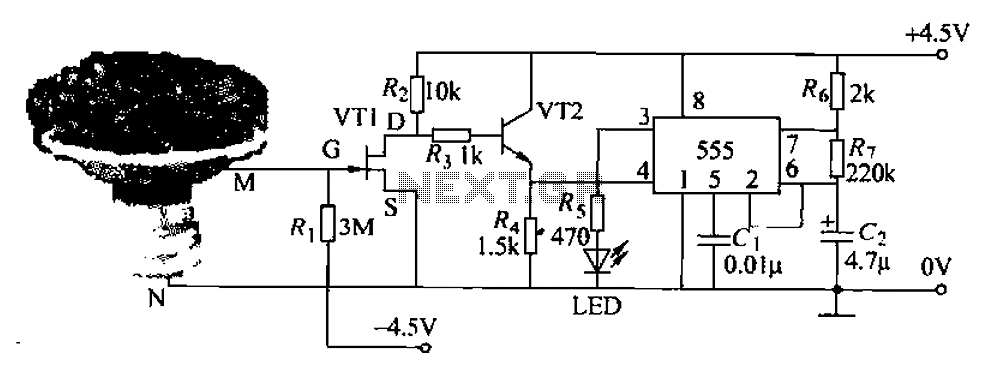
The flowers in pots require watering, as relying solely on the observation of moist soil surfaces can be unreliable. To address this issue, a flower watering indicator has been developed. This circuit includes a field effect transistor (VT1), a second...
The alarm circuit diagram for safety box and other metal objects
When an individual touches the safety box or other protected metal objects, the sensor circuit generates a pulse to the alarm circuit. The positive edge of this pulse activates the semiconductor and thyristor flash GE, subsequently triggering the camera to...
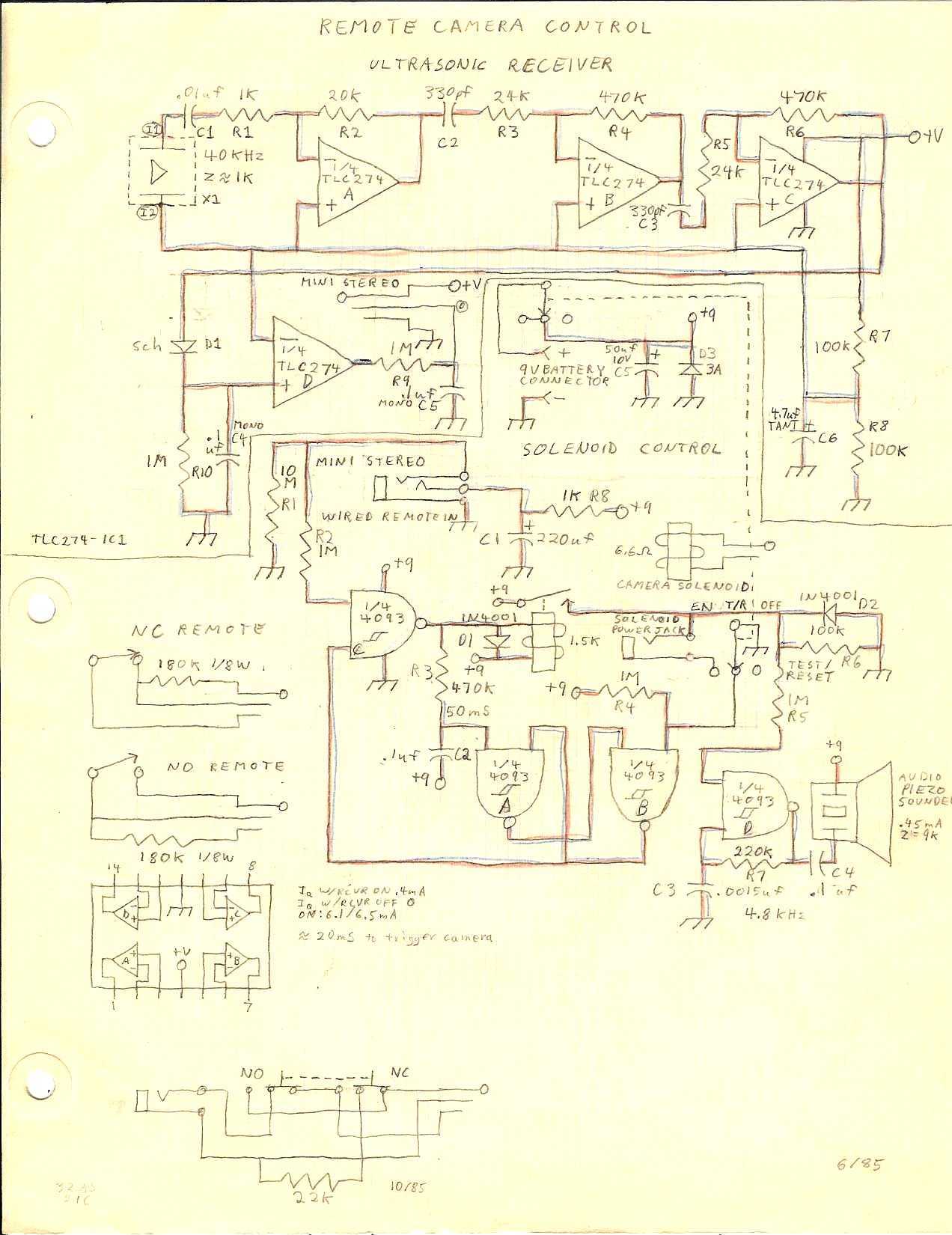
camera Trigger
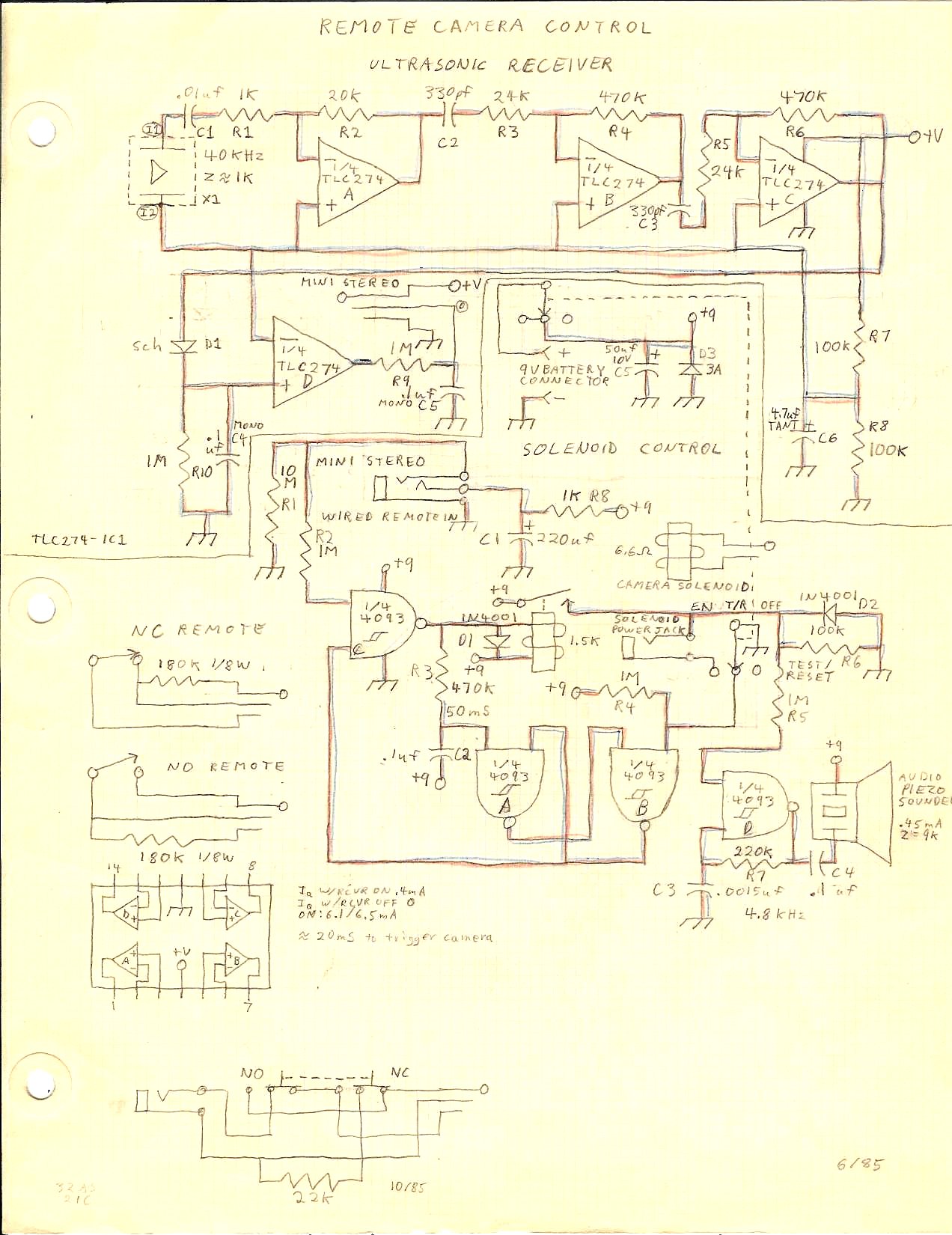
A camera trigger designed to capture transient phenomena was created using a Mamiya ZE 35mm camera and a Mamiyalite ZE flash unit. At that time, the only method for remotely triggering the camera was through the cable release socket integrated...
smatriger
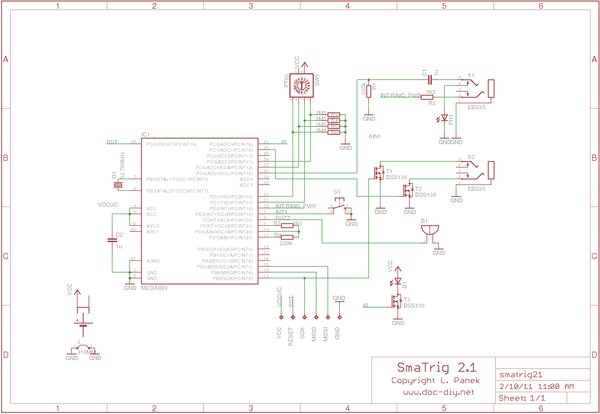
This is the project home page of the SmaTrig 2.1, the improved version of the SmaTrig 2. On this site, complete instructions on how to use and build the versatile and compact (27 grams) 15-in-1 camera trigger SmaTrig 2.1 are...
Add a sensor to a board and measure something with it
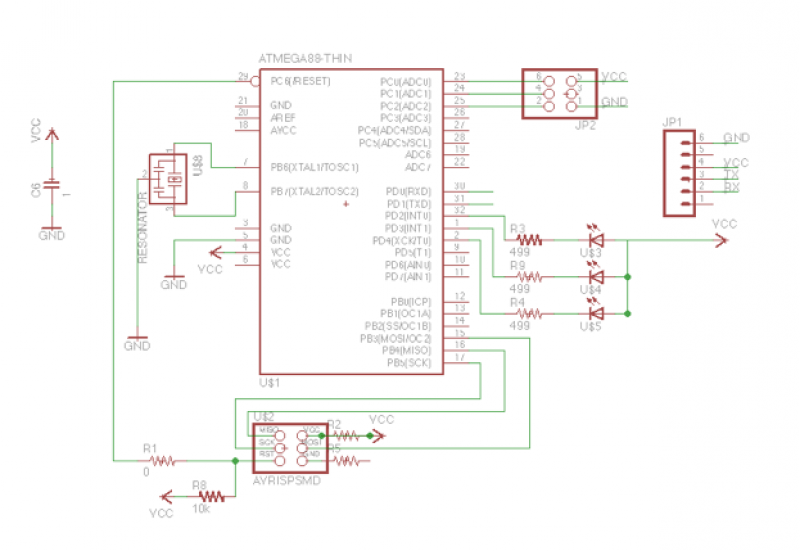
This week's plan is to build a device that warns of the potential for a knockdown, which is the process by which an over-canvassed ship is laid over on her beam-ends. The risk of sinking is high during this event,...
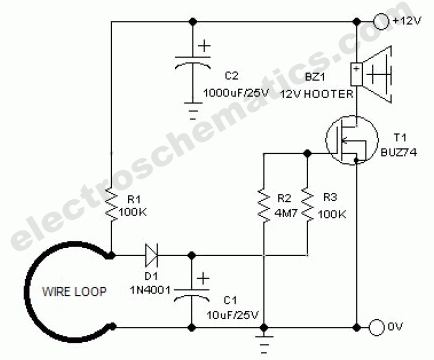
Wire Break Sensor Alarm Circuit Schematic
The circuit of a loop sensor-based simple security alarm is described here. The sensor loop consists of a short length of thin enamelled copper wire.
The loop sensor security alarm operates on the principle of detecting interruptions in the circuit formed...