


tilt sensor
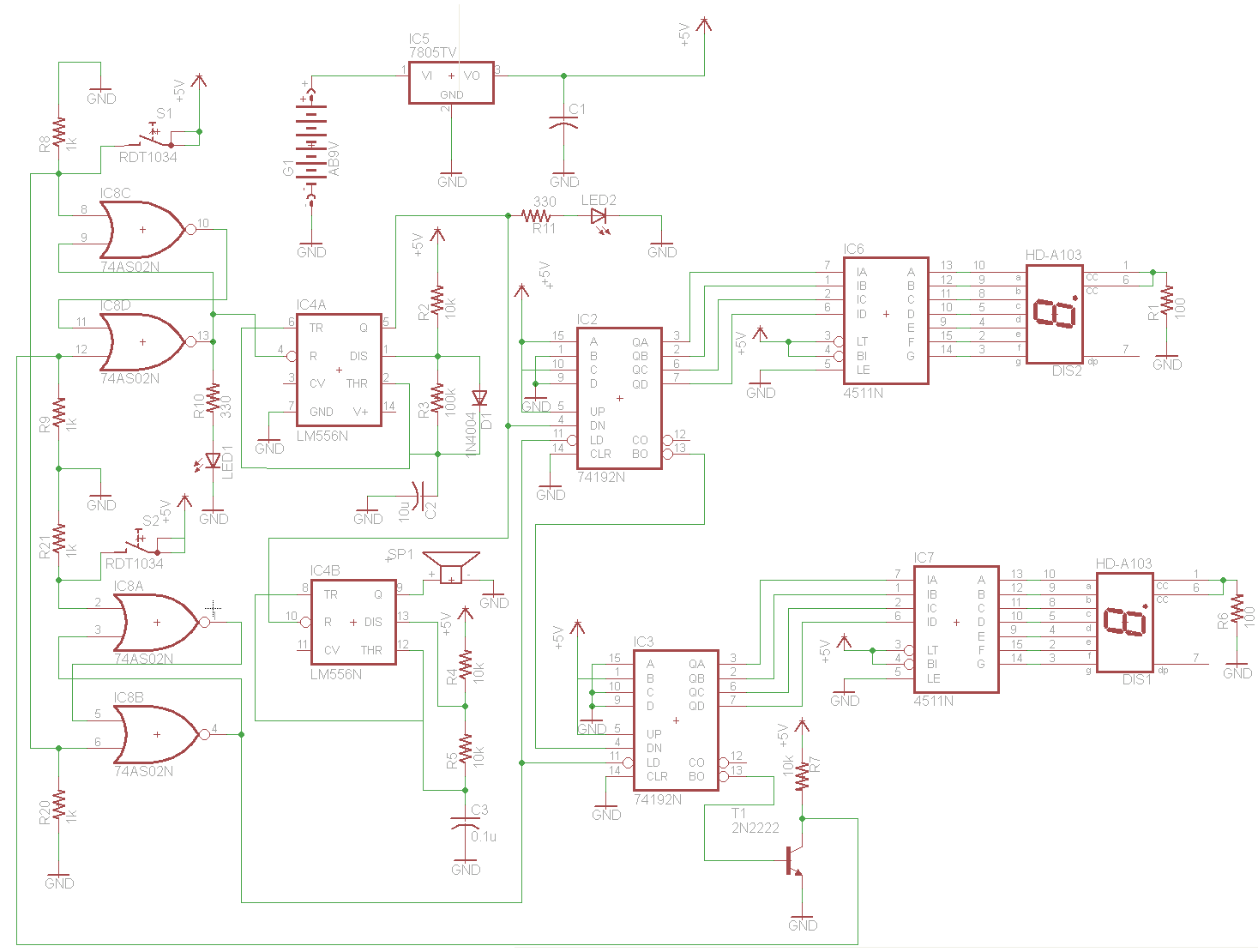
Description: Numerous LED projects to ignite creativity. Light Emitting Diodes are easy to use and enhance the appearance of DIY electronic projects.
LEDs (Light Emitting Diodes) are semiconductor devices that emit light when an electric current passes through them. They are widely used in various applications due to their efficiency, longevity, and versatility. The simplicity of incorporating LEDs into electronic projects makes them a popular choice for hobbyists and professionals alike.
A typical LED circuit consists of a power source, the LED itself, and a current-limiting resistor. The power source can be a battery or a DC power supply, providing the necessary voltage for the LED to operate. The forward voltage drop of an LED typically ranges from 1.8V to 3.3V, depending on the color and type of the LED.
To ensure the LED operates safely without exceeding its current rating, a resistor is used in series with the LED. The value of this resistor can be calculated using Ohm's Law (V = IR) and the following formula:
R = (V_source - V_LED) / I_LED
Where:
- R is the resistance in ohms (Ω)
- V_source is the voltage of the power supply
- V_LED is the forward voltage drop of the LED
- I_LED is the desired current through the LED, typically measured in milliamperes (mA)
In addition to simple circuits, LEDs can be integrated into more complex designs, such as LED matrices, displays, and various lighting effects. Various control methods can be employed, including microcontrollers for programmable lighting sequences, pulse-width modulation (PWM) for brightness control, and even sensors for interactive lighting.
Overall, the versatility of LEDs allows for a wide range of creative projects, from simple indicator lights to intricate light displays, making them an essential component in modern electronics.Tons of LED Projects to spark your creativity. Light Emitting Diodes are simple to use and make your DIY electronic projects look great..
LEDs (Light Emitting Diodes) are semiconductor devices that emit light when an electric current passes through them. They are widely used in various applications due to their efficiency, longevity, and versatility. The simplicity of incorporating LEDs into electronic projects makes them a popular choice for hobbyists and professionals alike.
A typical LED circuit consists of a power source, the LED itself, and a current-limiting resistor. The power source can be a battery or a DC power supply, providing the necessary voltage for the LED to operate. The forward voltage drop of an LED typically ranges from 1.8V to 3.3V, depending on the color and type of the LED.
To ensure the LED operates safely without exceeding its current rating, a resistor is used in series with the LED. The value of this resistor can be calculated using Ohm's Law (V = IR) and the following formula:
R = (V_source - V_LED) / I_LED
Where:
- R is the resistance in ohms (Ω)
- V_source is the voltage of the power supply
- V_LED is the forward voltage drop of the LED
- I_LED is the desired current through the LED, typically measured in milliamperes (mA)
In addition to simple circuits, LEDs can be integrated into more complex designs, such as LED matrices, displays, and various lighting effects. Various control methods can be employed, including microcontrollers for programmable lighting sequences, pulse-width modulation (PWM) for brightness control, and even sensors for interactive lighting.
Overall, the versatility of LEDs allows for a wide range of creative projects, from simple indicator lights to intricate light displays, making them an essential component in modern electronics.Tons of LED Projects to spark your creativity. Light Emitting Diodes are simple to use and make your DIY electronic projects look great..
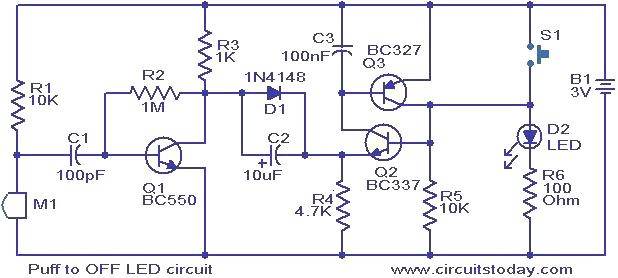
Puff to OFF LED circuit
This circuit features an LED that can be turned off with a puff of air. A condenser microphone (M1) detects the puff. When the push button switch S1 is activated, transistors Q2 and Q3, configured as a latching pair, are...
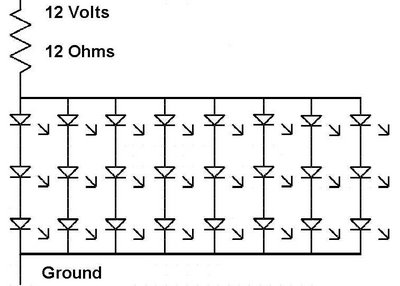
ve170 monitor repair with led
The issue with this monitor is that the power supply for the vacuum tube backlighting fails. The initial step involves completely disassembling the monitor into smaller components, followed by the careful removal of the gold-colored trays that hold the vacuum...
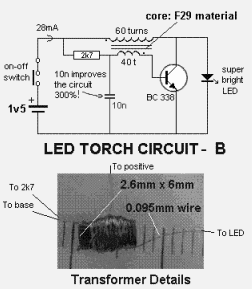
15V LED Power Supply
This circuit illustrates a 1.5V LED power supply circuit diagram. Features include the requirement of a step-up transformer (40:60) for easy provision. Components include an integrated circuit (IC).
The described circuit functions as a power supply specifically designed for driving LEDs...
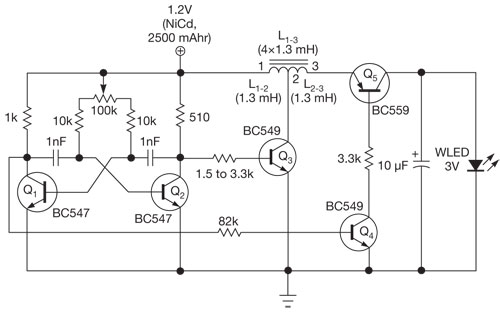
Pocket white-LED torch is power efficient
This single white LED torch can be housed in an empty glue stick tube and has a long rechargeable battery life.
The proposed circuit design features a compact LED torch that utilizes a single white LED as the primary light source....
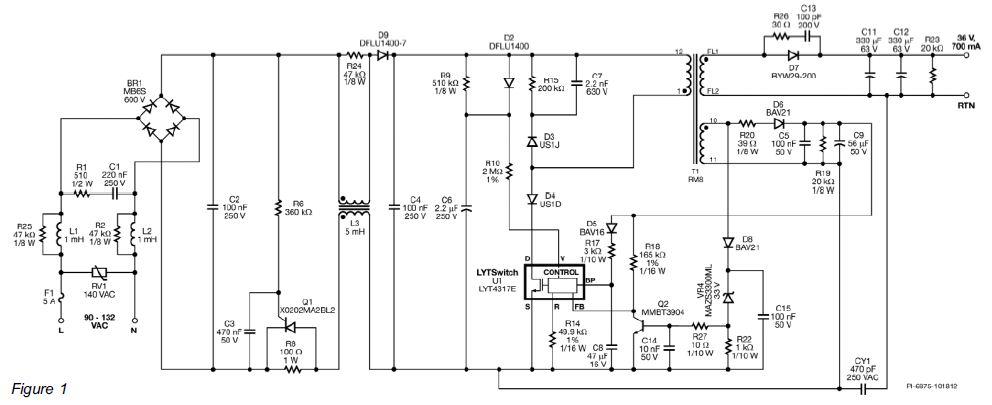
Driver and LED Companies must Work Together to Achieve High-Efficiency
The design of a PAR 38 LED spotlight focuses on delivering practical LED lighting systems that meet performance expectations by reducing power consumption, extending lifespan, and enhancing overall efficiency.
The PAR 38 LED spotlight is a widely used lighting solution in...
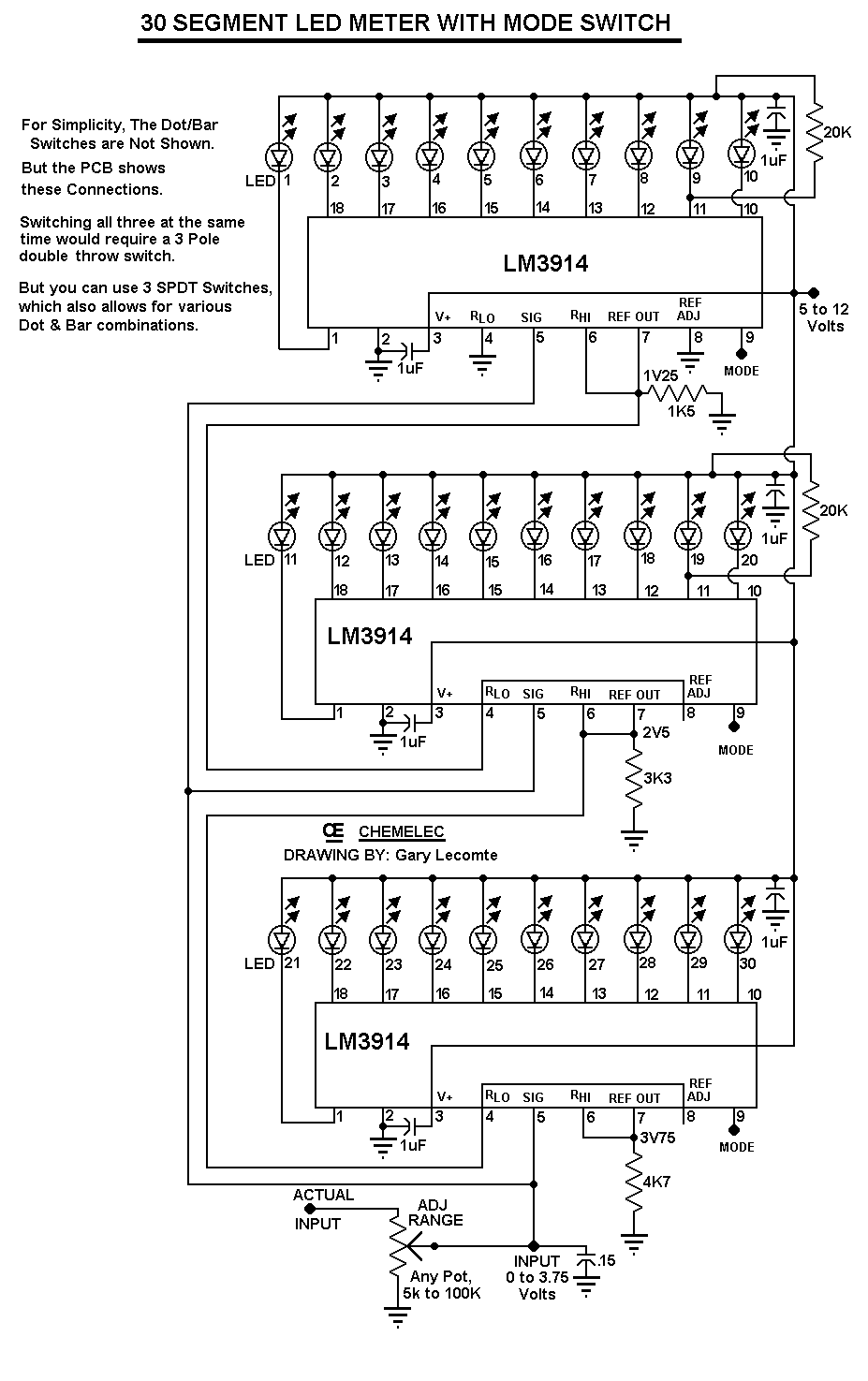
20 & 30 Segment LED Voltmeters
The circuit can be easily configured for full-scale voltages of either 20 or 200 volts by utilizing a suitable potentiometer on the input. It is critical not to exceed 30 volts at pin 5 of the LM3914. A 20 kΩ...
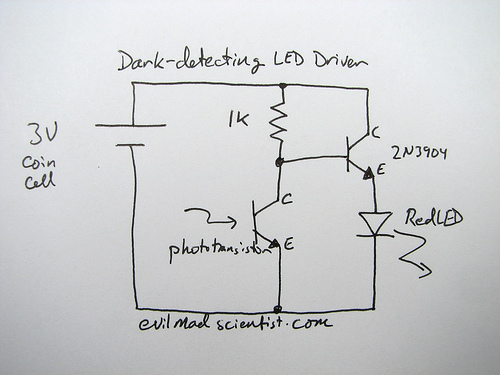
simple and cheap dark detecting led
How can an LED be activated in low light conditions? This scenario, often referred to as the "nightlight problem," is applicable in various situations such as emergency lights, street lights, and even computer keyboard backlights. There are numerous solutions available....
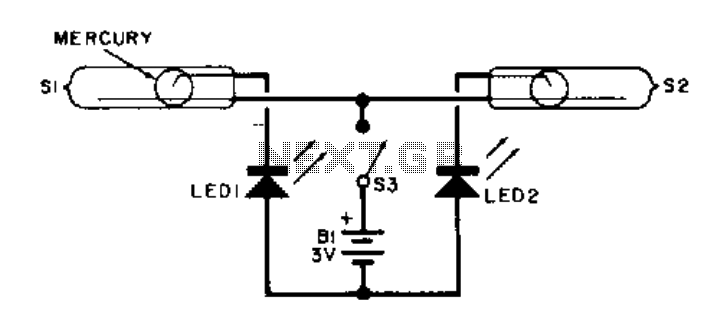
LED tilt level
This electronic level utilizes two LED indicators in place of an air bubble. When the surface tilts to the right, one LED illuminates; conversely, if it tilts to the left, the other LED illuminates. Both LEDs light up when the...
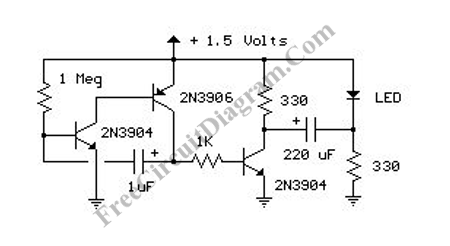
1.5V LED FLasher Using 3 Transistors
The LED flasher circuit operates by flashing an LED using only a 1.5-volt power supply. Typically, a power supply of more than 2 volts is required for an LED to function.
The LED flasher circuit designed for operation at 1.5 volts...