


Flexible AC Transmission Systems
#AC transmission
#power systems
#phase control
#grid stability
#FACTS
#voltage regulation
#power electronics
#energy efficiency
#smart grid
#electricity distribution
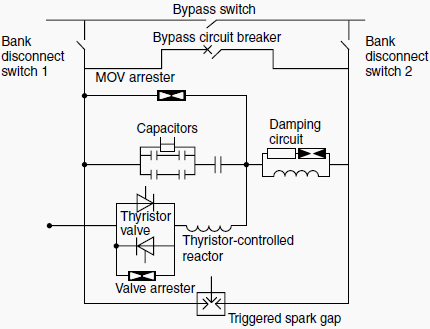
Description: The acronym FACTS stands for "flexible AC transmission systems." These systems incorporate some advantages of direct current (DC), such as phase independence and rapid response.
Flexible AC transmission systems (FACTS) are advanced technologies designed to enhance the controllability and stability of electrical power transmission networks. By utilizing power electronics, FACTS devices can dynamically manage power flow, improve voltage stability, and increase the capacity of existing transmission lines.
Key components of FACTS include Static Synchronous Compensators (STATCOMs), Thyristor-Controlled Series Capacitors (TCSCs), and Unified Power Flow Controllers (UPFCs). STATCOMs are employed to regulate voltage levels and provide reactive power support, facilitating improved voltage stability during peak loads or disturbances. TCSCs enhance power transfer capability by dynamically controlling the reactance of transmission lines, thereby optimizing power flow. UPFCs combine the functionalities of both series and shunt compensation, allowing for simultaneous control of active and reactive power flows in the system.
The integration of FACTS into transmission systems significantly mitigates issues such as voltage fluctuations, line overloads, and oscillations, leading to a more reliable and efficient power grid. These systems are particularly advantageous in areas with high renewable energy penetration, where they help maintain grid stability amidst variable generation patterns. The deployment of FACTS technologies ultimately supports the transition towards smarter, more resilient electrical networks, enhancing the overall performance and reliability of power transmission systems.The acronym FACTS stands for “flexible ac transmission systems.â€These systems add some of the virtues of DC, i.e., phase independence and fast.
Flexible AC transmission systems (FACTS) are advanced technologies designed to enhance the controllability and stability of electrical power transmission networks. By utilizing power electronics, FACTS devices can dynamically manage power flow, improve voltage stability, and increase the capacity of existing transmission lines.
Key components of FACTS include Static Synchronous Compensators (STATCOMs), Thyristor-Controlled Series Capacitors (TCSCs), and Unified Power Flow Controllers (UPFCs). STATCOMs are employed to regulate voltage levels and provide reactive power support, facilitating improved voltage stability during peak loads or disturbances. TCSCs enhance power transfer capability by dynamically controlling the reactance of transmission lines, thereby optimizing power flow. UPFCs combine the functionalities of both series and shunt compensation, allowing for simultaneous control of active and reactive power flows in the system.
The integration of FACTS into transmission systems significantly mitigates issues such as voltage fluctuations, line overloads, and oscillations, leading to a more reliable and efficient power grid. These systems are particularly advantageous in areas with high renewable energy penetration, where they help maintain grid stability amidst variable generation patterns. The deployment of FACTS technologies ultimately supports the transition towards smarter, more resilient electrical networks, enhancing the overall performance and reliability of power transmission systems.The acronym FACTS stands for “flexible ac transmission systems.â€These systems add some of the virtues of DC, i.e., phase independence and fast.

Hysteresis-free phase control circuit
This circuit is designed for lamp dimming and similar applications. It requires only one RC phase lag network. To prevent the hysteresis (or "snap-on") effect, the capacitor is reset to approximately 0 volts at the end of every positive half...
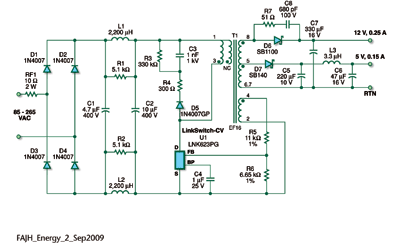
Smart power grid demands innovative design
As electric utility companies face the challenge of reducing greenhouse gas emissions and managing rising costs and lead times for new generating capacity, they are adopting the concept of the smart grid. A key component of the smart grid is...
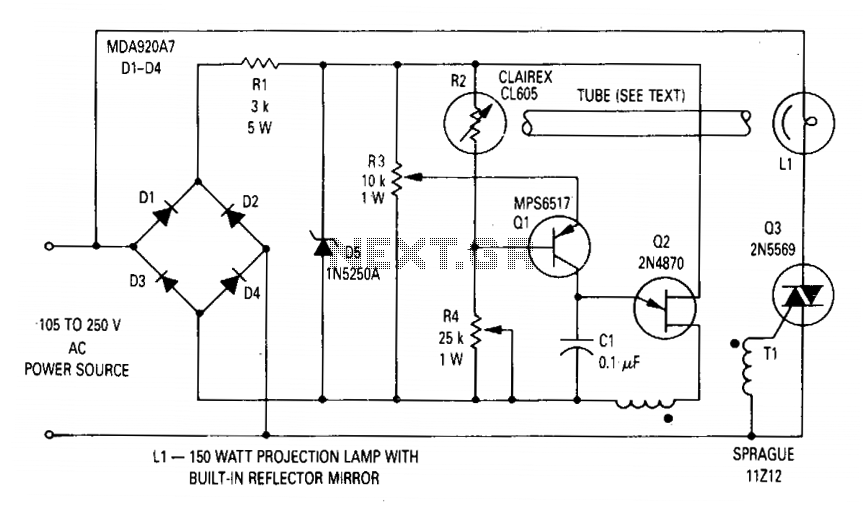
Voltage regulator for projection lamp
The circuit regulates the RMS output voltage across a load, specifically a projection lamp, to 100 volts ±2% for input voltages ranging from 105 to 250 volts AC. This regulation is achieved by indirectly sensing the light output of lamp...
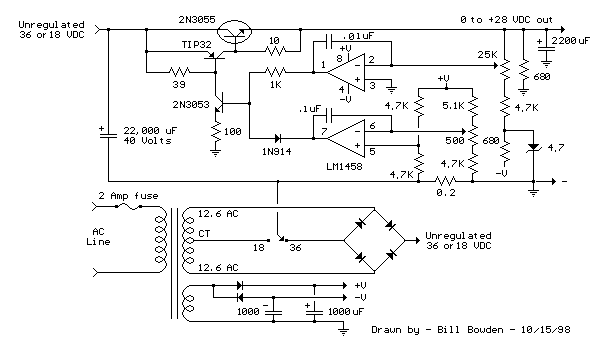
Current and Variable Voltage Power Supply
Another adjustment of application operational amplifiers to adapt a power supply is apparent below. The power supply requires an additional adjustment to supply the op-amps with a bipolar voltage (+/- 8 volts), and the negative voltage is also used to...
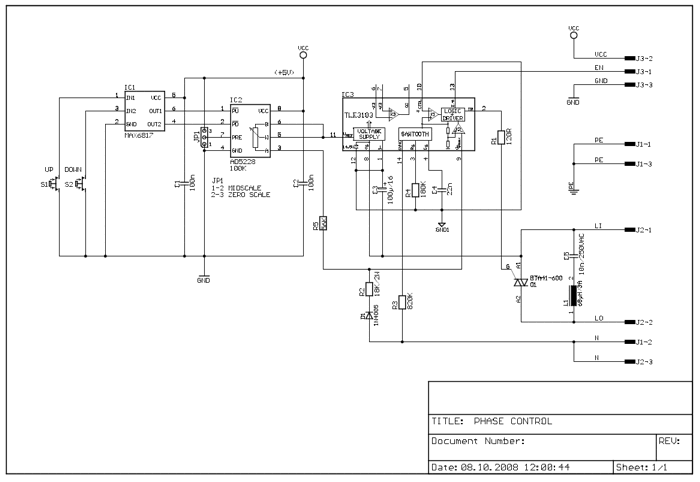
2500W Phase Control Circuit Schematic
The following circuit illustrates a 2500W Phase Control Circuit Schematic. Features include a ground-tied trigger output that is disabled, and a low voltage input.
The 2500W Phase Control Circuit is designed to regulate the power delivered to a load by controlling...
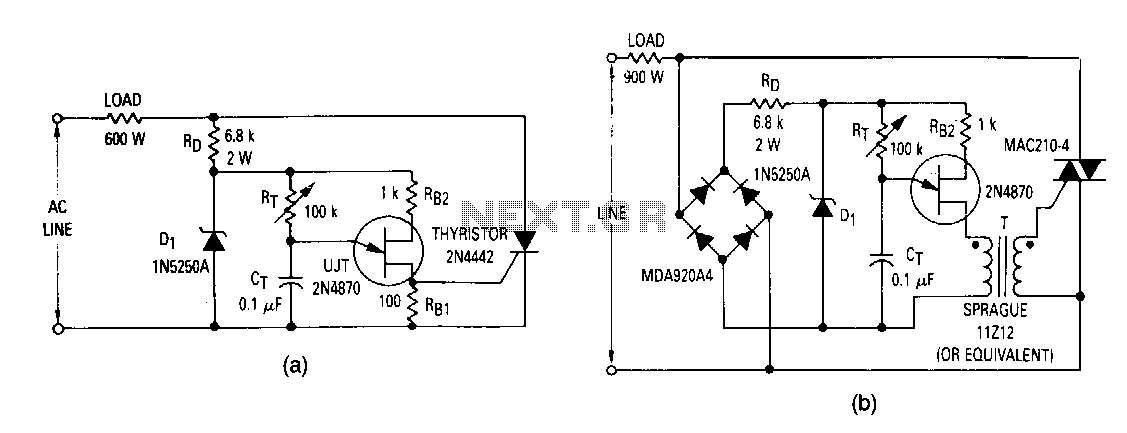
Phase Control Circuit
The most elementary application is a half-wave control circuit. The thyristor is acting both as a power control device and as a rectifier, providing variable power to the load during the positive half cycle and no power to the load...
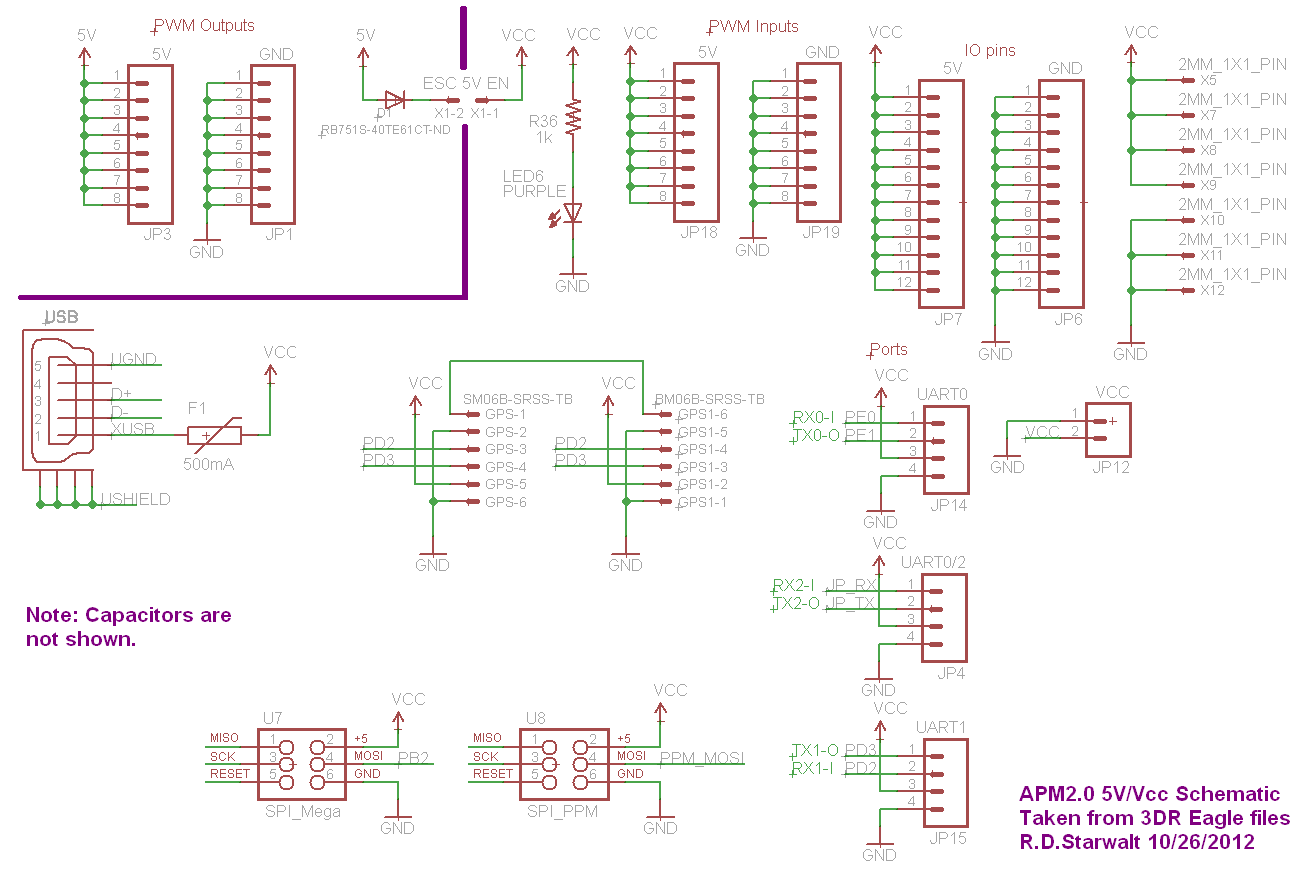
APM2.0 5V/Vcc Schematic
The PWM Output section has been separated into the upper left corner, delineated by a heavy purple line that is bridged by jumper JP1 on the APM2.0. This design choice highlights that diode D1 allows current to pass through JP1,...
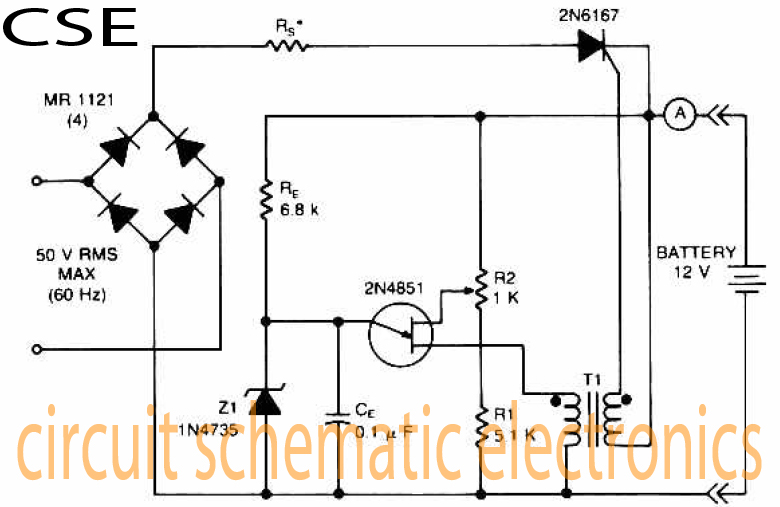
Variable charger circuit Schematic Diagram
The accumulator charger circuit must provide a voltage that matches the specifications of the batteries being charged. For a 12-volt accumulator, the output voltage should not exceed 12 volts, nor should it fall significantly below this threshold. Failure to maintain...
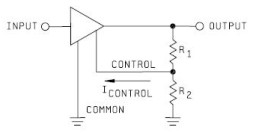
Voltage Regulator
Neither term describes a regulator, only its placement within a circuit or system. Any voltage regulator could meet the requirements, depending on its placement. A listing of Analog Voltage Regulator IC manufacturers. The types of products or devices they produce...