


High Impedance Amplified Telephone Line Tap
#telephone line
#amplifier
#high impedance
#DTMF
#electrical isolation
#relay driver
#communication
#signal tap
#minimally invasive
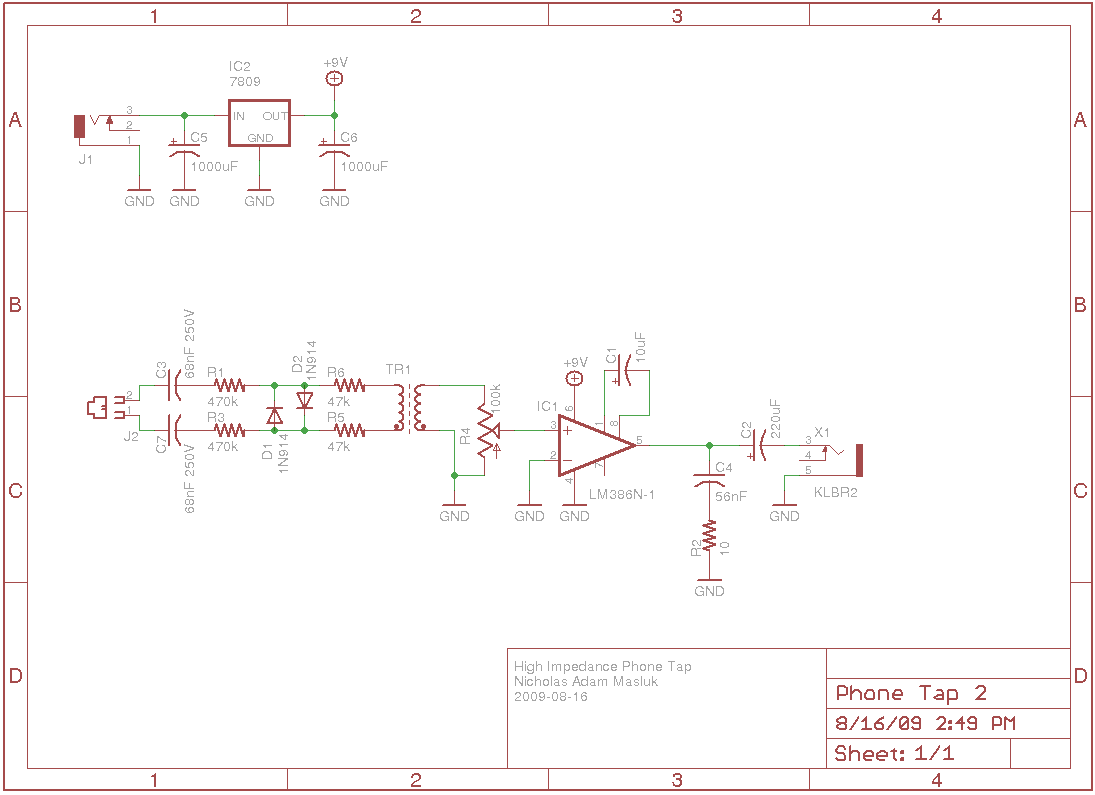
Description: This is an amplified telephone line tap designed to be minimally invasive. The connection to the phone line features a high input impedance and is electrically isolated from the main circuit components. It is intended for use with a DTMF-controlled relay driver, which lacks a direct connection interface for the phone line. When properly configured, the output audio from the tap is very clear, causing no disturbance to the phone line and remaining essentially undetectable. The LM386 audio amplifier is configured for a voltage gain of 200, and the output can drive an 8-ohm speaker. The transformer utilized is sourced from an analog modem. Depending on the application, it may be necessary to connect the circuit ground to the building's electrical ground to minimize noise pickup; this is not required when using batteries, but some DC power supplies may introduce issues.
The amplified telephone line tap circuit is engineered for discreet audio monitoring of telephone line signals. The high input impedance ensures that the tap does not load the phone line, preserving the integrity of the call. The electrical isolation is critical to prevent interference with the main circuit, ensuring that the tap operates independently without affecting the phone's functionality.
The LM386 audio amplifier is a low-voltage audio power amplifier that is widely used in various audio applications. In this circuit, it is configured for a voltage gain of 200, which provides significant amplification of the audio signal captured from the phone line. The output stage of the LM386 is capable of driving an 8-ohm speaker, making it suitable for direct audio playback or further processing.
The transformer sourced from an analog modem serves a dual purpose: it provides the necessary impedance matching between the phone line and the amplifier while also ensuring electrical isolation. This isolation is essential for preventing any potential feedback or noise that could arise from the circuit interacting with the phone line.
For optimal performance, especially in environments with potential electrical noise, grounding considerations are vital. Connecting the circuit ground to the building's electrical ground can help mitigate any noise that may be introduced by external electrical sources. However, this grounding is unnecessary when the circuit is powered by batteries, as they provide a clean power source devoid of such noise issues. It is important to analyze the specific application requirements to determine the best grounding strategy, particularly when using DC power supplies, which may introduce unwanted noise into the system.This is an amplified telephone line tap, which is designed to be minimally invasive. The interconnect to the phone line has a large input impedance, and is electrically isolated from the main electronics of the circuit. I designed this for use with a DTMF controlled relay driver, which did not come with an interface for direct connection to the ph
one line. When properly set up, the output audio from the tap is very clear, and the tap causes no disturbance to the phone line, and is essentially undetectable. The LM386 audio amplifier is set up for a voltage gain of 200, and the output is capable of driving an 8 ohm speaker.
The transformer used is from an analog modem. Depending on the application, it may be necessary to connect the circuit ground to the electrical ground of the building to reduce noise pickup (this is not necessary with batteries, but some DC power supplies will cause problems).
The amplified telephone line tap circuit is engineered for discreet audio monitoring of telephone line signals. The high input impedance ensures that the tap does not load the phone line, preserving the integrity of the call. The electrical isolation is critical to prevent interference with the main circuit, ensuring that the tap operates independently without affecting the phone's functionality.
The LM386 audio amplifier is a low-voltage audio power amplifier that is widely used in various audio applications. In this circuit, it is configured for a voltage gain of 200, which provides significant amplification of the audio signal captured from the phone line. The output stage of the LM386 is capable of driving an 8-ohm speaker, making it suitable for direct audio playback or further processing.
The transformer sourced from an analog modem serves a dual purpose: it provides the necessary impedance matching between the phone line and the amplifier while also ensuring electrical isolation. This isolation is essential for preventing any potential feedback or noise that could arise from the circuit interacting with the phone line.
For optimal performance, especially in environments with potential electrical noise, grounding considerations are vital. Connecting the circuit ground to the building's electrical ground can help mitigate any noise that may be introduced by external electrical sources. However, this grounding is unnecessary when the circuit is powered by batteries, as they provide a clean power source devoid of such noise issues. It is important to analyze the specific application requirements to determine the best grounding strategy, particularly when using DC power supplies, which may introduce unwanted noise into the system.This is an amplified telephone line tap, which is designed to be minimally invasive. The interconnect to the phone line has a large input impedance, and is electrically isolated from the main electronics of the circuit. I designed this for use with a DTMF controlled relay driver, which did not come with an interface for direct connection to the ph
one line. When properly set up, the output audio from the tap is very clear, and the tap causes no disturbance to the phone line, and is essentially undetectable. The LM386 audio amplifier is set up for a voltage gain of 200, and the output is capable of driving an 8 ohm speaker.
The transformer used is from an analog modem. Depending on the application, it may be necessary to connect the circuit ground to the electrical ground of the building to reduce noise pickup (this is not necessary with batteries, but some DC power supplies will cause problems).
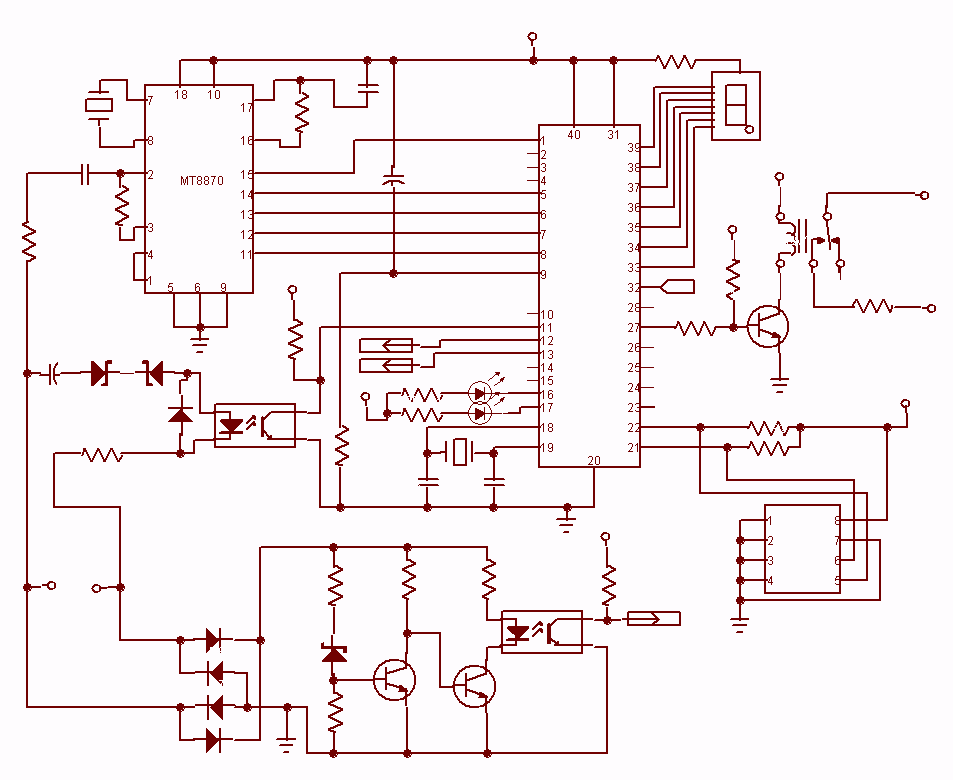
Telephone motor Controller
This Project is used to control a single phase Motor from any where in the world through the telephone. The circuit consists of a DTMF tone detector and a powerful 8 bit Microcontroller AT89S52. The Microcontroller senses the DTMF signal...
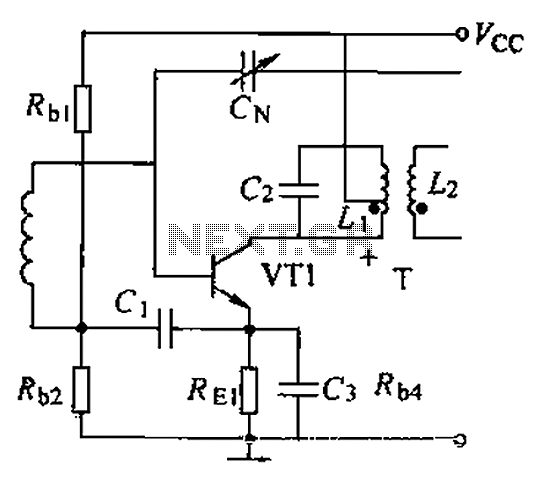
Common intermediate frequency amplifier circuit having a circuit and on the radio
A common intermediate frequency amplifier circuit is presented, along with its components and parameters. The reference values for the components are as follows: 1) Transistors: VT1 to 3DG19, Vcc = 6V. 2) Resistance values: R1 = 50 kΩ, R2 =...
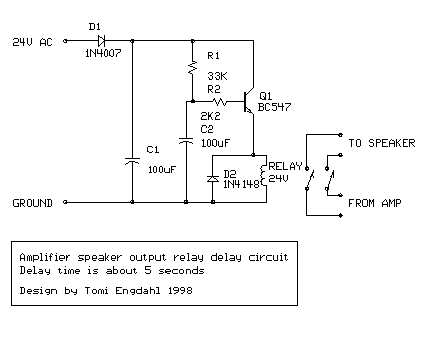
Amplifier Circuit Output Relay Delay Audio
This is a simple circuit designed for an audio amplifier project to control the speaker output relay. The purpose of this circuit is to manage the relay that activates the speaker output in the audio amplifier. The circuit is designed...
telephone number display circuit diagram
The circuit is designed to connect in parallel with a telephone, displaying the dialed number using DTMF (Dual Tone Multi-Frequency) signaling. It can also show the number dialed from the receiving party's phone, making it useful for capturing numbers over...
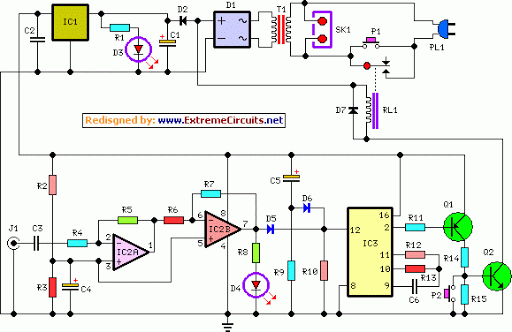
Amplifier Timer Circuit Schematic
This circuit turns off an amplifier or any other device when it remains idle for 15 minutes. It is powered by the amplifier's tape output.
The described circuit functions as an automatic power management system, designed to enhance energy efficiency by...
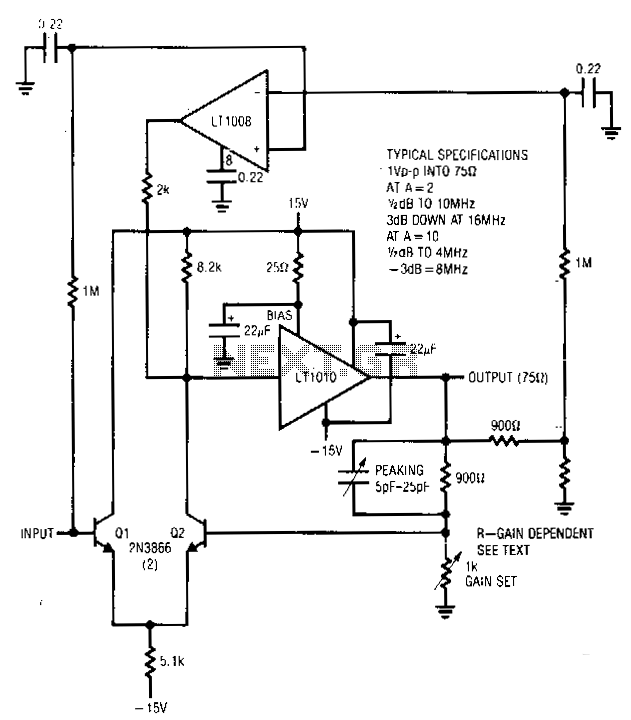
Stabilized-amplifier
This amplifier operates across a broad range of gains, typically from 1 to 10. It integrates the LT1010 with a fast discrete stage and an LT1008-based destabilizing loop. Transistors Q1 and Q2 create a differential stage that converts to a...
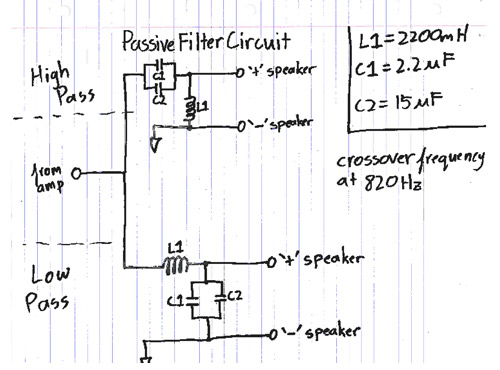
iPod/MP3 Mini Speaker System
Listen and share music wherever you go with the mini speaker system project. This project allows for music playback in various locations such as dorms, cubicles, or the beach. It serves as an excellent introduction to circuit systems, featuring an...
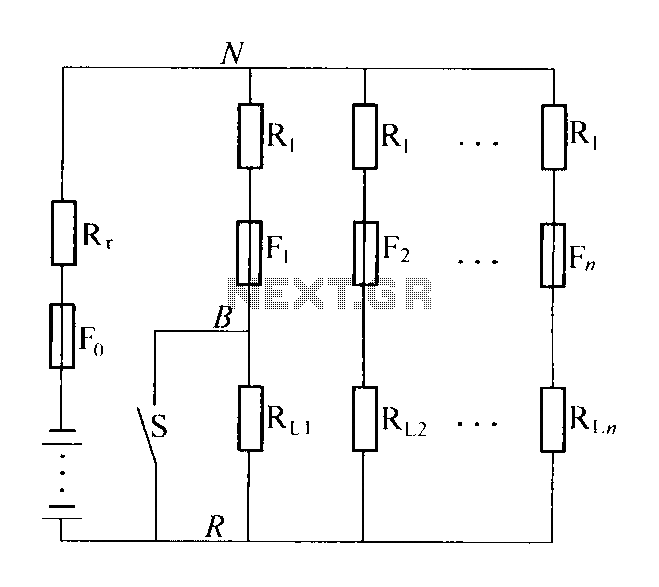
High resistance distribution circuit
The circuit diagram illustrates a high-impedance distribution system characterized by low resistivity distribution. A notable feature is the series resistance of the shunt load current limiting resistor R1, typically valued at five to ten times the internal resistance of the...
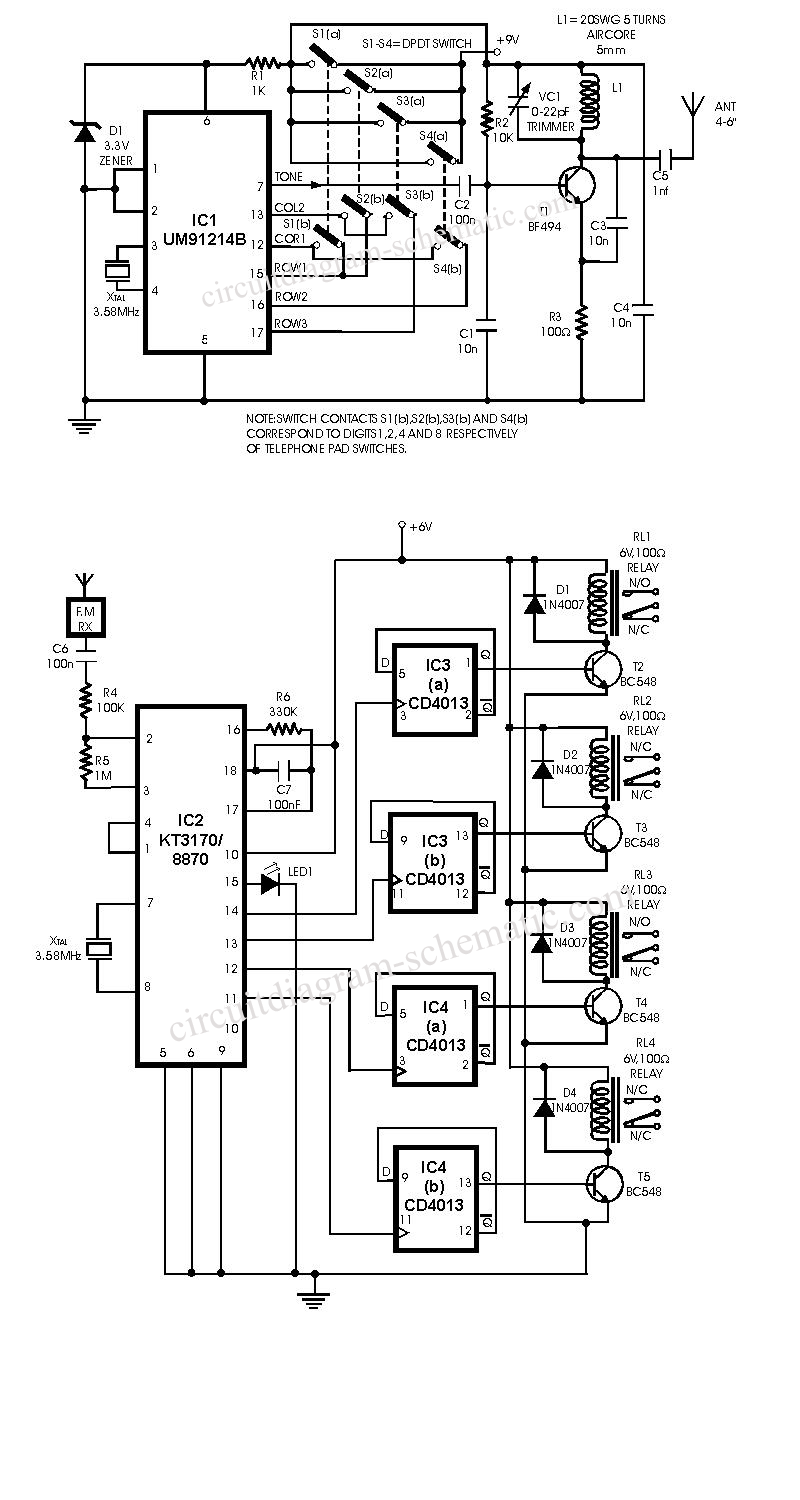
Radio Remote Control Using DTMF
This circuit diagram represents a remote control system utilizing DTMF (Dual Tone Multi-Frequency) signals. DTMF signals, generated by pressing numbers on a telephone keypad, serve as the control mechanism for the system. The DTMF tones are employed to modulate the...