


LM2889 Lm2889 Tv Video Modulator - National Semiconductor
#TV modulator
#video modulator
#voltage-to-frequency converter
#frequency modulation
#National Semiconductor
#LM2889
#analog-to-digital conversion
#frequency demodulation
#signal processing
#broadcast
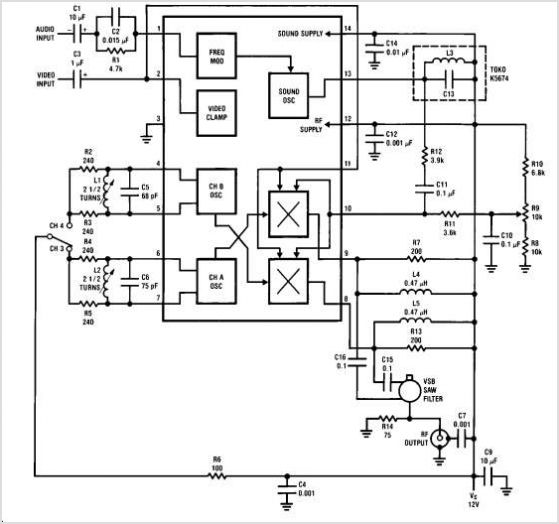
Description: The LM231 and LM331 family of voltage-to-frequency converters are well-suited for use in simple, low-cost circuits for analog-to-digital conversion, precision frequency-to-voltage conversion, long-term integration, linear frequency modulation or demodulation, and various other functions. When utilized as a voltage-to-frequency converter, the output is a pulse train at a frequency that is precisely proportional to the applied input voltage. This provides all the inherent advantages of voltage-to-frequency conversion techniques and facilitates easy application in standard voltage-to-frequency converter scenarios. Furthermore, the LM231A and LM331A achieve a new level of accuracy versus temperature that was previously only achievable with expensive voltage-to-frequency modules. The LM231 and LM331 are particularly suitable for use in digital systems operating at low power supply voltages and can deliver cost-effective analog-to-digital conversion in microprocessor-controlled systems. Additionally, the frequency output from a battery-powered voltage-to-frequency converter can be easily channeled through a simple photo isolator to ensure isolation against high common mode levels. The LM231 and LM331 incorporate a new temperature-compensated band-gap reference circuit to provide excellent accuracy across the entire operating temperature range, even at power supply voltages as low as 4.0V. The precision timer circuit features low bias currents without compromising the quick response required for 100 kHz voltage-to-frequency conversion. The outputs are capable of driving three TTL loads or providing a high voltage output of up to 40V while being short-circuit-proof against VCC.
The LM231 and LM331 voltage-to-frequency converters are designed to meet the demands of various electronic applications, particularly in environments where cost-effectiveness and precision are essential. The architecture of these converters includes a high-performance temperature-compensated band-gap reference, which ensures that the output frequency remains stable across a wide temperature range, thus improving reliability in diverse operating conditions.
The pulse train output generated by these converters is a direct representation of the input voltage, making them ideal for applications in analog-to-digital conversion. The integration of a precision timer circuit allows for rapid response times, essential for high-frequency applications. With the capability to drive multiple TTL loads, these converters can be seamlessly integrated into digital systems without the need for additional buffering stages.
In battery-powered applications, the ability to channel the output through a photo isolator adds an extra layer of protection against high common mode voltages, which is particularly beneficial in industrial settings where electrical noise can be prevalent. The short-circuit protection feature ensures that the devices can operate safely under adverse conditions, reducing the risk of damage and enhancing longevity.
Overall, the LM231 and LM331 converters represent a robust solution for voltage-to-frequency conversion, providing both precision and versatility in a compact form factor, making them suitable for a variety of low-cost electronic designs.The LM231 LM331 family of voltage-to-frequency converters are ideally suited for use in simple low-cost circuits for Analog-to-digital conversion, precision frequency-to-voltage conversion, long-term integration, linear frequency modulation or demodulation, and many other functions. The output when used as a voltage-to-frequency converter is a pul se train at a frequency precisely proportional to the applied input voltage. Thus, it provides all the inherent advantages of the voltage-to-frequency conversion techniques, and is easy to apply in all standard voltage-to-frequency converter applications. Further, the LM231A/LM331A attain a new high level of accuracy versus temperature which could only be attained with expensive voltage-to-frequency modules.
Additionally the LM231 331 are ideally suited for use in digital systems at low power supply voltages and CAN provide low-cost Analog-to-digital conversion in microprocessor-controlled systems. And, the frequency from a battery powered voltage-to-frequency converter CAN be easily channeled through a simple photo Isolator to provide isolation against high common mode levels.
The LM231 LM331 utilize a new temperature-compensated band-gap reference circuit, to provide excellent accuracy over the full operating temperature range, at power supplies as low as 4. 0V. The precision Timer circuit has low bias currents without degrading the quick response necessary for 100 kHz voltage-to-frequency conversion.
And the output are capable of driving 3 TTL loads, or a high voltage output up to 40V, yet is short-circuit-proof against VCC.
The LM231 and LM331 voltage-to-frequency converters are designed to meet the demands of various electronic applications, particularly in environments where cost-effectiveness and precision are essential. The architecture of these converters includes a high-performance temperature-compensated band-gap reference, which ensures that the output frequency remains stable across a wide temperature range, thus improving reliability in diverse operating conditions.
The pulse train output generated by these converters is a direct representation of the input voltage, making them ideal for applications in analog-to-digital conversion. The integration of a precision timer circuit allows for rapid response times, essential for high-frequency applications. With the capability to drive multiple TTL loads, these converters can be seamlessly integrated into digital systems without the need for additional buffering stages.
In battery-powered applications, the ability to channel the output through a photo isolator adds an extra layer of protection against high common mode voltages, which is particularly beneficial in industrial settings where electrical noise can be prevalent. The short-circuit protection feature ensures that the devices can operate safely under adverse conditions, reducing the risk of damage and enhancing longevity.
Overall, the LM231 and LM331 converters represent a robust solution for voltage-to-frequency conversion, providing both precision and versatility in a compact form factor, making them suitable for a variety of low-cost electronic designs.The LM231 LM331 family of voltage-to-frequency converters are ideally suited for use in simple low-cost circuits for Analog-to-digital conversion, precision frequency-to-voltage conversion, long-term integration, linear frequency modulation or demodulation, and many other functions. The output when used as a voltage-to-frequency converter is a pul se train at a frequency precisely proportional to the applied input voltage. Thus, it provides all the inherent advantages of the voltage-to-frequency conversion techniques, and is easy to apply in all standard voltage-to-frequency converter applications. Further, the LM231A/LM331A attain a new high level of accuracy versus temperature which could only be attained with expensive voltage-to-frequency modules.
Additionally the LM231 331 are ideally suited for use in digital systems at low power supply voltages and CAN provide low-cost Analog-to-digital conversion in microprocessor-controlled systems. And, the frequency from a battery powered voltage-to-frequency converter CAN be easily channeled through a simple photo Isolator to provide isolation against high common mode levels.
The LM231 LM331 utilize a new temperature-compensated band-gap reference circuit, to provide excellent accuracy over the full operating temperature range, at power supplies as low as 4. 0V. The precision Timer circuit has low bias currents without degrading the quick response necessary for 100 kHz voltage-to-frequency conversion.
And the output are capable of driving 3 TTL loads, or a high voltage output up to 40V, yet is short-circuit-proof against VCC.
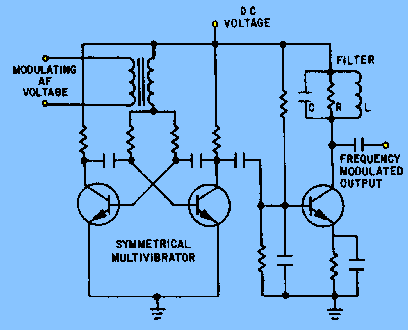
Methods of frequency modulation
The circuit depicted in figure 2-6 and discussed in previous sections serves illustrative purposes only and is not practical in real-world applications. Nevertheless, the fundamental principle involved—the variation in reactance of an oscillator circuit in response to modulating voltage—represents one...
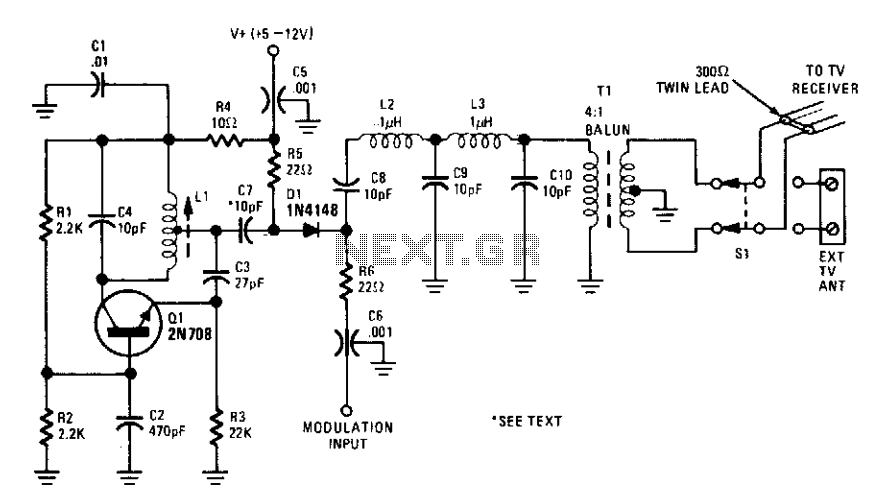
Video modulator 2
This circuit allows for the direct connection of composite video signals from video game consoles and microcomputers to the antenna terminals of television sets. The output signal level is regulated by the modulation input.
The circuit is designed to facilitate the...
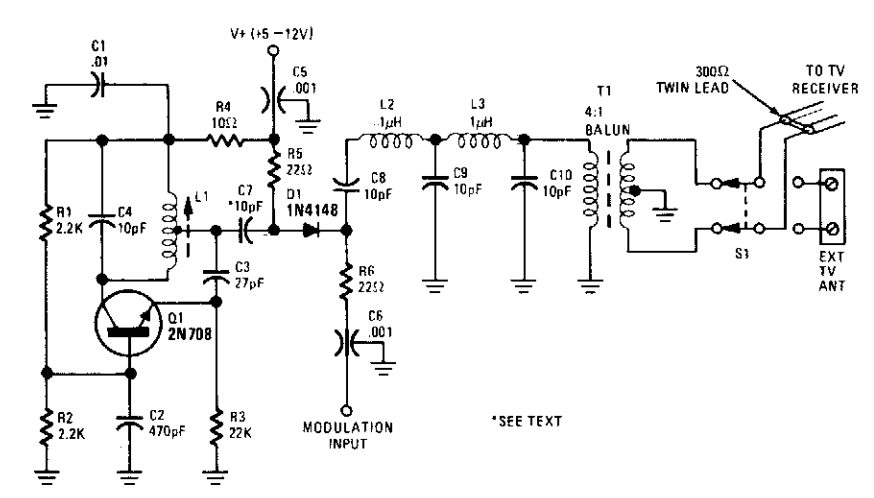
Video modulator 2
This circuit allows for the direct connection of composite video signals from video game consoles and microcomputers to the antenna terminals of television sets. The output signal level is regulated by the modulation input.
The circuit design effectively integrates composite video...
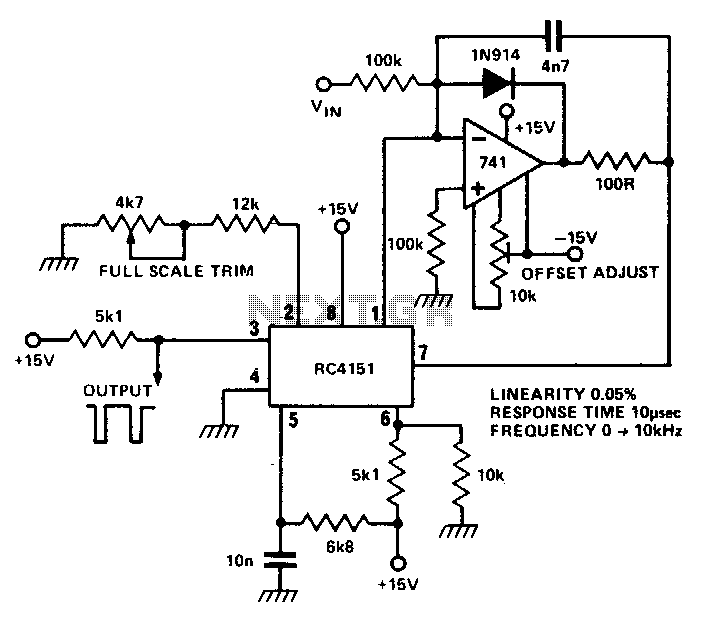
Precision oscillator
The RC 4151 precision voltage-to-frequency converter generates a pulse train output that is linearly proportional to the input voltage.
The RC 4151 is a highly accurate voltage-to-frequency converter designed for applications requiring precise frequency output based on varying voltage levels. This...
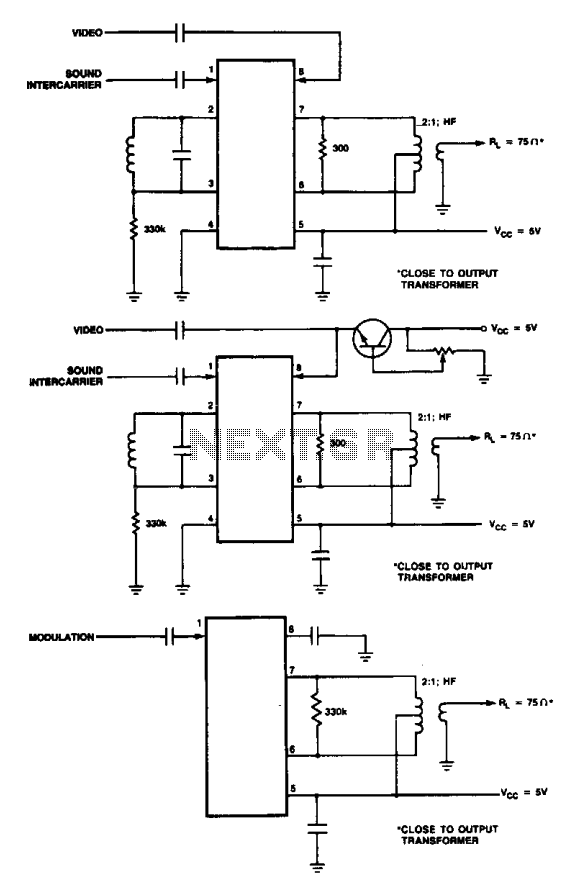
Video modulator circuit
These are modulator circuits designed for the modulation of video signals on a VHF/UHF carrier. The circuits require a 5 V power supply and a few external components for negative modulation mode. For positive modulation, an external clamp circuit is...
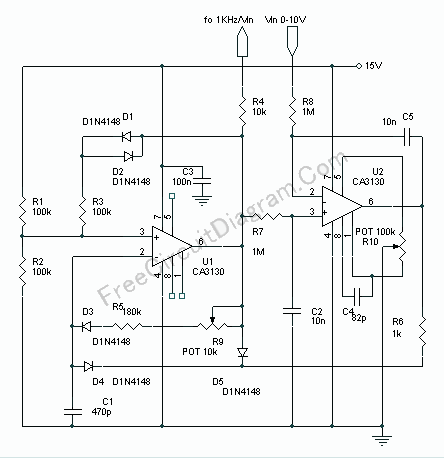
High Precision Voltage-to-Frequency Converter (VFC) Using CA3130 Op-Amps
Voltage to frequency conversion is highly beneficial in various applications, such as transmitting temperature measurements using standard voice radio transceivers. This circuit utilizes two CA3130 operational amplifiers, demonstrating satisfactory performance. The linearity of the voltage-frequency transfer is better than 0.5%,...

1-2Mhz broadcast transmitter
T1 is a low impedance output transformer with a conversion ratio of 5000 to 8 ohms.
The low impedance output transformer, T1, is designed to match the output of an audio amplifier to the impedance of the speaker load. The specified...
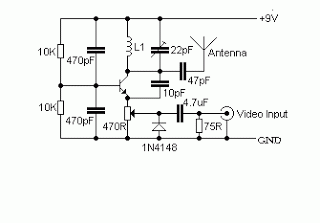
Broadcast circuits
This page is provided to the domain owner free of charge by Sedo's Domain Parking. The domain owner and Sedo do not have any relationship with third-party advertisers. References to any specific service or trademark are not controlled by Sedo...
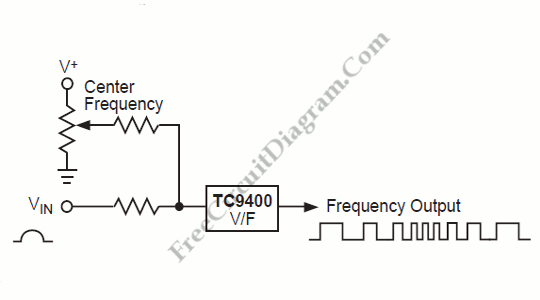
Superlinear FM (Frequency Modulator)
Designing various electronic circuit systems (synthesizer, modem, decoder, data converter, etc.) often requires a frequency modulator subsystem. An FM modulator is a crucial component in these systems.
An FM modulator is an electronic device that encodes information in a carrier wave...