


TEA1069 TEA1069; TEA1069A Versatile Speech/dialler/ringer With Music-on-hold
#TEA1069
#speech
#dialler
#ringer
#music-on-hold
#Bimos IC
#AM/FM stereo
#radio
#telephony
#communication
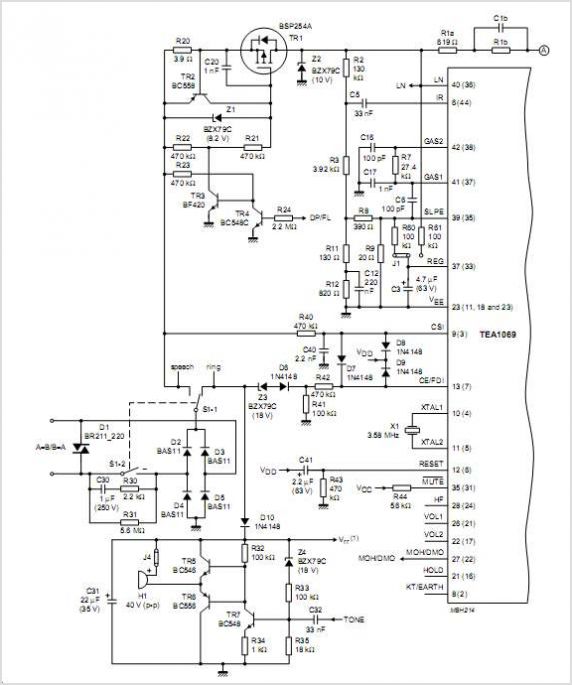
Description: The TEA5711 is a high-performance Bimos integrated circuit designed for use in AM/FM stereo radios. It integrates all necessary functions, including the AM and FM front-end, AM detector, and FM stereo output stages.
The TEA5711 is engineered to provide a compact and efficient solution for AM/FM radio applications. Its Bimos technology allows for the integration of both bipolar and CMOS transistors, enhancing performance while minimizing power consumption. The IC features a built-in AM/FM front-end, which is responsible for the initial signal reception and amplification. This front-end is designed to handle a wide range of input signals, ensuring clear reception even in challenging environments.
The AM detector within the TEA5711 converts the amplitude-modulated signals into audio signals, effectively demodulating the received radio waves. The FM stereo output stages are optimized to deliver high-quality stereo sound, providing a rich listening experience. The circuit's design includes various internal components such as oscillators, filters, and amplifiers, all of which contribute to its overall functionality.
The TEA5711 also supports additional features such as automatic gain control (AGC) and noise suppression, which enhance the radio's performance by maintaining consistent audio levels and reducing background noise. The IC operates over a wide voltage range, making it suitable for various power supply configurations.
Overall, the TEA5711 is a versatile and efficient solution for AM/FM stereo radio designs, providing all essential functions in a single package while ensuring high performance and audio quality.The TEA5711 is a high performance Bimos IC for use in AM/FM stereo Radios All necessary functions are integrated: from AM and FM front-end to AM detector and FM stereo output stages.
The TEA5711 is engineered to provide a compact and efficient solution for AM/FM radio applications. Its Bimos technology allows for the integration of both bipolar and CMOS transistors, enhancing performance while minimizing power consumption. The IC features a built-in AM/FM front-end, which is responsible for the initial signal reception and amplification. This front-end is designed to handle a wide range of input signals, ensuring clear reception even in challenging environments.
The AM detector within the TEA5711 converts the amplitude-modulated signals into audio signals, effectively demodulating the received radio waves. The FM stereo output stages are optimized to deliver high-quality stereo sound, providing a rich listening experience. The circuit's design includes various internal components such as oscillators, filters, and amplifiers, all of which contribute to its overall functionality.
The TEA5711 also supports additional features such as automatic gain control (AGC) and noise suppression, which enhance the radio's performance by maintaining consistent audio levels and reducing background noise. The IC operates over a wide voltage range, making it suitable for various power supply configurations.
Overall, the TEA5711 is a versatile and efficient solution for AM/FM stereo radio designs, providing all essential functions in a single package while ensuring high performance and audio quality.The TEA5711 is a high performance Bimos IC for use in AM/FM stereo Radios All necessary functions are integrated: from AM and FM front-end to AM detector and FM stereo output stages.
Energy-sucking Radio Antennas
Here's something that has always bugged me: light waves are about 5000 Angstroms in wavelength, while atoms are more like 1 Angstrom across. Atoms are thousands of times smaller than light waves, yet atoms obviously interact very strongly with light....
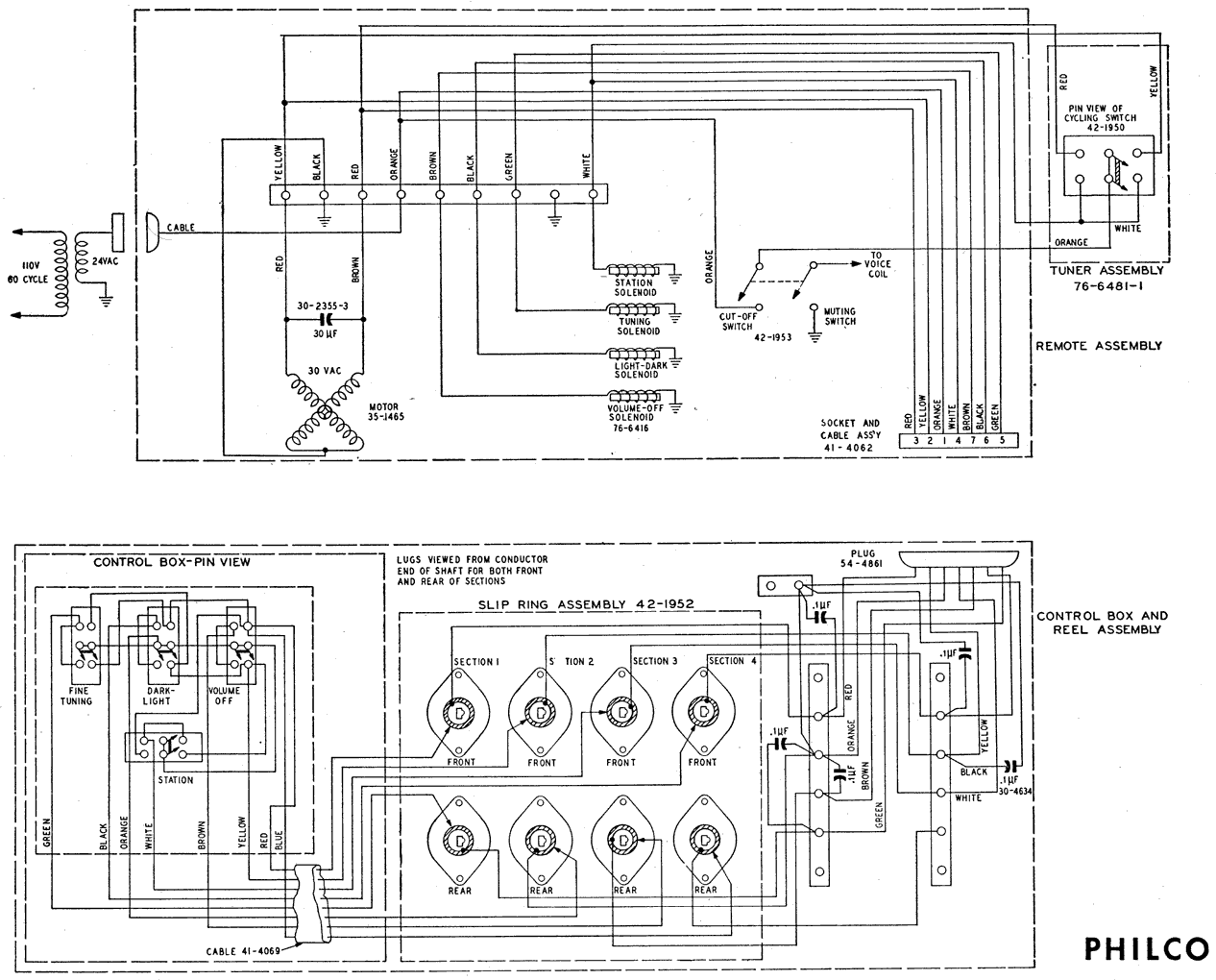
rc1
An Instruction and Reference Book on Radio and Television, Coyne Electrical and Television-Radio School, 1951
This publication serves as a comprehensive instructional and reference guide focused on the principles and practices of radio and television technology as taught by the Coyne...
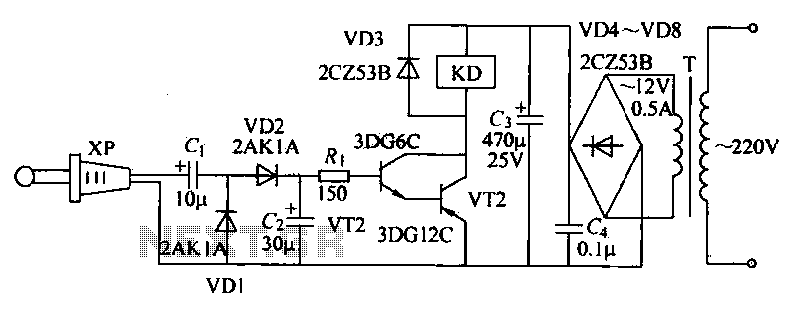
Radio remote control circuit
The receiver circuit depicted in the figure requires the insertion of a plug into the radio headphone jack. When the radio receiver detects a signal from the transmitter, an audio signal is output from the jack. This signal is then...
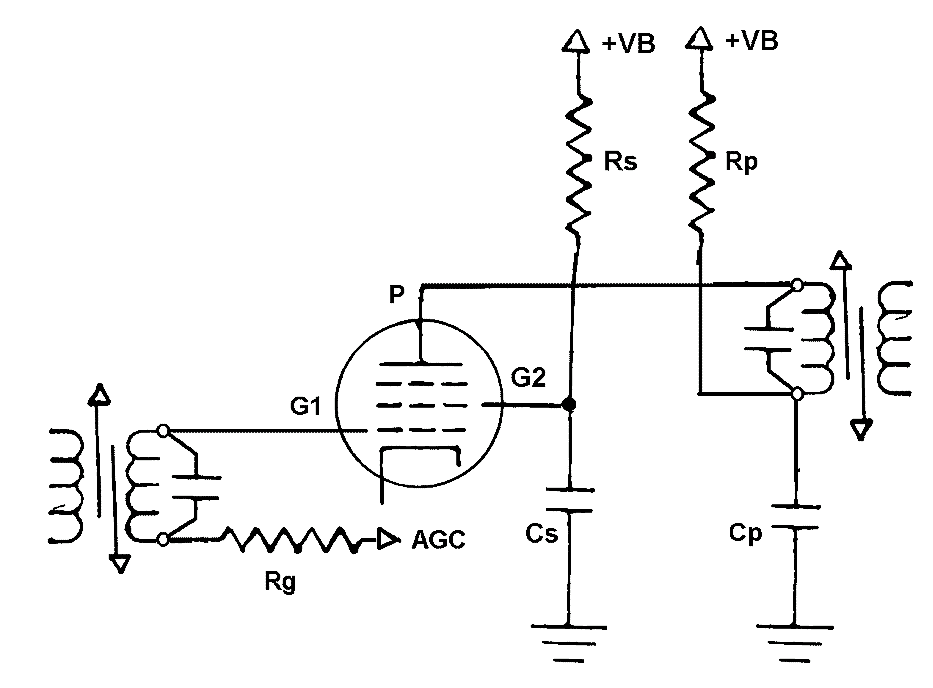
Servicing old radios
A radio that has been stored for years on a dusty shelf needs to be gently revived to restore its reliable operation and provide warm, pleasant sounds for years to come. Here are a few general notes on how a...
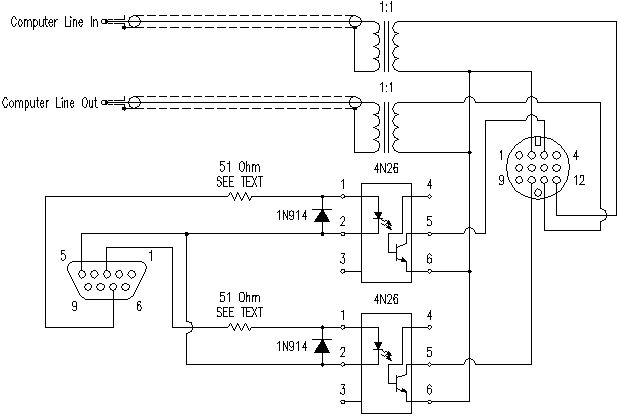
KG6MVBs Rig to Computer interface
This document outlines a modification that connects a radio to a computer. It is important to proceed with caution and recognize that the responsibility for any consequences lies with the user. The design has been tested on an Icom 718...

Old Radio Information
This area is primarily characterized by commercial information resellers. A notable exception is Nostalgia Air, which maintains an expanding database of radio schematics. Some links provided here direct to Nostalgia Air's database; however, if the desired information is not found,...
1962 circuit diagram tech data philips l3go3t radio
Visit eBid United Kingdom, the online marketplace without fees - buy and sell today.
eBid United Kingdom serves as an online marketplace that facilitates buying and selling transactions without imposing fees on its users. This platform offers a user-friendly interface that...
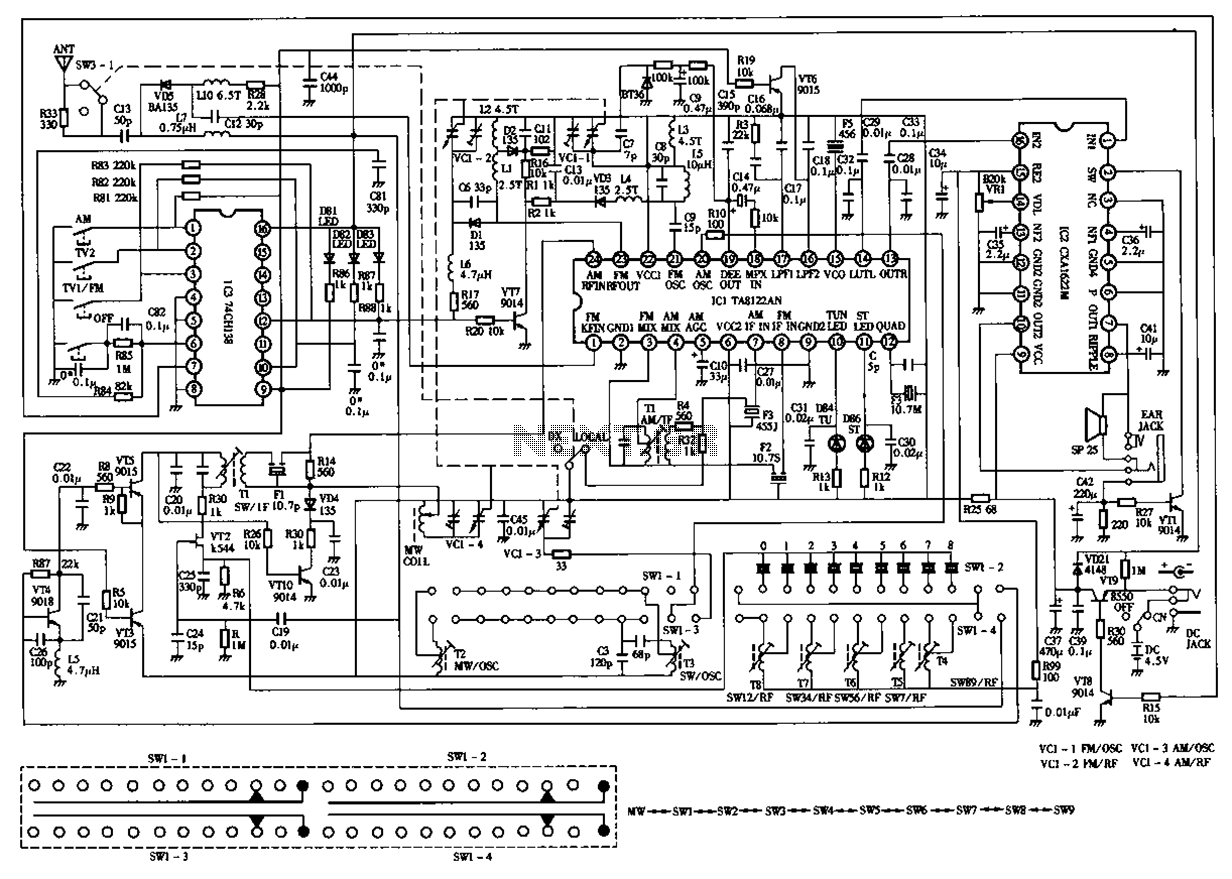
Desheng 119 700 High sensitivity l2-band stereo radio circuit diagram
The circuit diagram for the Desheng 119 700 type FM, TV sound, medium wave, and short wave high sensitivity L2-band stereo radio is presented below.
The Desheng 119 700 type radio circuit is designed to receive various frequency bands including FM,...
SV3 Radio Magnadyne Radio
Most models produced in the 1930s utilize similar circuits, particularly in the RF section, which follows a common LW-MW-SW scheme. Variations among different models primarily stem from the inclusion or exclusion of variable selectivity control, the sophistication of tone controls,...